
Affiliate disclosure: some links are affiliate links — as an Amazon Associate we earn from qualifying purchases, at no extra cost to you. Full disclosure.
"Propane tank heater" is a confusing search term, since it sounds like it might mean a heater that uses a propane tank. It actually refers to something different: an electric blanket that wraps around the tank itself to keep it warm in cold weather. Here’s what these do and when you’d want one.
What a Tank Heater Blanket Actually Does
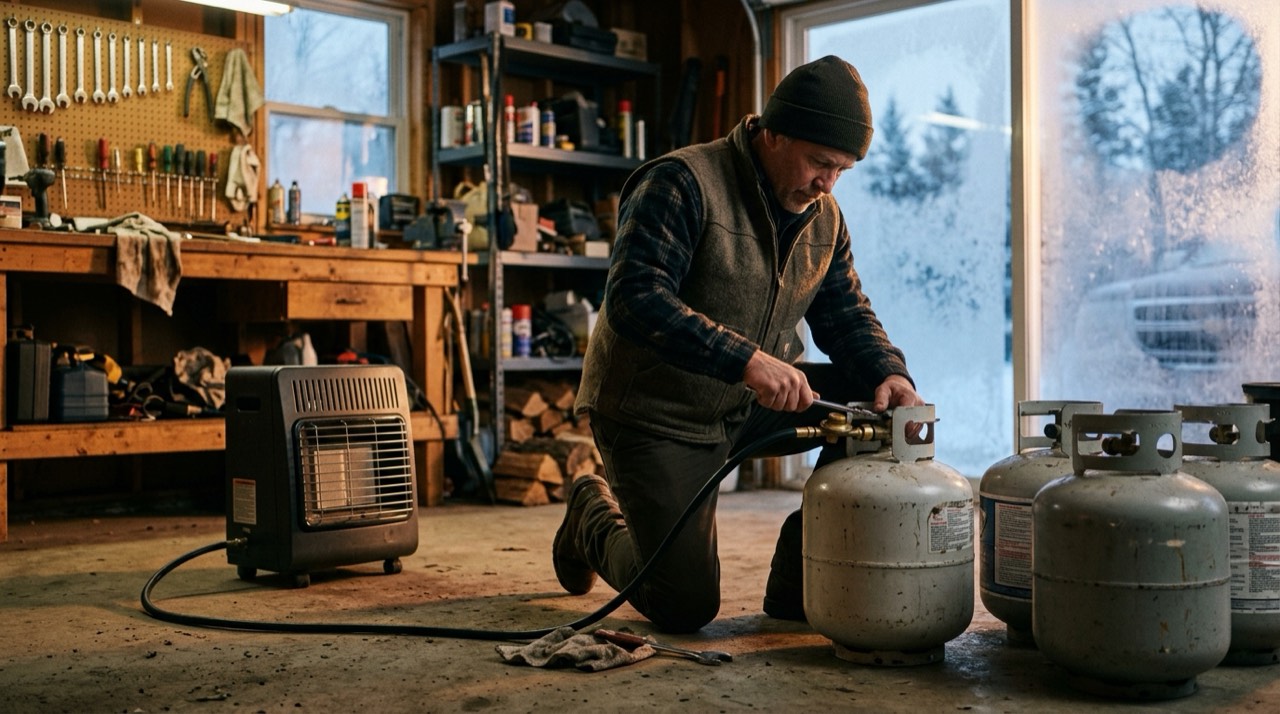
Cold temperatures reduce a propane tank’s internal pressure. Propane vaporizes less readily as it gets colder. In genuinely cold conditions, this can reduce fuel delivery to a high-demand appliance, even with plenty of liquid propane still in the tank. A tank heater blanket wraps around the outside of the tank and warms it electrically, keeping internal pressure more consistent through cold weather.

Best for Standard grill-size and mid-size tanks in cold climates
- Fits 20, 30 and 40 lb tanks
- Built-in temperature control (85-105F)
- Wraps directly around the tank

Best for Larger bulk tanks used in a workshop or job site setting
- Fits 100 lb tanks
- Fixed internal thermostat (max 90F)
- UL 499 tested, waterproof fabric
Who Actually Needs One
This is a niche accessory. Most portable heater owners don’t need one. It matters most for high-demand draws in genuinely cold climates: a large tank feeding a high-BTU appliance through an extended cold snap. This is common in commercial, agricultural or extreme cold-weather settings. A typical Buddy-style heater running off a 1 lb or 20 lb tank in normal winter conditions doesn’t usually need one.
Power Requirements
These blankets run on standard household electrical current, which means they need access to a power outlet, unlike the propane heater itself. This limits them to a fixed location near power, not a portable camping or off-grid setup where no outlet is available.
Built-In Temperature Control
Both options above include a built-in temperature control or thermostat, which prevents overheating the tank and keeps the blanket within a safe operating range automatically. This isn’t something to bypass or modify, since it’s a genuine safety feature protecting against a tank getting warmer than intended.
Choosing Between the Two Sizes
The 20-40 lb option fits the tank sizes most portable and semi-portable heater setups actually use. The 100 lb option is built for larger bulk tanks common in a workshop, job site, or agricultural setting. Match the blanket to your actual tank size rather than assuming one size fits all, since a poorly fitted blanket won’t heat the tank evenly.
Is This the Same as Insulating a Tank?
No. A basic insulated cover, discussed in our tanks and accessories guide, slows heat loss but doesn’t actively add heat. A tank heater blanket actively warms the tank using electricity. The two solve related but different problems, and most home and camping users only need the passive insulation, not active heating.
Safety Considerations
These blankets include automatic temperature limiting for a reason. An uncontrolled heat source wrapped around a pressurized fuel tank would be a genuine hazard. Never use a generic electric heating pad instead of a purpose-built blanket. A generic pad lacks the safety-tested temperature limits these products include. Always follow the manufacturer’s instructions for installation and use exactly as written.
Where These Are Commonly Used
Beyond extreme residential cold, tank heater blankets show up regularly in commercial forklift propane setups and agricultural equipment running through winter. Industrial settings often need consistent fuel delivery more than a typical home heating scenario does. If your use case resembles a commercial or agricultural setting more than home camping or garage use, a tank heater blanket is more likely worth the investment.
Materials and Construction
A quality tank heater blanket uses a woven, weather-resistant outer fabric, commonly a coated polyester. It wraps around an internal heating element with a built-in thermostat. The waterproof layer matters for anything stored or used outdoors. A wrap that absorbs moisture around a live heating element is a real hazard, not a minor inconvenience. Look for a UL-tested or similarly certified unit specifically. A heating element wrapped around a pressurized fuel tank isn’t the place to save money on an untested generic part.
Who Should Skip This Accessory Entirely
Anyone running a heater purely indoors in a climate-controlled space has no real use for a tank heater blanket. The cold-weather pressure drop this accessory solves only shows up with outdoor tank exposure in genuinely low temperatures. Renters and anyone without guaranteed outdoor outlet access should also skip this category. The blanket’s power requirement makes it impractical without a nearby, weatherproof electrical connection.
Installation Basics
Most blankets wrap directly around the tank’s body and secure with a hook-and-loop closure or a similar simple fastener, then plug into a standard outlet. No tools or permanent modification to the tank are needed. Confirm the blanket is properly seated and secure before leaving it running unattended, since a loose fit reduces its effectiveness at maintaining consistent tank temperature.
Maintenance and Storage
When not in use, store a tank heater blanket somewhere dry, disconnected from power. Fold it loosely rather than creasing it tightly, since a sharp fold can stress the internal heating element over time. Inspect the fabric and power cord each season for cracking, fraying, or exposed wiring before plugging it back in — the same check you’d give a hose or extension cord after months in storage. Replace the whole blanket outright if the cord or thermostat housing shows any damage, given what it’s wrapped around.
Cost vs. Benefit for Home Users
For most home and camping propane heater owners, the cold-weather pressure drop these blankets solve is a minor inconvenience at worst. It’s rarely a genuine problem worth the cost of a dedicated electric accessory. Running a heater at a slightly lower setting, or accepting a modestly weaker flame on the coldest days, is a reasonable trade-off. Most portable setups don’t have outlet access anyway, which makes the point somewhat moot for that use case.
A Quick Buying Checklist
- Confirm your tank size matches the blanket’s rated range before ordering.
- Check for a UL-tested or similarly certified unit, not a generic heating pad.
- Confirm you have weatherproof outlet access at the tank’s location.
- Inspect the fabric and cord each season before plugging it back in.
Final Take
Skip this accessory unless your setup genuinely resembles the commercial or agricultural use cases described above. For typical home, garage or camping use, the standard tank and hose setup covered elsewhere on this site handles normal winter conditions just fine without it. Save the expense for a setup that genuinely needs it.