
Affiliate disclosure: some links are affiliate links — as an Amazon Associate we earn from qualifying purchases, at no extra cost to you. Full disclosure.
A screened porch sits in an awkward middle ground between indoor and outdoor. It has walls and a roof, but the screening lets air move through in a way a sealed room doesn't. A porch heater is, at its core, a specialized space heater adapted for that semi-outdoor environment. That distinction matters more than almost anything else when picking propane porch heaters, because it changes which heaters are appropriate and how manufacturers rate them for the space.
Top 3 Recommended
Is a Screened Porch or Covered Porch Indoor or Outdoor? Ventilation, Oxygen Depletion Sensor and Low-Oxygen Shutoff for This Space Heater
Manufacturers don't publish a specific "screened porch" rating — heaters are certified either for enclosed indoor use or for open outdoor use, and a screened porch has to be judged against those two categories based on how enclosed it actually is. A porch with screening on most sides and good airflow behaves more like an outdoor space for ventilation purposes, even though it has a roof. A covered porch with solid walls on multiple sides needs the same enclosed-space judgment call as one enclosed with vinyl panels, glass, or heavy tarps for winter use — both behave more like an indoor room, and at that point it needs a heater explicitly rated for enclosed or indoor use, with an oxygen depletion sensor (the same mechanism some manufacturers label a low-oxygen shutoff), rather than an outdoor-only patio or tank-top heater. When in doubt, treat a mostly-closed porch as an indoor space for heater selection purposes — it's the more conservative and safer assumption. Our indoor safety guide covers the oxygen depletion sensor requirement in more depth.
Tank-Top Radiant Heaters for a Screened Porch: BTU, Heat Radius and a 20-lb Propane Cylinder
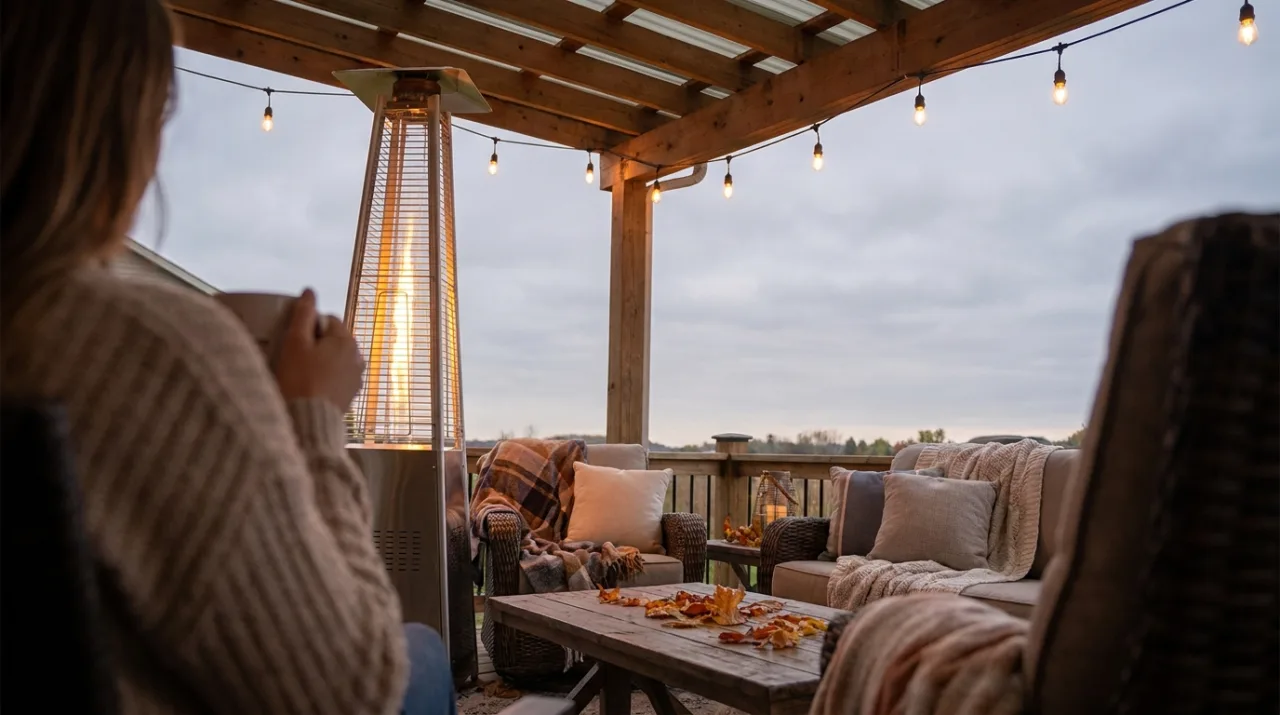
For a porch that's genuinely well-ventilated — screening on most sides, no solid panels closing it in — a tank-top radiant heater is a popular choice among owners, because it throws heat across a wide radius without needing much floor space. The Mr. Heater Original 540° 45,000 BTU Tank Top Radiant Heater is frequently mentioned in porch and outdoor-living reviews specifically because its 360-degree swivel head throws a wide heat radius that suits a porch's typically rectangular seating arrangement better than a heater designed to throw heat in one direction only. It's still an outdoor-rated heater, though, so it belongs on the more open end of the porch spectrum — not a porch that's been sealed up with plastic sheeting for winter. Beyond Mr. Heater, Hiland and Bluu both sell tank-top and standing patio-style heaters commonly used on a porch, and a standard 20 lb propane cylinder fits any of them.
Indoor-Safe Heaters for a More Enclosed Porch
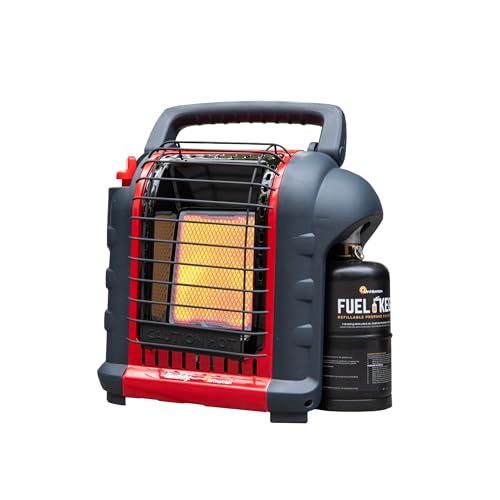
If a porch has been substantially enclosed — storm windows, vinyl panels, or a conversion that makes it function more like a three-season room — an indoor-safe heater with an oxygen depletion sensor is the more appropriate choice. A heater like the Mr. Heater 9,000 BTU Portable Buddy is built for exactly this kind of ambiguous space: it's rated for enclosed use, it's portable enough to move if the porch season ends, and 9,000 BTU comfortably heats a small-to-mid porch without oversizing. Dyna-Glo also sells indoor-safe vent-free heaters sized for a more enclosed porch if you'd rather buy a permanent fixture than a portable Buddy-style unit. See our indoor propane heater guide for the full breakdown of indoor-safe models across BTU tiers.
Sizing a Porch Heater by Square Feet
A porch loses heat faster than a fully sealed interior room, even when it's mostly enclosed, because screening and older windows are rarely as airtight as standard wall construction. As a starting point, plan for the higher end of typical BTU-per-square-foot guidance rather than the low end — a porch that would need 20 BTU per square foot as a sealed room often performs better with 25–30 BTU per square foot once you account for the extra air leakage. A 200 square foot screened porch, for example, is a reasonable fit for a 45,000 BTU tank-top heater if it's well-ventilated, or an 18,000 BTU Big Buddy-class heater if it's more enclosed and rated for indoor use. Our BTU sizing calculator can help narrow this down for your specific porch.
Airflow on a Three-Season Porch
Even a well-insulated three-season porch behaves differently from a interior room because it's rarely part of a home's sealed HVAC envelope. Cold air infiltrates more easily around older windows, screen frames and door thresholds, which is why a porch heater often needs to run longer or at a higher setting than the same BTU heater would need in a comparably sized interior room. This isn't a flaw in the heater — it's simply the nature of a space that's semi-conditioned by design. Buyers who find their porch heater "underperforming" compared to the BTU rating are, in most cases, dealing with a leakier envelope rather than a defective unit.
Porch Heater vs. Patio Heater: What's the Real Difference?
A porch heater and a patio heater are often the same physical products, marketed toward slightly different use cases. A tank-top or a compact standing heater works in both settings. The meaningful difference is less about the product and more about the space: a patio is fully open, so wind and heat dissipation dominate the buying decision; a porch has walls and often a lower ceiling, so coverage radius and whether the space counts as "enclosed enough" to need an indoor-safe rating become the more important questions. If you're deciding between the two, our outdoor and patio heater guide covers the fully-open scenario in more depth.
Clearance to Combustibles From Screens, Furniture and Curtains: Wood Deck Clearance, Overhead Clearance and a Tip-Over Shut-Off
Porches often have more flammable material within heater range than an open patio does — outdoor curtains, cushioned furniture, and the screen material itself. Every heater's manual specifies minimum clearance to combustibles, and that clearance matters more on a porch than in open air, simply because there's less room to work with. Pay attention to wood deck clearance specifically if the porch floor is untreated lumber rather than composite or tile, and don't overlook overhead clearance from a porch ceiling fan or light fixture while focused on floor-level furniture. Every heater discussed here, tank-top or indoor-safe, also includes a tip-over shut-off as a baseline safety feature.
Keep a tank-top or standing heater well clear of screen panels specifically; sustained heat exposure can warp or discolor screening material even where it wouldn't ignite it outright, and several owners of tank-top heaters used on porches specifically mention this in reviews as something they learned to watch for after their first season.

Carbon Monoxide Detector Considerations on a Porch: CSA Certified Heaters and Portable Heaters
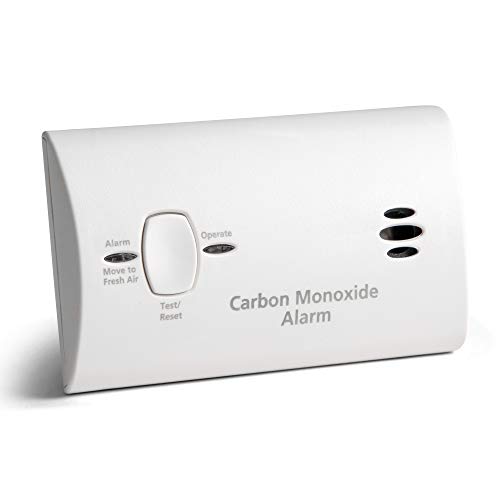
Any semi-enclosed space carries more carbon monoxide risk than a fully open patio, which is exactly why the indoor-vs-outdoor judgment call at the top of this guide matters. A battery-backed carbon monoxide detector is worth having on a porch that gets heated regularly, regardless of which heater style is in use — it doesn't rely on the heater's own safety systems working correctly, and it's inexpensive insurance for a space that sits in the gray zone between indoor and outdoor. A model like the Kidde Carbon Monoxide Detector runs on batteries, which matters on a porch that might not have a nearby outlet, and a First Alert CO detector is a comparably priced alternative if you'd rather stick with that brand.
Indoor-safe heaters used on a more enclosed porch are generally built to the ANSI Z21.11 safety standard and are typically CSA certified as well. The CPSC publishes seasonal warnings on carbon monoxide poisoning from portable heaters used in semi-enclosed spaces. OSHA also sets workplace CO exposure limits, relevant to a porch used as a break area or workspace rather than a living space.
What Owners Say About Using a Tank-Top Heater on a Porch
Owners who use a tank-top radiant heater specifically on a porch consistently mention two things. First, the 360-degree heat throw suits a porch's usual furniture layout — chairs and a small table arranged around the space — better than a directional heater would. Second, the tank itself takes up floor space that matters more on a porch than it would on an open patio, since porches tend to be narrower. Several reviewers mention positioning the tank in a corner or against a rail to keep the walking area clear, which is a workaround worth planning for before buying rather than discovering after the tank arrives.
Wind and Draft on a Screened Porch
A screened porch isn't fully sheltered from wind the way an interior room is, and that changes how a radiant heater performs compared to its rated coverage on a completely open patio. Screening cuts wind speed noticeably but doesn't stop it entirely, so a porch on the windward side of a house often needs a heater positioned differently than a sheltered porch would. Owners who mount or position a tank-top heater away from the most exposed screen panel — using a porch corner or a section shielded by the house itself — consistently report better and more even heat than positioning it in the most exposed spot for maximum "spread." A pole-mounted standing heater on a porch benefits from the same wind consideration as one on an open patio: a weighted base matters even more indoors-adjacent, since a porch's furniture and rail layout gives a tipped heater less room to fall safely than open ground would.
Running Cost for a Porch Heater
Because a porch heater often runs longer per session than a quick-use camping heater — people tend to sit on a porch for a full evening rather than a few minutes — running cost adds up faster than the BTU rating alone suggests. A 45,000 BTU tank-top heater running continuously burns through a 20 lb tank in roughly 9–10 hours, using the standard published conversion of about 21,600 BTU per pound of propane. A smaller 9,000 BTU indoor-safe heater on the same tank lasts closer to 48 hours. If porch heating is a regular evening habit through a cool season rather than an occasional use, the lower-BTU indoor-safe option is often the more economical choice as well as the safer one for a more enclosed space, since it uses less fuel per hour of comfortable sitting.
Choosing Between a Portable Big Buddy Setup and a Semi-Permanent Tank-Top Heater
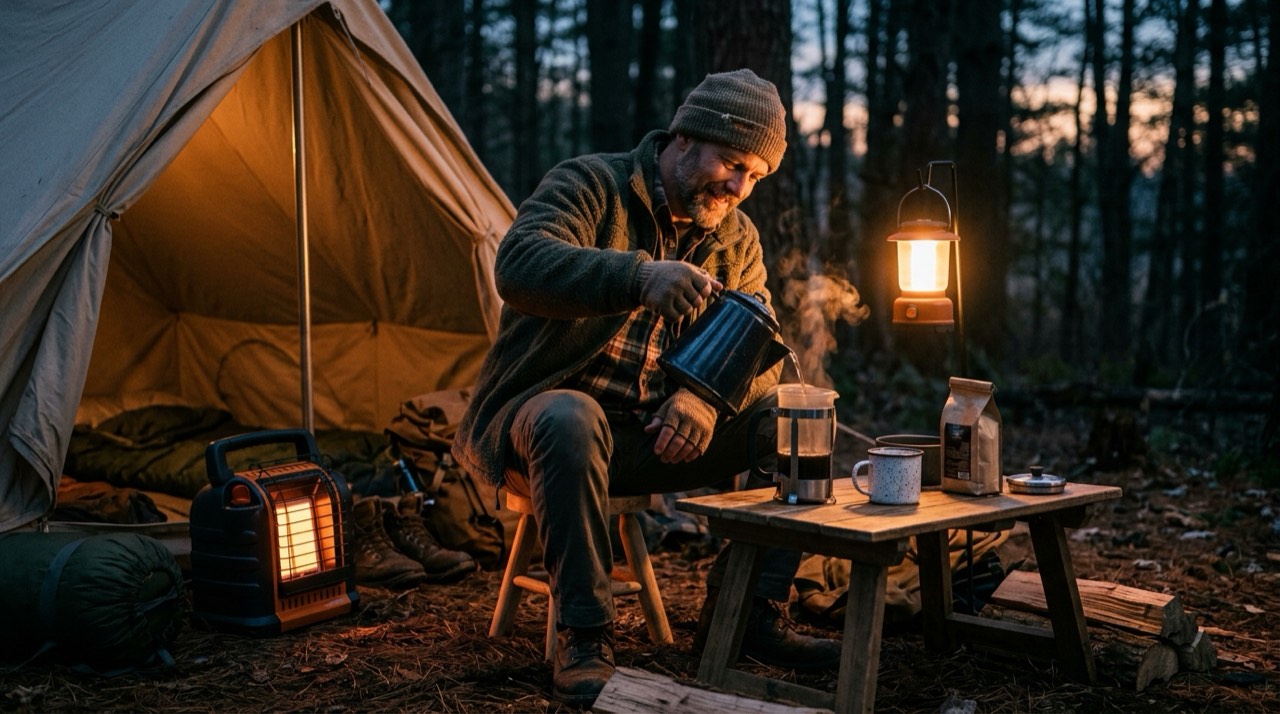
Some porch owners want a heater that stays in place for the whole cool season; others want something they can move indoors or into storage between uses. A tank-top heater that stays connected to a tank kept on the porch functions almost like a semi-permanent installation, which is convenient but means the tank and heater are exposed to porch humidity and temperature swings year-round unless actively stored. A portable Buddy-style heater, by contrast, is easy to bring inside between uses, which protects it from weather exposure but means remembering to disconnect and store it each time. Neither approach is wrong; it's a tradeoff between convenience and equipment longevity that's worth deciding on deliberately rather than by default.
Common Mistakes Propane Porch Heater Buyers Make
- Assuming "outdoor" and "porch" are the same rating. A porch that's been partially enclosed for winter needs to be judged on its own ventilation, not just labeled outdoor because it has screens.
- Buying based on BTU number alone. A 45,000 BTU tank-top heater on a small, sheltered porch can be more heat than the space needs; a 9,000 BTU heater on a large, drafty porch can be underpowered.
- Ignoring clearance to screening and furniture. Porches have less open floor space than a patio, so clearance requirements are easier to violate without realizing it.
- Skipping a carbon monoxide detector because the space "feels" outdoor. A screened porch sits in a genuine gray zone, and a detector is inexpensive insurance either way.
Seasonal Storage for a Porch Heater
A porch heater that's only used a few months a year benefits from the same off-season care as any other propane heater: disconnect the tank, keep the unit dry, and check the hose and burner for cracking or debris before the first use of a new season. Porches see more humidity exposure than an indoor closet, so a heater stored on the porch itself over summer is more prone to moisture-related wear than one moved to a garage or indoor closet between seasons. A basic cover, or simply bringing the heater inside during the off-season, meaningfully extends its working life.