
Affiliate disclosure: some links are affiliate links — as an Amazon Associate we earn from qualifying purchases, at no extra cost to you. Full disclosure.
Looking for the full spec breakdown and verdict on the Grab N Go itself? Read our complete Dyna-Glo Grab N Go review →
Dyna-Glo markets the Grab N Go as indoor-safe, portable, and dual-fuel. That combination makes it a reasonable candidate for a screened porch, a space that’s neither fully indoor nor fully outdoor. This page isn’t another spec teardown — that lives in our full review linked above. Instead, it covers what actually matters for porch placement specifically: enclosure type, airflow, and clearance.

Top 3 Recommended
What "Grab N Go" Actually Refers To
The name describes the heater’s core design goal: a unit light and compact enough to genuinely grab and carry, rather than a heater that technically has a handle but is awkward to actually move. That portability is part of why it suits porch use well. Many owners keep it stored just inside a nearby door, ready to carry out to the porch on short notice rather than leaving it outside permanently exposed to weather.
Why "Indoor-Safe" Doesn’t Automatically Mean "Porch-Safe"
A manufacturer’s indoor-safe rating is based on testing in a typical enclosed room with normal air exchange through doors, windows, and HVAC. A screened porch is a different environment. It usually has more airflow than a sealed room, thanks to the screens, but it can also have less predictable airflow depending on wind direction and how many sides are screened. The heater’s core safety features — the oxygen depletion sensor and tip switch — work the same way regardless of location. What changes is how much natural ventilation the space actually provides, and that’s on you to assess for your specific porch.
Assessing Your Porch’s Enclosure Level
A porch screened on all four sides with no solid walls behaves closer to outdoor conditions. A porch enclosed with screens on two sides and solid walls on the other two behaves closer to an indoor room. The more enclosed your specific porch is, the more it matters to treat the heater with the same ventilation caution you’d use indoors: a cracked window or door nearby, and never fully sealing the space with plastic sheeting while the heater runs.
Clearance and Placement Tips
- Keep the heater away from screens. Direct heat exposure can damage screen material over time and creates a fire risk if the screen touches the heater.
- Place it on a stable, level surface. A porch floor with any slope increases tip-over risk, which the built-in tip switch is designed to catch, but shouldn’t be relied on as the only safeguard.
- Avoid corners with reduced airflow. A tightly enclosed corner, even on an otherwise open porch, can trap combustion byproducts more than the open middle of the space.
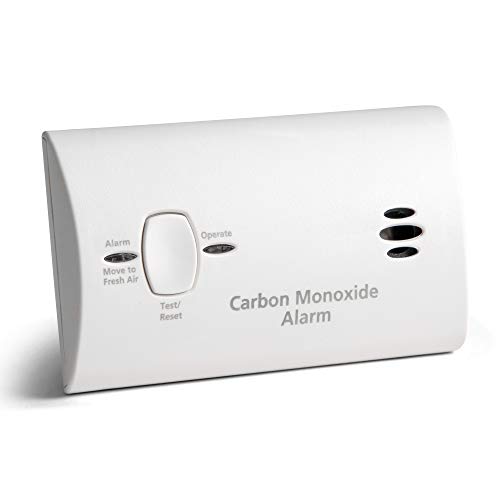
- Keep a CO detector on the porch itself, not just inside the connected house, since porch air doesn’t always mix quickly with indoor air.
Dual-Fuel Flexibility Fits Porch Use Well
The Grab N Go’s ability to run on either a 1 lb. cylinder or a 20 lb. tank with a hose is a genuine advantage for porch use specifically. Many porches sit close to a home’s existing 20 lb. propane supply, whether from a grill setup or a dedicated line, making the longer-runtime tank option practical rather than a hassle. For occasional porch use, the 1 lb. cylinder keeps things simple without any hose to store.
Coverage for a Typical Porch
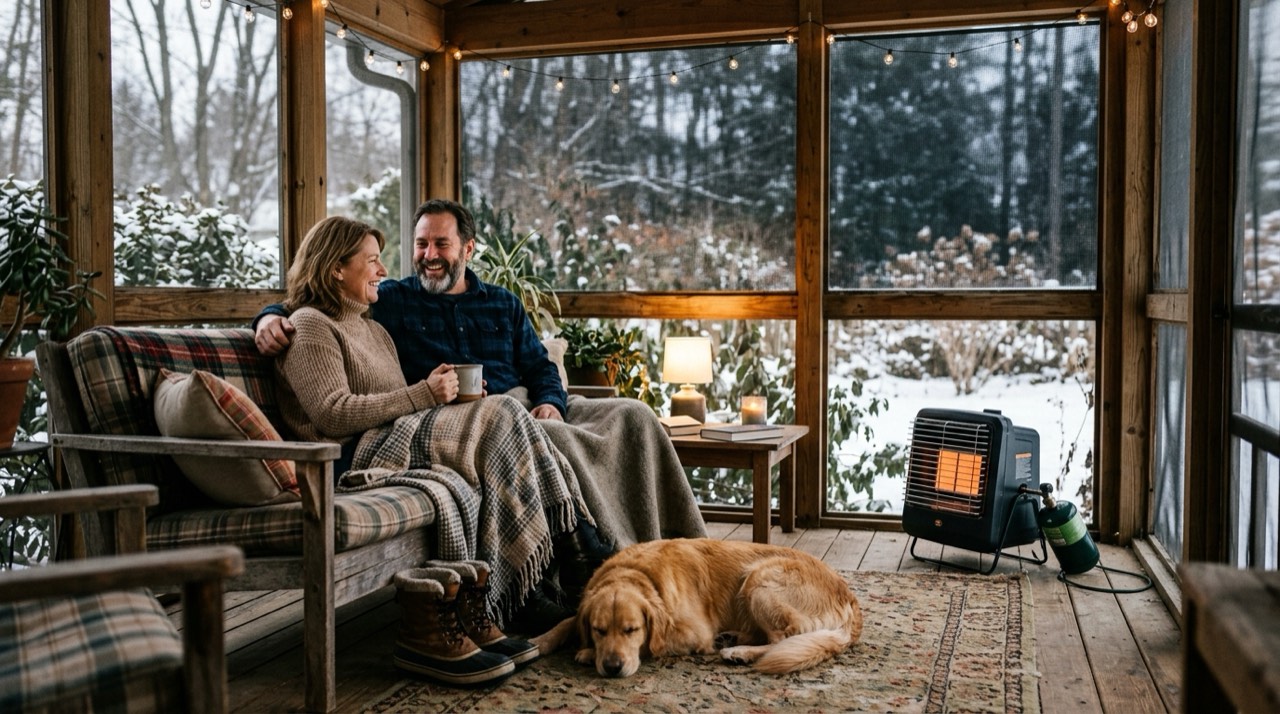
At up to 250 sq ft of rated coverage, the Grab N Go comfortably covers most residential screened porches, which tend to run smaller than that ceiling. Larger wraparound porches or those used for bigger gatherings may want to size up to a full-size standing heater instead — see our Hiland pyramid porch heater review for that use case.
Emergency and Backup Heat on a Porch
Many owners buy the Grab N Go for power-outage preparedness, and a screened porch adds a useful option to that plan. If indoor conditions ever get smoky or feel unsafe from any heat source, having a properly rated heater available for a porch, rather than only inside, gives you a fallback space with better natural airflow. Keep the same ventilation caution in mind even in an emergency, since the fundamentals don’t change just because the situation is more urgent.
Weatherproofing Considerations
Unlike a heater built specifically for outdoor exposure, the Grab N Go isn’t marketed as weatherproof. A screened porch with a solid roof usually protects it from direct rain, but a wind-driven storm can still reach a porch through open screens. Store the heater indoors between uses if your porch doesn’t offer full protection from blowing rain, rather than leaving it out permanently like a true outdoor-rated unit.
Comparing Runtime Options for Porch Use
A porch used for occasional evenings works fine with the simpler 1 lb. cylinder setup, which needs no extra hose or hardware. A porch used most nights through a whole season benefits more from the 20 lb. tank hose, since it cuts down on how often you’re swapping cylinders mid-evening. Think about how often you actually use the porch before deciding which fuel setup to buy accessories for, rather than defaulting to whichever the heater ships with. Keep a spare 1 lb. cylinder on hand either way, since running out mid-evening is the most common frustration reported with either fuel setup.
Verdict
The Dyna-Glo Grab N Go is a genuinely reasonable pick for a screened porch, provided you assess your specific porch’s enclosure level and airflow rather than assuming the indoor-safe label covers every scenario automatically. A mostly open, all-screen porch is the easiest case. A more enclosed porch deserves the same ventilation caution as an indoor room. For the complete spec table, owner-reported pros and cons, and full verdict on the heater itself, see our full Grab N Go review.

Best for Screened porches up to 250 sq ft, dual fuel flexibility
Related Products
See our porch airflow and ventilation guide for more on assessing your specific space, or the full porch heater guide. Pair it with these: