
Affiliate disclosure: some links are affiliate links — as an Amazon Associate we earn from qualifying purchases, at no extra cost to you. Full disclosure.
A radiant propane heater — sometimes called an infrared heater — warms objects and people directly with infrared energy, rather than heating the surrounding air the way a forced-air heater does. That's the entire reason radiant heaters exist as a separate category: they feel warm almost instantly, even in cold or windy conditions, because the heat reaches you directly instead of needing to warm the air around you first.

Top 3 Recommended
How the Ceramic Burner and Reflector Create Directional Heat
Radiant heat works the same way sunlight warms your skin on a cold day even when the air temperature hasn't changed much. A ceramic burner glows red-hot and radiates infrared energy outward in a fairly direct line, often backed by a metal reflector that redirects that energy into a tighter, more directional heat pattern.
Line-of-Sight Heating: Why Blocking the Path Blocks the Warmth
This is line-of-sight heating: anything blocking the direct path between the burner and you blocks the warmth too, the same way stepping into shade blocks sunlight. Physicists describe this as "radiative" heating versus the "convective" heating a forced-air unit relies on — moving warmed air around a space until the whole volume reaches temperature.
Spot Heating for Instant Warmth Instead of Convection Heat
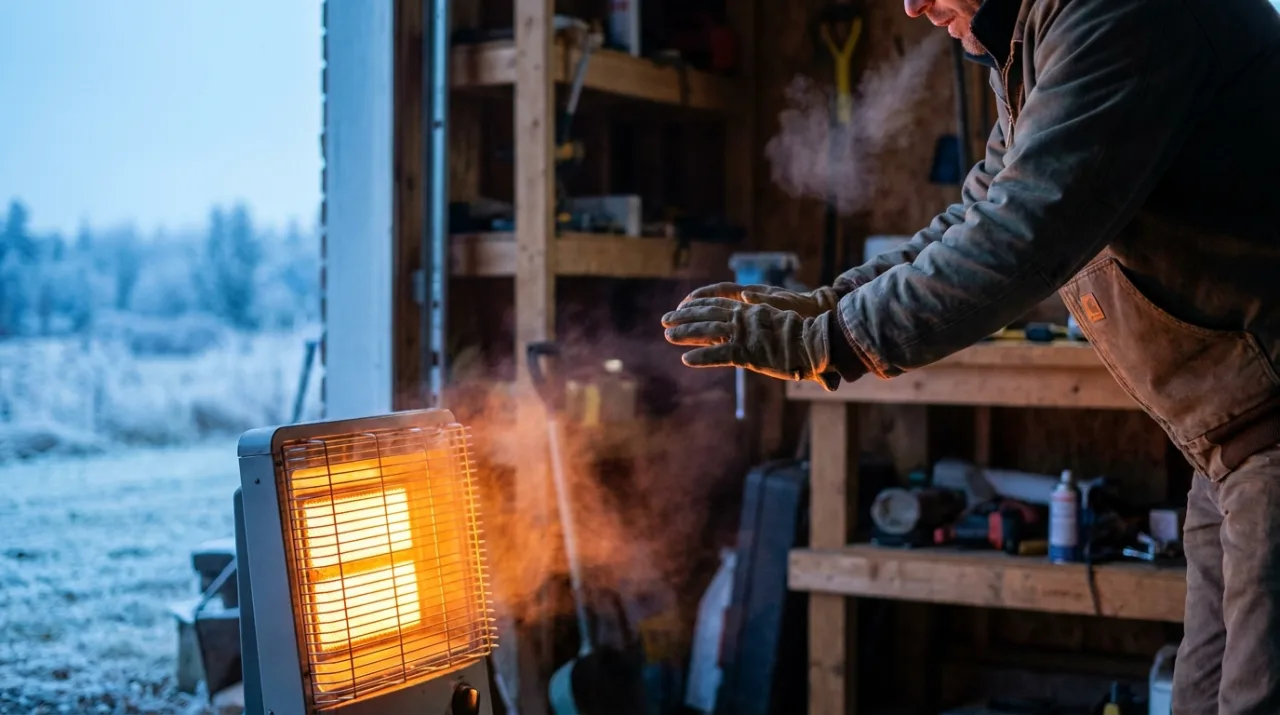
A radiant heater skips that step, which is exactly why it excels at spot heating a workbench, a chair or a tent occupant, delivering instant warmth rather than waiting for convection heat to build up in the surrounding air the way a forced-air heater does, and why it dominates outdoor and semi-outdoor categories where wind would carry that warmed air away.
Why Radiant Heaters Feel Warmer at a Lower BTU Rating
A common point of confusion is that a 9,000 BTU radiant Buddy heater can feel just as warm, in the right setup, as a much higher-BTU forced-air unit in an open space. The reason is that radiant heat is directional and efficient at short range — you're warmed directly rather than waiting for ambient air temperature to rise. In an open or drafty space, a forced-air heater has to fight constant heat loss to the surrounding air, while a radiant heater keeps delivering the same direct warmth regardless of drafts. This is also why radiant heaters underperform their BTU rating in a genuinely large enclosed room: they're excellent at warming what's directly in their path but don't raise the ambient air temperature of a whole room the way a forced-air heater eventually can.
Portable Radiant Heaters and the Oxygen Depletion Sensor: The Buddy Platform
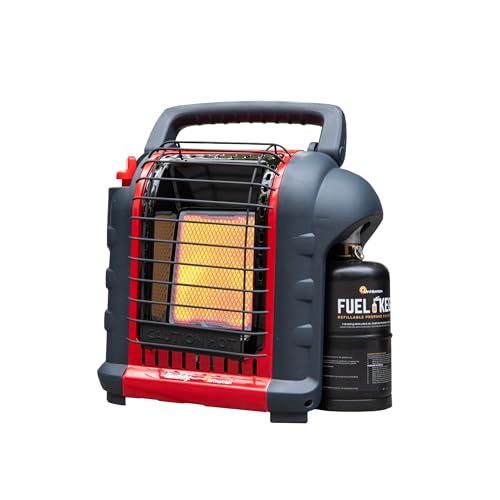
The Mr. Heater 9,000 BTU Portable Buddy is the reference point for portable radiant heaters, and it illustrates the category well: a compact ceramic radiant element, an oxygen depletion sensor for indoor-safe use, and a design meant to warm the people directly in front of it — a chair, a workbench, a tent interior — rather than an entire room. Owners across garages, hunting blinds and camping setups consistently praise how quickly it produces noticeable warmth compared with waiting for a space heater to raise ambient temperature.
Tank-Top Radiant Heaters for Wider Coverage
A tank-top radiant heater like the Mr. Heater Original 540° 45,000 BTU Tank Top Radiant Heater scales the same radiant principle up with a swiveling head that throws heat across a much wider radius — useful for a patio, garage bay or job site where people are seated or working around the heater rather than directly in front of it. It's outdoor-rated rather than indoor-safe, which is the tradeoff for the higher BTU output and wider coverage pattern.
Vent-Free Radiant Heaters for Permanent Installs
For a permanent installation — a workshop, converted garage or cabin — a vent-free radiant heater like the Mr. Heater 30,000 BTU Vent Free Radiant Propane Heater applies the same radiant principle at a fixed location with a higher, sustained BTU output. It's built to run for longer stretches than a portable unit and typically connects to a fixed line or larger tank rather than a swappable cylinder. See our wall-mount and cabinet heater guide for the installation-focused options.
Best Uses for a Radiant Heater vs. a Forced-Air Heater
Radiant heat suits any situation where you need to warm specific people or a specific spot rather than an entire volume of air: a hunting blind, an ice shanty, a workbench, a patio seating area, a tent. Forced-air heat suits the opposite situation: raising the ambient temperature of a large, enclosed, uninsulated space like a two-car garage or an active construction site, where there's no single spot to target and the goal is genuinely warming the room. Our forced-air heater guide covers that category directly if a large uninsulated space is the actual use case.
Radiant Heater BTU vs. Forced-Air BTU: They Are Not Directly Comparable
Because radiant and forced-air heaters deliver heat differently, comparing their BTU ratings directly can be misleading. A 9,000 BTU radiant heater and a 9,000 BTU forced-air heater will feel very different in the same space: the radiant heater concentrates its output on what's directly in front of it, while the forced-air heater spreads a similar amount of energy across a larger volume of moving air. As a rough rule that shows up consistently in owner comparisons, a radiant heater often "feels" equivalent to a forced-air heater rated meaningfully higher, when the use case is warming a person rather than a room. This is one of the more common points of confusion for first-time buyers comparing spec sheets side by side.

Safety Distance for Radiant and Infrared Heaters
Because radiant heat is directional and concentrated, clearance-to-combustibles guidance matters more for radiant heaters than it might seem from the BTU number alone. Manufacturers specify a minimum safe distance between the radiant element and anything flammable directly in its path — furniture, tent fabric, clothing — and that distance is based on direct radiant exposure, not just ambient room temperature. This is a different consideration from a forced-air heater, where the main clearance concern is the exhaust and fan intake rather than a concentrated heat beam. Always check the specific model's manual for its rated safe distance rather than assuming based on a similar-looking heater.
Indoor-safe radiant heaters are generally built to the ANSI Z21.11 safety standard. Pairing one with a battery-backed CO detector, such as Kidde, is standard advice regardless of brand. The CPSC publishes seasonal warnings on carbon monoxide poisoning from portable heaters. OSHA also sets workplace CO exposure limits, relevant to a radiant heater used in a workshop or garage rather than a living space.
Tip-Over Switch, Oxygen Depletion Sensor, Low-Oxygen Shutoff and Clearance Distance
Every radiant heater on this page needs a genuine tip-over switch alongside its oxygen depletion sensor — sometimes marketed as a low-oxygen shutoff — for indoor-safe operation, plus a clearance distance from combustibles that's rated for direct radiant exposure rather than general room heat.
Fuel Cylinders: 1-lb Cylinder vs. 20-lb Tank, and Piezo Ignition
Portable models typically run on a 1-lb cylinder for short sessions or hose-connect to a 20-lb tank for longer use, and every one lights with reliable piezo ignition.
Other Radiant Brands: CSA Certified Models Beyond Mr. Heater
Beyond the Mr. Heater picks discussed above, Dyna-Glo and World Marketing both sell CSA certified radiant and vent-free models, Texsport makes a lighter camping-focused radiant heater worth a look for backpacking.
Garage Heating: When the Radiant vs Forced Air Comparison Tips the Other Way
DeWalt's forced-air line is the natural comparison point if garage heating a whole two-car bay — rather than warming one spot in it — is your actual goal. See the radiant vs forced air comparison above for that decision.
What Owners Report About Radiant Heaters: Speed vs. Heat Output
The recurring praise across radiant heater reviews is speed: people consistently mention feeling warm within a minute or two of turning the heater on, well before the surrounding air has changed temperature at all. The recurring complaint, especially from first-time buyers, is coverage — someone expecting a radiant heater to warm an entire room the way a forced-air or central heating system does is often disappointed, because that isn't how radiant heat is designed to work. Reviews that are negative about heat output often trace back to this mismatch between expectation and design rather than an actual product defect.
Catalytic Heaters: A Flameless Form of Radiant Heat
Catalytic heaters are a specific sub-type of radiant heater that produce heat through a chemical reaction on a catalytic pad rather than an open flame. RV catalytic heaters like the Camco Olympian Wave series work this way, and the practical benefit is silence — there's no burner noise, no fan, and no visible flame, which matters in an RV or cabin where people are trying to sleep near the heater. Catalytic heaters generally run at lower BTU output than a flame-based radiant heater of similar size, and they typically need a fixed propane line or larger tank rather than a small disposable cylinder, but the tradeoff of quiet, even heat is exactly why RV owners specifically seek them out over a portable Buddy-style heater for overnight use. See our RV and off-grid heater guide for the full comparison.
Why Radiant Heaters Dominate Outdoor and Camping Categories
Look across camping, hunting, ice fishing and patio heating, and radiant designs dominate the product listings in a way they don't for garage or job-site heating. The reason comes back to wind. A forced-air heater's warmed air disperses quickly outdoors or in any drafty space, while a radiant heater's direct heat transfer isn't affected by air movement the same way. That's why a hunting blind, an ice shanty, or an open patio setup relies almost exclusively on radiant or catalytic heaters, while a sealed two-car garage — where air doesn't escape as fast — is one of the few common scenarios where a forced-air heater's approach genuinely outperforms a radiant one for total room warmth.
Positioning a Radiant Heater for Best Results
Because radiant heat travels in a fairly direct line from the element, where you place a radiant heater matters more than it would for a forced-air unit that's meant to circulate air throughout a space. Owners consistently report better results positioning a radiant heater so its heat path falls directly on the area people are sitting or working in, rather than pointing it at open floor space in the hope that it will eventually warm the whole room. A tank-top heater's swiveling head is specifically designed to let you aim the heat pattern at a seating area rather than relying on the heater's placement alone, and taking a minute to angle it correctly makes a bigger practical difference than upgrading to a higher BTU model in many cases.
Running Cost of a Radiant Propane Heater
Using the standard conversion of roughly 21,600 BTU of usable energy per pound of propane, a 9,000 BTU radiant Buddy heater running continuously on a 20 lb tank lasts in the neighborhood of 48 hours. A 45,000 BTU tank-top radiant heater burns through the same tank in about 9–10 hours at full output. Because radiant heaters are often used for shorter, targeted sessions rather than continuous room heating, real-world tank life frequently runs longer than these full-burn numbers suggest. Our running-cost calculator can adjust for your specific heater and tank size.
Maintenance for Radiant and Catalytic Elements
A radiant heater's ceramic or metal element and a catalytic heater's pad both perform best when kept clean and free of dust or debris buildup, which can happen during off-season storage. Manufacturers generally recommend a visual check of the radiant element before the first use of a new season — cracks, discoloration beyond normal use, or visible debris are signs worth addressing before lighting the heater rather than after. Catalytic pads specifically have a service life and will eventually need replacement as the catalytic reaction becomes less efficient over years of use; this is normal wear rather than a defect, and it's covered in more detail in our troubleshooting and repair guide.