
Affiliate disclosure: some links are affiliate links — as an Amazon Associate we earn from qualifying purchases, at no extra cost to you. Full disclosure.
Hunting blinds, ice fishing shanties and tailgate setups share a common heating problem: a small, often enclosed space, where you're sitting still for extended periods and need a heater that's quiet, portable and safe in an unventilated area. Anyone shopping for a portable propane heater for hunting specifically is usually optimizing for silence and a low profile more than raw output — a different priority than someone heating a garage or a large tailgate crowd. This is where the Mr. Heater Buddy line's specific strengths matter most.
Top 3 Recommended
Best Propane Heater for Hunting: Hunting Blind Heater Picks (Scent-Free, Including a Deer Blind)
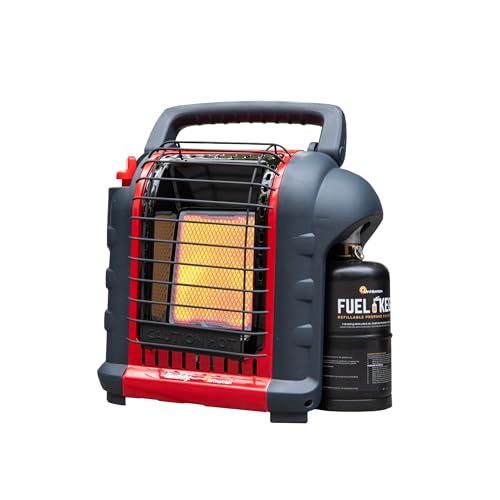
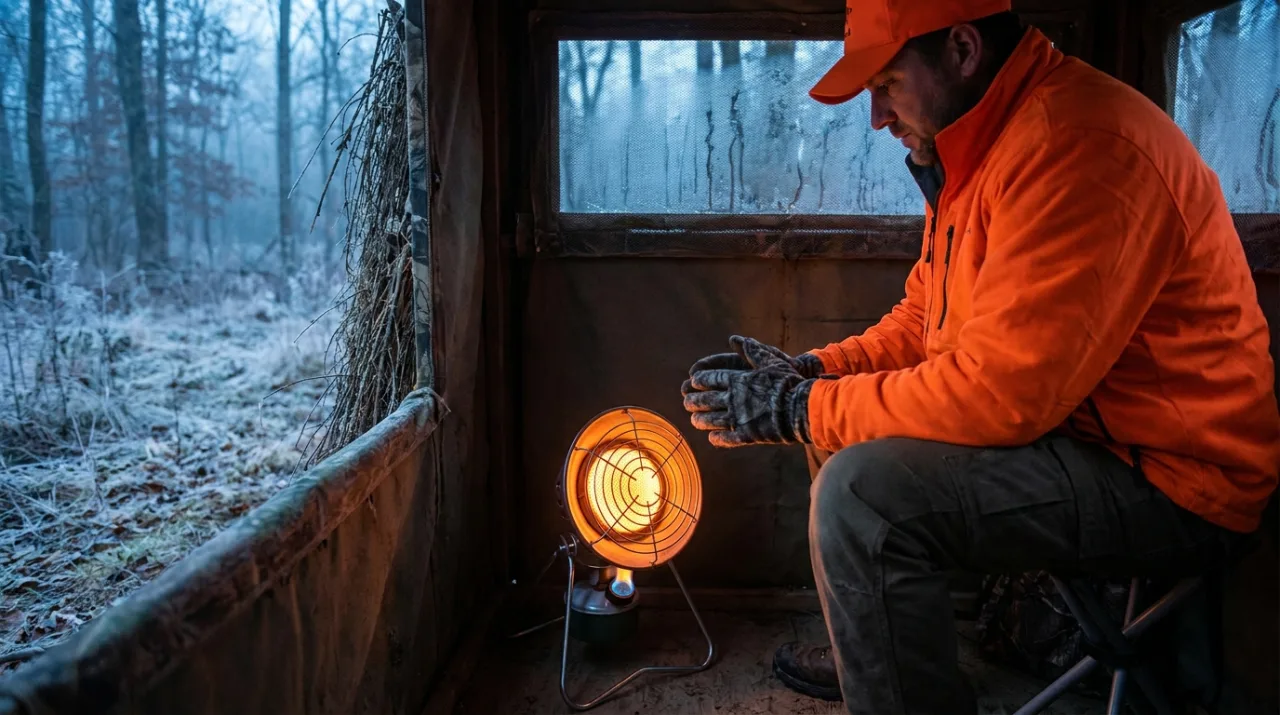
A hunting blind, including a dedicated deer blind, is small, often fully enclosed, and demands a heater that won't spook game with noise or bright light. The Mr. Heater 12,000 BTU Hunting Buddy was built specifically for this scenario — a camo housing to blend in, an indoor-safe rating for the enclosed blind, and enough output to keep a hunter comfortable through a long sit without excess bulk. Propane also burns essentially scent-free compared to wood or liquid-fuel alternatives, which matters to hunters trying to stay undetected. Hunters who prioritize silence and low visual profile over maximum BTU consistently recommend it over a generic camping heater precisely because of the camo finish and Mr. Heater's established safety track record in an enclosed space.
Best Ice Fishing Heater for an Ice Shanty
An ice fishing shanty is one of the smallest, most fully enclosed spaces this category covers, which makes an indoor-safe rating with a working oxygen depletion sensor non-negotiable rather than a nice-to-have. The Mr. Heater 3,800 BTU Little Buddy is the most commonly recommended option for a small one- or two-person shanty, since its lower output matches the shanty's small enclosed volume without overheating it, while the standard 9,000 BTU Buddy suits a larger multi-person shanty better. Ice shanties also trap cold air at floor level more than a tent does, so positioning the heater to warm the space you're actually sitting in — rather than the coldest corner — makes a bigger difference than raw BTU output. Most shanties run well under 100 square feet of interior floor space, which is exactly the range a Little Buddy or standard Buddy is sized for.
The Quietest Propane Heater for Hunting: A Quiet Propane Heater, Catalytic Heater and Silent Operation Explained
Every heater in the Mr. Heater Buddy radiant line runs essentially silently — there's no fan and no continuous mechanical noise, just the quiet hiss of the burner itself. If you want a genuinely quiet propane heater for this category, any model in the Buddy lineup meets that bar. A Camco Olympian Wave-series catalytic heater is another genuinely silent option some hunters and anglers choose instead, trading a slightly lower BTU ceiling for flameless, near-total quiet. This is one of the biggest reasons radiant and catalytic heaters dominate hunting-specific recommendations over forced-air alternatives, which run a combustion fan loud enough to be genuinely disruptive in a quiet blind. If silence is the top priority, the choice between Little Buddy, standard Buddy, Hunting Buddy and a catalytic option comes down to output needed and whether the camo finish matters for your specific setup.
Tailgating Heater Setup Guide: Tip-Over Shut-Off and Stability
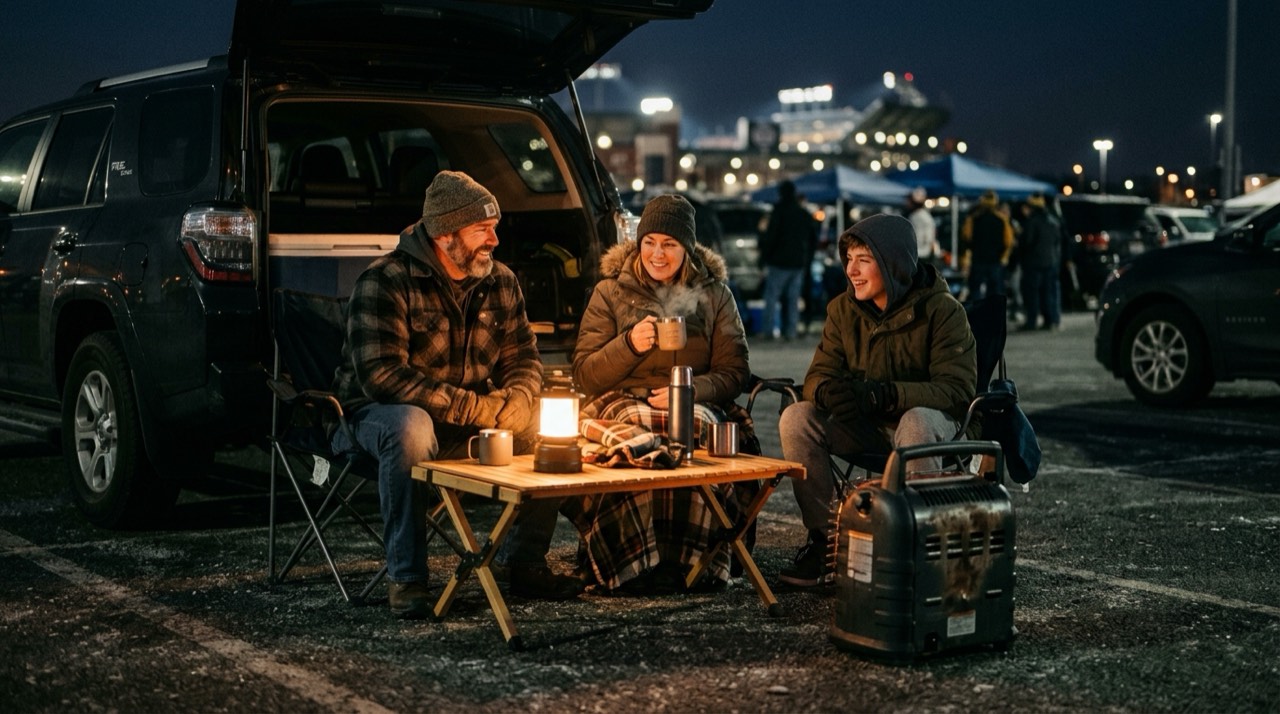
Tailgating differs from hunting and ice fishing in one key way: the space is usually more open, whether that's the open tailgate of a truck or a canopy setup in a parking lot, so ventilation is less of a concern and BTU output for genuine warmth matters more. A standard 9,000 BTU Buddy or, for larger groups under a canopy, an 18,000 BTU Big Buddy covers most tailgate setups. Coleman also sells compact propane heaters and fuel canisters commonly seen at tailgates and campsites, worth cross-shopping alongside the Buddy line. Because tailgating involves more moving people and equipment than a stationary hunting blind, a stable base and tip-over shut-off — standard on the whole Buddy line — matter more here than in a fixed blind or shanty where the heater isn't likely to be bumped.
Safety Basics for an Enclosed Hunting or Fishing Space: Ventilation, Carbon Monoxide Detector, Oxygen Depletion Sensor and Low-Oxygen Shutoff
Blinds and shanties are genuinely enclosed spaces, often more so than a tent, which raises the stakes on ventilation and carbon monoxide awareness even with an indoor-safe heater running. Manufacturer guidance for every indoor-safe heater still recommends some airflow — a cracked window on a shanty, a vent on a blind — even though the oxygen depletion sensor provides a safety backstop. A small battery-powered carbon monoxide detector (CO detector) is genuinely worth carrying for extended sits in a fully enclosed blind or shanty, since these spaces trap air more effectively than most tents, and the heater's tip-over shut-off and low-oxygen shutoff are backstops, not a substitute for that detector. Indoor-safe models in this category are generally built to the ANSI Z21.11 safety standard and are typically CSA certified as well. Kidde and First Alert both make compact battery-powered CO detectors suited to a blind or shanty. The CPSC publishes seasonal warnings on carbon monoxide poisoning from portable heaters. OSHA's general workplace CO guidance is also a useful reference for extended hours in an enclosed hunting or fishing structure. See our indoor safety guide for the full picture.
BTU, Running Cost, 1-lb Cylinder Run Time and Fuel Planning for a Long Hunting Trip
Multi-day hunting trips or a full season of weekend ice fishing require planning fuel around trip length rather than buying a single cylinder and hoping it lasts. Using the standard conversion of roughly 21,600 BTU per pound of propane, a Little Buddy at 3,800 BTU stretches a 1-lb cylinder to a run time of around 5.5 hours, while a standard 9,000 BTU Buddy burns through the same size cylinder in under 2.5 hours on high. For a full day in a blind or shanty, packing two or three spare cylinders — or running a hose-and-filter kit to a larger tank if the setup allows it — avoids running out of heat partway through a sit.
Camo vs. Standard Finish: Does It Actually Matter?
Beyond aesthetics, the Hunting Buddy's camo housing has a real practical purpose for hunters specifically: a bright red or orange heater is more visible to game and to other hunters at a distance than a camo-finished unit tucked into a blind. For ice fishing and tailgating, where visibility to wildlife isn't a concern, the standard finish Buddy models perform identically and are typically priced the same or slightly less, so the camo premium is worth paying only if you're actually hunting rather than fishing or tailgating. Anglers and tailgaters who buy the camo version anyway, usually because it was the model in stock, report no functional difference at all — the finish is purely cosmetic once you're past the hunting-specific visibility concern.
Backup Heat and Redundancy for Multi-Day Trips
For a multi-day hunting or ice fishing trip, especially somewhere remote, carrying a second smaller heater as backup is a common practice among experienced outdoorsmen — not because the primary heater is likely to fail, but because losing your only heat source days from a vehicle or town carries real consequences. A Little Buddy makes a natural backup to a larger primary heater specifically because of its low cost and minimal pack weight relative to the peace of mind it provides. This redundancy mindset shows up consistently in long-term hunting and ice fishing community discussions, more so than in general camping advice where a heater failure is a bigger inconvenience than a genuine risk.
Storing and Transporting a Packable Hunting Heater: Hand Warmer Uses
Heaters carried into a blind or onto ice take more abuse during transport than one that lives in a garage — bouncing in a truck bed, being carried across uneven terrain, exposure to moisture near water. A genuinely packable design matters here, especially for a long hike into a remote blind or across ice to a shanty, and a compact heater doubles nicely as a hand warmer substitute during a break in the action. A padded carrying case protects the radiant element and control valve, and it's worth checking the heater and its connections for damage before each trip rather than assuming it survived the last one intact. Storing the heater in a dry place between hunting seasons, with the cylinder disconnected, prevents the kind of corrosion and debris buildup that causes ignition problems the following season.
Positioning a Heater Inside a Hunting Blind or Pop-Up Blind for Even Radiant Heat
Blind interiors — whether a fixed box blind or a pop-up blind — are usually small enough that heater placement matters as much as heater choice. Positioning the heater low and toward the center, rather than in a corner, distributes radiant heat more evenly across the space you're actually sitting in. Keeping the heater's exhaust and burner clear of gear bags, bow cases and other equipment stored in a cramped blind reduces both a fire risk and the chance of accidentally knocking the heater over during a long, cramped sit. A stable, flat surface — rather than an uneven blind floor or a makeshift shelf — also matters more here than in an open camping setup, since a blind offers less room to safely place a heater away from foot traffic.
Cold Weather Ignition Tips for Hunting and Ice Fishing
Propane heaters can be harder to light in genuinely cold conditions, since cold temperatures affect how readily propane vaporizes from the tank or cylinder. Keeping a spare cylinder — and a hand warmer for your own fingers — warmer inside a jacket or vehicle rather than sitting on cold ground before use can make a meaningful difference in ignition reliability on the coldest hunting or ice fishing days. This isn't specific to any one brand; it's a general characteristic of propane as a fuel in cold weather, and it's worth knowing before assuming a heater that won't light immediately in extreme cold is defective.
Tailgating BTU Sizing for a Crowd
A tailgate setup for a small group under an open tailgate gate is well served by a single standard Buddy heater, but a larger group under a full canopy or tent structure benefits from either a Big Buddy or multiple standard Buddy units spaced around the gathering area. Because tailgating spaces are typically more open than a blind or shanty, radiant heat's directional nature means a single heater in the middle of a large group leaves people on the perimeter cold — spacing two heaters at opposite ends of a gathering area, similar to the multi-heater approach used for larger patios, generally works better than one heater trying to cover everyone.
Comparing Camo Hunting Buddy Models
Beyond the dedicated Hunting Buddy, some standard and Big Buddy models are also available in camo finishes depending on current retail availability, giving hunters a choice of output level without sacrificing the low-visibility housing. If a specific BTU tier isn't available in camo at a given time, wrapping a standard-finish heater in a commercially available camo heater cover or sleeve is a common workaround hunters use rather than waiting for a specific colorway to restock.
What Hunters and Anglers Report
Across hunting and ice fishing forums, the consistent theme is that reliability under cold-weather conditions matters more than any other single factor — a heater that hesitates to light at 10°F is a bigger complaint driver than one that's slightly heavier or costs a bit more. The Buddy line's reputation for cold-weather reliability is the main reason it dominates recommendations in these communities specifically, ahead of generic camping heaters that see less scrutiny in genuinely cold, high-stakes outdoor use.
Choosing Between the Three Use Cases: Little Buddy vs Big Buddy
- Hunting blind: prioritize silence, low visual profile and an indoor-safe rating — the Hunting Buddy or standard Buddy in camo covers most needs.
- Ice fishing shanty: prioritize matching output to the shanty's small volume — Little Buddy for one or two people, standard Buddy for a larger shanty.
- Tailgating: prioritize genuine warmth output for a more open space — standard Buddy for small groups, Big Buddy or multiple heaters for larger gatherings.
All three use cases can be covered by owning just two heaters from the lineup — a Little Buddy for tight, solo spaces and a standard or Big Buddy for everything larger — rather than buying a separate specialized heater for every activity. That two-heater approach covers hunting, ice fishing and tailgating without needing a third or fourth model sitting unused most of the year.