
Affiliate disclosure: some links are affiliate links — as an Amazon Associate we earn from qualifying purchases, at no extra cost to you. Full disclosure.
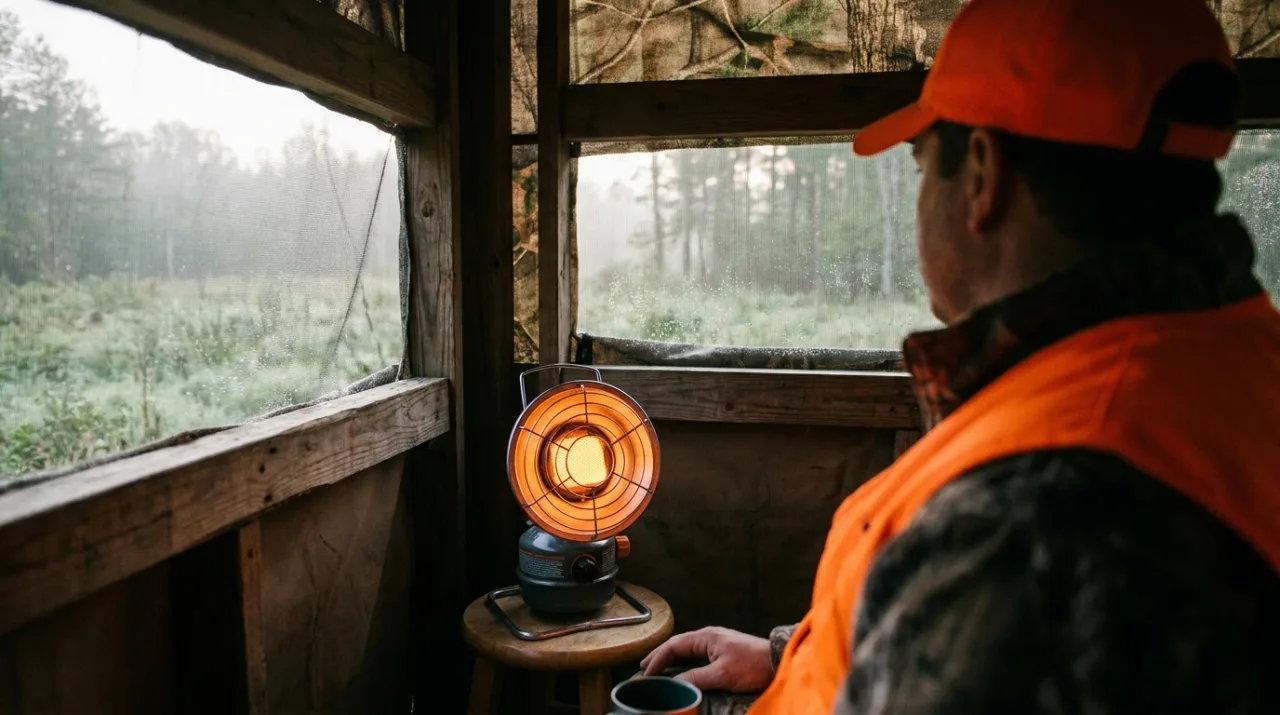
A hunting blind demands something most heaters are not built for: total silence and a low profile, in a fully enclosed space, in genuinely cold weather. We looked at the heaters that come up most in hunting-specific owner reviews and ranked six worth carrying into a blind. Every ranking below reflects aggregated owner reviews, manufacturer specifications, and safety certifications.
How We Picked the Best Propane Heater for Hunting
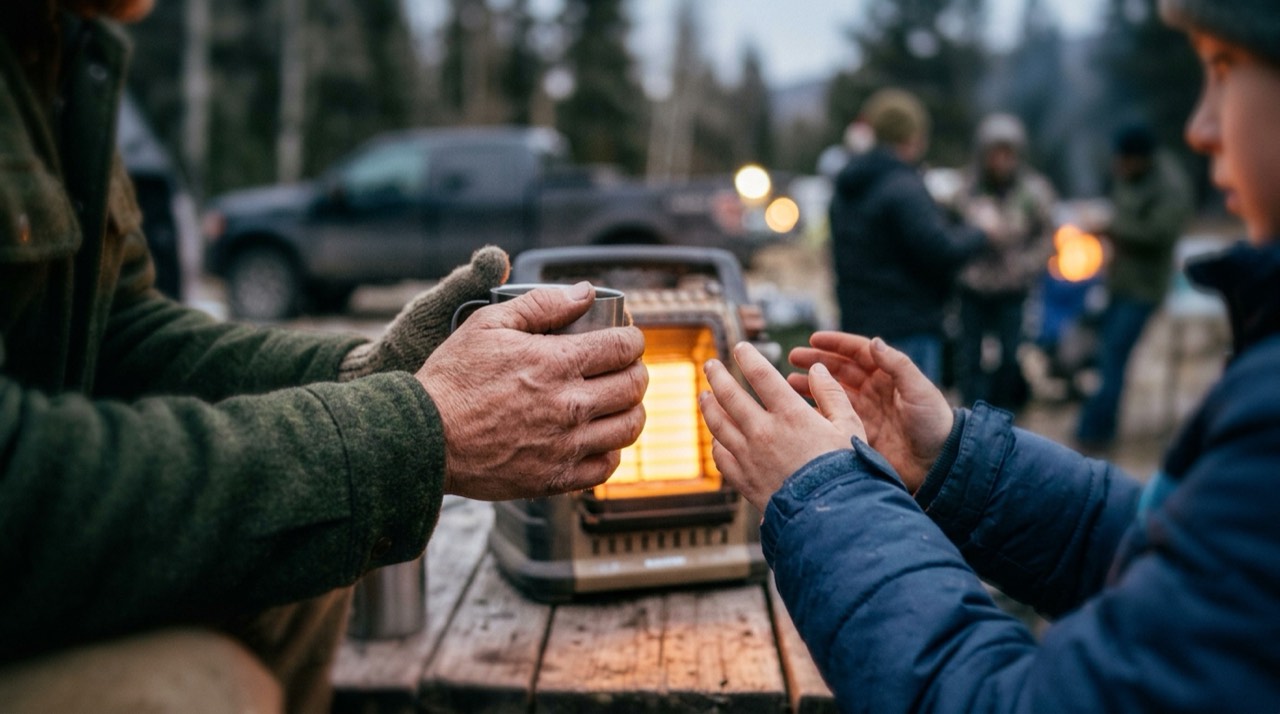
Three things mattered most. First, silent operation, since a forced-air fan would spook game and ruin a quiet sit. Second, an indoor-safe rating with a working oxygen depletion sensor, since a blind is a genuinely enclosed space. Third, cold-weather ignition reliability, which owner reviews consistently flag as the single biggest factor separating a trusted hunting heater from a frustrating one.
The Short Answer: Our Best Overall Hunting Blind Heater Pick
For most hunters, the Mr. Heater 12,000 BTU Hunting Buddy is the safest starting point. It was built specifically for this use case, with a camo finish and indoor-safe rating. Sharing a bigger blind with others? Step up to the Big Buddy 18,000 BTU. Do not need the camo finish? The standard 9,000 BTU Buddy performs the same for less.

Best for A hunter who wants low visibility and an indoor-safe heater for a long sit
- 12,000 BTU output
- Camo housing for low visibility
- Indoor-safe with oxygen depletion sensor
- Runs silently, no fan
Why buy it: This heater was built specifically for hunters. The camo finish keeps a low profile in a blind, and the indoor-safe rating means it can run in a fully enclosed space without the ventilation concerns a forced-air heater would raise.
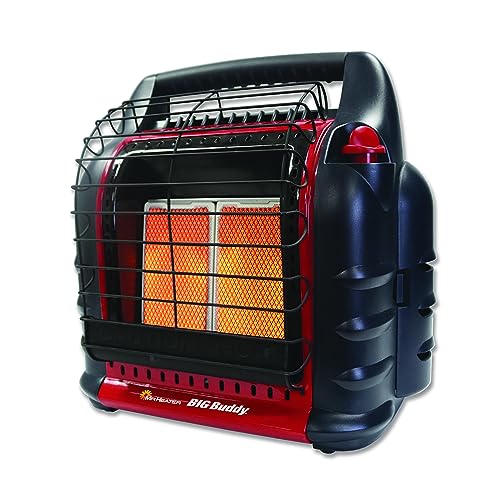
Best for A bigger blind or a group hunt where more output is needed
- 18,000 BTU output
- Radiant heat, no fan noise
- Indoor-safe with oxygen depletion sensor
- Portable, no assembly needed
Why buy it: For a larger box blind or a group of hunters sharing one space, the extra output over the standard Buddy makes a real difference without giving up the silent operation that matters most in a blind.
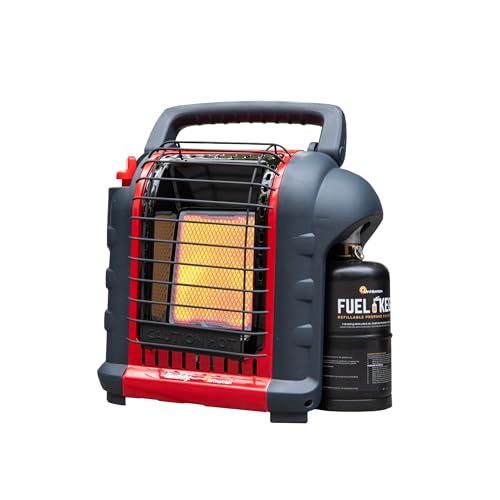
Best for Hunters who do not need the camo finish and want to save some money
- 9,000 BTU output
- Indoor-safe with oxygen depletion sensor
- Runs on a 1 lb cylinder or hose-connected tank
- Standard non-camo finish
Why buy it: The camo finish on the Hunting Buddy is purely cosmetic. This standard-finish version performs identically for less money, which is why plenty of hunters who do not care about the color choose it instead.

Best for A lightweight backup heater or a very small, tight blind
- 3,800 BTU output
- Indoor-safe with oxygen depletion sensor
- Lightest, most compact Buddy model
- Runs on a single 1 lb cylinder
Why buy it: Experienced hunters often carry this as a backup to a larger heater, since it weighs almost nothing and provides real peace of mind if a primary heater ever fails on a remote hunt.

Best for A hunter who also uses the heater around camp or a truck bed
- 11,000 BTU output
- Indoor/outdoor rated
- Runs on a 1 lb cylinder or hose-connected tank
- Compact radiant design
Why buy it: This sits between the standard and Big Buddy in output, and its flexible indoor/outdoor rating suits a hunter who wants one heater for both the blind and general camp use.

Best for A hunter walking into a blind rather than driving up to it
- 10,000 BTU output
- Compact, carry-handle design
- Indoor/outdoor rated
- Simple dial control
Why buy it: The carry-handle design makes this an easy grab for a hunter walking a distance into a blind, and 10,000 BTU is enough output for most single-hunter setups.
Full Comparison
All six picks side by side. "Best for" reflects the specific hunting setup each heater is most consistently recommended for in owner reviews.
| Product | Best for | Buy |
|---|---|---|
| Mr. Heater 12,000 BTU Hunting Buddy Portable Radiant Propane Heater (Camo) | Best Overall for a Hunting Blind | Check Price |
| Mr. Heater 18,000 BTU Big Buddy PRO Series Heater | Best for Larger or Group Blinds | Check Price |
| Mr. Heater 9,000 BTU Portable Buddy Radiant Propane Heater | Best Budget Pick | Check Price |
| Mr. Heater 3,800 BTU Little Buddy Portable Radiant Propane Heater | Best Ultra-Compact Backup | Check Price |
| Mr. Heater Buddy FLEX 11,000 BTU Radiant Propane Indoor/Outdoor Space Heater | Best Indoor/Outdoor Flex | Check Price |
| Dyna-Glo 10K BTU Grab N Go Portable Propane Heater | Best Grab-and-Go for Walk-In Blinds | Check Price |
Radiant Heat and a Quiet Propane Heater for a Hunting Blind
Every heater on this list is a radiant design with no fan at all. This matters more here than almost anywhere else on this site. A forced-air heater’s combustion fan runs loud enough to spook game at a distance. It also lacks the oxygen depletion sensor that makes these radiant heaters safe in a fully enclosed blind. Radiant heat also warms the hunter directly rather than needing to raise the whole blind’s ambient temperature, which suits a small, tight space better anyway.
Near-Instant Heat vs. a Convection Portable Heater
A quiet propane heater like these also gives near-instant heat at turn-on. That's unlike a portable heater that relies on convection and needs time to warm the surrounding air.
Scent-Free Operation for a Hunting Setup
None of these units add any real scent to your gear beyond the faint smell of propane combustion itself. That matters to a scent-free hunting setup.
Camo Finish vs. Standard: What You Are Actually Paying For
The camo finish on the Hunting Buddy has one real practical purpose: a bright red or orange heater is more visible to game and other hunters at a distance than a camo-finished unit tucked into a blind. Beyond that, it performs identically to the standard-finish Buddy models. If visibility to game genuinely matters for your setup, pay for the camo. If not, the standard finish saves money with zero performance tradeoff.
Cold Weather Ignition: The Factor That Matters Most
Across hunting forums and reviews, reliability in genuinely cold conditions comes up more than any other factor. Propane vaporizes more slowly in extreme cold, which can make ignition harder. Keeping a spare cylinder warmer, inside a jacket or vehicle rather than sitting on cold ground, meaningfully improves ignition reliability on the coldest hunting days. This is a fuel property, not a defect in any specific heater.
BTU Sizing and Heat Coverage for a Hunting Blind
A small one- or two-person box blind is well served by the 9,000 to 12,000 BTU tier. A larger blind or a group hunt benefits from stepping up to 18,000 BTU. Oversizing in a genuinely small, enclosed blind can make the space uncomfortably warm fast, so match heat coverage to your specific blind size rather than defaulting to the biggest heater available.


1-lb Cylinder Run Time for a Full Day in a Blind
Using the standard conversion of roughly 21,600 BTU per pound of propane, a 12,000 BTU Hunting Buddy stretches a 1-lb cylinder to a run time of a little over 4 hours. For a full day in a blind, pack two or three spare cylinders rather than relying on a single one and hoping it lasts. A hose-and-filter kit connecting to a larger tank is an option if your blind setup allows it.
Carbon Monoxide Awareness and the Oxygen Depletion Sensor in an Enclosed Blind
A hunting blind is a genuinely enclosed space, often more so than a tent. Manufacturer guidance for every indoor-safe heater still recommends some airflow, like a cracked vent, even with an oxygen depletion sensor providing a safety backstop. A small battery-powered carbon monoxide detector is worth carrying for extended sits, since blinds trap air more effectively than most people expect.
Safety Features to Check: Tip-Over Shut-Off, Low-Oxygen Shutoff, and Ventilation
Every pick on this list pairs a low-oxygen shutoff, its oxygen depletion sensor, with a tip-over shut-off that cuts the flame automatically if the heater is knocked over during a long sit. That combination, plus basic ventilation from a cracked vent, is the baseline safety setup for any hunting blind heater. Look for CSA certification on the unit's label as further confirmation it has been independently tested.
Positioning a Heater Inside a Blind
Blind interiors are small enough that placement matters as much as heater choice. Position the heater low and toward the center rather than in a corner, to distribute radiant heat more evenly across the space you are actually sitting in. Keep the heater’s exhaust and burner clear of gear bags and bow cases stored in a cramped blind, both for fire safety and to avoid knocking it over during a long sit.
Backup Heater for Multi-Day and Remote Hunts
For a multi-day or remote hunting trip, carrying a Little Buddy as backup to a larger primary heater is common practice among experienced hunters. It costs little and weighs almost nothing, and losing your only heat source days from a vehicle carries real consequences that a spare heater directly solves.
Storing and Transporting a Hunting Heater
A heater carried into a blind takes more abuse than one that lives in a garage: bouncing in a truck bed, being carried across uneven terrain, exposure to moisture. A padded carrying case protects the radiant element and control valve. Check the heater and its connections for damage before each trip, and store it dry between hunting seasons with the cylinder disconnected.
What Hunters Report
Across hunting forums, reliability under cold-weather conditions is the consistent theme separating well-regarded heaters from frustrating ones. A heater that hesitates to light at 10°F draws far more complaints than one that is slightly heavier or costs a bit more. The Buddy line’s reputation for cold-weather reliability is the main reason it dominates recommendations in hunting-specific discussions.
Ground Blind vs. Elevated Box Blind
A ground blind and an elevated box blind present slightly different heating considerations. A ground blind sits closer to cold earth and often has thinner walls, so heat escapes faster than in an insulated box blind. If you hunt primarily from a ground blind, size toward the higher end of the appropriate BTU range and pay extra attention to sealing drafts around the blind’s base.
Battery-Powered Hand Warmer vs. a Catalytic Heater
Some hunters consider battery-powered heating pads or hand warmers as an alternative to a propane heater. These provide localized warmth to hands or feet but cannot come close to matching a propane heater’s ability to raise the temperature of an entire blind interior. For a genuinely cold, multi-hour sit, propane remains the more effective option, with battery warmers serving best as a supplement rather than a replacement. Some hunters also consider a catalytic heater, a flameless design that produces heat through a chemical reaction rather than an open flame, though its output generally runs lower than a Buddy-style radiant heater. Coleman, well known for camping gear, does not currently make a dedicated hunting blind heater, which is part of why the Mr. Heater Buddy line dominates recommendations in this category.
Maintaining a Hunting Heater Between Seasons
A heater that sits in storage for months between hunting seasons benefits from a check before the season’s first use. Inspect the hose and connection for cracking, test the igniter, and confirm the oxygen depletion sensor is functioning per the manual’s test procedure. Most ignition problems reported at the start of a new season trace back to a skipped pre-season check rather than an actual defect.
Choosing Between Adjustable and Fixed Output
Some Buddy models offer adjustable output across a range, while others run at a single fixed BTU level. An adjustable heater lets you dial down on a milder day to stretch cylinder life, then run higher on a genuinely cold morning. If you hunt across a range of temperatures through a season, an adjustable model offers more flexibility than a fixed-output heater at the same base price.
How Elevation Affects a Hunting Heater
Like any propane appliance, a heater’s effective output can be affected by elevation, since thinner air at higher altitudes means less oxygen for complete combustion. This matters more for mountain hunts at meaningful elevation than for most hunters at lower elevations. Check your specific heater’s manual for any altitude derating note if you hunt somewhere with a significant elevation gain from sea level.
Final Buying Advice
Start with the Hunting Buddy if camo and indoor-safe operation both matter to you. Drop to the standard Buddy if camo does not matter. Size up to the Big Buddy for a shared or larger blind. Carry a Little Buddy as backup regardless of which primary heater you choose. This simple framework covers the overwhelming majority of hunting heater needs without overcomplicating the decision.
Deer Blind, Duck Blind, Tree Stand, and Pop-Up Blind Compared
A deer blind or ground blind tends to be smaller and more enclosed than a duck blind, which often has more open sides for shooting lanes. A pop-up blind, common for ground hunting, has thin fabric walls that lose heat faster than a solid box blind, so it deserves the same higher-BTU sizing as an open duck blind. A turkey blind sits somewhere in between, typically small and fully enclosed like a deer blind. Match your heater’s output and the blind’s real enclosure level rather than assuming every blind type needs the same setup, since a duck blind’s more open design loses heat faster than a sealed deer box.
Heater Weight and Packable Size for a Long Walk-In
For a hunter walking a real distance to a remote blind, heater weight matters as much as output. The Little Buddy and standard Buddy models are both packable enough to fit into a hunting pack alongside other gear, while the Big Buddy adds noticeably more bulk and weight. Weigh the tradeoff between more output and easier packing based on how far you are actually walking to your blind each morning.
Using a Heater to Dry Wet Gear in a Blind
Some hunters position gear near, but not too close to, a running heater to help dry out wet boots or gloves during a long sit. Keep any drying gear at a safe clearance distance, since fabric placed too close to a radiant element is a real fire risk.
What to Do If a Heater Fails Mid-Hunt
If a heater stops working mid-sit, check the cylinder connection and fuel level first, since these cause the large majority of field failures. If the heater still will not light, switch to a backup if you brought one, and treat the failed unit as needing inspection before its next use rather than assuming a fluke and trying again immediately.