
Affiliate disclosure: some links are affiliate links — as an Amazon Associate we earn from qualifying purchases, at no extra cost to you. Full disclosure.
A propane heater is only as good as what feeds it. A propane tank heater setup depends on three things working together correctly: the tank itself, the hose or regulator connecting it, and a compatible fitting between them. Most performance problems that look like a heater defect actually trace back to one of these three components rather than the heater itself, which is why this guide exists separately from the individual heater category pages elsewhere on this site.
Top 3 Recommended
Propane Tank Sizes Explained
Propane tanks and cylinders come in a range of standard sizes, each suited to different heater types and usage patterns. The 1-lb cylinder, sold as a disposable format, is the standard fuel source for portable radiant heaters like the Mr. Heater Buddy line, offering maximum portability at the cost of frequent replacement for regular use. The 20-lb tank — the same size used for a gas grill — is the most common mid-size option, refillable or exchangeable widely, and suitable for hose-connected portable heaters and smaller tank-top units. Larger 30 lb and 40 lb tanks extend run time further for the same footprint increase, and 100 lb tanks are the standard choice for high-output forced-air heaters or a workshop used regularly through a full season. Beyond 100 lb, tanks become semi-permanent fixtures — typically installed outside a structure with a fixed line running in — rather than something moved between heaters or locations.
Choosing a Refillable Propane Tank
A refillable steel propane tank like the Flame King YSN-201 20 lb Propane Tank is a straightforward purchase for anyone running a heater regularly, since it can be refilled indefinitely at a refill station rather than exchanged. Every propane tank sold in the US carries an OPD (overfill protection device) valve as standard, a safety requirement that prevents overfilling and has been mandatory on new tanks for years — this isn't an optional feature to look for, it's a baseline safety standard across all current tanks. Aluminum tanks are also available as a lighter-weight alternative to steel, at a higher price point, and are worth considering for anyone who transports a tank frequently and finds a steel tank's weight a genuine inconvenience.
Refill vs Exchange: Which Is Cheaper?
The refill vs exchange decision usually comes down to how often you use a heater through a season. Exchange programs at hardware stores and gas stations swap an empty tank for a filled one on the spot, which is convenient but typically costs more per gallon than filling your own tank at a dedicated propane refill station, since you're paying for the exchange service and a tank that may not be filled to full capacity. For anyone using a heater regularly through a cold season, seeking out a local refill station rather than defaulting to exchange consistently saves money over a season of heavy use, though exchange remains the more convenient option for occasional or one-off tank needs. See our filling vs. exchanging guide for the full breakdown, including what happens if a station won't accept your tank.
Propane Hose Assembly and Propane Regulators
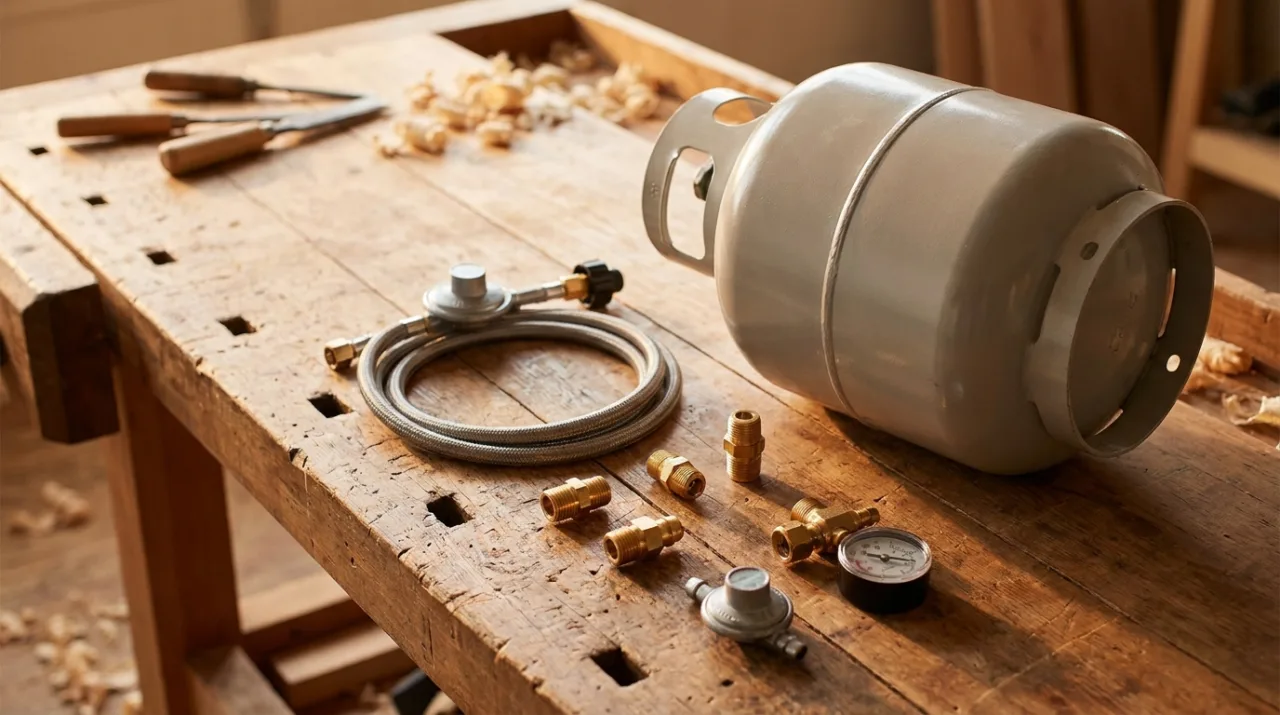
A hose assembly and regulator connect a heater to its tank, regulating the tank's higher internal pressure down to the lower pressure a heater's burner is designed for. A model like the 12ft Propane Regulator Hose with Gauge is a common general-purpose option that fits the standard QCC1 (Type 1) tank connection used on most 20 lb tanks. Regulators are rated for specific pressure and BTU throughput ranges, and using one rated below a heater's actual BTU requirement can bottleneck fuel delivery and cause performance problems that look like a heater defect. Always match the hose and regulator's rated capacity to the heater's BTU output, not just to the tank's fitting type — a mismatch affects running cost more than people expect, since a bottlenecked regulator can make a heater run longer than necessary to reach temperature. See our best propane hose roundup and regulator guide for real product picks by use case.
RV Hose and Regulator Requirements
RV propane systems often have different fitting requirements than a standard grill-tank setup, and a purpose-built option like the Camco Olympian 5-Foot RV Propane Supply Hose is designed specifically to connect a Wave-series catalytic heater or similar RV appliance to a motorhome's onboard tank or a portable tank, with built-in excess-flow protection as a safety feature. Using a generic hardware-store hose on an RV system can result in a fitting mismatch, so RV owners should specifically look for RV-rated hoses rather than assuming a general-purpose hose will fit correctly.
1-lb to 20-lb Adapter Fitting and Back
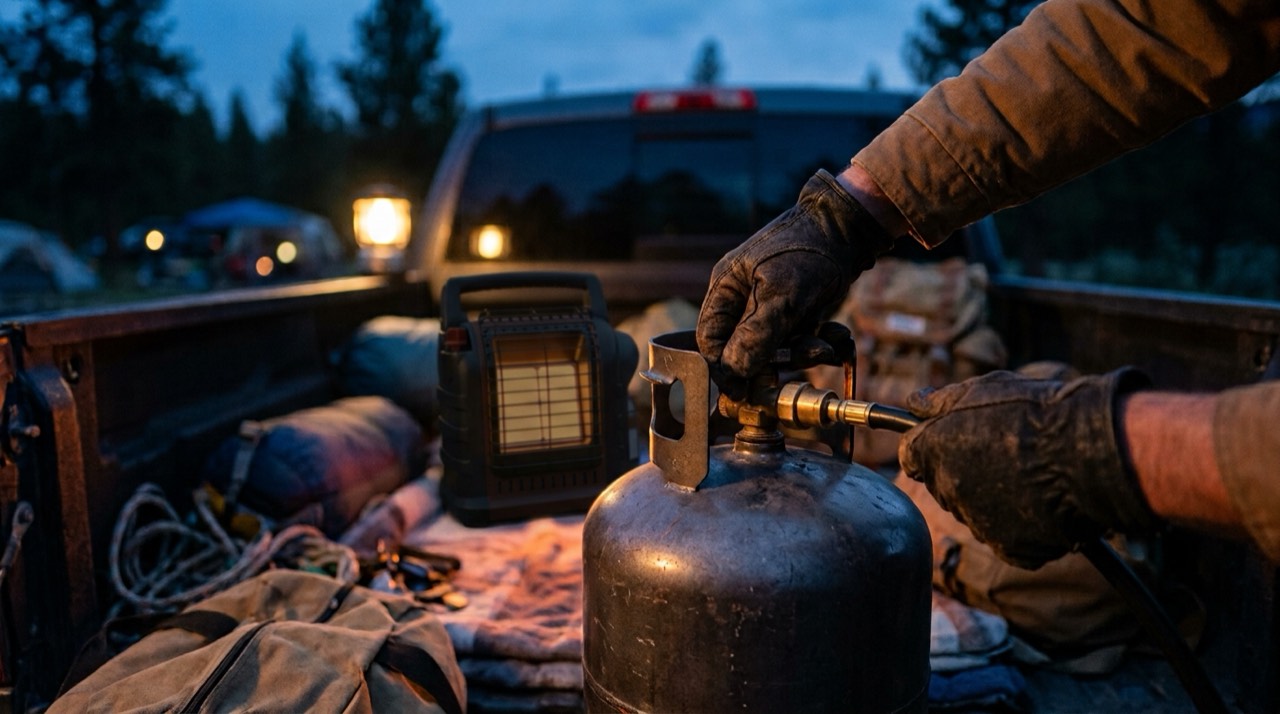
An adapter hose lets a heater designed for one cylinder size run off a different one — most commonly, converting a 1 lb-cylinder heater like the Buddy line to run off a larger 20 lb tank via a hose-and-filter kit, or occasionally the reverse for a heater that ships expecting a large tank connection. These adapters are widely available and a common upgrade path for anyone tired of buying disposable 1 lb cylinders repeatedly. Always use the manufacturer's official adapter kit for a given heater model where one exists, since it's designed and tested specifically for that heater's fuel intake rather than a generic universal fitting. Our adapter types guide explains the difference between a hose-and-filter kit and a fitting adapter, and our 1 lb vs. 20 lb comparison covers which tank size actually fits your usage pattern. For a bulk 100 lb tank instead, see our bulk tank connection guide.
Fuel Filter Kits and Debris Protection
Refillable tanks accumulate more debris and moisture over repeated fill cycles than a fresh disposable cylinder, which is why manufacturer-recommended hose-and-filter kits for heaters like the Mr. Heater Buddy line include an inline fuel filter rather than just a plain hose. This filter catches particulates before they reach the heater's regulator and burner, where they can cause the same kind of inconsistent-flame symptoms as a mismatched regulator. Skipping the filter and using a generic hose without one is a common shortcut that sometimes works fine for a while, but it's a false economy for anyone planning to use a refillable tank long-term.
Propane Tank Maintenance and Inspection
Propane tanks require periodic recertification — typically every 5 or 10 years depending on the tank's manufacture date and construction — after which most refill stations will not fill an out-of-date tank until it's been recertified or replaced. The manufacture date is stamped on the tank's collar, and checking it before assuming a refill station's refusal is an error saves a wasted trip. Beyond recertification, a visual check for dents, rust or damage to the valve before each season of use catches problems that could affect safe operation, particularly for a tank stored outdoors year-round.
Common Tank and Hose Problems
- Weak flame despite a full tank: check the regulator's rating against the heater's BTU requirement — a mismatch bottlenecks fuel delivery.
- Hose won't connect: confirm the fitting type matches — QCC1/Type 1 is standard on most 20 lb tanks, but older tanks and specialty equipment sometimes use different fittings.
- Tank won't fill at a refill station: check the recertification date stamped on the collar — most stations won't fill an expired tank.
- Reduced output in cold weather: cold reduces a tank's internal pressure, which can look like a heater or regulator problem but is a normal characteristic of the fuel itself.
Understanding Tank Fittings: QCC1 vs. POL Fitting
Most modern propane tanks in the 20 lb and larger range use a QCC1 (Quick Connect Coupling 1) fitting, also called Type 1, which is designed to be hand-tight and requires no wrench, along with a built-in feature that prevents gas flow until the connection is properly seated. Older tanks sometimes use a POL fitting (Prest-O-Lite) instead, an earlier standard that requires a wrench and doesn't have the same safety interlock. If you're connecting a hose to an older tank or specialty equipment, checking which fitting type is actually present — rather than assuming QCC1 — avoids buying an incompatible hose or adapter.
Brass Fittings, Adapter Types, QCC-1 Connector, and POL Connector
Most quality hoses and regulators use a brass fitting at the connection points, since brass resists corrosion better than the surrounding steel tank valve over years of outdoor use. Look for CSA or UL certification stamped on the hose assembly itself, not just the tank. An adapter fitting bridges two different connector types — most commonly a 1-lb to 20-lb adapter that lets a Buddy-style heater run off a larger tank, using the same QCC-1 connector or POL connector as the primary hose. Brands like Marshall Excelsior and GasOne make widely available adapter and regulator hardware in this space, alongside the more heater-specific kits sold under Mr. Heater's own name.
1-lb Cylinder vs. a 20-lb Tank: Disposable vs. Refillable
The small 1 lb cylinders used by portable Buddy-style heaters come in both disposable, single-use versions and refillable versions that can be topped off from a larger tank using an adapter. Refillable 1 lb cylinders cost more upfront but pay for themselves over repeated use if you regularly buy disposable cylinders for a portable heater, since a 20 lb tank can refill a 1 lb cylinder many times over at a fraction of the cost of buying disposables individually. This is a popular upgrade path for hunters, campers and anyone using a small radiant heater frequently rather than occasionally.
Propane Tank Gauges
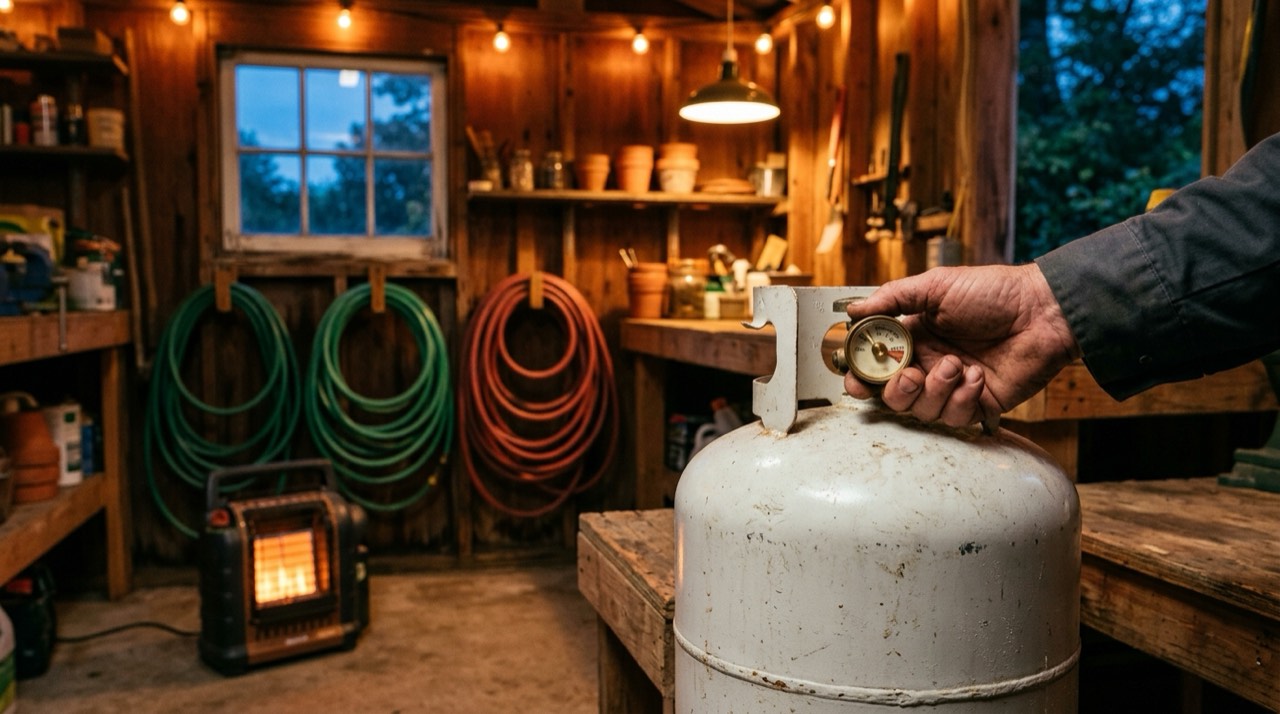
Most propane tanks and cylinders don't include a built-in fuel gauge, which makes it hard to know exactly how much fuel remains without weighing the tank against its stamped empty (tare) weight. Aftermarket gauges that attach between the tank and hose, or scales designed specifically for weighing propane tanks, solve this for anyone who wants a more precise read than "shake it and guess." For infrequent users, simply weighing a tank periodically against its stamped tare weight — printed on the collar alongside the manufacture date — is a free and reasonably accurate alternative to a dedicated gauge. See our tank gauges guide for real product picks and how these gauges actually work.
Extension Hoses and a Propane Tree for Flexible Placement
A longer hose between the tank and heater — beyond the standard length included with most heaters — gives more flexibility in where the tank can sit relative to the heater, which matters for keeping a tank out of a walkway, away from a heat source, or positioned for better stability on uneven ground. Extension hoses need to match the same fitting type and pressure rating as the heater's original hose, and adding excessive length can slightly reduce fuel delivery pressure at very high BTU outputs, though this is rarely a practical concern at the lengths most consumer extension hoses come in. For a setup running more than one heater off a single supply, a propane tree splits one tank connection into two or more regulated outlets.
Winterizing Tanks and Hoses: The Tank Blanket
Tanks and hoses left connected outdoors through a full winter face more wear than ones disconnected and stored between uses. Disconnecting a tank at the end of a heating season, rather than leaving it connected to a heater sitting idle, reduces the hose's exposure to temperature swings and UV that accelerate rubber degradation. A tank itself is generally fine to store outdoors through winter as long as it's kept upright and away from other heat sources, but the hose specifically benefits from being coiled and stored somewhere protected rather than left exposed to the elements for months. A tank blanket, essentially an insulated wrap for the cylinder, helps maintain internal pressure in genuinely cold outdoor conditions.
Storing Tanks and Hoses Safely: DOT and LP Gas Standards
Propane cylinders sold in the US are manufactured and tested to DOT specifications for LP gas service. NFPA 58 is the national fire code covering LP-gas storage and handling, and most local propane regulations are built on it. Propane tanks should be stored upright, outdoors or in a well-ventilated area. Never store one in a fully enclosed space like a basement or attached garage long-term. That's standard guidance from tank manufacturers and fire safety authorities, including CPSC and OSHA guidance on safe fuel storage. Hoses degrade with UV exposure and temperature swings over time, even when not in use, so inspecting them for cracking or brittleness at the start of each season — rather than assuming a hose that worked last year is still in good condition — catches the kind of gradual wear that causes mid-season failures. A tank stored near a heat source, in direct summer sun for extended periods, or in a location prone to flooding should be relocated regardless of how convenient the current spot is — none of these storage risks are specific to any one heater or tank brand, they apply to propane storage generally.
Buying Tanks and Accessories: What to Prioritize
- Match tank size to actual usage, not the biggest tank you can afford — a 100 lb tank makes little sense for an occasional 9,000 BTU camping heater.
- Check the recertification date on any used or long-stored tank before assuming it's still fillable.
- Match regulator and hose ratings to the heater's BTU output, not just the fitting type.
- Consider a refillable tank over disposables if you use a heater regularly — the fuel cost savings add up quickly.
- Inspect hoses each season for cracking, especially after a hose has sat connected outdoors through winter.
The Full Propane Heater Accessories Lineup: Carry Case, Carbon Monoxide Detector, Replacement Parts, Tip-Over Switch, and Thermocouple
Beyond tanks, hoses and regulators, this hub covers the full range of propane heater accessories: stands and mounts for keeping a tank or heater stable, carry cases and storage for transport between seasons, carbon monoxide detectors, and replacement parts covering pilot assemblies, control valves and fuel filters. For a specific part, see our dedicated guides on the tip-over switch, the thermocouple, igniter parts, and fan and blower kits. For cold-climate tank warming, see our tank heater blanket guide, and for whether the tank itself belongs indoors, see our indoor tank safety guide.


