
Affiliate disclosure: some links are affiliate links — as an Amazon Associate we earn from qualifying purchases, at no extra cost to you. Full disclosure.
Mr. Heater's Buddy series is the reference point for the entire indoor-safe portable propane heater category — it's the line most owner reviews across this site refer back to, and it now spans five distinct models at different BTU tiers and for different use cases. Here's how they actually compare.
What Every Indoor-Safe Buddy Model Shares: CSA Certified Safety and a Tip-Over Shut-Off
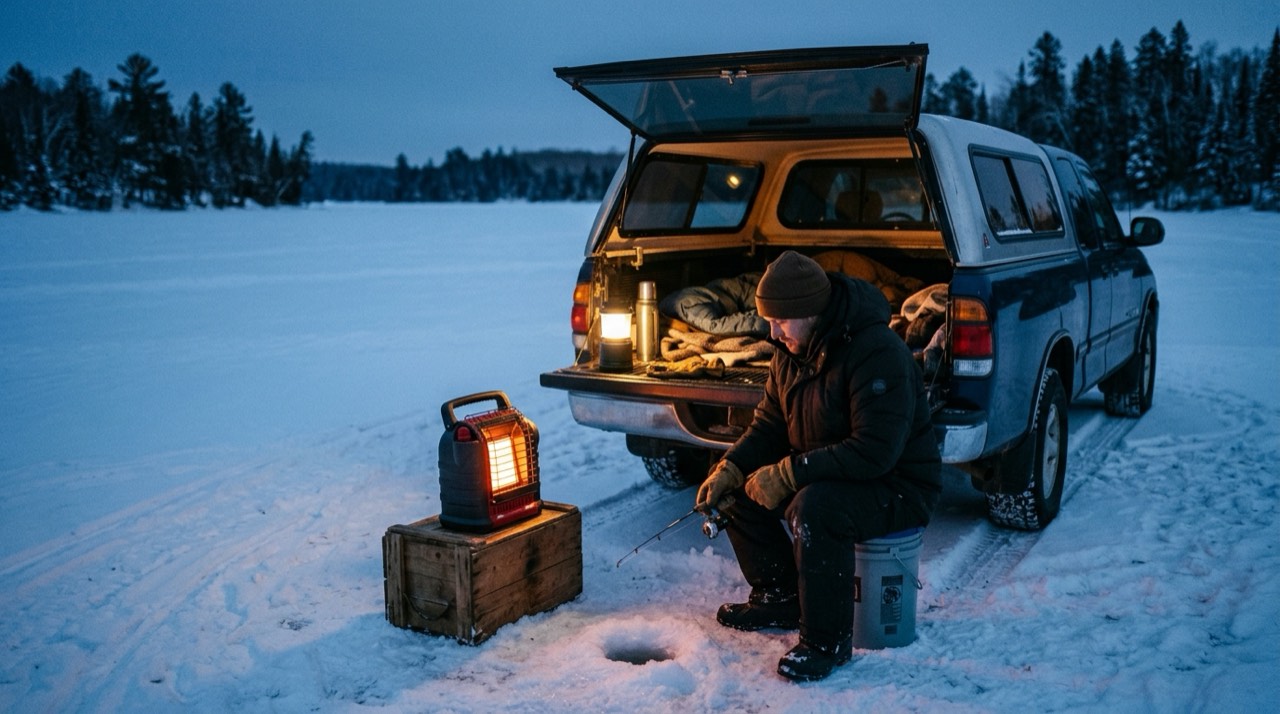
What ties the whole lineup together is a shared design philosophy: a CSA certified radiant heat ceramic burner, an oxygen depletion sensor for indoor-safe operation, and a tip-over shut-off, scaled up or down across five different BTU tiers and two housing variants. Choosing between them mostly comes down to answering two questions honestly — how big is the space you actually need to heat, and how much are you willing to carry or store between uses. The rest of this guide walks through each model's tradeoffs so you're not choosing on brand name alone.
Mr. Heater Buddy Series Lineup at a Glance
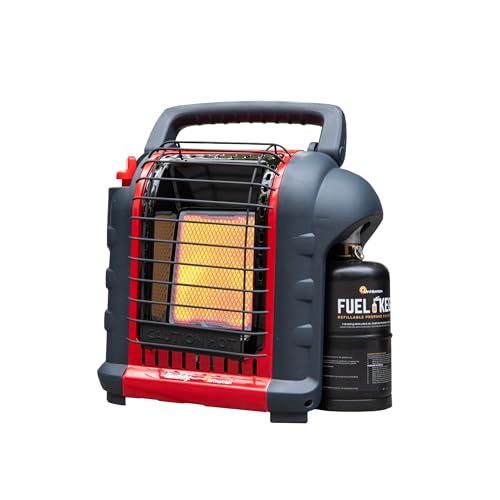
Best for Garages, workshops, tents, ice shanties, single rooms
- 4,000–9,000 BTU, low/high settings
- Runs on 1 lb cylinder or hose-connected 20 lb tank
- Built-in ODS and tip-over shutoff
Why buy it: The standard Buddy is the most-reviewed heater in the entire lineup, and the size most people mean when they just say "a Buddy heater."

Best for Ice fishing shanties, small tents, single-room emergency heat
- 3,800 BTU fixed output
- 1 lb disposable cylinder only
- Under 10 inches tall
Why buy it: The cheapest and smallest way into the indoor-safe Buddy platform — best for spaces under roughly 95 sq ft.
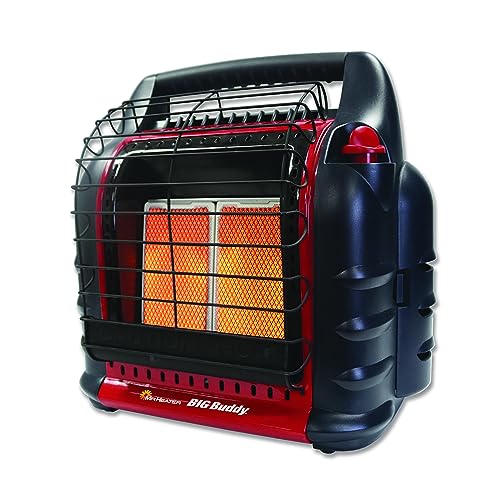
Best for Larger garages, big canvas tents, job-site trailers
- 4,000–18,000 BTU across three settings
- Two 1 lb cylinders or hose-connect to a 20 lb tank
- Fan-assisted heat distribution
Why buy it: Steps up from the standard Buddy for anyone who found 9,000 BTU underpowered for a larger space.

Best for Hunting blinds, tree stands, tailgating
- 12,000 BTU output
- Camo housing
- Same ODS-equipped platform as the standard Buddy
Why buy it: A mid-size Buddy variant built specifically for hunters who want a heater that blends in rather than a bright safety-orange or red housing.

Best for Buyers who want one heater rated for both indoor and outdoor use
- 11,000 BTU output
- Rated for both indoor and outdoor use
- Updated design over the original Buddy line
Why buy it: A newer entry in the Buddy family that splits the difference between the standard Buddy and the Big Buddy on output.
Full Comparison
| Product | Best for | Buy |
|---|---|---|
| Mr. Heater 9,000 BTU Portable Buddy Radiant Propane Heater | Most Popular | Check Price |
| Mr. Heater 3,800 BTU Little Buddy Portable Radiant Propane Heater | Most Compact | Check Price |
| Mr. Heater 18,000 BTU Big Buddy PRO Series Heater | Most Powerful | Check Price |
| Mr. Heater 12,000 BTU Hunting Buddy Portable Radiant Propane Heater (Camo) | Best for Hunting & Camo | Check Price |
| Mr. Heater Buddy FLEX 11,000 BTU Radiant Propane Indoor/Outdoor Space Heater | Newest / Most Flexible | Check Price |
Little Buddy's 1-lb Propane Cylinder vs. Portable Buddy: Which Size Do You Need?
The Little Buddy is fixed at 3,800 BTU and runs only off a 1-lb propane cylinder, which makes it the most portable and cheapest option in the lineup.
4000 BTU to 9000 BTU on a Swivel Regulator Dial
The standard Buddy adjusts between roughly 4000 BTU and 9000 BTU on its swivel regulator dial and can run off either a 1 lb cylinder or a hose-connected 20 lb tank, more than doubling the Little Buddy's maximum output. As a rough guide, the Little Buddy suits a space under about 95 square feet — an ice shanty, a small tent, a single small room — while the standard Buddy handles closer to 200 square feet on its high setting. Buyers who go with the Little Buddy specifically for its size and price, then find it underpowered, are one of the more common upgrade paths reviewers describe when moving to the standard Buddy afterward.
Standard Buddy vs. Big Buddy: Stepping Up to 18000 BTU
The Big Buddy roughly doubles the standard Buddy's maximum output, running from 4,000 up to a full 18000 BTU with fan-assisted heat distribution that spreads warmth more evenly than the standard Buddy's single radiant element. It's noticeably larger and heavier, and it runs on two 1 lb cylinders simultaneously or hose-connects to a bigger tank. Owners who step up to the Big Buddy consistently cite one of two reasons: a two-car garage or larger space that the standard Buddy couldn't keep up with, or a canvas wall tent used for extended camping or hunting trips where more sustained heat matters more than compact size.
Hunting Buddy: The Same Platform, Camo Housing
The 12,000 BTU Hunting Buddy sits between the standard Buddy and the Big Buddy on output, and its main differentiator isn't performance — it's the camo housing, aimed specifically at hunters who don't want a bright red or orange heater in a blind or tree stand. Functionally, it uses the same ODS-equipped radiant platform as the rest of the lineup, so the buying decision mostly comes down to whether the camo finish and the 12,000 BTU middle-ground output matter more than the cost savings of a standard Buddy or the extra power of a Big Buddy.
Buddy FLEX: What's Actually New
The Buddy FLEX is a newer addition to the lineup, rated at 11,000 BTU and explicitly certified for both indoor and outdoor use — a slightly different certification approach than the original Buddy models, which are indoor-safe but not specifically marketed with an "indoor/outdoor" dual rating. For buyers who want a single heater that moves between a garage (indoor use) and a patio or campsite (outdoor use) without needing to think about which rating applies where, the FLEX simplifies that decision, though it sits at a similar price point to the Big Buddy for less maximum BTU output.
How to Light a Mr. Heater Buddy: Piezo Igniter and Oxygen Depletion Sensor


Every model in the Buddy series uses the same basic ignition process: open the fuel valve, turn the control knob to the pilot position, hold it in while repeatedly pressing the push-button piezo igniter until the pilot catches, then continue holding for the time specified in the manual — typically 30–60 seconds — before releasing and turning to the desired heat setting.
Lighting at High-Altitude Takes a Few Extra Presses
At high-altitude, the pilot can take a few extra presses to catch since thinner air burns slightly differently than at sea level. The most common reason a Buddy heater "won't light" on a first attempt is releasing the control knob before the thermocouple has had enough time to heat up and hold the gas valve open on its own. Our troubleshooting guide covers this and other common Buddy-specific ignition issues in more depth.

BTU, Running Cost and Run Time by Propane Tank Size
Using the standard conversion of roughly 21,600 BTU of usable energy per pound of propane, a standard Buddy at 9,000 BTU on high burns through a single 1 lb cylinder in a little under 2.5 hours, or a 20 lb tank in roughly 48 hours via the hose-connect kit. The Little Buddy at a fixed 3,800 BTU stretches a 1 lb cylinder to around 5.5 hours. The Big Buddy at its full 18,000 BTU setting burns through a 20 lb tank in about 24 hours. Running any model on a lower setting extends these numbers considerably — our running-cost calculator can work out a number for your specific model and tank.
Hose and Filter Options: A 20-lb Tank Hookup
Every Buddy model ships ready to run on 1 lb disposable cylinders, but the most common upgrade long-term owners make is adding a hose and filter kit for a 20-lb tank hookup instead of swapping disposable cylinders, which cuts the ongoing cost significantly for anyone using the heater regularly.
An Inline Fuel Filter Protects the Regulator
Mr. Heater sells an official hose-and-filter assembly specifically designed for the Buddy series that includes an inline fuel filter, which the company's own documentation recommends over a generic hose to avoid debris from a refillable tank affecting the heater's regulator. See our tanks and accessories guide for more on this upgrade.
Safety in a Tent: What the Buddy Series Is (and Isn't) Rated For
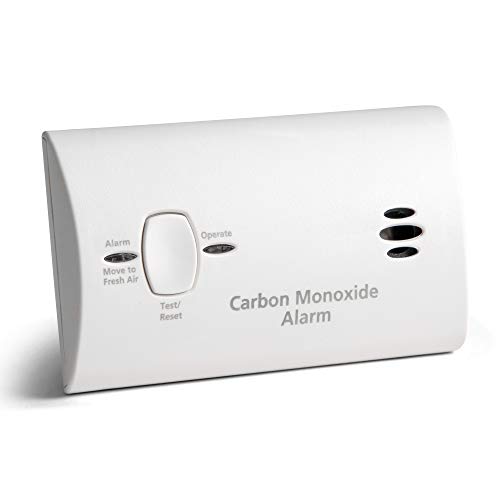
The Buddy series' ODS and tip-over shutoff are what make it commonly used inside a tent, but "indoor-safe" doesn't mean risk-free in an unventilated tent. Manufacturer guidance consistently recommends cracking a tent flap or vent for airflow even when using an indoor-safe heater, and a battery-backed carbon monoxide detector is worth having for extended tent use regardless of which Buddy model is running. Our indoor safety guide and camping and hunting heater guide both cover this in more depth for tent-specific use.
The whole Buddy platform is built to the ANSI Z21.11 safety standard. That's where the ODS requirement comes from. Pairing any Buddy model with a battery-backed CO detector, such as Kidde, is standard advice regardless of size. The CPSC publishes seasonal warnings on carbon monoxide poisoning from portable heaters, worth a quick read before the first cold-weather use of the season.
Buddy Series Model Numbers Explained: MH9BX, MH18B and F215100
Mr. Heater's model numbering for the Buddy series follows a reasonably consistent pattern that's worth knowing before comparing listings, since the marketing name and the model number don't always appear together in every retail listing. The standard Buddy carries model number MH9BX, referring to its 9,000 BTU maximum output. The Little Buddy is F215100. The Big Buddy PRO carries model number MH18B, again referencing its 18,000 BTU ceiling. Knowing the model number is particularly useful when searching for replacement parts or accessories, since a hose kit or regulator part is usually listed by model number rather than by the "Buddy" marketing name alone.
Weight and Portability Across the Lineup
Portability drops off meaningfully as you move up the lineup, and it's worth weighing against the BTU output you actually need. The Little Buddy weighs in at just a few pounds and fits easily in a backpack or under a truck seat. The standard Buddy is still very portable but noticeably heavier once you account for a hose-connect kit and tank. The Big Buddy, with its dual-cylinder capacity and fan assembly, is the heaviest and bulkiest of the group — it's still "portable" in the sense that it's not a fixed installation, but it's more of a "load it in the truck" heater than a "carry it in one hand" heater. For buyers prioritizing pure portability over maximum output, the smaller end of the lineup is usually the better fit even if it means running two smaller heaters instead of one large one.
Buddy Series vs. Competing Radiant Heaters
Because the Buddy series effectively created and still dominates the indoor-safe portable radiant heater category, most competing products are judged against it rather than the other way around. Generic imported radiant heaters in a similar BTU range are often cheaper, but owner reviews for the Buddy series consistently cite the ODS certification, the thermocouple-based safety shutoff, and the sheer volume of long-term ownership data as reasons buyers choose it over a less-established alternative even at a higher price point. For a category where the failure mode of a cheap knockoff is a genuine safety issue rather than just poor performance, the established track record carries real weight in the buying decision.
Choosing the Right Buddy for Your Space
If you're still unsure which model fits, work backward from the space rather than the price tag. Measure or estimate the square footage you actually need to heat, check it against the BTU-per-square-foot guidance in our sizing guide, and then pick the smallest model in the lineup that comfortably covers it — oversizing wastes fuel and adds bulk without a real comfort benefit. For most single-room, garage or tent use cases, that lands on either the Little Buddy or the standard Buddy; it's only larger tents, two-car garages or extended off-grid stays where the Big Buddy's extra output earns its extra size and weight.
Accessories Worth Adding
- Hose-and-filter kit — connects any Buddy model to a refillable 20 lb tank, cutting long-term fuel costs versus disposable cylinders.
- Carrying case — several Buddy models have a purpose-built case that protects the unit during transport and storage between seasons.
- Tank tree or stand — keeps a connected 20 lb tank upright and stable, particularly useful in a tent or blind where floor space is limited.
- Battery-backed carbon monoxide detector — recommended for any Buddy model used in an enclosed space, regardless of the built-in ODS.
What Owners Report Across the Lineup
Reliability is the single most consistent praise point across every model in the Buddy series — "it just works" is the most repeated phrase in the review history for all five variants. The most common complaint, also consistent across the lineup, is fuel consumption on a 1 lb cylinder at higher settings, which is why the hose-and-filter upgrade shows up so often in long-term ownership reviews. Model-specific complaints are rare; most negative reviews trace back to a buyer choosing the wrong size for their space rather than a defect in the specific unit.