
Affiliate disclosure: some links are affiliate links — as an Amazon Associate we earn from qualifying purchases, at no extra cost to you. Full disclosure.
"BTU" is the number buyers fixate on when comparing Buddy models. That makes sense. It is the best predictor of how much room a given model can actually heat. Here is every model’s output compared directly, with the sizing logic behind it.
Top 3 Recommended
BTU by Model
| Model | BTU | Approx. Coverage | Fuel |
|---|---|---|---|
| Little Buddy | 3,800 (fixed) | Up to ~95 sq ft | 1 lb cylinder only |
| Portable Buddy (standard) | 4,000–9,000 (low/high) | Up to ~200 sq ft | 1 lb cylinder or hose-connect |
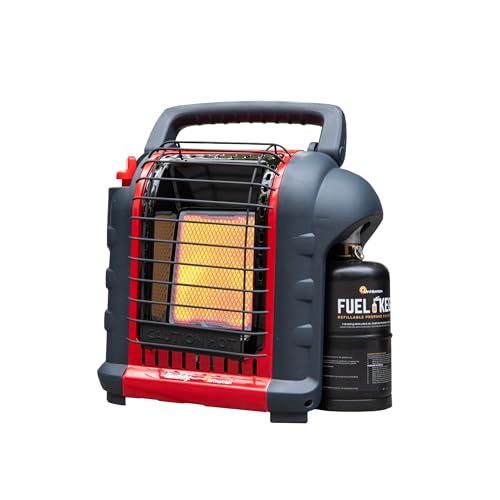
| Hunting Buddy | 12,000 (fixed) | Up to ~275 sq ft | 1 lb cylinder or hose-connect |
| Buddy FLEX | 11,000 (fixed) | Up to ~250 sq ft | 1 lb cylinder or hose-connect |
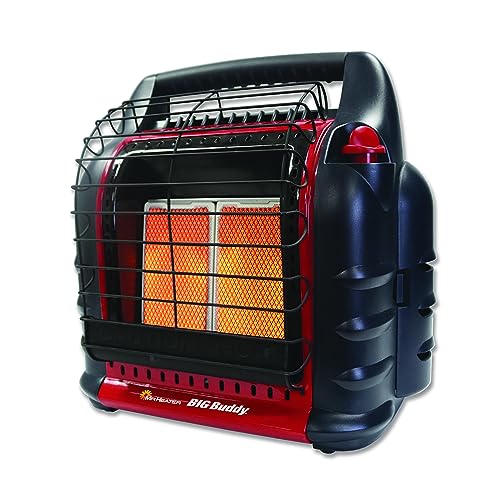
| Big Buddy | 4,000–18,000 (3 settings) | Up to ~450 sq ft | 2× 1 lb cylinders or hose-connect |
What BTU Actually Measures
A BTU is a British Thermal Unit. It measures heat energy. One BTU is the energy needed to raise one pound of water by one degree Fahrenheit. A heater’s BTU rating tells you its maximum output per hour. It does not tell you how "strong" the heat feels up close. A 3,800 BTU heater held near your body can feel warmer than an 18,000 BTU heater trying to fill a large, drafty garage. That is why coverage area matters as much as the raw number.
How the Coverage-Area Estimates Work
The coverage figures above use a common guideline: roughly 20 to 30 BTU per square foot for an enclosed, insulated space. Think of a tent, a small room, or an insulated garage bay. A poorly insulated or drafty space needs more BTU per square foot than this guideline assumes. Treat the numbers above as a starting point, not an exact fit for your specific structure.
Why the Little Buddy Is Fixed, Not Adjustable
The Little Buddy’s 3,800 BTU output has no low/high dial. It runs at one setting only. This keeps the unit simple and cheap. Its intended use, a small enclosed space, rarely needs the extra control a dial would add. The trade-off shows up if you occasionally want slightly more or less heat than its single setting gives you.
Why the Standard Buddy and Big Buddy Have a Range
The standard Buddy runs 4,000 to 9,000 BTU. The Big Buddy runs 4,000 to 18,000 BTU. Both ranges give you a low setting for mild days and a high setting for genuinely cold ones. Running on low also stretches a tank further when you do not need maximum output. That is the single easiest way to make a tank last longer.
Hunting Buddy and Buddy FLEX: Fixed Middle-Ground Output
The Hunting Buddy runs a fixed 12,000 BTU. The Buddy FLEX runs a fixed 11,000 BTU. Neither has a low/high dial. Both sit between the standard Buddy and Big Buddy on raw heat. Neither offers the fuel savings of a low setting. That matters if stretching a single cylinder further is more important to you than the camo housing or dual rating each one adds.
BTU vs. Real-World Heat: Ventilation and Insulation Matter
Two spaces of the same square footage can need very different BTU output. Insulation, drafts, and ceiling height all play a part. A well-sealed tent can get by on less BTU per square foot than the general guideline suggests. A garage with a leaky door needs more. If a model at the "right" BTU still feels underpowered, check insulation and draft-sealing first. Do not assume you need a bigger heater right away.
Matching BTU to Specific Use Cases
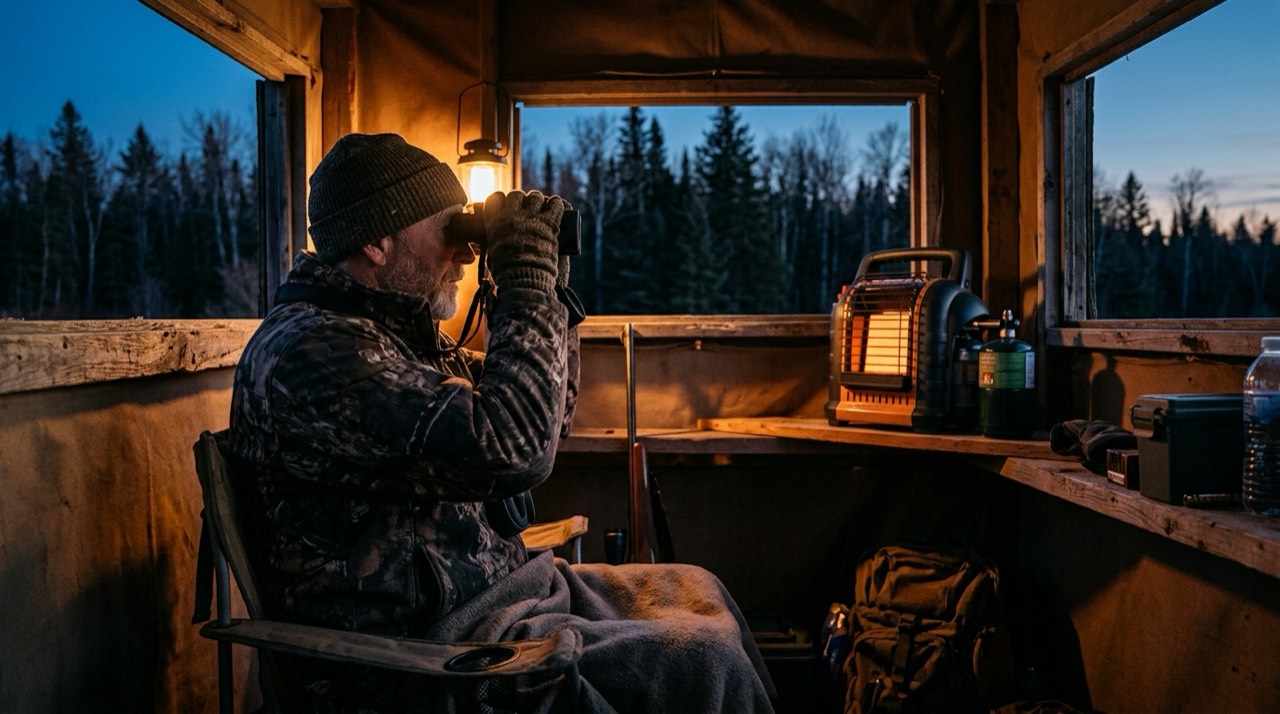
An ice fishing shanty is usually small and well-sealed, often under 50 sq ft. The Little Buddy’s 3,800 BTU covers it comfortably. A single-car garage used for occasional projects fits the standard Buddy’s range well. A large canvas wall tent for extended trips is Big Buddy territory. A hunting blind or tree stand is often small but drafty. That is where the Hunting Buddy’s 12,000 BTU and camo housing both earn their place.
Does More BTU Always Mean Better?
No. Oversizing wastes fuel. It adds bulk and weight with no real comfort benefit once a space is already warm enough. Owners who buy the Big Buddy for a small tent report burning fuel faster with no meaningful comfort gain over a correctly sized standard Buddy. Buy the smallest model that comfortably covers your actual space. That is the more fuel-efficient choice almost every time.
Run Time Trade-Off at Higher BTU
Higher BTU output burns fuel faster on the same tank size. That is the main trade-off for choosing a bigger model than you need. Our run-time by tank size guide has exact hours-per-tank numbers for every model at every setting. Check it alongside BTU before deciding how much heater to buy.
Comparing Buddy BTU Against Other Heater Categories
All five Buddy models sit well below a forced-air construction heater, which commonly starts around 60,000 BTU. That gap is by design. The Buddy platform trades raw output for radiant heat, quiet operation, and genuine portability. A forced-air heater does not offer any of those three. If your real need is heating a large uninsulated space rather than a room, tent, or blind, see our forced-air heater guide instead.
A Simple Way to Estimate Your Space
Measure length and width in feet, then multiply the two numbers. A 10-by-10 room is 100 sq ft. A typical two-person tent runs 50 to 70 sq ft. A single-car garage runs 200 to 250 sq ft. Round up slightly if your ceiling is unusually high, since more air volume needs more heat to warm evenly.
What Happens If You Buy the Wrong Size
An undersized heater runs constantly on its highest setting and still leaves you cold. That is the more common mistake. An oversized heater cycles less efficiently and burns through fuel faster than needed for the comfort it delivers. Both mistakes are avoidable by measuring your space honestly before buying, rather than guessing or defaulting to whichever model is cheapest that day.
Choosing by BTU: The Short Version
Estimate your space’s square footage. Apply the 20 to 30 BTU-per-square-foot guideline for an enclosed, reasonably insulated area. Pick the smallest model on the table above whose range comfortably covers that number. Going bigger "just in case" mostly adds weight, cost, and faster fuel burn, with no real comfort payoff once your actual space is already covered.
How BTU Relates to Fuel Cost, Not Just Comfort
A higher BTU output does not just mean more heat. It also means faster fuel burn on the same tank. Two models that both comfortably cover your space, but at different BTU levels, will have noticeably different running costs over a season. Where you have a genuine choice between two adequately sized models, the lower-BTU option is usually the cheaper one to run over time.
BTU Ratings and Altitude
Manufacturer BTU ratings are typically measured at or near sea level. At meaningfully higher altitudes, thinner air can reduce a propane heater’s effective output by a modest amount, similar to how a car engine loses some power at altitude. If you regularly camp, hunt, or work at high elevation, it is worth sizing slightly above the standard guideline rather than right at the calculated minimum.
Re-Checking BTU Needs After a Season
If a model feels consistently underpowered or oversized after a full season of real use, that is useful information for your next purchase. Note which setting you actually ran on most nights, and compare it against the table above. A pattern of always running on high suggests the next model up would serve you better; always running on low suggests you could have sized down and saved on fuel.