
Affiliate disclosure: some links are affiliate links — as an Amazon Associate we earn from qualifying purchases, at no extra cost to you. Full disclosure.
Most propane heater repair questions trace back to one of a handful of causes: an empty or low tank, an issue with the fuel line or regulator, a thermocouple that hasn't had time to heat up, or a safety system doing exactly what it's designed to do. Working through the symptoms systematically usually identifies the cause faster than guessing, and most propane heater repair jobs turn out to be simple once the actual cause is identified.
Top 3 Recommended
Propane Heater Won't Light: General Troubleshooting and Ignition Checks
Start with the basics before assuming a heater problem: confirm the tank or cylinder actually has fuel, confirm the valve is fully open, and confirm the connection between the fuel source and the heater is seated properly. Also confirm the piezo ignition button is being pressed firmly and repeatedly rather than just once. If those check out, the next most common cause is air in the line after a tank change — some heaters need a brief purge cycle, sometimes just repeating the ignition sequence two or three times, before fuel reaches the burner consistently. If the heater still won't light after these checks, the igniter or pilot assembly itself may need inspection or replacement.
Mr. Heater Buddy Won't Light or Won't Stay Lit: Pilot Light, Clogged Orifice and Carbon Buildup
The Buddy series' most common ignition issue is releasing the control knob too early during lighting — the thermocouple needs the full time specified in the manual, typically 30–60 seconds, to heat up enough to hold the gas valve open on its own. This differs from a standing pilot light design used on some permanent installations, where a continuously burning small flame ignites the main burner on demand rather than needing a hold-to-light sequence each time. Releasing early causes the flame to go out the moment you let go, which can look like the heater "won't stay lit" when the actual issue is timing. If the heater lights but the flame is weak or yellow rather than blue, a clogged orifice or the burner ports may be partially blocked with dust, carbon buildup, or debris and need cleaning per the manual's instructions.
Propane Heater Clicking Not Igniting: Piezo Ignition and Igniter Issues
A heater clicking not igniting on the first few attempts in cold weather is common and not necessarily a defect — it usually means the piezo igniter is sparking but the spark isn't reaching the gas, or gas isn't reaching the burner at the moment of the spark. Common causes include a nearly empty tank not providing enough pressure, a loose connection between the igniter and the burner, or corrosion on the igniter's electrode reducing spark strength. Cleaning or lightly sanding the electrode contact points sometimes restores a weak spark; if the igniter has failed entirely, most heaters accept a direct replacement igniter assembly.
Propane Heater Smells Like Gas When Lit
A faint propane odor briefly during lighting is normal — it's the small amount of gas released before ignition catches. A persistent or strong gas smell during operation is not normal and should be treated as a potential leak: turn the heater off immediately, shut the tank valve, ventilate the area, and inspect connections for looseness or damage before relighting. If you can't identify an obvious loose connection, don't continue using the heater — have it inspected by a qualified technician or contact the manufacturer before further use.
Propane Heater Shuts Off by Itself: Oxygen Depletion Sensor, Tip-Over Switch, Safety Shut-Off and Reset
An indoor-safe heater shutting off unexpectedly is very often the oxygen depletion sensor (ODS) doing its job in a room with insufficient ventilation, not a malfunction — the ODS and tip-over switch are both safety shut-off systems designed to cut fuel rather than let the heater run in an unsafe condition. Repositioning the heater on stable ground or improving ventilation and letting the ODS reset usually resolves the shutoff without any parts replacement. CSA-certified indoor-safe heaters rely on this same ODS and tip-over switch combination, and their ODS certification is generally tied to the ANSI Z21.11 safety standard. The CPSC publishes seasonal warnings on carbon monoxide poisoning from portable heaters that shut off or malfunction. A battery-backed CO detector, such as Kidde, is worth having regardless of which safety system triggered the shutoff. OSHA's general workplace CO guidance is also a useful reference for a garage or job-site heater. Check that the room meets the manual's minimum ventilation guidance before assuming the heater is defective. A tip-over switch triggering because the heater isn't sitting level or was bumped is another common, non-defect cause. If ventilation and stability are both confirmed and the heater still shuts off, a failing thermocouple or a loose connection in the safety circuit is the next thing to check.
Carbon Monoxide Alarm Going Off Near a Propane Heater
If a carbon monoxide detector alarms while a heater is running, treat it as a genuine safety event, not a false alarm to investigate casually: turn the heater off, ventilate the space, and move to fresh air immediately. Once safe, check whether the heater is rated for the space it was running in and whether ventilation guidance was followed. A detector that alarms repeatedly even with a correctly rated heater and adequate ventilation should prompt a professional inspection rather than repeated attempts to work around it. See our indoor safety guide for the full safety picture.
Propane Heater Low on Fuel: Symptoms
A tank running low produces a recognizable pattern before it's fully empty: reduced flame height, a hissing or sputtering sound, and sometimes a temporary flame color change to yellow or orange as pressure drops. Cold weather makes this worse, since cold temperatures reduce a tank's internal pressure and can make a nearly-empty tank perform poorly even before it's technically out of fuel. If a heater's performance drops off notably in cold weather compared with how it ran previously, checking remaining fuel — by weight, since a gauge isn't standard on most cylinders — is worth doing before assuming a heater fault.
Propane Heater Troubleshooting: Regulator, Gas Pressure, Fuel Filter and Low Flame Issues
A faulty or mismatched regulator produces symptoms that look like a heater problem but originate in the fuel supply: inconsistent flame, reduced maximum output, low flame at high settings while running fine on low, or a heater that runs fine at low settings but struggles at high. Regulators are rated for specific gas pressure ranges and BTU throughput, and using a mismatched regulator — for example, one rated for a smaller heater than actually connected — can bottleneck fuel delivery. A clogged fuel filter, present on hose-connected Buddy and Big Buddy setups, is another common cause of reduced flame that's easy to overlook. If a heater's problems appeared right after switching to a different hose or regulator, that's the first place to check rather than assuming the heater itself failed.
Propane Heater Thermocouple and Flame Sensor Explained: Cutting Gas Flow
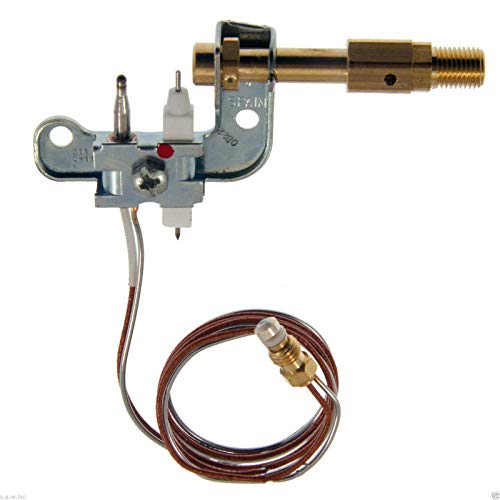
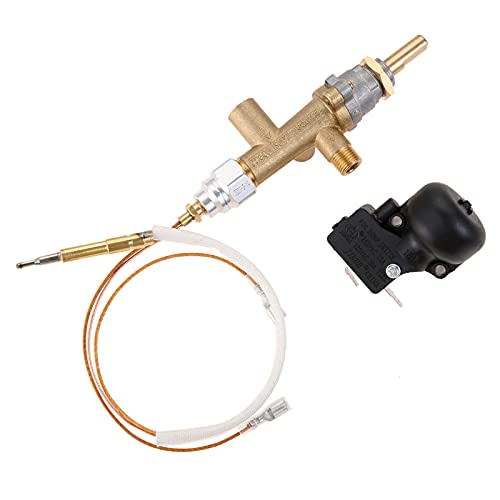
A thermocouple functions as the heater's flame sensor, generating a small electrical current when heated by the pilot flame, and that current holds the main gas valve open. If the pilot goes out, the thermocouple cools and the valve closes automatically, cutting gas flow — this is a safety feature, not a malfunction. A worn or dirty thermocouple can fail to generate enough current even with a lit pilot, causing the valve to close prematurely and the heater to act like it "won't stay lit." Thermocouples are inexpensive, commonly available replacement parts across most heater brands, and replacing one is usually straightforward following the specific model's manual. A replacement assembly like the Viefow ODS Pilot Assembly covers vent-free wall heaters specifically, while patio heater control valve and thermocouple kits cover standing patio heaters.
Burner Cleaning for a Propane Heater: Spider Web Blockage in the Burner Ports and Venturi Tube
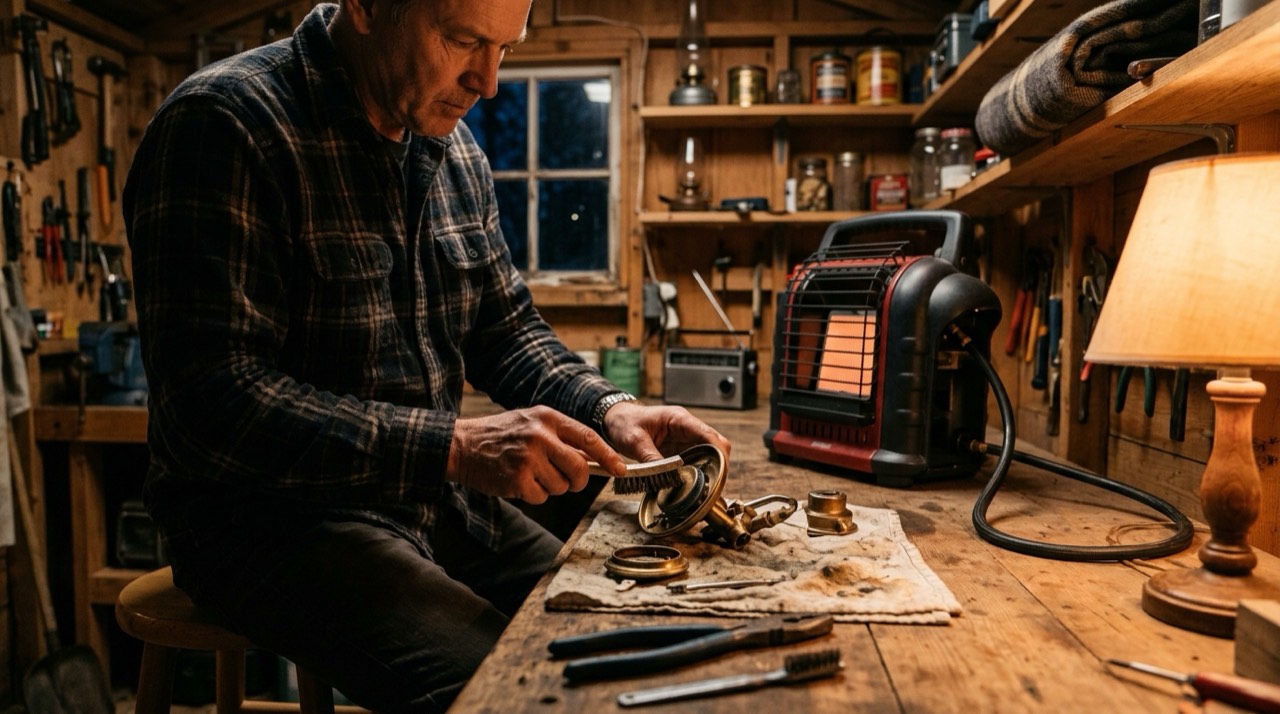
Dust, debris, carbon buildup and spider web blockage or other insect nests in burner ports are a genuinely common cause of ignition and flame-quality problems, especially after a heater has sat unused in storage for months. A clogged orifice specifically restricts fuel flow right at the burner tip, producing a weak or uneven flame even when the rest of the system checks out fine. Cleaning generally involves disconnecting the fuel source, allowing the heater to fully cool, and using a soft brush or compressed air to clear debris from the burner ports and venturi tube per the manufacturer's specific cleaning instructions — never use a wire brush or sharp tool that could damage the burner. Basic burner cleaning at the start of each new heating season, before the first light, prevents most of the seasonal "won't light" complaints that trace back to debris rather than a genuine defect.
Forced-Air Heater Won't Ignite
Forced-air construction heaters add electronic ignition and a fan motor to the troubleshooting picture beyond what a simple radiant heater has. If a forced-air heater won't start, check the power supply first — a bad extension cord, a tripped breaker, or a generator not providing clean enough power can all prevent the electronic ignition system from firing, even with plenty of fuel available. If power is confirmed good and the unit still won't ignite, the same fuel-line and regulator checks that apply to radiant heaters apply here too. A forced-air heater that ignites but produces noticeably less heat than its rating suggests is often a partially clogged nozzle rather than a fan or burner failure — this is a job for the manufacturer's specific cleaning or service instructions rather than generic troubleshooting.
Kerosene and Diesel Heater Troubleshooting Basics: Glow Plug and Error Codes
Kerosene wick heaters have their own specific failure patterns: a heater that won't light is often a wick that's burned down too far or become saturated with old fuel residue and needs trimming or replacement, a well-documented maintenance item for wick-style kerosene heaters generally. A kerosene heater that smokes excessively usually indicates a wick trimmed unevenly or fuel quality issues — using genuine K-1 kerosene rather than a lower grade matters more than owners sometimes expect. Diesel parking heaters, increasingly common in vans and RVs — including budget-friendly VEVOR units alongside pricier established brands — more often show error codes on their digital display than the simpler symptom patterns of a propane or kerosene heater; checking the specific error code against the manufacturer's manual is the fastest path to diagnosis, since codes vary between brands. A failing glow plug is one of the most common causes behind a diesel heater's ignition-failure error code, since it wears out from repeated heating and cooling cycles. See our kerosene heater guide and diesel heater guide for more on these fuel-specific issues.
When a Heater Problem Is Actually an Accessory Problem
A substantial share of complaints that read like a heater defect actually trace back to the hose, regulator or tank rather than the heater itself. An aging or cracked hose can restrict fuel flow enough to mimic a heater malfunction. A regulator rated for the wrong pressure range bottlenecks fuel delivery regardless of how well the heater itself is functioning. A tank that hasn't been checked for remaining fuel, especially in cold weather where pressure drops, is one of the most common "my heater stopped working" reports that turns out to be a simple fuel issue. Before assuming the heater needs repair or replacement, ruling out these accessory-level causes saves time and money — see our tanks and accessories guide for what to check first.
Seasonal Storage Problems
Heaters that sat unused for months between seasons develop a specific set of issues distinct from in-use failures. Insects and spiders nesting in an unused burner tube over a storage period is a surprisingly common, well-documented cause of ignition problems across gas appliances generally. Rubber hoses and O-rings can degrade from age and temperature exposure even without being used, meaning a heater that worked perfectly last season can develop a leak or restriction purely from sitting in storage. A visual inspection and test light before the first real use of a new season — rather than waiting until you actually need the heat — catches most of these issues at a convenient time rather than a critical one.
DIY Repair vs Replace: When to Stop
This repair vs replace decision usually comes down to the part's cost relative to a new unit's price. Simple fixes — cleaning a burner, replacing a thermocouple, swapping a hose or regulator — are reasonable DIY repairs for most owners comfortable with basic mechanical work. Anything involving the gas valve's internal components, a suspected leak you can't isolate, or a heater that's been damaged structurally (dented tank, cracked housing) is where professional inspection or replacement becomes the safer choice over continued DIY troubleshooting. For an inexpensive portable radiant heater, replacement is often more cost-effective than extensive repair once you're past simple parts swaps; for a more expensive forced-air or permanent installation, professional repair usually remains worthwhile.
Where to Buy Genuine Replacement Parts
Buying genuine manufacturer replacement parts, rather than generic universal substitutes, is worth the small extra cost for anything safety-relevant — a thermocouple, an ODS assembly, or a regulator specifically. Fit and calibration on these components can affect how reliably the safety system works, which matters more than saving a few dollars on a part that isn't a precise match. Dyna-Glo, Mr. Heater and other major brands sell official replacement parts directly or through authorized retailers, and checking the exact model number before ordering avoids the common mistake of buying a part designed for a similar but different model in the same product line.