
Affiliate disclosure: some links are affiliate links — as an Amazon Associate we earn from qualifying purchases, at no extra cost to you. Full disclosure.
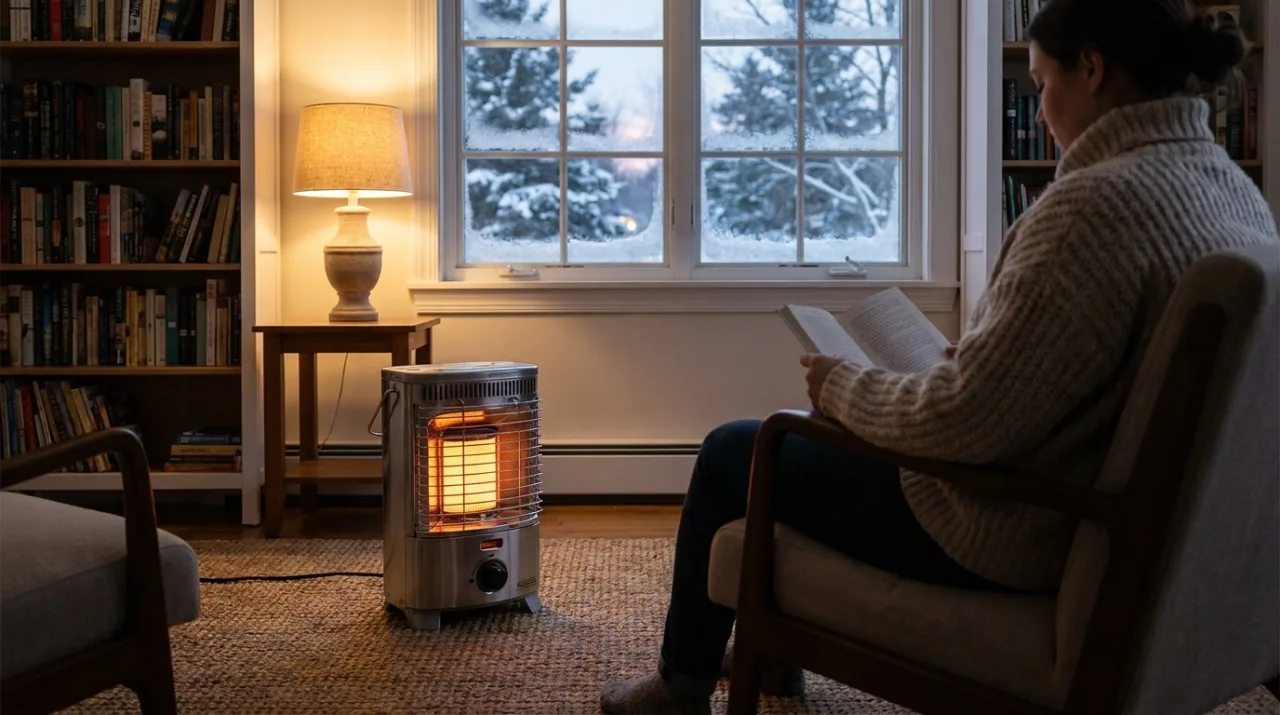
An indoor propane heater is a heater built and certified to run inside an enclosed room rather than outdoors only. That's a narrower category than "portable propane heater" as a whole. Most propane heaters sold for job sites and construction — the big forced-air units — are explicitly outdoor-only. The heaters that can run indoors share one non-negotiable feature: an oxygen depletion sensor.
Top 3 Recommended
What Makes an Indoor-Safe Propane Heater Safe: Oxygen Depletion Sensor, Low-Oxygen Shutoff, Tip-Over Shut-Off, CSA Certified and ANSI Z21.11.2
The feature that separates an indoor-safe heater from an outdoor-only one is the oxygen depletion sensor (ODS). It's a pilot-mounted sensor that continuously reads the oxygen level in the surrounding air. Oxygen can drop below a safe threshold in a small, sealed room as the heater burns fuel. When that happens, the ODS shuts the heater off automatically, before carbon monoxide can build up to dangerous levels. Manufacturers test and certify this feature specifically. It isn't something you can add to a heater that wasn't designed with it. Always check the specific model's manual for its indoor-use rating rather than assuming based on size or brand. Even within the same manufacturer's lineup, some models are indoor-safe and others are not. Manufacturers sometimes call this same feature a low-oxygen shutoff rather than an oxygen depletion sensor, but it's the identical mechanism. Beyond the ODS, look for a tip-over shut-off as a second layer of protection on any portable model. The relevant safety standard for this category is ANSI Z21.11.2, and indoor-rated models are also typically CSA certified. For the full picture on ventilation, detectors and what the actual risk looks like, see our indoor safety and carbon monoxide guide.
Portable Radiant Heaters vs. Wall-Mount Heaters and Cabinet Heaters
Portable Radiant Heaters: 1-lb Propane Cylinder, 20-lb Propane Tank and Piezo Ignition
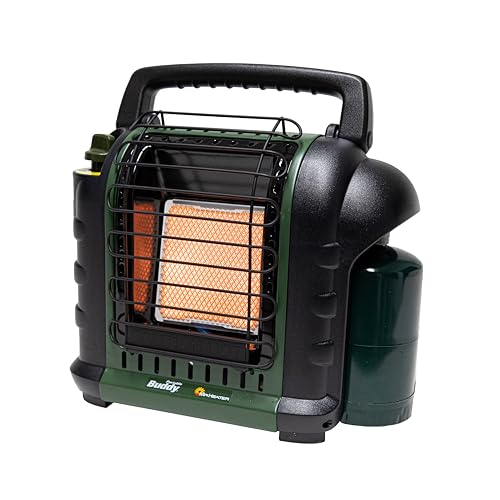
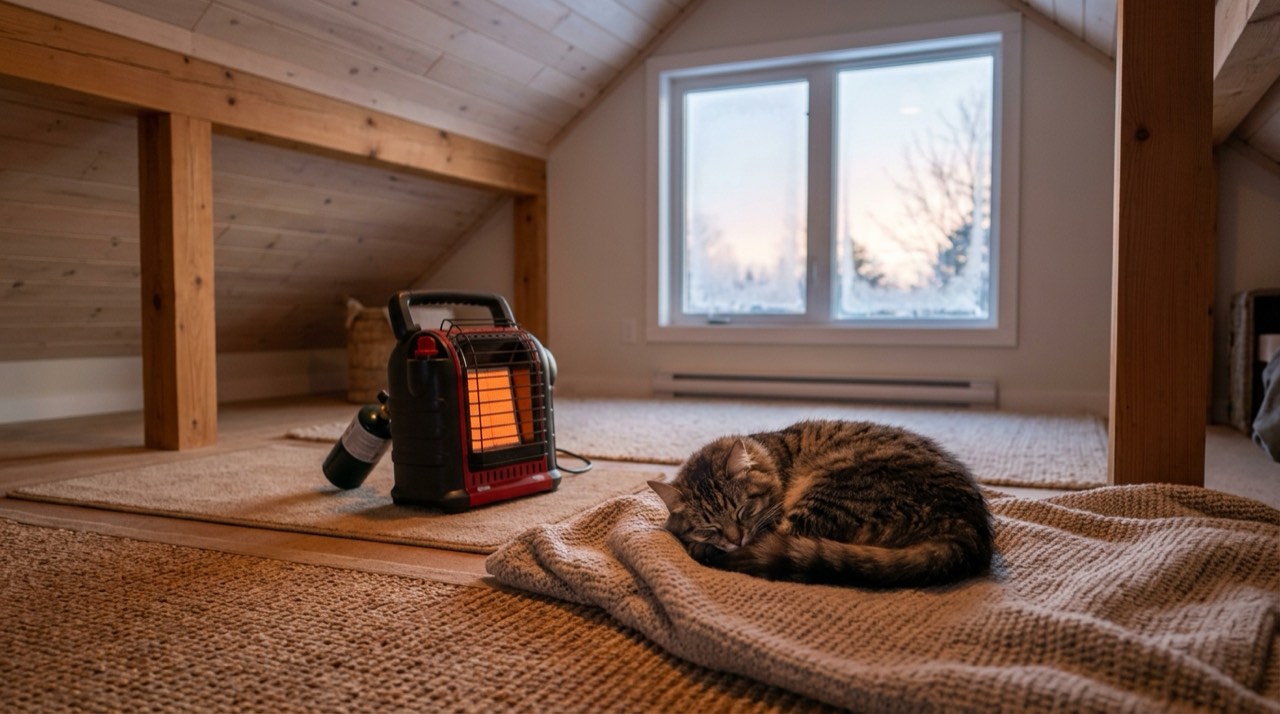
Indoor-safe propane heaters split into two practical categories. The first is the portable radiant heater — the Mr. Heater Buddy line is the reference point here, and it's built around a small radiant burner with an ODS and tip-over shutoff, running off a 1 lb cylinder or a hose-connected tank. It's meant to move room to room or space to space, running off a 1-lb propane cylinder by default with the option to hose-connect to a 20-lb propane tank for regular use, and lighting with a simple piezo ignition button rather than a match. Products like the Mr. Heater Buddy 4,000–9,000 BTU Indoor-Safe Portable Propane Radiant Heater are explicitly marketed and reviewed for this use case, and owners consistently report using them in single rooms, workshops, and enclosed porches. Beyond Mr. Heater, Dyna-Glo and ProCom both build indoor-safe vent-free and cabinet-style heaters worth comparing if a specific model above is unavailable.
Permanent Ventless Wall-Mount Heaters, Cabinet Heaters and a Thermostat
The second category is the permanent vent-free wall-mount or cabinet heater, which is installed in one place — a workshop, a converted garage, a cabin — and typically connects to a fixed propane line or a larger tank rather than a swappable cylinder. A heater like the Mr. Heater 30,000 BTU Vent Free Radiant Propane Heater falls in this tier: higher BTU output than a portable Buddy heater, an ODS as standard, and a design meant to stay put rather than travel. Vent-free heaters in this category are also called ventless heaters, and some permanent models add a built-in thermostat that cycles the burner to hold a set room temperature instead of running at one fixed output. See our wall-mount, cabinet and tank-top heater guide for the installation-focused options in more depth.
Sizing an Indoor Propane Heater by BTU and Room Size
Matching BTU to Room Size in Square Feet
BTU output needs to match the room, not just the heater's price tier. As a general starting point, a well-insulated interior space needs somewhere around 20–30 BTU per square foot. A drafty or poorly insulated room needs more. A 9,000 BTU heater is a reasonable fit for a single bedroom-sized room or a small workshop. A larger open room, or a poorly insulated space, usually calls for stepping up to an 18,000 BTU Big Buddy or a permanent 30,000 BTU vent-free unit instead. Oversizing isn't just wasteful. In an enclosed space, a heater running far above what the room needs can make ventilation and oxygen management harder to balance safely — part of why manufacturers publish room-size guidance per model rather than one number for the whole product line. Our BTU sizing and running-cost guide has an interactive calculator if you want a number for your own room.
Ventilation, CO Detector Placement and Carbon Monoxide Safety, Even With an ODS
An oxygen depletion sensor is a safety backstop, not a substitute for basic ventilation. Manufacturer manuals for indoor-safe propane heaters consistently specify a minimum room size and recommend cracking a window or door slightly while the heater runs, even in a room the heater is rated for. This is standard guidance across the category, not something specific to one brand. A battery-backed carbon monoxide detector in the same room is recommended by manufacturers and safety agencies alike, regardless of how the heater is rated — it's cheap insurance against a sensor failure, a ventilation mistake, or a heater that's been damaged in a way that isn't visible.
Indoor-rated models are generally built to the ANSI Z21.11 safety standard. Pairing one with a battery-backed CO detector is standard manufacturer advice, regardless of brand — Kidde and First Alert both make widely available options. The CPSC publishes seasonal warnings on carbon monoxide poisoning from portable heaters. OSHA also sets workplace CO exposure limits, relevant to a workshop or garage rather than a living space. Catalytic options such as Camco's Olympian Wave line are another indoor-safe route. They're more common in RVs and cabins with a fixed propane line than in a typical house.
Where Indoor Propane Heaters Get Used: Garage Heater, Workshop Heater, Porch Heater and Power Outage Backup
- Workshops and detached garages without central heat, where running an extension cord for an electric heater isn't practical or the circuit can't handle the load. See our garage and workshop heater guide.
- Porches and three-season rooms that are enclosed enough to trap heat but aren't part of the home's HVAC zone. Our porch and screened-space guide covers the specific considerations there.
- Tiny homes, cabins and off-grid living spaces without a connected furnace, where a vent-free heater is sometimes the primary heat source rather than a supplement.
- Power outage backup heat for a single room, when the alternative is no heat at all — this is one of the more common reasons buyers cite for keeping an indoor-safe Buddy-style heater on hand even if they don't use it regularly.
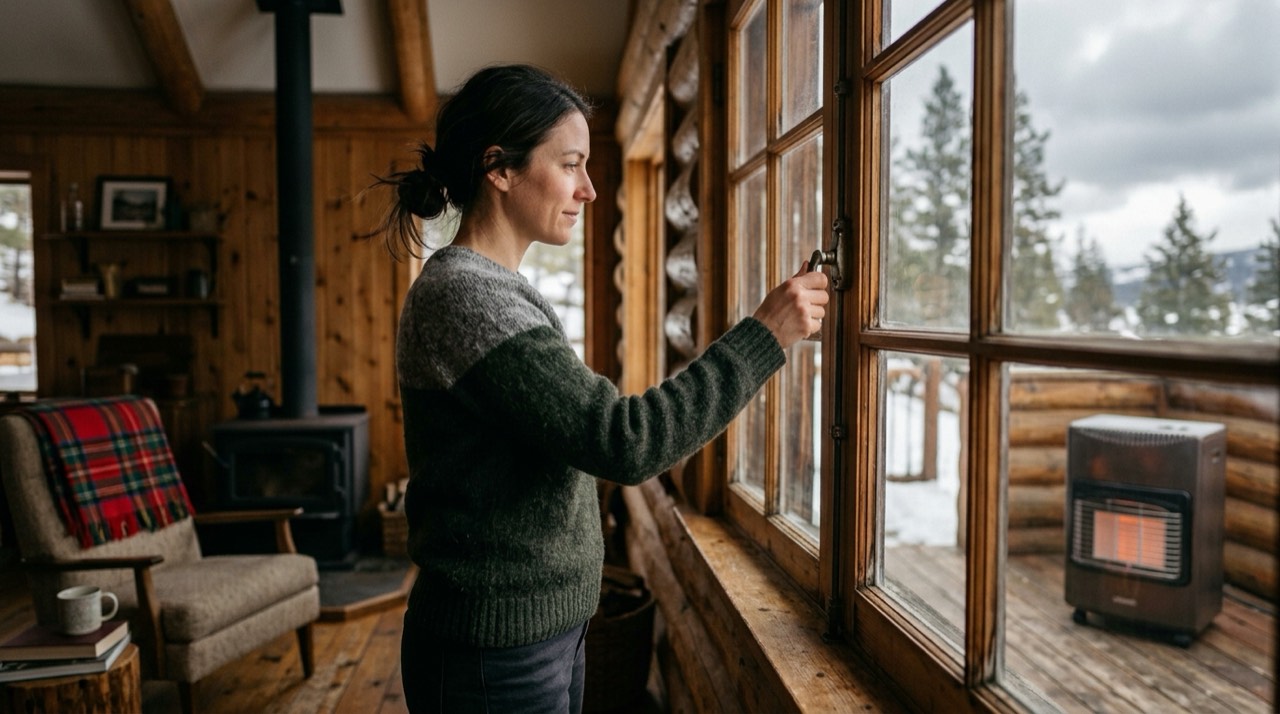
What We Would Not Use Indoors: Forced-Air Heaters and Outdoor-Only Units
Forced-air construction heaters, most tank-top radiant heaters, and standing patio heaters are built for open or ventilated outdoor spaces and are not certified for enclosed indoor use. Running one indoors is not a gray area or a matter of "being careful" — the manufacturer's own documentation rates them outdoor-only, and using them inside an enclosed room is a genuine safety risk regardless of how cold it is outside. If a job requires heating an open garage bay or job site, that's a different use case with different products — see our forced-air and construction heater guide for that scenario specifically.
What Owners Report About the Mr. Heater Buddy, Big Buddy and Square Footage Covered
The indoor-safe Buddy heater has one of the largest review histories of any product in this category, and a few patterns show up consistently once you read past the star rating. Owners who use it in the space it's actually sized for — a single room, a small workshop, an enclosed porch under roughly 200 square feet — are overwhelmingly satisfied, often citing how quickly it brings a cold room up to a comfortable temperature. The complaints cluster around two things. First, fuel consumption on a small 1 lb cylinder at the highest setting is faster than some buyers expect, which is why many long-term owners add a hose-and-filter kit to run it off a 20 lb tank instead. Second, a small number of owners report the tip-over safety switch triggering on an uneven surface, which is the heater working as designed rather than malfunctioning — it's meant to shut off if it isn't sitting level and stable.
The 30,000 BTU vent-free wall unit draws a different kind of review. Because it's a permanent installation rather than something you carry room to room, most reviews come from people replacing an older heater or adding supplemental heat to a space without central HVAC — a converted garage, a detached office, a cabin. The consistent praise is output: at 30,000 BTU it noticeably outperforms a portable Buddy-class heater for square footage covered. The consistent caveat is that it needs to be sized and installed according to the manual's specific clearance and room-size requirements, which are stricter than a portable heater's because it's designed to run for longer stretches unattended.
Running Cost: How Long a 20 lb Tank or 1 lb Cylinder Lasts Indoors
Indoor heaters tend to run longer per session than an outdoor or camping heater, simply because people use them to hold a room at a comfortable temperature for hours rather than for a quick burst of warmth. Using the standard published conversion of roughly 21,600 BTU per pound of propane, a 9,000 BTU heater running continuously on a 20 lb tank lasts in the neighborhood of 48 hours; a 30,000 BTU vent-free unit on the same tank burns through it in under 15 hours at full output. In practice, most indoor heaters cycle on and off rather than running continuously, which stretches real-world tank life well past those full-burn numbers — but it also means the number on the box is a ceiling, not a typical day's usage. Our running-cost calculator lets you plug in your own heater's BTU rating and tank size.
Installing a Permanent Vent-Free Heater: Clearance to Combustibles on a Propane Tank or Gas Line
A vent-free wall or cabinet heater is a bigger commitment than a portable Buddy-style unit, and the manual's clearance to combustibles requirements are not optional guidance — they're the difference between a heater that's safe to leave running and one that isn't. Every vent-free heater manual specifies minimum distances from walls, furniture and flammable materials, along with a minimum room volume the heater is rated for. If you're connecting to a fixed propane line rather than a portable tank, that's typically a job for a licensed plumber or gas fitter rather than a DIY install, both for safety and because many local codes require it for a permanent gas appliance. Renters and anyone in a space they don't own outright should check with a landlord or building management before installing a permanent gas heater, since it usually counts as a fixed modification to the property.
Buying Considerations for an Indoor Propane Heater or Wall Heater: LP Gas Basics
- Check the model number, not just the product line. Within the same brand, some models in a lineup are indoor-safe and others are outdoor-only — the ODS certification is model-specific, not a blanket feature of the brand.
- Match the BTU to the room, not the biggest number available. A heater rated well above what a room needs isn't more effective past a certain point, and in an enclosed space it makes oxygen management and comfort harder to balance.
- Factor in fuel logistics. A portable heater running on 1 lb cylinders needs a steady supply of them or a hose-connect kit to a refillable tank; a permanent vent-free unit needs either a nearby 20–30 lb tank or a fixed line, which is a bigger upfront decision.
- Budget for a carbon monoxide detector if you don't already have one in the specific room the heater will run in — this is universal safety guidance across the category, not an upsell specific to any one product.
- Note that propane is sometimes labeled LP gas (liquefied petroleum gas) on tank valves and manuals — it's the same fuel under a different name, not a different product.
Related safety gear
Beyond a carbon monoxide detector, it's worth keeping a spare hose and regulator on hand if you're running a portable indoor heater off a tank rather than disposable cylinders — a cracked or aging hose is one of the more common reasons an otherwise healthy heater starts acting up mid-season. Our tanks, hoses and accessories guide covers what to check and replace.
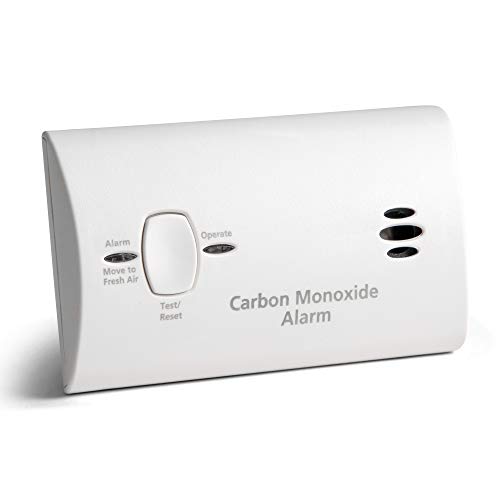
A carbon monoxide detector is the single most-recommended accessory to pair with any indoor propane heater, indoor-safe or not — it catches the scenario an ODS is designed to prevent but doesn't rely on the heater's own sensor working correctly. A model like the Kidde Carbon Monoxide Detector is a straightforward battery-powered option that doesn't depend on household wiring, which matters in a workshop or cabin that may not have outlets everywhere a heater might run.