
Affiliate disclosure: some links are affiliate links — as an Amazon Associate we earn from qualifying purchases, at no extra cost to you. Full disclosure.
Only a fraction of the propane heaters sold in the US are actually certified for indoor use, and that certification — not the brand, not the price — is the entire basis for this list. We looked at the portable and permanent propane heaters explicitly rated by their manufacturers for enclosed or indoor use. We then cross-referenced owner reviews spanning bedrooms, workshops and enclosed porches, and ranked the six that come up most consistently as the best indoor propane heater choice for real households. Every ranking below reflects aggregated owner reviews, manufacturer specifications and published safety certifications.

How We Picked These Indoor Propane Heaters
An indoor propane heater lives or dies on one non-negotiable feature and three practical ones. The non-negotiable: a built-in oxygen depletion sensor (ODS). Every heater on this list has one. We confirmed each against the manufacturer’s own spec sheet, not marketing copy. The three practical factors we weighted on top of that: BTU output matched to a realistic indoor room, fuel setup, and what owners report after a full season of real use. Fuel setup means disposable cylinder vs. hose-connected tank vs. fixed line. We skipped unboxing reviews in favor of longer-term feedback. Heaters with a pattern of ignition or regulator complaints were dropped, even with a fine average star rating.
The Short Answer: The Best Overall Indoor-Safe Propane Heater Pick
For most people typing "best indoor propane heater" into a search bar, the Mr. Heater Buddy 4,000–9,000 BTU Indoor-Safe Heater is the safest starting point. It is explicitly ODS-certified. It has the deepest review history of anything in this category. And 9,000 BTU comfortably covers a bedroom, home office or small workshop. If that size heater has already underwhelmed you in a bigger room, step up to the 18,000 BTU Big Buddy. Want the cheapest indoor-safe option for a genuinely small space? The 3,800 BTU Little Buddy carries the same certification at the lowest price in the lineup.
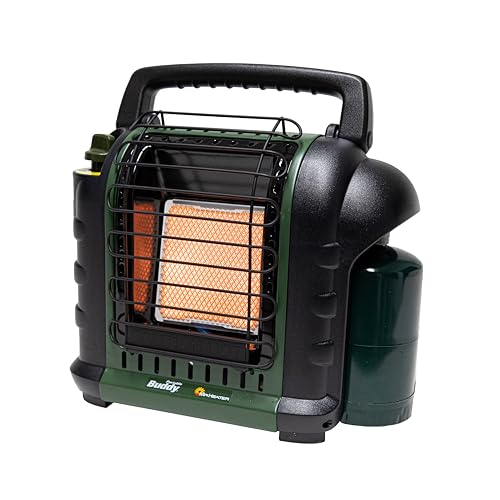
Best for Bedrooms, home offices, workshops and enclosed porches under roughly 200 sq ft
- Built-in oxygen depletion sensor (ODS) and automatic low-oxygen shutoff
- Tip-over safety switch
- Runs on a 1 lb cylinder or hose-connects to a 20 lb tank
- Low/high settings from 4,000–9,000 BTU
Why buy it: It is the most-reviewed indoor-safe propane heater on the market by a wide margin, and the review pattern is consistent: it lights on the first try, the safety shutoffs work as described, and it heats a small enclosed room fast enough that owners rarely regret the purchase.
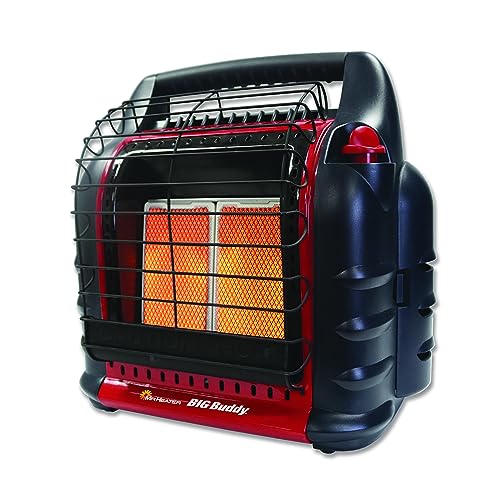
Best for Larger bedrooms, converted garages and open-plan rooms a standard Buddy underpowers
- 4,000–18,000 BTU across three settings
- Same ODS and tip-over protection as the smaller Buddy
- Fan-assisted heat distribution
- Two 1 lb cylinders or hose-connect to a 20 lb tank
Why buy it: Owners who tried a 9,000 BTU Buddy first and found it underpowered for a bigger indoor space consistently report the Big Buddy closes that gap without giving up the indoor-safe sensor package that makes the whole category viable indoors.

Best for Small rooms under 100 sq ft, and buyers who want the cheapest entry into an indoor-safe heater
- 3,800 BTU fixed output
- Same ODS certification as the rest of the Buddy line
- Runs directly off a 1 lb disposable cylinder
- Under 10 inches tall
Why buy it: It carries the same indoor-safe certification as its bigger siblings at the lowest price point in the lineup, and owner reviews are consistent that it is not underpowered for the small-room use case it is actually sized for.

Best for A workshop, converted garage or cabin that needs a fixed, higher-output heat source
- 30,000 BTU sustained radiant output
- ODS standard
- Wall or floor-mount installation
- Connects to a fixed line or larger tank rather than a swappable cylinder
Why buy it: This is the pick for anyone who has decided a portable Buddy-class heater will not keep up with a bigger, permanently-heated indoor space — owners consistently cite it as noticeably outperforming a portable heater for square footage covered.

Best for Households that want the option to run on either natural gas or propane
- 30,000 BTU blue-flame burner (heats the room air, not just objects in its path)
- Dual-fuel: switches between natural gas and propane
- ODS and built-in thermostat
- Vent-free, wall or floor mount
Why buy it: The blue-flame burner heats a room’s air more evenly than a radiant element does, which owners specifically call out when comparing it to a standard vent-free radiant heater in a larger indoor space, and the dual-fuel switch is a genuine hedge against propane price swings.

Best for Bedrooms and sleeping areas where fan noise or pilot-light hiss is a dealbreaker
- 6,000 BTU adjustable catalytic (flameless) heat
- No fan, no pilot noise
- Portable or permanent wall-mount
- Rated for continuous ventilated indoor use per the manual
Why buy it: Catalytic heat is popular indoors specifically because it is silent, and owners who use one in an RV or a bedroom-adjacent space consistently mention that the total quiet is the reason they chose it over a radiant Buddy-style heater.
Full Comparison
All six picks side by side. "Best for" reflects the specific indoor scenario each heater is most consistently recommended for in owner reviews, not a claim that one is universally biggest or cheapest.
| Product | Best for | Buy |
|---|---|---|
| Mr. Heater Buddy 4,000–9,000 BTU Indoor-Safe Portable Propane Radiant Heater | Best Overall | Check Price |
| Mr. Heater 18,000 BTU Big Buddy PRO Series Heater | Best for a Larger Room | Check Price |
| Mr. Heater 3,800 BTU Little Buddy Portable Radiant Propane Heater | Best Compact & Budget | Check Price |
| Mr. Heater 30,000 BTU Vent Free Radiant Propane Heater | Best for a Permanent Install | Check Price |
| Mr. Heater 30,000 BTU Vent Free Blue Flame Dual Fuel Heater | Best Dual-Fuel Flexibility | Check Price |
| Camco Olympian Wave-6 Catalytic Safety Heater, 6,000 BTU | Best Silent / Catalytic | Check Price |
Portable vs. Permanent Wall-Mount Installation: Vent-Free Heaters and Supplemental Heat Compared
Every heater on this list is a ventless (also called vent-free) design, but four of the six picks above are portable, cylinder-fed heaters you can move room to room; two are permanent installation, wall-mounted units meant to stay in one place. That split matters more than BTU count when deciding between them. A portable Buddy-class heater makes sense if the room you’re heating changes — a home office some days, a workshop on others, or a spare bedroom only during a cold snap. A permanent vent-free unit like the 30,000 BTU radiant or blue-flame models makes more sense when one specific room needs supplemental heat every winter and you’d rather not deal with swapping cylinders. For the full breakdown of how these two categories differ structurally — including installation requirements for the permanent units — see our indoor propane heater guide.
What Owners Report: Blue Flame, Catalytic Heater and the Other Less-Obvious Picks
The standard Buddy heater’s review pattern is well known: reliable ignition, fast warm-up, and a 1 lb cylinder that empties faster than expected at full output. The other four picks on this list draw more specific feedback. The Little Buddy earns polarized reviews for a simple reason — buyers who use it in a space it’s actually sized for (under roughly 100 sq ft) are consistently satisfied, while lower ratings mostly come from people who tried to heat a bigger room with a 3,800 BTU unit. The Blue Flame Dual Fuel heater draws praise specifically from owners who’ve used both a radiant and a blue-flame vent-free heater indoors — the recurring comment is that blue-flame heat feels more like central heating because it warms the room’s air directly rather than just what’s in the radiant element’s line of sight. The Camco Olympian Wave-6 is reviewed almost entirely on noise: RV owners and light sleepers specifically seek it out because there is no fan and no pilot-light hiss, though several reviews note it needs a fixed propane connection rather than a simple disposable cylinder, which is a bigger commitment than a Buddy-style heater.
BTU Sizing and Square Footage for an Indoor Space
Every heater on this list is rated for a different practical room size. Matching BTU to square footage matters more indoors than outdoors. An oversized heater in a sealed room makes oxygen and ventilation management harder to balance, not just more wasteful. As a rough starting point, a well-insulated interior room needs about 20–30 BTU per square foot. If you want an exact number for your own room rather than a rule of thumb, our indoor propane heater BTU by room size guide has the specific breakdown, and our sitewide BTU sizing and running-cost guide has an interactive calculator.
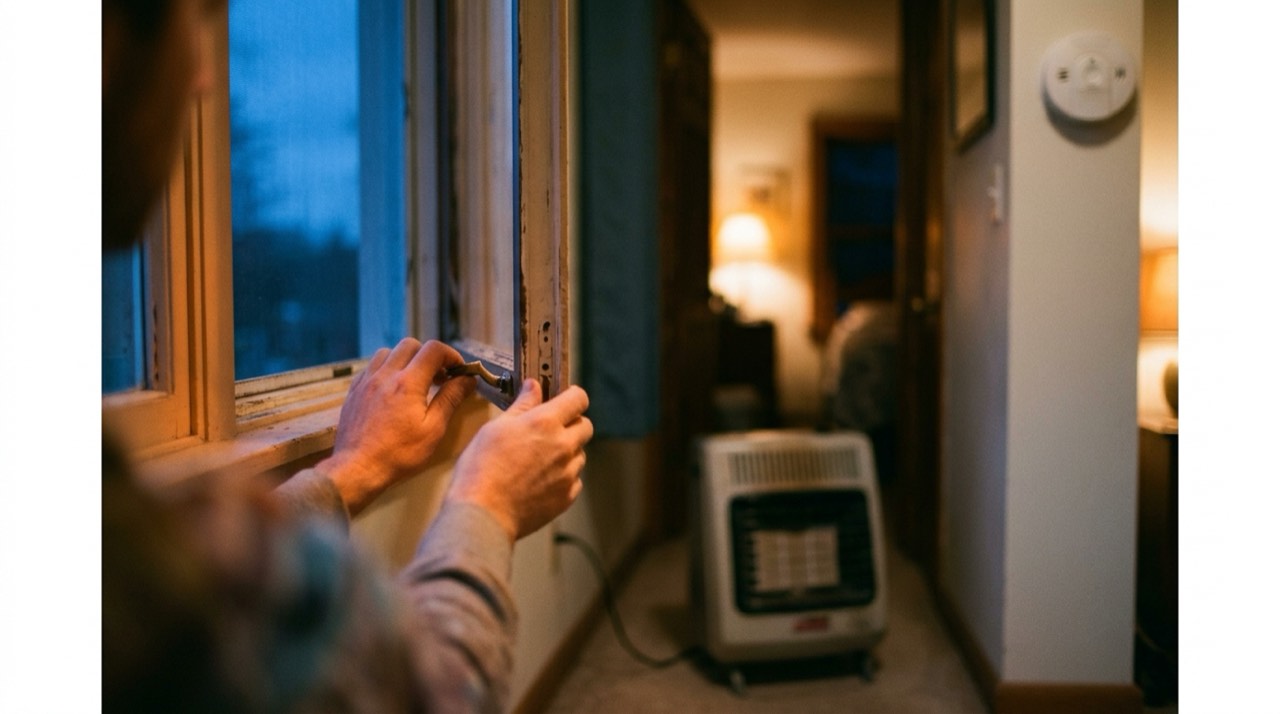
Ventilation, the Oxygen Depletion Sensor (ODS) and Low-Oxygen Shutoff: Backing Up a Carbon Monoxide Detector
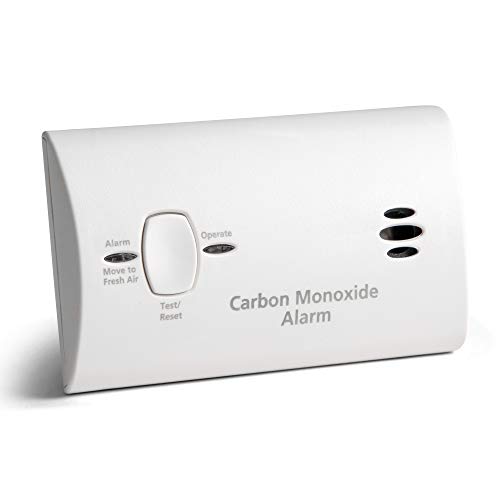
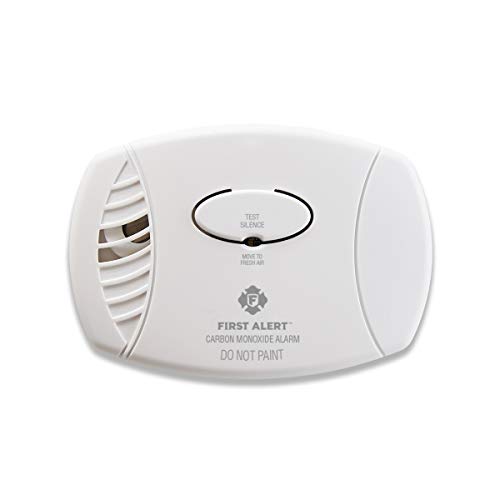
Every heater ranked above has an oxygen depletion sensor, and every manufacturer manual for these products still recommends basic ventilation — cracking a window or door slightly — while the heater runs, because the ODS is a safety backstop rather than a substitute for fresh air. This is standard guidance across every brand on this list, not a caveat specific to any one product. Pair any heater on this page with a battery-backed carbon monoxide detector in the same room; it doesn’t rely on the heater’s own sensor working correctly, and it’s the single most-recommended accessory across every indoor propane heater review we read. Our full breakdown of ventilation requirements is in the ventilation requirements guide, and the underlying safety mechanics are covered in the sitewide indoor safety and carbon monoxide guide.
Fuel Setup: A 1-lb Cylinder vs. a 20-lb Tank Hookup and Heat Output
The four portable heaters on this list run off a 1-lb cylinder out of the box, with the option to hose-connect via a 20-lb tank hookup for a lower cost per hour of run time and, on some models, a modest boost in sustained heat output. The two permanent vent-free units need either a fixed propane line or a larger tank kept nearby — not something you’ll be running to a hardware store to swap mid-winter. If you’re leaning toward a permanent unit, budget for that installation decision before comparing BTU numbers, since it changes both the upfront cost and who can legally do the connection work in your area. A licensed plumber or gas fitter is typically required for a fixed-line connection to a permanent appliance.
Other Indoor-Safe Brands: Dyna-Glo, ProCom, CSA Certified and ANSI Z21.11.2 Cabinet Heaters
Mr. Heater dominates this list, but it is not the only manufacturer building an indoor-safe propane heater. Dyna-Glo and ProCom both sell vent-free lineups — including cabinet heater and wall-mount models — that carry the same oxygen depletion sensor and a CSA certified or ANSI Z21.11.2 safety listing required for enclosed indoor use. A cabinet heater is worth knowing as its own sub-category: it houses the burner inside a vented metal cabinet rather than an exposed radiant element, which some owners prefer for a room with kids or pets moving around it. Whichever brand you choose, confirm the specific model — not just the product line — carries the ODS certification and a listed tip-over shut-off, and check that the U.S. Consumer Product Safety Commission (CPSC) has not issued a recall notice for it.
Altitude and High-Elevation Use
Propane combustion is affected by elevation, and manufacturers of every heater on this list publish a derating or adjustment note for high-altitude use, typically starting somewhere above 2,000–3,000 feet. At higher elevations, thinner air means less oxygen available for combustion, which can affect flame quality and, on some models, the accuracy of the BTU rating printed on the box. This isn’t unique to indoor propane heaters — it’s standard combustion-appliance physics that applies to gas stoves, furnaces and grills as well. If you live at meaningful elevation, check the specific model’s manual for an altitude adjustment table or a note on maximum recommended elevation, and if you’re right at the edge of a manufacturer’s stated range, sizing up slightly compensates for the reduced effective output better than assuming the box rating holds exactly as printed.
Common Clearance Mistakes When Installing a 30,000 BTU Radiant Heater or Vent-Free Unit
The two permanent picks on this list — the 30,000 BTU radiant heater and the blue-flame dual-fuel unit — come with installation requirements that portable Buddy-style heaters don’t. A few mistakes show up repeatedly in owner discussions. The most common is underestimating clearance-to-combustibles requirements. These are measured from the heater’s specific mounting point and are not the same for every wall or fixture nearby. A bookshelf or curtain that seems far enough away on a tape measure can still fall inside the manual’s rated clearance zone. The second mistake is skipping the manufacturer’s minimum room-volume check. This exists specifically because a vent-free heater at this output level needs more air exchange than a portable unit, not less. The third is treating the gas-line connection as a DIY project when local code requires a licensed installer. This varies by jurisdiction, so it’s worth a quick call to a local gas fitter before assuming either way rather than finding out after the heater is mounted.
Best Indoor Propane Heater Buying Checklist: Piezo Ignition, Square Footage and the Tip-Over Shut-Off
- Confirm the exact model is ODS-certified, not just the product line — some manufacturers sell both indoor-safe and outdoor-only models under the same family name.
- Size to the room’s actual square feet, not the biggest room in the house, since oversizing indoors is a genuine ventilation consideration, not just a cost one.
- Confirm the tip-over shut-off is present and functional before first use — every portable pick on this list includes one, and it’s a core part of why these heaters are rated safe to run unattended for short periods.
- Check how the heater lights. Most picks here use a simple piezo ignition button rather than a match or separate lighter, which matters if you plan to relight the heater often through a season.
- Decide portable vs. permanent before comparing BTU — it changes the whole shortlist, not just the price.
- Add a carbon monoxide detector to the budget if the room doesn’t already have one; it’s inexpensive insurance every manufacturer and safety agency recommends regardless of which heater you choose.
- Read the manual before the first light, not after a problem. Clearance-to-combustibles distances, minimum room-size figures and altitude derating notes are all published there and vary meaningfully across the six picks above.
Storage and Off-Season Care
Every heater on this list benefits from the same basic off-season routine: disconnect the cylinder or tank before long-term storage, keep the unit somewhere dry, and inspect the hose, regulator and burner ports for cracking, debris or insect nests before the first light of a new season. This matters slightly more for the portable picks, which tend to get boxed up in a garage or closet between uses, than for the two permanent wall units, which stay connected but still benefit from a pre-season visual check of the pilot assembly and ODS sensor.