
Affiliate disclosure: some links are affiliate links — as an Amazon Associate we earn from qualifying purchases, at no extra cost to you. Full disclosure.
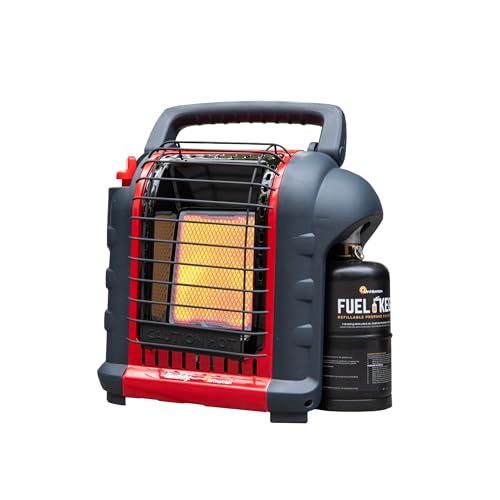
The Little Buddy is the entry point into Mr. Heater’s indoor-safe Buddy lineup. It’s built for one specific job: heating a small, enclosed space off a single disposable 1 lb. propane cylinder. No cord. No batteries beyond the built-in piezo igniter. At 3,800 BTU, it isn’t trying to compete with the larger Buddy models on raw output. It’s the lightest and most compact heater in the series, and that’s the whole point for the person buying it.
Top 3 Recommended
Who It’s For
The Little Buddy fits a two-person tent, an ice shanty, a deer blind, or a small unheated room under about 95 sq ft. These are spaces where a bulkier 9,000 or 18,000 BTU Buddy model would be more heater than needed, and more weight than most people want to carry on foot. It’s a poor fit for anything larger than a small room. It’s also not meant to be a primary heat source for continuous overnight use in freezing conditions. Treat it as supplemental warmth for a confined space, not a furnace replacement. It’s also a reasonable pick for an emergency kit, since it needs no batteries beyond the built-in igniter and no electrical outlet, and it stores flat in a closet for years without any real maintenance.
Full Specs
| Spec | Detail |
|---|---|
| BTU output | 3,800 BTU (single setting) |
| Coverage | Up to 95 sq ft |
| Fuel | One 1 lb. disposable propane cylinder |
| Runtime | 5.6 hours per cylinder |
| Dimensions | 12"L x 9.75"W, 8" round base |
| Weight | 5.85 lbs |
| Safety | Oxygen Depletion Sensor (ODS), accidental tip-over shut-off, heavy-duty wire guard |
| Ignition | Piezo spark, one-button start |
| Max elevation | 7,000 ft |
Source: Mr. Heater official Little Buddy product page.
What Owners Praise
The most consistent theme in aggregated owner feedback is how little the Little Buddy asks of the person using it. No battery to charge. No cord to run. Just a single 1 lb. cylinder, and most owners say it’s easy to keep a few spares in a truck bed or gear bag. Hunters and ice anglers in particular report relying on it season after season. They say it starts reliably in cold weather with a single push, without the fumbling some pilot-light designs require with gloves on. Its small footprint and light weight also come up often as a real advantage, not a compromise. Owners packing it into a blind or shanty on foot describe it as barely noticeable in a gear bag next to a larger Buddy model.
Owners also frequently note that the 8-inch round base keeps it stable on uneven ground. Tent floors, shanty decking, truck beds — it holds its footing in a way some taller portable heaters don’t. The tip-over shutoff triggers appropriately, too, without excessive false alarms from normal handling.
What Owners Report as Drawbacks
The most common complaint is the flip side of its biggest strength. 3,800 BTU simply isn’t enough heat for anyone expecting it to warm a full-size room or a larger tent. Some negative feedback comes from buyers who didn’t check the 95 sq ft coverage figure before buying. A second recurring point is runtime. At 5.6 hours per 1 lb. cylinder, an overnight trip means packing several cylinders, or accepting the heater running out partway through the night. Owners on multi-day trips consistently mention needing to plan cylinder quantity carefully. A smaller number of owners note there’s no adjustable heat setting. It’s either on at 3,800 BTU or off, which limits fine control compared with a multi-setting Buddy model.

Pros & Cons
Pros
- At 5.85 lbs, it’s the lightest, most packable heater in the Buddy lineup
- Reliable single-push piezo ignition, widely reported to work well in cold weather
- 8" round base gives it real stability on uneven tent or shanty floors
- ODS + tip-over shutoff make it indoor-safe for a small enclosed space
Cons
- 3,800 BTU only covers up to 95 sq ft — not a fit for a larger room or tent
- 5.6-hour runtime per cylinder means packing multiple cylinders for overnight trips
- Single heat setting only, no way to dial output down further
- Not intended as a primary heat source for continuous freezing-night use
Maintenance and Storage
Keep the Little Buddy’s wire guard free of dust and lint, since it sits close to the burner. Check the base for cracks each season, since a stable base matters most for a heater this light. Never store it with a cylinder still attached. Remove the cylinder and keep both parts somewhere dry. Test the piezo igniter and the tip-over shutoff at the start of each season, before your first real trip. A quick check now beats finding out something’s wrong when you’re already out in the cold.
How It Compares
Within the Buddy lineup, the Little Buddy is the clear pick for anyone prioritizing weight and simplicity over raw heat. The next size up, the 9,000 BTU Portable Buddy, weighs almost twice as much but adds adjustable settings and roughly doubles the coverage. Outside the Buddy series, other single-cylinder radiant heaters in this class rarely match its combination of low weight and a stable round base. Most competitors are either lighter but less stable, or more stable but noticeably bulkier.
Verdict
The Little Buddy does one job well: small-space, grab-and-go warmth off a single 1 lb. cylinder. According to the consistent pattern in owner feedback, it does that about as reliably as anything in the category. It’s the right pick for a hunting blind, a small tent, or an ice shanty, where weight and simplicity matter more than raw BTU output. Anyone heating a larger space, or planning long overnight use without resupplying cylinders, should look at the 9,000 BTU Portable Buddy or the 18,000 BTU Big Buddy instead. Both trade some of the Little Buddy’s portability for meaningfully more heat and runtime.

Best for Tents, ice shanties and small rooms under 95 sq ft
Related Products
See our full Mr. Heater Buddy series guide for how the Little Buddy compares to the rest of the lineup, or our indoor propane heater roundup for other brands in this size class. Pair it with these: