
Affiliate disclosure: some links are affiliate links — as an Amazon Associate we earn from qualifying purchases, at no extra cost to you. Full disclosure.
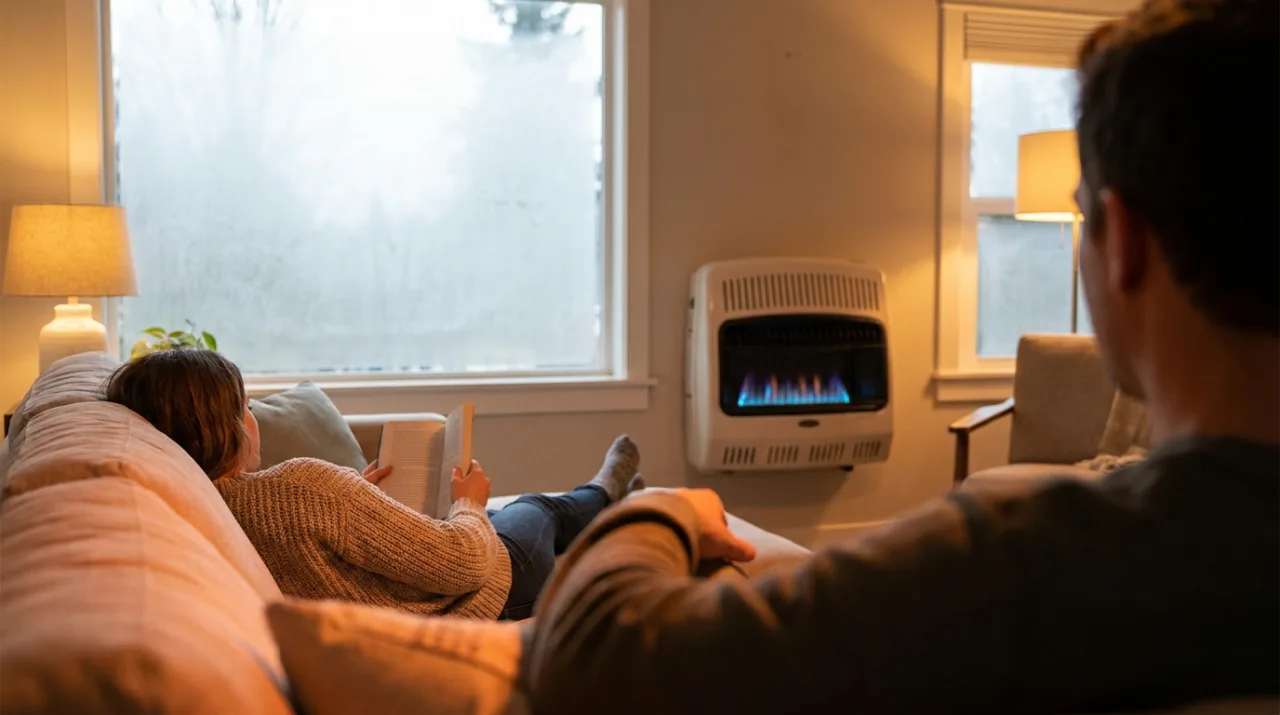
"Best propane heater for indoor use" is really five different questions depending on where you’re actually putting it. A heater sized right for a bedroom is the wrong pick for a workshop, and a heater meant to sit permanently in an off-grid cabin isn’t the one you want for occasional power-outage backup. Rather than one flat ranking, this guide matches an indoor-safe propane heater to the specific situation people searching this term usually have in mind. For a straight ranked top-6 list instead, see our best indoor propane heater roundup. Every recommendation here reflects aggregated owner reviews and manufacturer safety certifications.
What Every Indoor-Safe Propane Heater Pick Has in Common
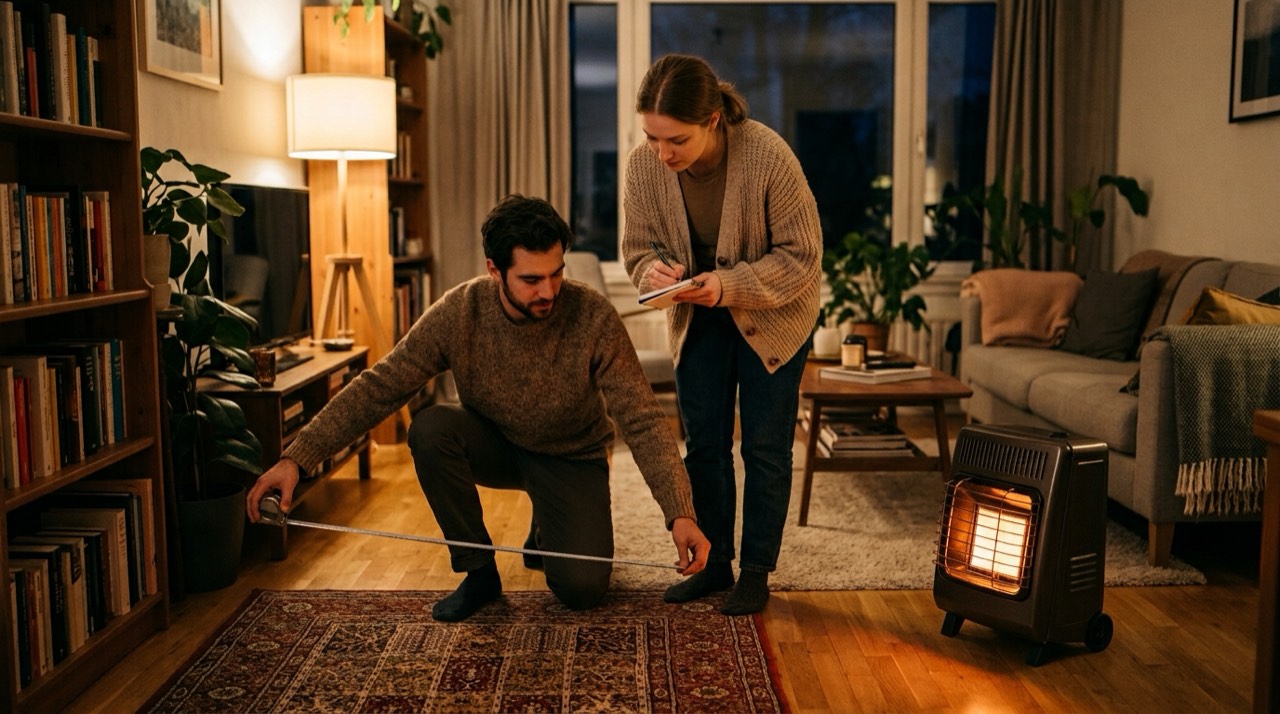
Before getting into specific situations, one thing doesn’t change: every heater recommended below has a manufacturer-certified oxygen depletion sensor (ODS) and is explicitly rated for indoor or enclosed-space use.
Oxygen Depletion Sensor (ODS) and CSA Certified Testing
That’s a smaller pool than "propane heater" as a whole — most outdoor and construction-grade units are excluded by design, regardless of BTU or price. If you’re unsure whether a specific model you’re considering qualifies, check the spec sheet for "ODS" or "indoor-safe" language rather than assuming based on the brand.
Tip-Over Shut-Off and a Low-Oxygen Shutoff
Every pick also includes a tip-over shut-off that cuts gas flow if the heater is knocked over. The ODS itself works as a low-oxygen shutoff, closing the gas valve well before oxygen levels in the room become unsafe. Look for CSA certified components specifically. The Consumer Product Safety Commission (CPSC) treats independent certification as the baseline signal that a heater's safety features were actually tested, not just claimed.
For a Bedroom or Home Office: Piezo Ignition, Radiant Heat and a 1-lb Propane Cylinder
A bedroom is the situation where oversizing matters most, because you want steady, moderate warmth rather than a blast of heat, and a smaller heater is easier to place safely away from bedding and furniture in a room that’s often tight on floor space. The Mr. Heater 3,800 BTU Little Buddy is the size most consistently recommended for this use — it’s ODS-certified, it’s the smallest footprint in the Buddy lineup, and owner reviews confirm it comfortably handles a room under roughly 100 sq ft without being so large it forces you into ventilation compromises. Like the rest of the Buddy lineup, it produces radiant heat lit by a simple piezo ignition and runs on a 1-lb propane cylinder that pierces directly into the unit for a compact, disposable setup. For anyone specifically asking whether it’s safe to fall asleep with one running, see our dedicated guide on running an indoor propane heater overnight before assuming any model is rated for that.
For a Workshop or Detached Garage: Heat Coverage, a 20-lb Tank Hookup or a Vent-Free Cabinet Heater
A workshop or garage without central heat is one of the most common reasons people search for an indoor-safe propane heater in the first place, and the calculus is different from a bedroom: you generally want more BTU output and don’t mind a bit more noise from a fan-assisted unit. The Mr. Heater 18,000 BTU Big Buddy is the pick owners most often cite for this scenario — it carries the same ODS certification as the smaller Buddy heaters but with enough output, and enough heat coverage, to make a real difference in a poorly-insulated garage bay — especially with the optional 20-lb tank hookup for longer runtime instead of swapping 1-lb cylinders all day. If the space is bigger than a single garage bay, a permanent 30,000 BTU vent-free wall or cabinet heater is usually a better long-term fit than stepping up portable heaters further; see our garage and workshop heater guide for that comparison.
For a Tiny Home or Off-Grid Cabin: Thermostat, Ventless and Supplemental Heating
Off-grid living spaces without a connected furnace often use a propane heater as primary heat rather than a supplement, which changes the priority list: quiet, continuous operation and low BTU-per-hour fuel draw matter more than raw output. The Camco Olympian Wave-3 Catalytic Heater is the reference point here — it produces flameless catalytic heat with no fan noise, and it’s popular specifically among cabin and off-grid owners who run a heater for hours at a stretch and don’t want the drone of a fan-assisted unit. It typically needs a fixed propane connection rather than a swap-in cylinder, which is worth planning for before buying. Some off-grid models add a built-in thermostat to cycle output automatically rather than running at one fixed flame, and are commonly marketed as ventless or vent-free supplemental heating for a cabin's main living area.
For a Basement: Square Footage, Ceiling Height and Clearance to Combustibles
Basements present a specific challenge: they’re often larger and less insulated than the rooms above them, but also more enclosed, with fewer windows to crack for ventilation. That combination argues for a heater on the higher end of the indoor-safe range with a genuinely reliable ODS, rather than the smallest unit that might technically fit the square footage. The Mr. Heater 30,000 BTU Vent Free Radiant Heater is the pick most owners in this situation land on, precisely because a basement with limited natural ventilation benefits from a heater engineered for sustained, higher-output indoor use rather than a portable unit stretched past its comfortable range. Confirm your specific basement’s square footage and ceiling height, plus the manual’s stated clearance to combustibles, against the minimum room-volume requirement before installing a permanent unit like this one.
For a Power Outage: Emergency Backup Heat
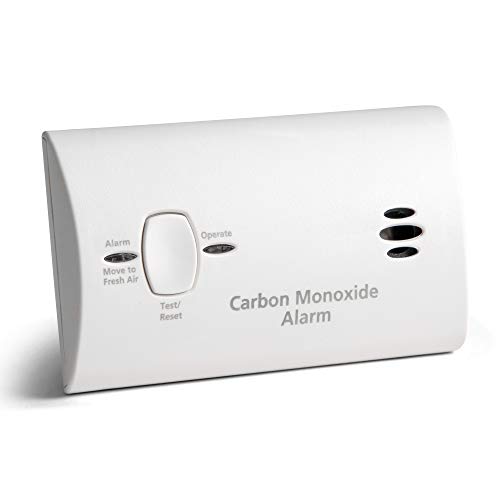
A meaningful share of indoor-safe propane heater buyers aren’t heating a room every day — they’re buying insurance for the next multi-day outage. For that use case, the standard Mr. Heater Buddy 4,000–9,000 BTU is the most commonly recommended option, because it stores compactly, needs no installation, and runs on cylinders you can stockpile without a special fuel supply chain. Owners who keep one specifically for outages consistently mention testing it briefly once or twice a year rather than leaving it untouched in a box, since a heater that’s never been lit is a heater whose actual condition you don’t really know. Store a few spare 1 lb cylinders and a battery-backed carbon monoxide detector alongside it — a detector that depends on grid power isn’t useful during the exact scenario you bought the heater for.
For a Rental or Apartment: The Best Value Indoor Propane Heater You Can’t Modify
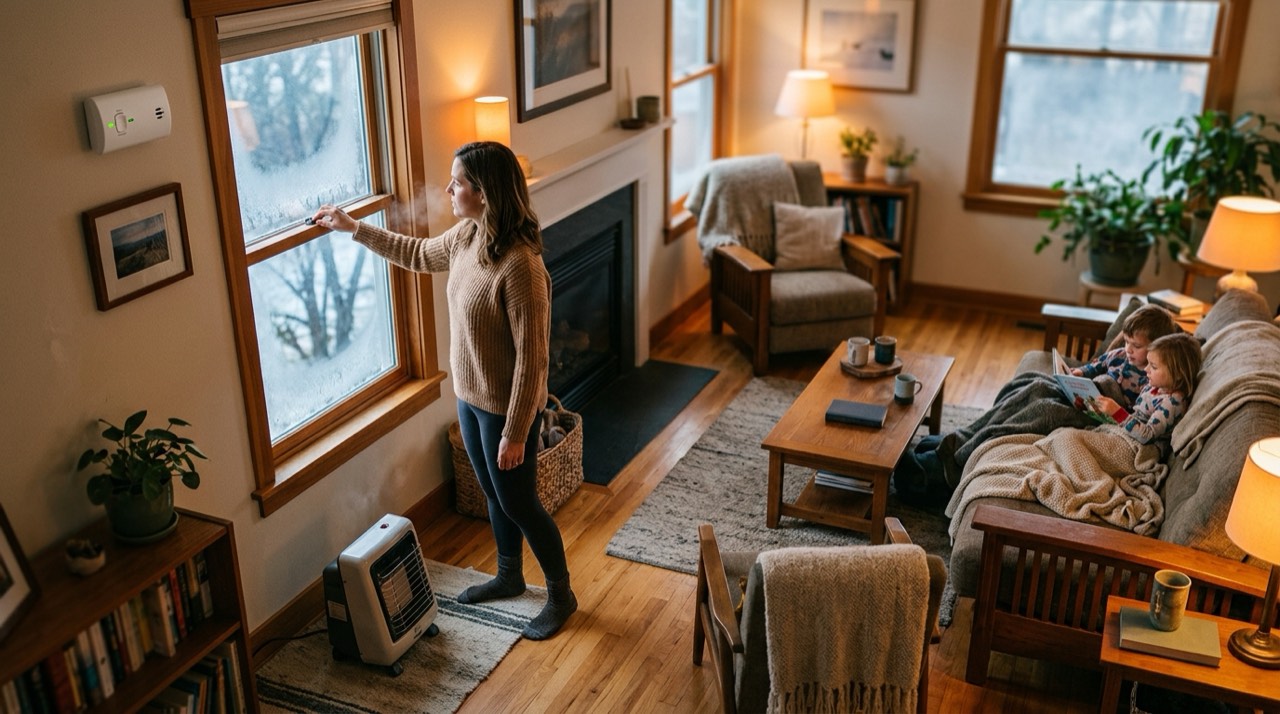
Renters face a specific constraint the other scenarios don’t: no permanent vent-free wall unit, no gas-line modification, and often no ability to drill or mount anything. That rules out two of the picks above entirely and points squarely toward a portable, cylinder-fed heater that needs zero installation and travels with you at lease-end. The standard Mr. Heater Buddy 4,000–9,000 BTU fits this constraint well — it sits on the floor, needs no mounting hardware, and its adjustable output covers most apartment-sized rooms without needing a second heater for a slightly bigger space — making it the best value pick for anyone who can't modify the unit itself. Before running any heater in a rental, it’s worth checking your lease and local fire code for any restriction on fuel-burning appliances indoors; some buildings and jurisdictions restrict them regardless of ODS certification, which is a compliance question a heater review can’t answer for your specific address.
For a Multi-Room House: An Adjustable-BTU Portable Heater
Older homes and additions sometimes have one or two rooms never connected to the main HVAC system — a converted sunroom, an addition without ductwork, a detached in-law suite. Here the heater may need to move between rooms on different days rather than living in one fixed spot, so an adjustable-output portable heater beats a single-BTU fixed unit. Whichever room it ends up in on a given day, the same ventilation and room-size rules apply fresh each time.
For a Sudden Cold Snap in a Region That Rarely Needs Heat
Not every buyer here owns a heater every winter — some are reacting to an unusual cold snap and want something they can buy once, use for a week, and store indefinitely without it degrading. Simplicity matters most: fewer moving parts means less to fail after sitting unused for a year. The standard Mr. Heater Buddy 4,000–9,000 BTU fits well precisely because it’s the most straightforward design here — cylinder in, light it, done.
Ventilation Requirements and a Carbon Monoxide Detector: What All Situations Share
Regardless of which scenario matches your situation, three things don’t change. First, ventilation guidance in the manual still applies even with an ODS — see our ventilation requirements guide. Second, BTU should match the specific room, not the biggest number you can afford; our BTU by room size guide has the specifics. Third, a battery-backed carbon monoxide detector belongs in the room regardless of which heater you choose — it’s the one piece of safety equipment every manufacturer and every safety agency recommends without exception. Dyna-Glo and ProCom both make CSA certified vent-free wall and cabinet heaters worth cross-shopping against the Mr. Heater picks above for a basement or workshop installation.
Matching Fuel Setup — Disposable Cylinder or Tank — to How Often You’ll Use It
One factor cuts across every situation above and doesn’t get enough attention in most buying advice: how often you’ll actually run the heater changes which fuel setup makes sense, independent of BTU or room type. Someone running a heater daily through a whole winter burns through 1 lb disposable cylinders fast enough that a hose-connect kit to a refillable 20 lb tank pays for itself in convenience within a season. Someone using a heater occasionally — a cold snap, a power outage, weekend workshop sessions — is often better off sticking with disposable cylinders, since the lower upfront cost and zero-maintenance simplicity outweigh the marginal fuel savings of a tank setup they’d rarely use enough to justify. Neither approach is wrong; it’s worth deciding based on realistic usage rather than defaulting to whichever setup came bundled with the heater you’re looking at.
When None of These Situations Quite Fit
If your situation is a screened porch or three-season room rather than a fully enclosed interior space, the indoor-vs-outdoor classification changes and a different set of products applies — see our porch and screened-space heater guide. If you’re choosing based on raw BTU output for the biggest possible space rather than a specific room type, our flat ranked indoor propane heater list is the more direct comparison. And if you’re still not sure which of the situations above best matches yours, start with the room’s square footage and how often you’ll actually run the heater — those two answers narrow the field faster than any other factor discussed on this page.