
Affiliate disclosure: some links are affiliate links — as an Amazon Associate we earn from qualifying purchases, at no extra cost to you. Full disclosure.
The short answer: only if the specific heater’s manual explicitly rates it for continuous or unattended overnight use — and most portable indoor-safe propane heaters do not carry that rating, even ones with an oxygen depletion sensor. This surprises a lot of buyers who assume "indoor-safe" and "safe to run all night" mean the same thing. They don’t, and the distinction is worth understanding before you rely on any heater for overnight warmth.
Top 3 Recommended
Why "Indoor-Safe" Isn’t the Same as "Overnight-Safe"
An indoor-safe rating means a heater has a certified oxygen depletion sensor and is designed to run in an enclosed room without the ventilation a fully outdoor heater would need. It says nothing on its own about whether the manufacturer wants the heater running unattended while people sleep. Manufacturers set overnight-use ratings separately, based on additional testing around unattended operation, tip-over response time while nobody is awake to notice, and worst-case malfunction scenarios that matter more when the room’s occupants are asleep and slower to react. A heater can be genuinely indoor-safe for supervised daytime use and still carry a manual warning against unattended overnight operation.
What Manufacturers and Safety Agencies Actually Say
Across the indoor-safe propane heater category, manufacturer manuals and consumer safety guidance consistently advise against leaving any fuel-burning heater running unattended while occupants are sleeping, unless that specific model explicitly states otherwise. This is general guidance that applies across brands and heater types — it isn’t a caveat specific to one manufacturer trying to avoid liability. The reasoning is straightforward: sleeping occupants can’t notice early warning signs (a strange smell, worsening headache, unusual sound) the way an awake person could, which is precisely the scenario every layer of heater safety design — ODS, tip-over shutoff, carbon monoxide detectors — exists to cover for.
Which Heaters, If Any, Are Rated for Overnight Use
A small number of catalytic heaters — which produce flameless heat through a chemical reaction rather than an open flame — are marketed with continuous-use ratings that some owners interpret as overnight-safe, particularly in RVs. Even there, the correct approach is to check that specific model’s manual language directly rather than assuming based on the general "catalytic heaters are safer" reputation. Manufacturer language varies meaningfully model to model, even within the same brand’s lineup, and a rating for "continuous use while monitored" is not the same as a rating for "safe while occupants sleep unattended." When in doubt, treat the heater as not rated for unattended overnight use and plan accordingly — that’s the more conservative, safer assumption, and the one this site defaults to across every product it covers.
What to Do Instead If You Need Overnight Warmth
If overnight room temperature is the actual problem you’re solving, a few approaches don’t carry the same unattended-combustion risk as running a propane heater all night. Pre-heating the room before bed and letting a well-insulated space hold that warmth for several hours is the simplest option and requires no equipment change. An electric space heater with a proper thermostat and auto-shutoff, run on a dedicated circuit, avoids the combustion-byproduct question entirely, though it depends on reliable grid power. For a room that genuinely needs overnight heat every night through a cold season, the better long-term answer is usually a permanent, properly vented or professionally-installed heat source rather than stretching a portable propane heater past what its manual actually supports.
Why Sleeping Occupants Change the Risk Calculation
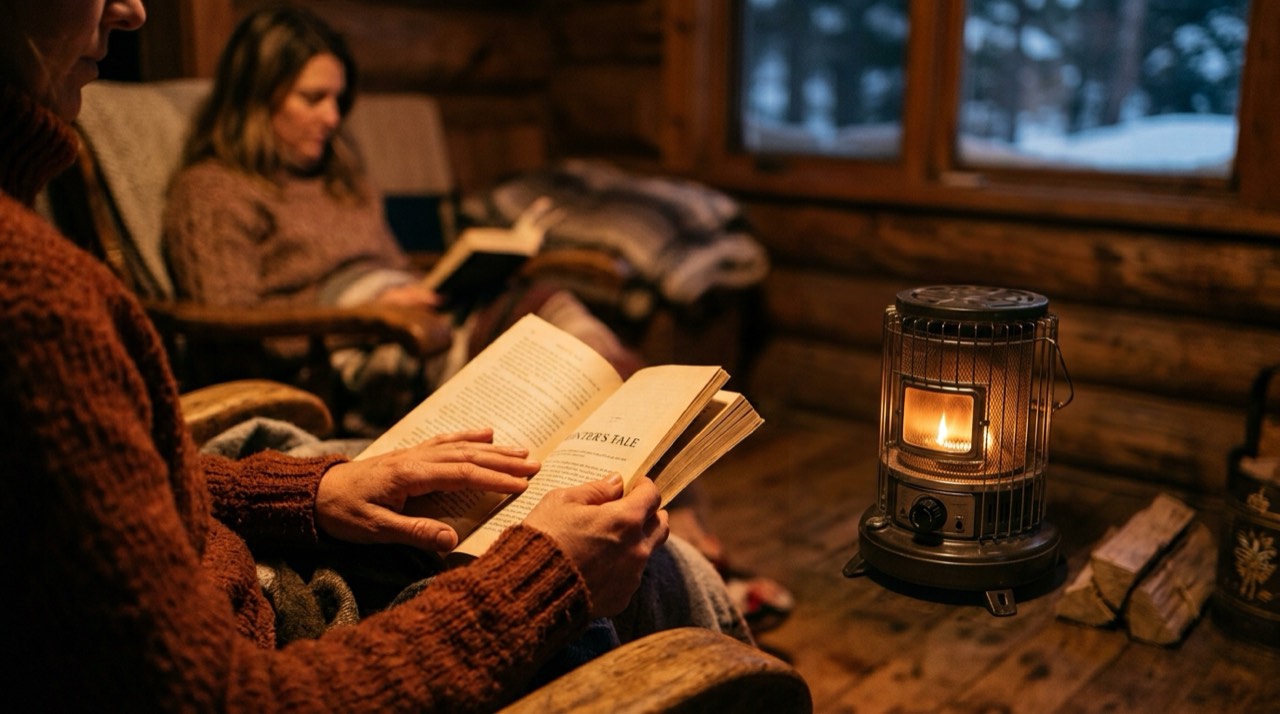
The core reason manufacturers treat overnight, unattended use differently from supervised daytime use comes down to human response time. An awake person notices a change in flame color, an unusual smell, or a heater that feels like it’s running differently than usual, and can react within seconds. A sleeping person can’t. Carbon monoxide exposure specifically is dangerous partly because early symptoms — headache, drowsiness, mild nausea — mimic normal sleep and are easy to miss entirely while unconscious. That gap in human ability to self-monitor is exactly why the safety margin manufacturers build in for "unattended" or "overnight" ratings is stricter than the margin for supervised use, even on the same physical heater.
If You Do Run a Heater in the Evening, Turn It Off Before Sleep
The most common real-world compromise — and the one aligned with manufacturer guidance for models without an explicit overnight rating — is running the heater to warm the room in the hour or two before bed, then turning it off before sleeping. A well-insulated room holds a meaningful amount of that warmth through several hours of a cold night, which addresses the practical goal (a warm room to fall asleep in) without leaving a fuel-burning appliance running unattended while everyone is asleep. This is the pattern most manufacturer guidance implicitly supports, even when it isn’t spelled out as a specific recommendation.
What Owners Actually Do, and Why It’s Worth Knowing the Difference
It’s worth being upfront that a real share of heater owners run their heaters overnight regardless of manual language, and forum threads and reviews reflect that reality. Repeating that pattern back as advice isn’t the same as it being safe, and this site isn’t going to frame common practice as equivalent to manufacturer guidance just because it’s widespread. The gap between what people commonly do and what the specific product they own is actually rated for is exactly the kind of gap that only shows up as a problem in the rare case something goes wrong — which is also why it’s worth closing that gap rather than assuming years of uneventful use means the practice was safe rather than lucky.
A Carbon Monoxide Detector Belongs in the Room Regardless
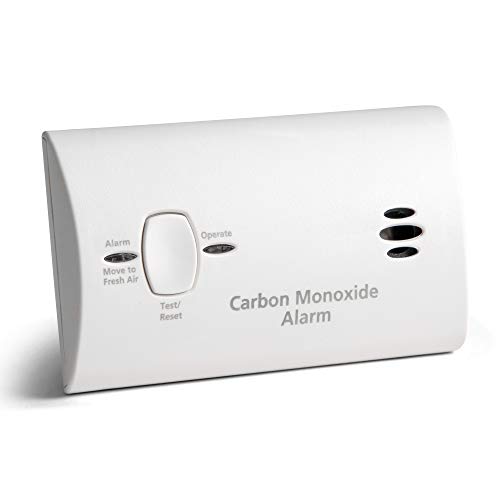
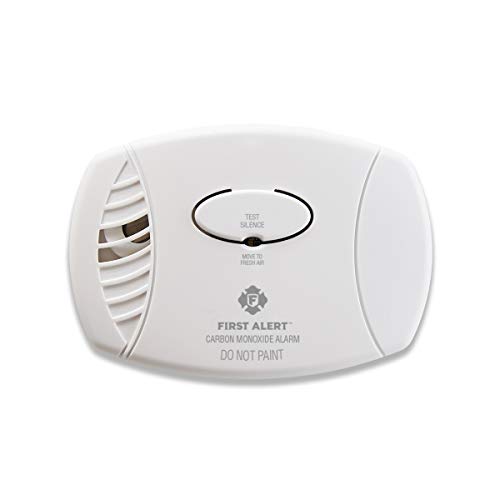
Whether or not you leave a heater running, a battery-backed carbon monoxide detector belongs in any room where a propane heater is used, full stop. If you do decide a specific model’s manual supports overnight use and you choose to rely on that rating, a working detector in the room is non-negotiable — it’s the safety layer that doesn’t depend on the heater’s own systems functioning correctly, and it’s the one piece of equipment every manufacturer and every safety agency recommends without exception. A model like the Kidde Carbon Monoxide Detector runs on batteries, so it keeps working even if the heater is plugged into the same circuit or the power goes out. A plug-in option with battery backup, like the First Alert CO605, is a solid alternative if you’d rather not manage battery replacement on a purely battery-powered unit.
Related Reading
For the specific ventilation requirements that apply whether or not a heater runs overnight, see our indoor propane heater ventilation requirements guide. For the broader safety mechanics behind why any of this matters, our indoor safety and carbon monoxide guide covers the full picture.