

Affiliate disclosure: some links are affiliate links — as an Amazon Associate we earn from qualifying purchases, at no extra cost to you. Full disclosure.
Even a heater with a certified oxygen depletion sensor comes with a ventilation requirement in its manual — and that requirement isn’t boilerplate legal language. It’s a real, practical instruction that affects how you should actually run the heater. This guide covers what "ventilation" means in this context, how much is typically required, and how to meet it without undermining the whole point of using an indoor heater in the first place.

Top 3 Recommended
Why Ventilation Is Required Even With an ODS
The oxygen depletion sensor is a backstop that shuts the heater off before oxygen drops to a dangerous level — it is not designed to be the only thing standing between a safe room and an unsafe one. Manufacturers build in ventilation requirements as a separate, complementary layer: a small amount of continuous fresh air exchange keeps oxygen levels stable in the first place, which means the ODS is less likely to trigger at all, and it also helps disperse the water vapor and combustion byproducts a ventless heater naturally produces. Think of it as two independent safety systems rather than one system with a backup — ventilation reduces how often you’ll ever need the ODS to act.
How Much Ventilation Is Actually Required
Manufacturer guidance across the indoor-safe propane heater category consistently specifies a minimum room size for each heater’s BTU rating, plus a general recommendation to crack a window or door slightly during extended use. The specific minimum room volume varies by model and BTU output — a 3,800 BTU Little Buddy has a smaller minimum room-size requirement than a 30,000 BTU vent-free wall unit, because higher BTU output consumes oxygen and produces combustion byproduct faster. Always check the specific model’s manual for its published minimum room size rather than assuming a number from a different heater applies. This isn’t a figure most listings advertise prominently, so it’s worth looking up directly on the manufacturer’s site if it isn’t included on the box.
What "Crack a Window" Actually Means in Practice
The instruction sounds vague, and it partly is by design — the exact gap needed depends on room size, heater BTU, and how airtight the space is to begin with. In practice, a window cracked an inch or two, or a door left slightly ajar to an adjoining room rather than fully sealed, is generally what manufacturers have in mind. The goal is a small, continuous exchange of air, not a noticeable draft that defeats the purpose of heating the room. If you’re running a heater in a room with no exterior window at all — an interior workshop or a windowless basement room — that’s a scenario worth reconsidering the heater choice for entirely, since meeting the spirit of the ventilation requirement is much harder without any direct path to outside air.
Rooms That Are Harder to Ventilate Properly
Some common heater use cases make manufacturer-recommended ventilation genuinely difficult to achieve. A converted closet or a very small interior room with no exterior wall is one example — there’s often no window to crack at all, which pushes toward choosing a smaller heater than the room’s square footage alone might suggest, or reconsidering whether that specific room is a good fit for a propane heater. A tightly sealed, newly-renovated room with modern high-efficiency windows and doors is another — the same square footage that ventilated adequately in an older, draftier structure may not exchange air as freely in a newer one, which is part of why manufacturer minimum-room-size figures assume "typical" construction rather than the tightest possible seal. If your space is unusually airtight, sizing down the heater or ventilating more deliberately than the minimum guidance suggests is the safer approach.

Signs Your Ventilation Isn’t Adequate
A few practical signs suggest a room isn’t getting enough fresh air for the heater running in it: the ODS triggering repeatedly and shutting the heater off, a lingering smell beyond the brief odor some heaters produce on first light, visible condensation building up on windows faster than normal, or simply a stuffy, heavy feeling in the air after extended use. None of these are subtle once you know to look for them, and any of them is a reason to increase ventilation immediately — opening a window further, cracking a second point of airflow, or in some cases stepping down to a lower BTU setting — rather than waiting them out. Our troubleshooting guide covers what to check if a heater is shutting off more often than seems normal.
Ventilation Requirements Scale With BTU
A heater’s ventilation and minimum room-size requirement isn’t a flat number across the category — it scales with BTU output. Stepping up from a 9,000 BTU portable Buddy heater to an 18,000 BTU Big Buddy, or further to a 30,000 BTU permanent vent-free unit, means stepping up the ventilation and room-size requirement in parallel, not just the heat output. This is one more reason to size a heater to the room it will actually run in rather than buying more BTU than needed "to be safe" — a heater that’s oversized for its room can be genuinely harder to ventilate adequately, not just more expensive to run. Our BTU by room size guide covers the sizing side of this in detail.
Ventilating a Room With No Exterior Window
Some indoor spaces people want to heat — a windowless interior closet-turned-office, a basement room with only a small ground-level vent — genuinely lack a direct path to outside air. In that situation, cracking a door to an adjoining room that does have exterior ventilation is the next-best option, provided the adjoining room itself has a window or door to the outside that can also stay slightly open, creating an actual chain of airflow rather than just moving the same stale air between two sealed rooms. If no such chain is achievable, that’s a genuine signal the room isn’t a good match for this category of heater, regardless of how appealing the BTU math looks on paper — a mechanical ventilation fan or a fundamentally different heat source is the more honest answer for a truly sealed space.
A Detector Doesn’t Replace Ventilation, Either
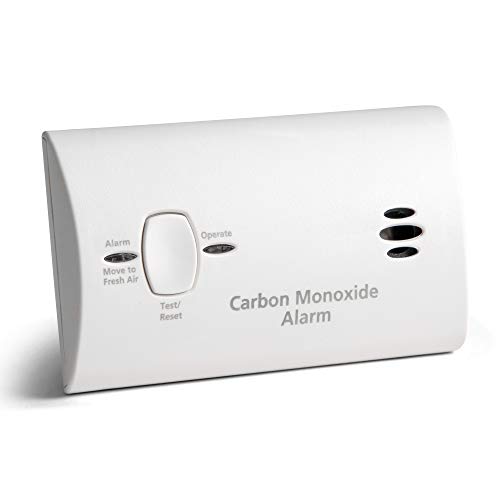
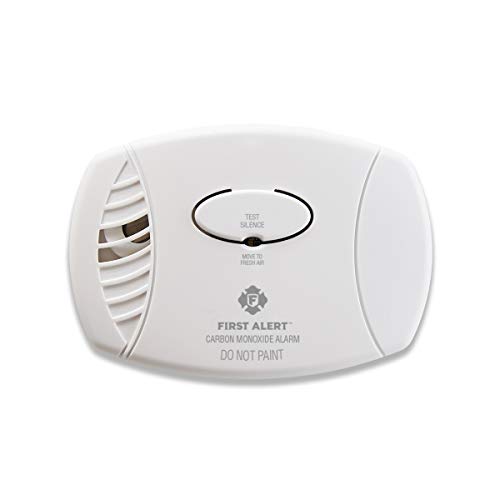
Just as the ODS isn’t a substitute for ventilation, neither is a carbon monoxide detector — a detector tells you something has already gone wrong; proper ventilation and a functioning ODS are what prevent that situation from developing in the first place. All three layers (ventilation, ODS, detector) work together rather than any one replacing the others. A model like the Kidde Carbon Monoxide Detector or a plug-in option with battery backup like the First Alert CO605 is the final layer, not the only one.
Related Reading
For how the ODS itself works mechanically, see our oxygen depletion sensor explained guide. For why ventless heaters need ventilation guidance at all, see ventless vs. vented indoor heaters.