

Affiliate disclosure: some links are affiliate links — as an Amazon Associate we earn from qualifying purchases, at no extra cost to you. Full disclosure.
We looked at every major category of portable propane heater on the market: indoor-safe radiant heaters, tank-top units, forced-air construction heaters, catalytic RV heaters and vent-free wall units. From that pool, we ranked the six models that come up again and again in owner reviews, manufacturer safety documentation and long-term ownership threads. Every ranking below reflects aggregated owner reviews, published manufacturer specifications and safety certifications, not a first-hand test rig.
How We Picked the Best Portable Propane Heater Options
A portable propane heater lives or dies on four things. Is it actually rated for where you plan to run it? Does the BTU output match the space? How is it fueled? And what do owners report after months of real use, not just the first week out of the box? We weighted all four:
Indoor-Safe Certification
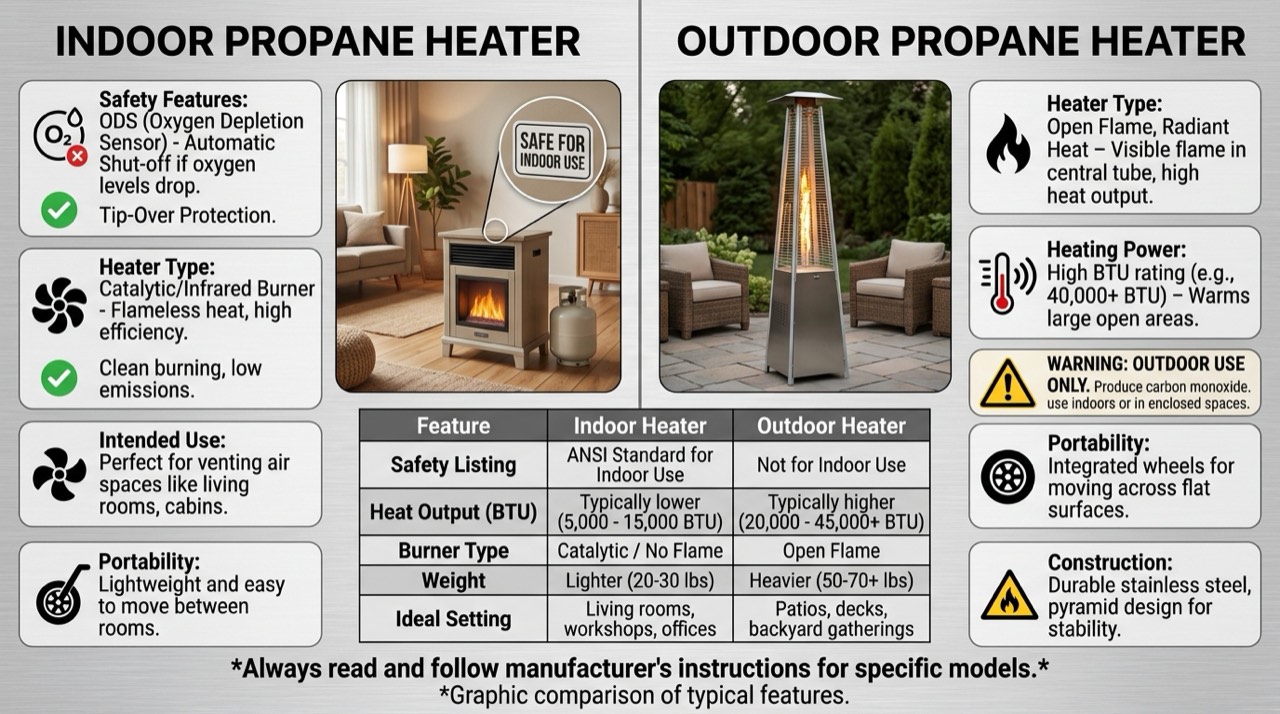
Any heater we recommend for enclosed spaces carries a built-in oxygen depletion sensor (ODS) and automatic shutoff, and is explicitly labeled by the manufacturer as safe for indoor or enclosed-space use. Heaters that are outdoor-only — like forced-air construction units — are labeled as such, every time.
BTU Output Matched to Square Footage and Heat Coverage
We cross-referenced each heater's rated BTU range against the square footage — usually given in square feet — that owners actually report as real heat coverage, not just the manufacturer's best-case number. See our BTU sizing and running-cost guide for the math.
Fuel Setup: 1-lb Propane Cylinder, 20-lb Tank, and Run Time
Some heaters run off a 1-lb propane cylinder, some hose-connect to a 20-lb tank or 30 lb tank, and a few catalytic units need a fixed propane line. We noted which is which, because it changes both the upfront cost and how long you can run the heater unattended, within manufacturer guidance.
Owner-Reported Reliability
A heater that lights reliably on the first try and holds a consistent flame over a full season of use outranks one with a higher headline BTU number but a pattern of ignition complaints in its review history.
We also read past the star rating itself. A heater can carry a strong average and still have a review history full of one specific complaint. A regulator that fails after a season. An ignition switch that gets sticky in cold weather. A fan that rattles at low settings. Where a pattern like that showed up consistently across dozens of reviews for a given model, we either dropped it from consideration or noted the tradeoff explicitly. None of the six heaters below are perfect. They're the ones where the recurring owner feedback is overwhelmingly about heat output and reliability, not a build defect.
The Short Answer: Our Best Overall Portable Propane Heater Pick
For most people asking "what's the best portable propane heater," the Mr. Heater 9,000 BTU Portable Buddy is the safest starting point. It's indoor-safe, it's the most reviewed heater in the category by a wide margin, and 9,000 BTU covers most single rooms, garages and tents without being so large it wastes fuel. Need more heat for a bigger space? Step up to the Big Buddy. Heating an uninsulated garage or job site rather than a room you'll be sitting in? A forced-air unit is the better fit. Living in an RV or an off-grid cabin? A catalytic heater like the Olympian Wave series is the quietest option, and it won't drain a battery bank.
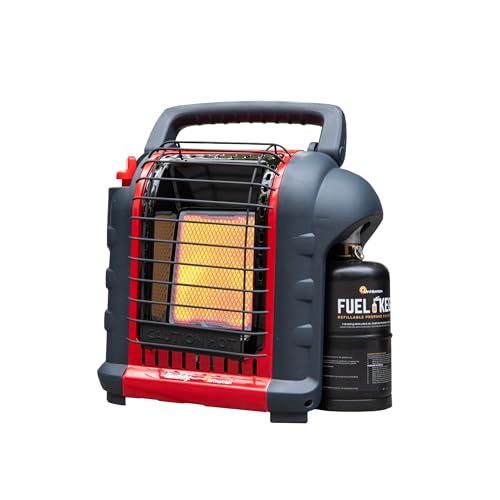
Best for Garages, workshops, tents, ice shanties and small-to-mid rooms
- 4,000–9,000 BTU, low/high settings
- Built-in oxygen depletion sensor (ODS) and tip-over shutoff
- Runs on a 1 lb cylinder or a hose-connected 20 lb tank
Why buy it: It is the single most-reviewed portable propane heater on Amazon, and owners across garages, hunting blinds and campers consistently report the same thing: it lights first try, heats a small enclosed space fast, and the safety shutoffs actually work as advertised.
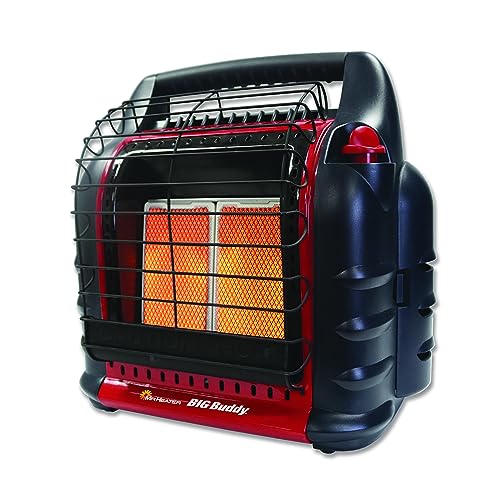
Best for Larger garages, big canvas tents, and job-site trailers
- 4,000–18,000 BTU across three settings
- Two 1 lb cylinders or hose-connect to a 20 lb tank
- Fan-assisted heat distribution and swivel-out regulator
Why buy it: Owners who outgrew a standard Buddy heater and stepped up to the Big Buddy report it comfortably carries a two-car garage or a wall tent that the smaller unit could not keep up with, without giving up the same indoor-safe sensor package.

Best for Ice fishing shanties, small tents, and single-room emergency backup heat
- 3,800 BTU fixed output
- Runs directly off a 1 lb disposable cylinder
- Sits under 10 inches tall — packs into a small bag
Why buy it: It is the cheapest way into the same indoor-safe Buddy platform, and owner reviews are consistent that for a space under roughly 100 sq ft it will not be underpowered — the complaints only start when people try to heat something bigger with it.

Best for Uninsulated garages, active construction sites, and large workshops
- 120,000–150,000 BTU adjustable output
- Forced-air fan pushes heat 50+ feet
- Continuous electronic ignition, no standing pilot
Why buy it: Forced-air heaters like this one are outdoor-use-only and loud compared with a radiant Buddy heater, but for raising the temperature in a large uninsulated space fast, owner and contractor reports consistently rank Dyna-Glo’s construction-heater line alongside Mr. Heater’s equivalent Contractor Series.

Best for Patios, open garage bays, and job sites where 360° heat throw matters
- 45,000 BTU, screws directly onto a 20 lb tank
- 540° swivel head throws heat in almost every direction
- Piezo ignition, no batteries required
Why buy it: Tank-top heaters trade portability for raw output and area coverage — this is the model owners most often mention by name when they say they replaced a patio heater or a small forced-air unit and got more usable warmth for less money.

Best for RVs, campers, cabins and off-grid spaces with a fixed propane line
- 3,000 BTU catalytic (flameless) heat
- Silent operation — no fan, no pilot light noise
- Portable or permanent wall-mount install
Why buy it: Catalytic heaters like the Olympian Wave series burn cooler and cleaner than a radiant heater, and RV owners specifically praise the total silence overnight — the tradeoff is lower BTU output, so it suits a single room or a well-insulated rig rather than a whole house.
Full BTU Comparison: Radiant Heaters, Tank-Top Heaters, Catalytic Heaters and Forced Air Construction Heaters
All six of the picks above side by side. "Best for" reflects the space and use case each heater is most consistently praised for in owner reviews — not a claim that any one of them is universally the biggest or the cheapest.
| Product | Best for | Buy |
|---|---|---|
| Mr. Heater 9,000 BTU Portable Buddy Radiant Propane Heater | Best Overall | Check Price |
| Mr. Heater 18,000 BTU Big Buddy PRO Series Heater | Best for Large Spaces | Check Price |
| Mr. Heater 3,800 BTU Little Buddy Portable Radiant Propane Heater | Best Budget & Most Compact | Check Price |
| Dyna-Glo RMC-FA150DGD 120,000–150,000 BTU Liquid Propane Forced Air Heater | Best for Garage & Construction | Check Price |
| Mr. Heater Original 540° 45,000 BTU Tank Top Radiant Propane Heater | Best Tank-Top Radiant | Check Price |
| Camco 57331 Olympian Wave-3 Catalytic Safety Heater | Best for RV & Off-Grid | Check Price |
Indoor use: what "indoor-safe" actually means
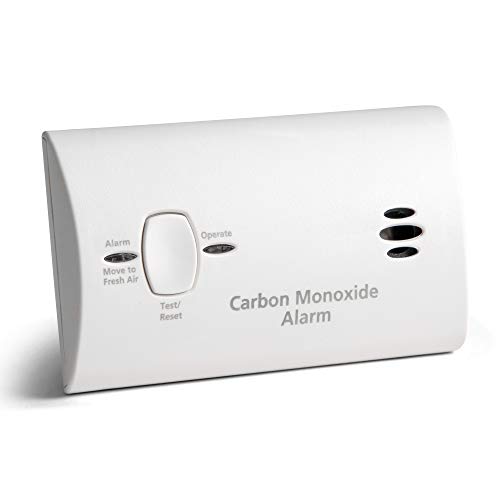
Not every propane heater is safe to run indoors, and the difference isn't marketing — it's a specific safety feature. An indoor-safe heater has an oxygen depletion sensor (ODS), a pilot-mounted sensor that measures the oxygen level in the surrounding air and automatically shuts the heater off before the room becomes unsafe. That's the mechanism behind radiant heat you can run in an enclosed space at all, as opposed to an outdoor-only forced air unit. Forced-air construction heaters and most tank-top radiant heaters do not have this feature and are labeled outdoor-use-only for a reason. Before you run any heater indoors, check the specific model's manual, not just the general category. Read our full breakdown in the indoor safety and carbon monoxide guide. Any fuel-burning heater, indoor-rated or not, should be paired with a battery-backed carbon monoxide detector in the room it's running in. That's general safety guidance from the manufacturers themselves, not something specific to any one brand on this list.
The Oxygen Depletion Sensor (ODS) Explained
Look for indoor-rated models built to the ANSI Z21.11 safety standard. That's the certification family behind the oxygen depletion sensor requirement. Pair any indoor-safe heater with a battery-backed CO detector, such as Kidde or First Alert. A detector catches the scenario an ODS is designed to prevent, without relying on the heater's own sensor. The CPSC publishes seasonal warnings on carbon monoxide poisoning from portable heaters. OSHA also sets workplace CO exposure limits for job sites running forced-air construction heaters. Both are worth a quick read before the first use of the season, especially in a garage, workshop or job site.
Tip-Over Shut-Off and CSA Certified: A Second Safety Layer
Alongside the ODS, most indoor-safe portable heaters add a tip-over shutoff — a mechanical or tilt-sensor switch that cuts fuel flow the moment the heater isn't sitting level. It's a second, independent layer on top of the oxygen sensor, and it's why a heater that shuts off on an uneven surface is working correctly rather than malfunctioning. Look for a heater that's CSA certified or built to a recognized ANSI standard — that combination of a tip-over shut-off and an independently tested certification is the baseline safety set for any indoor-safe pick on this list.
Fuel type: propane vs. the alternatives
Propane is the most common fuel for this category because it's widely available, doesn't degrade in storage the way gasoline does, and burns clean enough that indoor-rated models can meet emissions thresholds. It isn't the only option, though. Kerosene heaters generally put out more BTU per dollar of fuel and are common in regions where propane exchange is less convenient, at the cost of a fuel odor most people find stronger. Diesel parking heaters — increasingly popular in van conversions and overlanding rigs — draw fuel from the vehicle's own tank or a small onboard reservoir and run on 12V power, trading simplicity for an installation project. If you're choosing between fuel types rather than just between propane models, our kerosene and diesel category guides cover the tradeoffs in more depth.
Choosing the Right Propane Heater: Garage Heater, RV Heater or Campsite Use


Buyers researching this topic tend to fall into a handful of recurring situations, and the right heater changes with the situation more than with the brand:
Best for Garage or Workshop
A single-car garage you're standing in briefly is a good fit for a Buddy-class radiant heater. A two-car garage you're working in for hours, or one with poor insulation, usually needs either a Big Buddy or a forced-air unit. See our garage and workshop heater guide for the sizing breakdown.
Best for Camping, Hunting and Tailgating: Why Portability Matters Most
Portability and a low-BTU option for tight enclosed spaces (tents, blinds, shanties) matter more than raw output. Our camping and hunting heater guide covers the models specifically reviewed for those use cases.
RV, Van Life and Off-Grid
Battery draw, ventilation and noise become the deciding factors over BTU alone. See the RV and off-grid heating guide.
Patio and Porch
Standing patio heaters and tank-top units are built for open or semi-open air, not enclosed rooms. Our outdoor and patio heater guide and porch and screened-space guide separate the two.
Permanent Installation: Vent-Free, Ventless Wall-Mount or Cabinet Units
If you want a heater that lives in one place year-round — a workshop, a converted garage, a cabin — a vent-free, ventless wall-mount or cabinet unit is usually a better fit than a portable radiant heater. See wall-mount, cabinet and tank-top heaters.
What Owner Reviews Say About Each Pick
Star ratings compress a lot of nuance, so here's what the review text itself tends to say about each of the six heaters above, beyond the headline number.
- The standard 9,000 BTU Buddy gets praised almost entirely for reliability and simplicity. The most common phrase across its review history is some version of "just works." The recurring complaint: at the full 9,000 BTU setting, a single 1 lb cylinder empties faster than people expect. That's why most long-term owners switch to the hose-and-filter kit that connects it to a 20 lb tank instead.
- The Big Buddy earns its reviews from people who tried a standard Buddy first and found it underpowered for a two-car garage or a larger canvas tent. The tradeoff owners mention most is size and weight. It's meaningfully bulkier to store and transport than the smaller units in the same lineup.
- The Little Buddy has the shortest feature list of the three Mr. Heater picks, and the most polarized reviews as a result. People heating a space it's actually sized for (roughly 95 sq ft or less) are consistently satisfied. The lower ratings mostly come from buyers who tried to use a 3,800 BTU heater in a space that needed a Buddy or Big Buddy instead.
- The Dyna-Glo forced-air unit draws praise for genuinely fast temperature recovery in a large uninsulated space. Multiple owners describe raising a cold garage to a workable temperature in well under 30 minutes. The consistent caveat is noise: forced-air heaters run a combustion fan that owners describe as loud enough to need hearing protection, on par with a shop vacuum.
- The tank-top radiant heater gets the most "replaced something bigger and got better results" feedback of the group. Several reviewers specifically mention retiring a standing patio heater or a smaller forced-air unit in its favor. The most common criticism: the piezo igniter can take a few clicks to catch in windy, outdoor conditions.
- The Olympian Wave catalytic heater is reviewed almost exclusively by RV and van-life owners. The silence is the single most repeated praise point — no fan noise, no pilot-light hiss. The tradeoff owners are most upfront about is BTU ceiling: at 3,000 BTU it heats a single room or a well-insulated rig, not a whole house, and it needs a fixed propane line rather than a swap-in cylinder.
Running Cost: How Long a 20 lb Tank or 1 lb Cylinder Lasts
Propane stores roughly 21,600 BTU of usable energy per pound, which is the standard conversion most manufacturers publish and the one we use throughout this site. A 20 lb tank feeding a heater running at 9,000 BTU on high will last in the neighborhood of 48 hours of continuous burn; the same tank on a heater set to 4,000 BTU will roughly double that. Real-world run time varies with altitude, ambient temperature and how often the heater is actually cycling versus sitting on standby, so treat any run-time number — including the ones on this page — as an estimate rather than a guarantee. Our BTU and running-cost guide has an interactive calculator if you want to plug in your own tank size and heater output.
Mr. Heater Buddy, Little Buddy, Big Buddy and Dyna-Glo: Brands Worth Knowing
Mr. Heater effectively created the indoor-safe portable propane heater category with the original Buddy line and still dominates owner review volume across every size tier, from the 3,800 BTU Little Buddy up through the 18,000 BTU Big Buddy — see our full Buddy series breakdown. Dyna-Glo is the strongest name in forced-air and construction heaters, where raw BTU output for uninsulated spaces matters more than the indoor-safe sensor package — our Dyna-Glo guide covers their lineup. Camco's Olympian Wave series is the reference point for catalytic RV heaters. Traditional camping-gear brands like Coleman, Ozark Trail and Texsport are well known for stoves, lanterns and coolers, but none currently sell a dedicated indoor-safe space heater to rival the Buddy line — see our camping-brand heater guide for how campers actually solve for heat today.
Propane Tank, Hose and Regulator Accessories That Matter More Than People Expect
A heater is only as good as the tank and hose feeding it. Most complaints we see in owner reviews that sound like a heater problem — inconsistent flame, weak output, a heater that won't stay lit — trace back to an old or damaged hose and regulator, or a nearly empty tank, rather than the heater itself. Our tanks, hoses and accessories guide covers what to check first, and our troubleshooting and repair guide walks through the specific symptoms brand by brand.
What We'd Avoid: Carbon Monoxide and Forced-Air Heater Mistakes
We do not recommend running any outdoor-rated heater — forced-air units, most tank-top radiant heaters, and standing patio heaters — inside an enclosed room, a tent, or a vehicle, regardless of how cold it is, unless the specific model's manual explicitly says it is rated for that use. We also don't recommend buying based on BTU number alone: a heater rated for more BTU than your space needs burns fuel faster without heating the room any better past a certain point, and in an enclosed space it can be a genuine safety issue rather than just a waste of propane.
Tank-Top Heater and Buddy Heater Maintenance Between Seasons
Most portable propane heaters sit unused for months at a time between camping trips or cold snaps, and a chunk of the "won't light" complaints in owner reviews trace back to storage rather than a defective unit. Manufacturers consistently recommend disconnecting the tank or cylinder before long-term storage, keeping the heater somewhere dry to prevent the burner and igniter components from corroding, and checking the hose and connections for cracking before the first use of a new season — rubber hoses degrade with age and UV exposure even if the heater itself has barely been used. A quick visual check of the ODS sensor (on indoor-safe models) and the pilot assembly before the first light of the season catches most of the seasonal issues before they turn into a mid-use shutdown. Our troubleshooting and repair guide walks through the specific fixes when a heater won't light, won't stay lit, or shuts off unexpectedly.
Piezo Ignition Maintenance Tips
Heaters with piezo ignition — a spark generated by a spring-loaded crystal rather than a battery or standing pilot — occasionally need a few extra clicks to catch after a season in storage, especially outdoors in wind. That's usually residue or moisture on the igniter tip rather than a failed part, and a dry cloth wipe before the first light of the season resolves most of it.
Buying New vs. Buying Used: Best Value for a Simple Radiant Heater
Propane heaters show up frequently on the secondhand market. For a simple radiant unit like a Buddy or Little Buddy, a used unit in good condition can be the best value way to save money — the mechanism is straightforward, and there isn't much to fail silently. We'd be more cautious buying a used forced-air or catalytic heater. A worn ignition system, a fatigued fan motor, or a catalytic pad past its service life is harder to evaluate without running the unit for a while first. Buying new carries a real advantage either way: a full manufacturer warranty and a known service history. That matters more for a device that produces an open flame or catalytic combustion in an occupied space than it would for most other camping or garage gear.