
Affiliate disclosure: some links are affiliate links — as an Amazon Associate we earn from qualifying purchases, at no extra cost to you. Full disclosure.
Heating an RV, camper van or off-grid cabin comes with constraints a stationary home doesn't have: limited battery power, tight interior space, and the need for genuinely quiet operation overnight. A propane RV heater has to solve for all three at once, which is why this category looks different from garage or camping heating. This is the one category where catalytic heaters, not radiant Buddy-style units, are often the better default choice.

Top 3 Recommended
Choosing a Propane Heater for RV, Off-Grid or Van Use: Catalytic Heaters by BTU
A catalytic heater produces heat through a chemical reaction on a treated pad rather than an open flame, and the Camco Olympian Wave series is the reference point for this category. The Camco Olympian Wave-3 (3,000 BTU) suits a small camper or a single well-insulated room, while the Olympian Wave-6 (6,000 BTU) covers a larger RV interior. Both run completely silently — no fan, no pilot-light hiss — which is the single biggest reason RV and van-life owners specifically seek out catalytic heaters over a portable Buddy-style radiant unit for overnight use. Both models can also be found in an "8" variant at 8,000 BTU for the largest RV interiors, giving the Olympian Wave lineup three distinct output tiers to match almost any rig size.
A Non-Electric Heater With Battery-Free Heat
Many Olympian Wave models also include a built-in oxygen depletion sensor (ODS) as an added safety layer, similar to a radiant Buddy heater, even though the catalytic reaction itself doesn't rely on an open flame the same way — that silent operation combined with an ODS is why the Wave series is the default recommendation for overnight RV use. As a genuinely non-electric heater providing battery-free heat, the Wave series also produces some condensation as a byproduct of combustion.
Condensation and a Low-Oxygen Shutoff
Condensation is normal for any unvented catalytic or radiant heater, and it's one more reason the ODS doubles as a low-oxygen shutoff rather than a purely decorative spec.
Propane Heater vs. Built-In RV Furnace: A 12V Blower Fan
Most RVs ship with a built-in forced-air propane furnace as standard equipment, typically built to RVIA and CSA safety standards. A portable or catalytic heater is typically a supplement rather than a replacement. The built-in furnace draws significantly more battery power to run its 12V blower fan.
Boondocking Off a Battery Bank
That matters a great deal when boondocking off a battery bank rather than plugged into shore power. A catalytic or Buddy-style heater draws no electricity at all beyond an optional battery-powered igniter. That's a meaningful battery-life advantage for extended off-grid stays, at the cost of not being ducted throughout the RV the way a built-in furnace is.
Battery Draw: Van Life Heating Without Shore Power
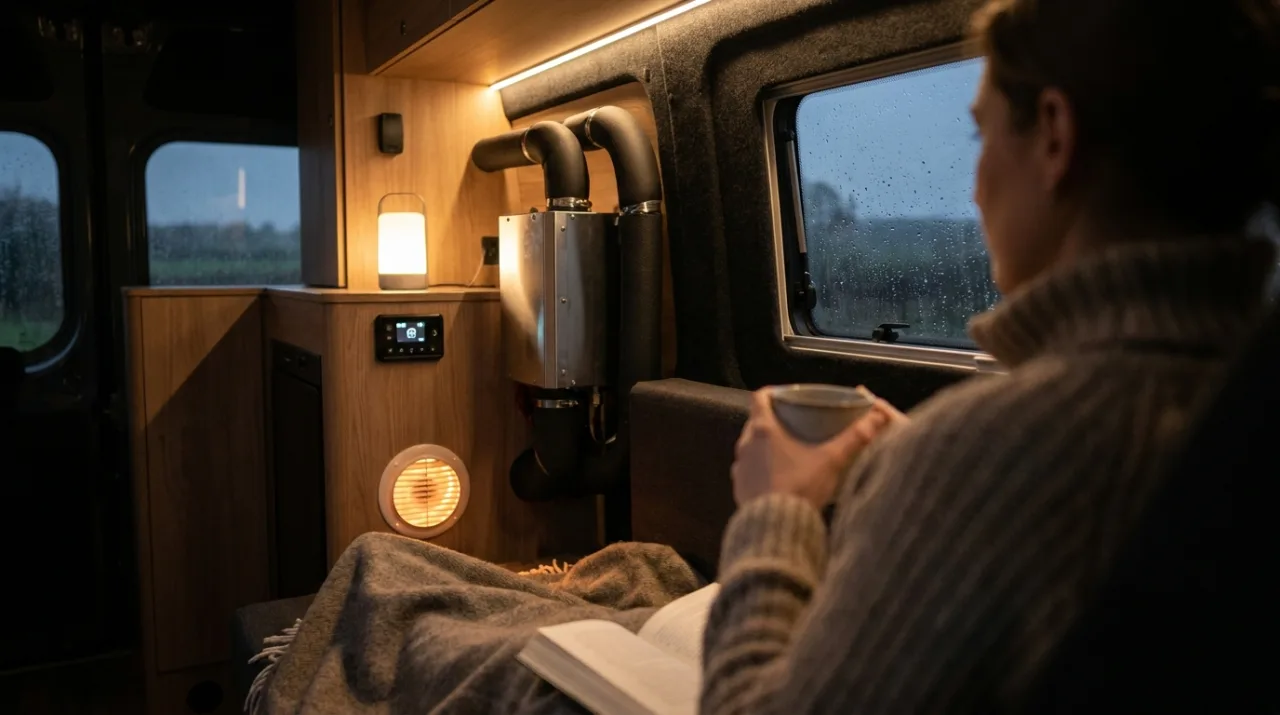
Van conversions without a built-in furnace typically rely on either a catalytic heater or a portable Buddy-style heater. Both need essentially zero electrical power to actually produce heat. That's a real advantage over a furnace or electric heater for anyone running primarily off solar and battery storage. The main electrical draw in this setup, if any, comes from an optional electronic igniter on some models. The catalytic reaction and radiant burn themselves don't need power once lit. This is one of the more consistently repeated pieces of advice across van-life communities: for off-grid heating without a generator, propane's independence from the electrical system is a genuine practical advantage.
Ventilation, Carbon Monoxide Detector and Oxygen Depletion Sensor Requirements in an RV or Van
RV and van interiors are smaller and more sealed than a typical room. That raises the stakes on ventilation more than in most other indoor-safe use cases covered on this site. Every indoor-safe heater — catalytic or radiant — still requires the ventilation specified in its manual, typically a cracked window or roof vent, regardless of how small the space feels. A battery-backed carbon monoxide detector (CO detector) is close to mandatory rather than optional for any RV or van running a fuel-burning heater overnight, given how sealed these spaces typically are compared with a house. See our indoor safety guide for the full picture.
Indoor-safe RV heaters are generally built to the ANSI Z21.11 safety standard. Kidde makes a compact battery-powered CO detector that suits an RV or van's limited space. The CPSC publishes seasonal warnings on carbon monoxide poisoning from portable heaters used in enclosed spaces. OSHA's general workplace CO exposure guidance is also useful if the van or RV doubles as a mobile workspace.
Off-Grid Heating With Propane: Wall-Mount Heaters
For a cabin, tiny home, or van life heating setup without a connected furnace, propane heating solves the same core problem RVs face: reliable heat without depending on grid electricity. A permanent vent-free wall-mount heater, covered in our wall-mount and cabinet heater guide, is often the better long-term choice for a genuinely off-grid dwelling used as a primary residence, since it can connect to a larger tank and run for extended periods without the fuel-swap frequency a portable unit would need. Dyna-Glo and Mr. Heater both make vent-free models suited to this kind of fixed, off-grid installation. A catalytic Olympian Wave heater remains a reasonable choice for a smaller off-grid structure too, particularly one already wired around the same low-power philosophy that drives most off-grid living: minimizing draw on a limited battery and solar setup rather than assuming grid-level power is always available.
Winterizing an RV: Overnight Heating With a Portable Propane Heater
Using a portable propane heater for overnight heating to keep an RV above freezing during winter storage or cold-weather travel is common practice. It requires more caution than heating an occupied RV during the day, though.
Tip-Over Shut-Off Safety for an Unattended RV
A heater's tip-over shut-off and ODS help, but manufacturers generally advise against leaving any portable heater running fully unattended overnight in an unoccupied RV, unless it's specifically certified for that continuous use. A carbon monoxide and propane leak detector — many RVs have this built in already — should be verified working before relying on a heater to protect pipes and systems from freezing while the RV sits empty.
Sizing, Running Cost and Propane Consumption for RV Square Footage
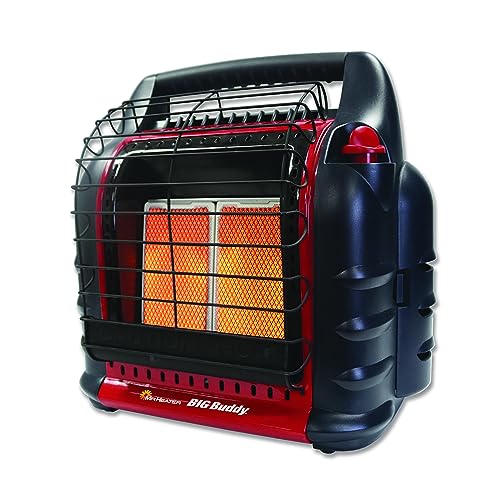
RV interiors vary widely, from a small teardrop trailer under 100 square feet to a large fifth-wheel well over 300 square feet. As a starting point, the 3,000 BTU Olympian Wave-3 suits the smaller end of that range. The 6,000 BTU Wave-6 handles a mid-size RV. A larger fifth-wheel or motorhome often benefits from an 18,000 BTU Big Buddy, or the built-in furnace running alongside a supplemental heater for specific zones. Our BTU sizing guide covers the general math, adjusted here for an RV's typically better insulation than an open room of the same size, which generally lowers propane consumption per hour compared to an equivalent uninsulated garage.
Olympian Wave Hose and Regulator Setup: 1-lb Cylinder vs. 20-lb Tank
Catalytic Wave heaters and permanent RV installations typically connect via a dedicated propane hose and regulator rather than a simple 1-lb cylinder swap. The Camco Olympian 5-Foot RV Propane Supply Hose is a purpose-built option for connecting a Wave heater to a motorhome's onboard tank or a portable 20-lb tank. It includes built-in excess-flow protection, a safety feature specific to a fixed RV installation. Using an RV-rated hose rather than a generic one matters here more than in other categories, since RV propane systems often have specific fitting requirements that a generic hardware-store hose may not match.
Installing an Olympian Wave Catalytic Heater in an RV or Van
The Olympian Wave series can be mounted permanently to a wall or used portably with an optional leg stand kit, giving RV and van owners flexibility depending on their build. A permanent wall mount is the more common choice in a finished RV or van conversion. It's secured according to the manual's clearance requirements from combustible materials — cabinetry, curtains, bedding. Those clearances matter more in a small van interior, where everything sits closer to the heater than it would in a full-size room. A permanent installation typically connects to the vehicle's existing propane system rather than a standalone portable tank. That connection is usually straightforward for anyone comfortable with basic RV systems work. If you're not confident in your own gas-fitting experience, it's worth having a qualified RV technician verify the installation.
Catalytic vs. Radiant Heat: Olympian Wave vs Big Buddy — Which Fits Your Rig?
The decision between a catalytic Wave heater and a portable radiant Buddy-style heater comes down to how you use the space. A catalytic heater's broad, gentle, silent heat suits a long, narrow RV interior, where you're moving around and sleeping in the same space overnight. A radiant Buddy heater's more directional heat pattern works better for a smaller van or a single zone you're actively occupying. Its portability also means it can move between the van and a separate outdoor setup, unlike a permanently mounted catalytic unit. Some full-time travelers keep both: a permanent Wave heater for overnight silence, and a portable Buddy for daytime use outside or in a separate space.
Fuel Sourcing for Off-Grid and Full-Time Travel
Full-time RVers and van-lifers face a different fuel-logistics challenge than someone camping for a weekend. Propane needs to be refillable or exchangeable wherever the road takes them, not just at a home base. Most RV parks, truck stops and hardware stores across the country offer propane refill or exchange service. That makes a fixed onboard tank generally more practical for full-time travel than relying on swappable 1 lb cylinders, which are harder to find in bulk on the road. Planning fuel stops around known refill locations, rather than assuming availability everywhere, is a habit experienced full-time travelers develop quickly.
Propane Leak Detector Systems
Many RVs come equipped with a built-in propane leak detector as standard safety equipment, separate from a carbon monoxide detector. It's worth confirming this system is present and functioning before relying on any propane heater in the vehicle. A propane leak detector senses the gas itself before it reaches combustion, giving an earlier warning than a carbon monoxide detector would catch after something has already gone wrong. If your RV or van conversion doesn't have one built in, an aftermarket propane leak detector is a relatively inexpensive addition worth making before running any propane heating equipment, portable or catalytic.
Cold-Climate Considerations for RV Heating
RVs are generally less insulated than a house. Cold-climate or four-season RVs address this with additional insulation, heated holding tanks, and sometimes a more powerful furnace as standard equipment. But even a well-insulated RV loses heat faster than a comparable house in genuinely cold conditions. A supplemental propane heater becomes more of a necessity than a luxury in sustained sub-freezing temperatures, both for occupant comfort and to help protect plumbing from freezing. Owners who winter in an RV regularly report that a combination works best: the built-in furnace for baseline heat, plus a supplemental catalytic or Buddy heater for a specific occupied zone.
What RV and Van-Life Owners Report
Across RV and van-life forums, the recurring theme is that silence and battery independence matter more than raw BTU output for most full-time or extended travelers. A heater that keeps you up all night with fan noise, or drains a battery bank overnight, gets far worse long-term reviews than one with slightly lower output but genuinely quiet, power-free operation. The Olympian Wave series consistently earns praise for exactly this reason. Portable Buddy-style heaters draw slightly more mixed reviews specifically in the RV context, mostly from owners who find the radiant heat pattern less even across a long, narrow RV interior than a catalytic heater's broader, gentler warmth.
Maintenance for a Permanent RV Heater
A catalytic pad has a service life and gradually becomes less efficient over years of use, which is normal wear rather than a defect — most manufacturers recommend periodic replacement of the catalytic element as part of routine RV maintenance rather than waiting for a total failure. Checking the propane hose and fittings for wear before each travel season, especially after winter storage, catches the same kind of degradation that affects any propane system exposed to temperature swings. Our troubleshooting and repair guide covers specific symptoms for catalytic and radiant heaters alike.
Full-time RVers who put significant hours on a catalytic heater each season report the pad's gradual efficiency loss as a genuinely slow process — most describe it in terms of years rather than months, and replacement parts remain readily available for the established Olympian Wave line specifically because of how widely used it is across the RV community.