
Affiliate disclosure: some links are affiliate links — as an Amazon Associate we earn from qualifying purchases, at no extra cost to you. Full disclosure.
An RV needs a heater that solves problems a house heater never faces. Limited battery power. Tight interior space. Genuinely quiet operation while someone sleeps a few feet away. The four picks below reflect what RV owners consistently favor, based on aggregated owner reviews and manufacturer specs.

The Short Answer: Our Best Overall RV Heater Pick
For most RV interiors, the 6,000 BTU Olympian Wave-6 is the safest, most popular pick. A smaller teardrop or camper does better with the 3,000 BTU Wave-3. A large fifth-wheel benefits from the 8,000 BTU Wave-8 alongside the built-in furnace.

Best for A mid-size RV interior, used overnight while occupied
- 6,000 BTU output
- Silent catalytic operation, no fan
- Portable or permanent wall-mount
Why buy it: Silence and zero electrical draw are what RV owners consistently value most, and the Wave-6 covers a typical RV interior without the battery drain of a built-in furnace blower.

Best for A small camper, teardrop trailer, or single-zone use
- 3,000 BTU output
- Silent catalytic operation
- Heats up to roughly 130 sq ft
Why buy it: Sized correctly for a smaller rig, it avoids the cost and bulk of a heater built for a much larger interior.

Best for A large fifth-wheel or motorhome interior alongside the built-in furnace
- 8,000 BTU output
- Silent catalytic operation
- Portable or permanent wall-mount
Why buy it: The top of the Olympian Wave range, giving the most catalytic coverage before stepping up to a radiant Buddy-style heater instead.
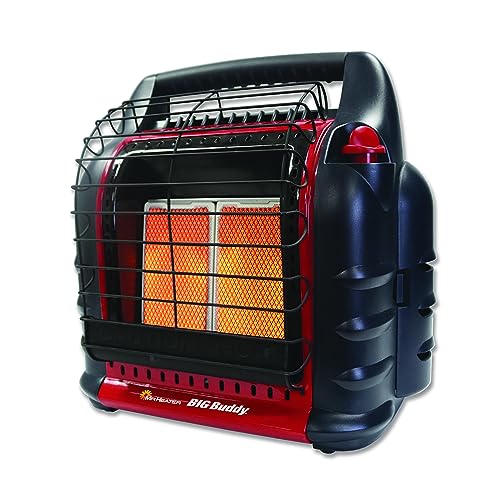
Best for Owners who want a heater that also moves outside the RV for camp use
- 4,000–18,000 BTU across three settings
- Fan-assisted heat distribution
- Genuinely portable, not fixed-mount
Why buy it: Unlike the fixed Wave series, the Big Buddy travels with you outside the RV as well, at the cost of a small amount of fan noise and a less even heat pattern across a long RV interior.
Full Comparison
| Product | Best for | Buy |
|---|---|---|
| Camco 57341 Olympian Wave-6 Catalytic Safety Heater – 6,000 BTU | Best Overall for RVs | Check Price |
| Camco 57331 Olympian Wave-3 Catalytic Safety Heater – 3,000 BTU | Best for a Small RV or Teardrop | Check Price |
| Camco 57351 Wave 8 Heater | Best for a Large Fifth-Wheel or Motorhome | Check Price |
| Mr. Heater 18,000 BTU Big Buddy PRO Series Heater | Best Portable Alternative | Check Price |
How We Picked the Best Propane Heater for RV Use
Three things mattered most for RV use. First, noise. A fan-driven heater running all night in a small interior feels very different than the same heater in an open garage. Second, electrical draw. Boondocking off a battery bank makes a furnace’s blower fan a real cost. Third, how consistently owners report a model as correctly sized for their specific rig.
Why a Non-Electric Heater Dominates: Battery-Free Heat and an RV Furnace Alternative
A catalytic heater produces heat through a chemical reaction on a treated pad. There is no open flame and no fan. As a non-electric heater, it needs no power beyond an optional battery igniter, delivering genuinely battery-free heat all night. That combination is why the Olympian Wave series, a real RV furnace alternative, is the default recommendation for most RV interiors rather than a radiant Buddy-style heater.
Propane Heater vs. Your RV’s Built-In Furnace
Most RVs ship with a built-in forced-air furnace as standard equipment. A portable or catalytic heater is typically a supplement, not a replacement. The built-in furnace draws significantly more battery power for its blower fan. This matters when boondocking off a battery bank. Our full furnace comparison guide covers this decision in depth.
Olympian Wave BTU Sizing and Heat Coverage for Your RV
RV interiors vary from a small teardrop under 100 sq ft to a large fifth-wheel well over 300 sq ft. The 3,000 BTU Wave-3 suits the smaller end. The 6,000 BTU Wave-6 covers a mid-size RV. The 8,000 BTU Wave-8 or a Big Buddy alongside the furnace handles the largest interiors. Our BTU sizing guide covers the math, adjusted for an RV’s typically better insulation than an open room of the same size.
Battery Draw While Boondocking
A catalytic or Buddy-style heater draws essentially no electrical power beyond an optional igniter. That is a genuine advantage over a furnace or electric heater when running off solar and battery storage without a generator. See our battery power guide for the fuller picture on off-grid electrical planning.
Ventilation, Condensation, and the Oxygen Depletion Sensor in an RV
RV interiors are smaller and more sealed than a typical room. Catalytic and radiant propane combustion both release water vapor into the cabin air, which can worsen condensation on cold RV windows even with a heater's oxygen depletion sensor holding safe indoor air quality. This raises the stakes on ventilation. Every indoor-safe heater still needs the ventilation specified in its manual, typically a cracked window or roof vent, no matter how small the space feels. Our ventilation requirements guide covers this in full.
Portable vs. Permanent Installation: Radiant Heat, Tip-Over Shut-Off, and Low-Oxygen Shutoff
The Olympian Wave series can be mounted permanently to a wall. It can also be used portably with an optional leg stand kit. A permanent mount is the more common choice in a finished RV. Secure it according to the manual’s clearance requirements from cabinetry and curtains. A portable Buddy-style heater, or a similar radiant model from Dyna-Glo, offers more flexibility to move between the RV and an outdoor camp setup. That radiant heat category also pairs an oxygen depletion sensor with a tip-over shut-off and low-oxygen shutoff, a different safety set than the catalytic Wave series relies on.
Winterizing an RV With a Portable Heater
Using a portable heater to keep an RV above freezing during winter storage is common practice. It requires more caution than heating an occupied RV during the day. Our winterizing guide covers the specific precautions for unattended use.
Propane Leak Detector vs. a Carbon Monoxide Detector
Many RVs come equipped with a built-in propane leak detector as standard safety equipment. This is separate from a carbon monoxide detector. Confirm this system is present and functioning before relying on any propane heater. A propane leak detector senses gas before combustion. That gives an earlier warning than a CO detector, which only catches trouble after something has already gone wrong.
What RV and Van Life Owners Report About Overnight Heating
Across RV forums, silence and battery independence matter more than raw BTU output for most full-time or extended travelers. A heater that keeps occupants up all night with fan noise gets far worse long-term reviews. So does one that drains a battery bank overnight. Slightly lower output with genuinely quiet, power-free overnight heating wins out almost every time — a preference that shows up just as often in van life forums as in traditional RV ones.
Warranty and Long-Term Reliability
Camco backs the Olympian Wave series with a standard manufacturer warranty against defects. Look for CSA certification, and RVIA certification on models built specifically for RV installation, as further confirmation of safety testing. The catalytic pad itself has a service life and gradually loses efficiency over years of use. This is normal wear, not a defect. Most manufacturers recommend periodic replacement of the catalytic element as part of routine maintenance.
Buying for a Fifth-Wheel, Full-Time or Occasional RV Trip
A full-time RVer benefits from investing in a permanent catalytic installation and a larger hose-connected tank, since the upfront cost spreads across far more nights of use. An occasional weekend traveler is often better served by a portable Buddy-style heater that can also serve double duty outside the RV at a campsite or tailgate.
Class A Motorhome, Class C and Travel Trailer Differences
A Class A motorhome typically has the largest interior of the group, often justifying the Wave-8 or a Big Buddy alongside the furnace. A Class C or smaller travel trailer usually fits the Wave-6 comfortably. A pop-up or teardrop trailer, with the least interior volume, is squarely Wave-3 or Little Buddy territory. Match the pick to your specific rig class as a starting point before fine-tuning heat coverage to your exact square footage.
Propane Consumption and Running Cost Across the Four Picks
Propane consumption scales directly with BTU output and run time, so a lower setting always stretches a tank further. Using the standard conversion of roughly 21,600 BTU of usable energy per pound of propane, the Wave-3 at 3,000 BTU stretches a 20 lb tank to well over 100 hours of continuous use. The Wave-6 at 6,000 BTU cuts that roughly in half. The Big Buddy at its full 18,000 BTU setting burns through a 20 lb tank in about 24 hours, though running it on a lower setting extends this considerably.
Installing a Catalytic Heater Yourself vs. Hiring a Technician
A portable Wave heater with an optional leg stand kit requires no installation at all. A permanent wall-mount installation connecting to your RV’s onboard propane system is a more involved job, and if you are not confident in your own gas-fitting experience, a qualified RV technician can complete it safely and correctly the first time.
Seasonal Storage for RV Heaters
Disconnect the fuel source before storing any heater between RV seasons, and keep it somewhere dry rather than left in a damp storage unit. A quick inspection of the hose and connections at the start of each season, before your first trip, catches most small issues before they become an inconvenient mid-trip problem.
Common Buying Mistakes for a First RV Heater
Buying based on the lowest price rather than matching output to your specific rig size is the most common regret in owner reviews. A close second is assuming a portable heater will fully replace the built-in furnace, when most owners actually keep and use both for different situations.
New vs. Used RV Heaters
A used Buddy-style radiant heater in good condition carries relatively low risk, given its simple mechanism. A used catalytic Wave heater is a bit more of a gamble, since the pad’s condition is not always obvious from a quick inspection and its efficiency degrades gradually over years of use rather than failing outright.
Where to Buy These Four Picks
All four picks are widely available through major online retailers and RV supply stores, so availability rarely forces a choice between them. Checking that a listing is sold by an authorized retailer, rather than an unfamiliar third-party seller, is worth the extra few seconds for warranty support down the line.
Traveling Between Climates With One Heater
A full-time RVer moving between a hot summer destination and a cold winter one needs a heater that performs across that whole range, not just one season. The Wave-6's mid-range output and the Big Buddy’s adjustable settings both handle this kind of seasonal travel better than a heater fixed at one extreme output level.
1-lb Cylinder and 20-lb Tank: What to Pack Alongside Your RV Heater
Beyond the heater itself, a sensible RV heating kit includes a spare 1-lb cylinder or a filled backup 20-lb tank, a working carbon monoxide detector, and a propane leak detector if your rig does not already have one built in. These three items, alongside whichever heater you choose from this list, cover the essentials for safe RV heating.
Talking to Fellow RVers About Their Heater Choice
RV forums and owner groups specific to your rig’s make and model are a genuinely useful resource for hearing how a specific heater performs in your exact floor plan, since interior layout affects heat distribution more than raw square footage alone. Cross-referencing owner experiences against manufacturer specs before buying helps set realistic expectations for your specific RV.
Altitude Considerations for Mountain RVing
All four picks can lose some effective output at higher elevation, since thinner mountain air affects combustion the same way it affects a car engine’s performance. RVers who regularly travel through mountain passes or camp at elevation should size slightly above what flatland guidance suggests, rather than discovering the shortfall on a cold night at altitude.
Combining a Heater With RV Skirting
RV skirting, a barrier around the underside of a parked RV, reduces heat loss through the floor and protects plumbing from cold air circulating underneath. Adding skirting alongside any of these four heater picks meaningfully reduces how hard the heater needs to work, which extends fuel supply and improves comfort during genuinely cold stays.
Final Thoughts on Choosing an RV Heater
The right RV heater matches your rig’s actual size and how you actually travel, not the highest BTU figure available. Start with the smallest pick that comfortably covers your interior, weigh silence and battery independence against portability, and pair the heater with basic ventilation and detector equipment for a genuinely safe setup.
Keeping This Guide Useful Over Time
Manufacturers occasionally update or discontinue specific models within a product line, so confirm the exact listing still matches the specs described here before buying. This guide reflects the currently verified catalog and will be updated to match any future changes rather than left stale as models come and go.
A Closing Note on Honest Sizing
It is tempting to buy the highest-output heater available "just in case," but oversizing wastes fuel and battery-igniter cycles without a real comfort benefit once your RV is already adequately warm. Measure your actual interior, apply the guidance above, and trust the smallest pick that genuinely covers it.


Quick Recap
The Wave-6 covers most RV interiors quietly and without battery drain. The Wave-3 fits a smaller rig. The Wave-8 or a Big Buddy handles the largest interiors. Match the pick to your rig’s actual size and how much you value silence over portability.