
Affiliate disclosure: some links are affiliate links — as an Amazon Associate we earn from qualifying purchases, at no extra cost to you. Full disclosure.
Search for a portable camping propane heater and you'll expect to find dedicated options from Coleman, Ozark Trail and Texsport — the brands most associated with camping gear generally. In practice, the heater market for camping doesn't work quite that way, and it's worth being upfront about that before recommending anything.
We'd rather tell you honestly which heater campers actually rely on than pad this page with camping-brand products that don't really exist in this category, or vaguely imply a brand offers something it doesn't. That's the honest-research approach this whole site is built on, and heating equipment — where a wrong safety assumption has real consequences — is exactly the category where it matters most.
Top 3 Recommended
Why Camping Brands Don't Make Dedicated Heaters
Coleman, Ozark Trail and Texsport are all well known for tents, sleeping bags, camp stoves, coolers and lanterns. Coleman specifically sells propane fuel canisters and camp stoves widely used alongside a heater from another brand. None of the three currently sells a dedicated, indoor-safe portable propane space heater to rival the Mr. Heater Buddy line. This isn't a gap in our research. It reflects how the market has actually developed. Mr. Heater built the indoor-safe radiant heater category specifically and has dominated it for years, while the traditional camping brands have stayed focused on their core categories of stoves, lighting and shelter.
What Campers Actually Use for Heat
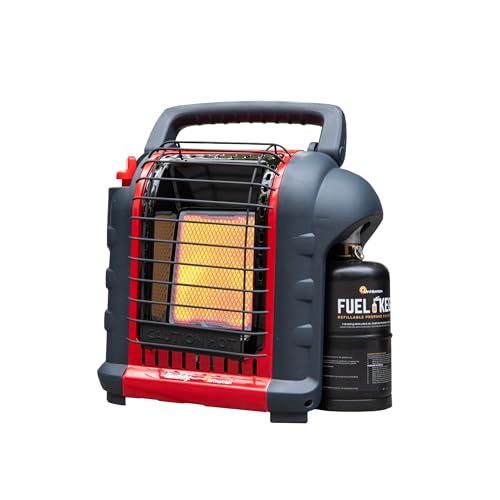
Given that gap, camping propane heaters in practice means one of two things. Either a Mr. Heater Buddy-series unit, or a generic imported heater from a smaller brand sold specifically for camping and outdoor use. The Mr. Heater 9,000 BTU Portable Buddy and the Mr. Heater 3,800 BTU Little Buddy are the two most commonly recommended options across camping and outdoor forums specifically because of their indoor-safe rating and established reliability track record — both matter more in a tent than they would in an open patio setting. See our full Buddy series comparison for how the different sizes stack up.
Generic and Budget Heaters for Camping
A smaller tier of imported, budget-priced heaters has also emerged specifically marketed for camping use — like the Portable Outdoor Heater with 8FT Hose, 9000 BTU. These run on either butane or propane and are typically priced below the established Mr. Heater line. These can be a reasonable budget option for occasional outdoor use, but they generally carry a much shorter or less established review history, and buyers should check specifically whether a given model is indoor-safe before assuming it is, since not all generic camping heaters carry an oxygen depletion sensor the way the Buddy line does.
Propane Tent Heater Safety: Oxygen Depletion Sensor and Ventilation
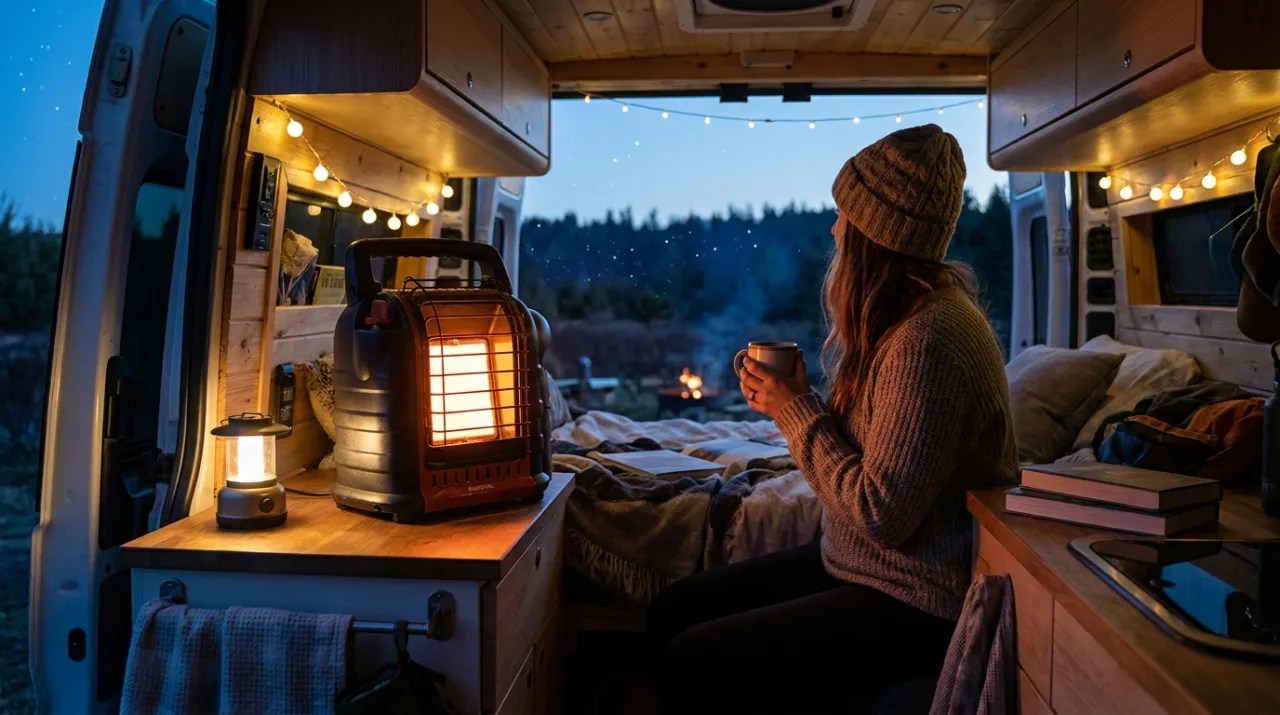
Using any propane heater inside a tent carries real safety considerations that go beyond what's needed on an open campsite. Only a heater explicitly rated indoor-safe or enclosed-space-safe — with a built-in oxygen depletion sensor — belongs inside a tent, and even then, manufacturer guidance consistently recommends cracking a tent flap or vent for airflow.
Tip-Over Shut-Off and Low-Oxygen Shutoff Safety Features
Look for a CSA certified model with both a tip-over shut-off and the low-oxygen shutoff built into its ODS — the two safety features that matter most once real ventilation is limited to a cracked flap rather than an open room.
A Carbon Monoxide Detector for Overnight Heating
A battery-backed carbon monoxide detector, or CO detector, is inexpensive insurance worth carrying specifically for tent camping trips where a heater will run overnight, since a tent is a genuinely enclosed space in a way that a lot of other "indoor-safe" use cases aren't. See our indoor safety guide for the full picture. The CPSC and OSHA both publish general guidance on carbon monoxide risk from fuel-burning equipment in enclosed spaces. That guidance applies directly to heating a tent overnight.
Best Camping Propane Heater by Tent Size: Radiant Heat and Packable Heater Picks
Matching heater output to tent size follows similar logic to matching a heater to a room, adjusted for how much less insulated a tent typically is compared to a structure. A small one- or two-person tent is usually well served by the 3,800 BTU Little Buddy; a larger three- to four-person tent or a family camping setup often benefits from the standard 9,000 BTU Buddy; and a large canvas wall tent used for extended trips, common in hunting camps, is where the 18,000 BTU Big Buddy earns its extra size and weight. Running a heater at the lowest setting that still keeps the tent comfortable both conserves fuel and reduces how much the tent's interior temperature swings. An ice shanty used for ice fishing falls into a similar category — a small, enclosed space measured in square feet just like a tent, where a compact Little Buddy-class heater is typically the right size rather than a larger model. Most tent-safe picks in this range produce radiant heat rather than relying on a fan, which keeps them genuinely packable heater options with no moving parts to fail in the field.
A 4000 BTU to 9000 BTU Range Covers Most Tents
Roughly a 4000 BTU to 9000 BTU range covers the vast majority of tent sizes.
A Flameless Catalytic Heater Alternative
A flameless catalytic heater is the quieter alternative some campers prefer for the same enclosed-space use.
Packing 1-lb Propane Cylinders for Car Camping or Backpacking
Beyond the heater itself, a few accessories consistently show up in camper packing lists: spare 1-lb propane cylinders (or a hose-and-filter kit to run off a larger tank if car camping rather than backpacking), a lighter or extra matches as an ignition backup, and a small battery-powered carbon monoxide detector.
Weather Resistance and Run Time Before You Pack
Packing the heater in a padded case with some weather resistance, or its original box, protects the radiant element and control valve from damage during transport, which matters more for camping trips involving off-road driving or a long hike to a backcountry site than it would for a heater that stays in a garage. Check the expected run time per cylinder against your trip length before you pack, not after you're already at the site.
Ozark Trail Products: What Actually Exists
Ozark Trail, Walmart's in-house camping brand, sells camp stoves, lanterns, tents and coolers extensively, and while the brand doesn't currently offer a dedicated indoor-safe propane space heater, it's worth checking current listings periodically since budget retail brands do occasionally add new categories. Buyers specifically loyal to Ozark Trail for other camping gear most commonly pair their existing equipment with a Mr. Heater Buddy for heat, based on the same logic that applies across this whole category: heat-specific safety features matter more than brand consistency across your full camping kit.
Coleman's Role in the Propane Camping Ecosystem
Coleman remains a major name in propane camping equipment through its stoves, lanterns and propane fuel canisters, which are frequently used to fuel a Mr. Heater Buddy or similar heater even without Coleman making the heater itself. Coleman's own catalog historically included some space heater products in past years, but current listings focus on stoves and cooking equipment rather than a dedicated indoor-safe radiant heater competing with the Buddy line. If you already run Coleman's 16 oz propane canisters for a stove, they're compatible with any heater that accepts standard 1 lb-equivalent disposable cylinders, which covers the Buddy line directly.
This is a common pattern across camping gear generally: a single trusted brand for cooking equipment and lighting, paired with a separate specialist brand for heating. There's no real downside to mixing brands this way — a Coleman stove, a Coleman lantern and a Mr. Heater Buddy all coexist in the same camping kit without any compatibility issue, since propane cylinders and tanks are a standardized fuel format across virtually every brand in this category.
Texsport and the Broader Budget Camping Gear Market
Texsport occupies a similar space to Ozark Trail in the camping gear market — tents, cookware, lanterns and camp furniture at accessible price points — without a dedicated propane space heater in its current catalog. Buyers who shop budget camping brands across the board for cost reasons sometimes assume a similarly priced generic heater will match the quality of their other gear, but heating equipment carries different safety stakes than a cooler or camp chair, which is why we'd encourage checking a heater's specific safety certification independently of how satisfied you've been with a brand's non-heating products.
BTU Needs for Different Camping Scenarios
Beyond tent size alone, the type of camping trip changes how much BTU output actually matters. Backpackers hiking into a remote site prioritize weight above all else and typically accept the Little Buddy's lower output as the tradeoff for its compact size. Car campers with more room to pack gear can reasonably bring a standard or Big Buddy along with extra cylinders. Hunters sitting still for hours in a blind often prefer a lower, steadier BTU setting over maximum output, since a blast of hot air can be as uncomfortable as no heat at all in a small enclosed space.
Running Cost for a Portable Propane Heater While Camping
Using the standard conversion of roughly 21,600 BTU of usable energy per pound of propane, a Little Buddy at its fixed 3,800 BTU stretches a single 1 lb cylinder to about 5.5 hours, while a standard Buddy at 9,000 BTU on high burns through the same size cylinder in under 2.5 hours. For a multi-day cold weather camping trip, this means packing multiple cylinders or bringing a hose-and-filter kit to run off a larger refillable tank if car camping rather than backpacking. Backpackers prioritizing weight typically stick with the Little Buddy and pack cylinders based on trip length; car campers have more flexibility to bring a 20 lb tank for extended stays and steadier overnight heating.
Butane vs. Propane for Cold Weather Camping Heaters
Some budget camping heaters, including several generic imports, run on butane, propane, or a combination of both rather than propane exclusively. Butane burns slightly cleaner in some conditions but performs noticeably worse in cold temperatures compared to propane, which vaporizes more reliably below freezing. For cold-weather camping specifically — the scenario most likely to have you shopping for a heater in the first place — a propane-only or dual-fuel heater is generally the more reliable choice over a butane-only unit, since butane can struggle to vaporize properly once temperatures drop well below freezing.
Where to Buy Fuel While Camping
Propane 1 lb cylinders and Coleman-brand 16 oz canisters are widely available at outdoor retailers, big-box stores, hardware stores and many gas stations near popular camping areas, making fuel resupply straightforward for most car-camping trips. Refilling a larger 20 lb tank typically requires a dedicated propane exchange or refill station rather than a general retailer, which is worth planning around if your trip relies on a hose-connected tank rather than swappable small cylinders. Checking fuel availability near your specific camping destination before a trip, rather than assuming it'll be as easy as at home, avoids an unpleasant surprise mid-trip.
What Owners Report Across Camping Heater Options
Across camping and outdoor forums, the recurring theme is that the Mr. Heater Buddy line's indoor-safe certification and long track record outweigh brand loyalty to Coleman, Ozark Trail or Texsport for the specific job of heating a tent or camp shelter. Owners of budget generic heaters report acceptable performance for occasional use but more inconsistent reviews around ignition reliability and build quality compared with the established Buddy line — a pattern consistent with a newer, less proven product category generally, not necessarily a defect in any specific model.
Camping Heaters vs. Hunting and Tailgating Heaters
There's meaningful overlap between camping propane heaters and the heaters used for hunting and tailgating, since the same Buddy-series units cover both use cases well. The main differences show up in accessories and finish rather than the heater itself: hunters more often choose the camo-finished Hunting Buddy for a blind or tree stand, while campers and tailgaters are less concerned with finish and more focused on straightforward output for a tent or open gathering. If your camping trips lean toward hunting or tailgating specifically, our camping, hunting and tailgating heater guide covers those more specialized use cases in additional depth.
Choosing Between the Buddy Line and a Budget Alternative
The decision usually comes down to how often you camp and how much weight you put on established safety data. Frequent campers, hunters and anyone using a heater inside an enclosed tent regularly are better served by the Mr. Heater Buddy line's larger review base and longer safety track record, even at a higher price point. Occasional campers heating an open or well-ventilated space for a single trip a year might reasonably decide a cheaper generic option is an acceptable tradeoff — but that calculation changes the moment the heater is running inside a fully enclosed tent overnight, where the safety margin matters more than the cost difference.