
Affiliate disclosure: some links are affiliate links — as an Amazon Associate we earn from qualifying purchases, at no extra cost to you. Full disclosure.
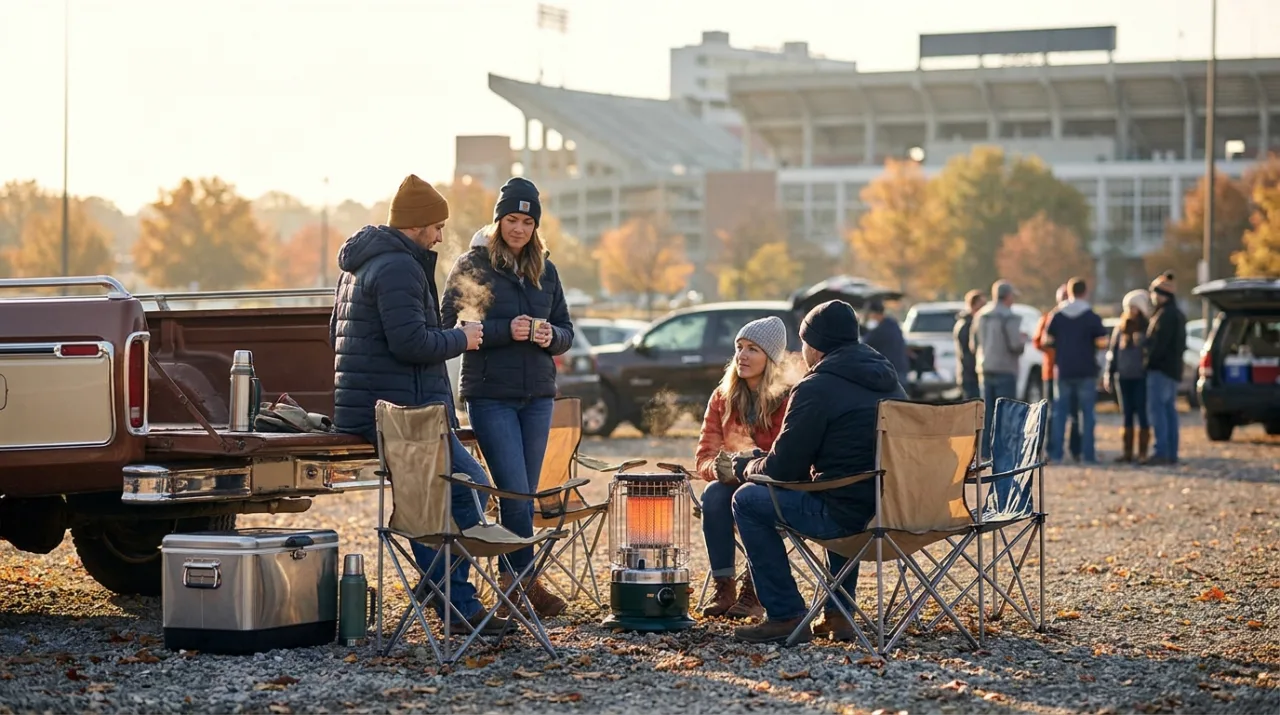
A tailgate setup has different needs than a sealed tent overnight: an open parking lot, a moving group of people, and heat that needs to reach several feet rather than just one person standing still. The three picks below reflect what tailgate groups consistently favor, based on aggregated owner reviews and manufacturer specs.
The Short Answer: The Best Overall Portable Propane Heater for Tailgating
For most tailgate groups, the 18,000 BTU Big Buddy is the strongest overall pick, with enough output and fan-assisted spread to warm a small crowd standing in the open. A smaller gathering does fine with the 9,000 BTU standard Buddy. Want something that stows easily between trips? The Dyna-Glo Grab N Go covers that.
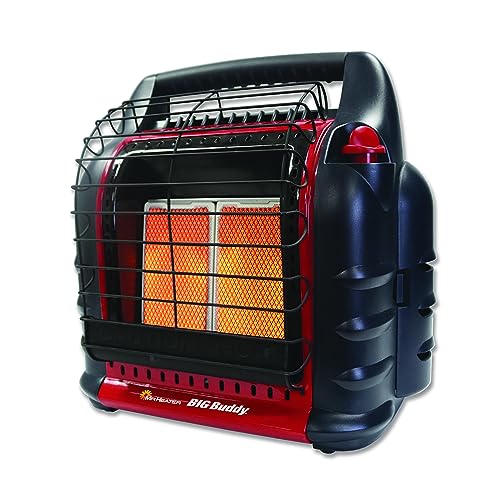
Best for A group standing around an open tailgate setup
- 4,000–18,000 BTU across three settings
- Fan-assisted heat distribution
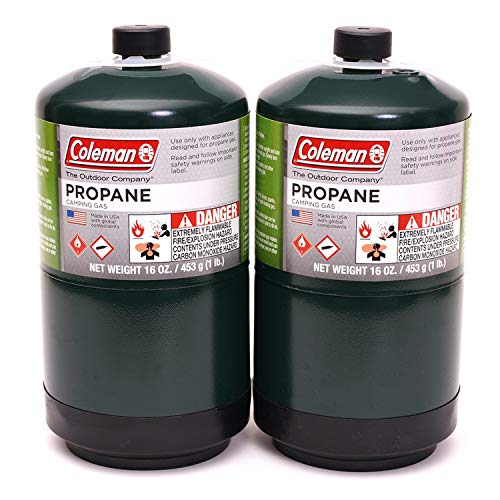
- Runs on two 1 lb cylinders or hose-connect
Why buy it: The higher output and fan assist push heat further into an open parking-lot crowd than a smaller radiant heater can manage, and it is the pick most tailgate groups land on.
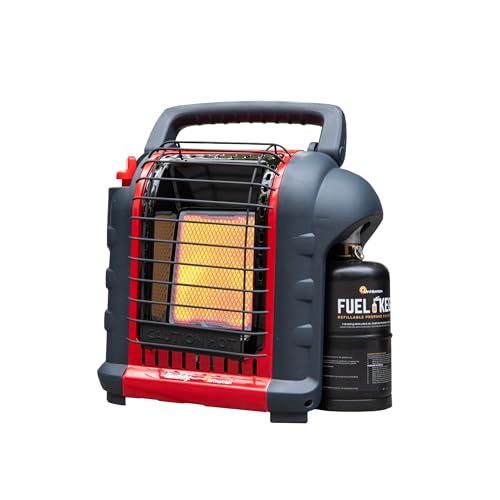
Best for A smaller gathering or a single truck bed setup
- 4,000–9,000 BTU on low/high
- Runs on a 1 lb cylinder or hose-connect
- Compact and easy to carry from the truck
Why buy it: Enough output for a handful of people standing close, at a fraction of the size and weight of the Big Buddy.

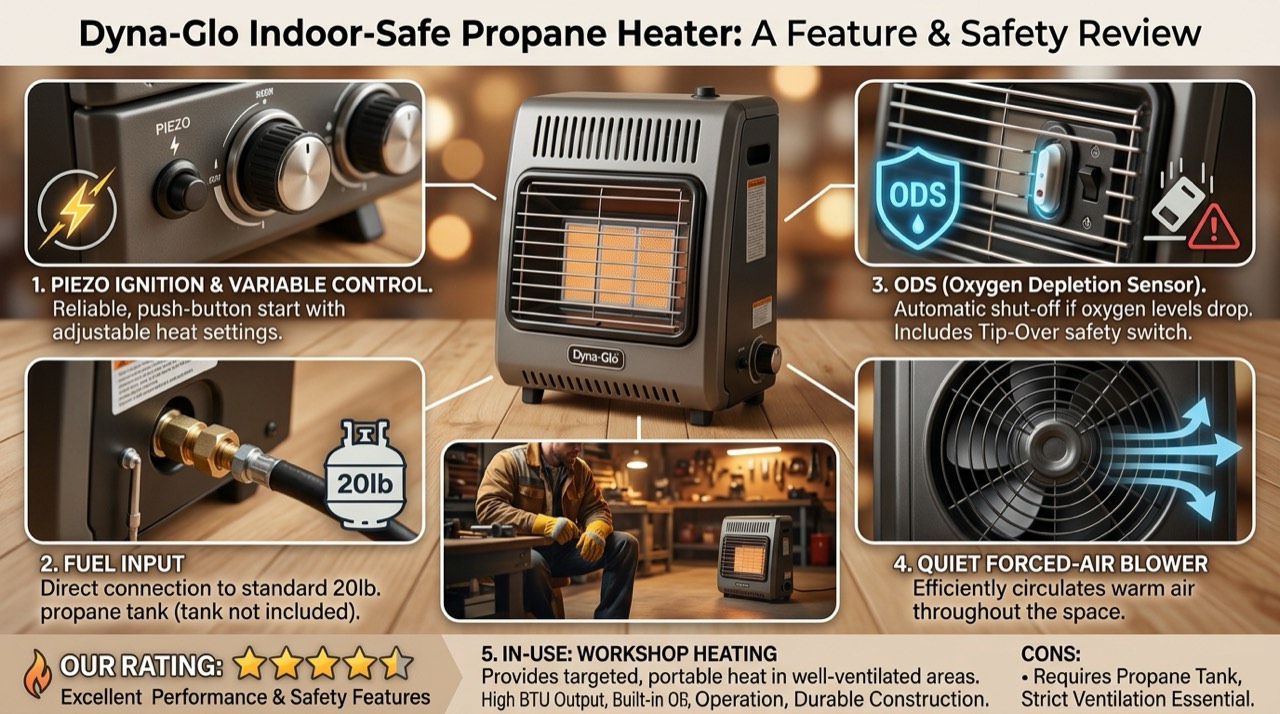
Best for Fans who want a heater that stows easily between the cooler and the folding chairs
- 10,000 BTU output
- Compact carry-handle design
- Indoor-safe with oxygen depletion sensor
Why buy it: A genuine alternative to the Buddy line for a tailgate setup, with a carry-handle design built around exactly this kind of grab-and-go use.
Full Comparison
| Product | Best for | Buy |
|---|---|---|
| Mr. Heater 18,000 BTU Big Buddy PRO Series Heater | Best Overall for Tailgating | Check Price |
| Mr. Heater 9,000 BTU Portable Buddy Radiant Propane Heater | Best for a Smaller Group | Check Price |
| Dyna-Glo 10K BTU Grab N Go Portable Propane Heater | Best Grab-and-Go | Check Price |
How We Picked
Tailgating has specific demands a general camping heater roundup does not fully capture. We weighed how well each pick throws heat into an open, moving crowd rather than a sealed space. We also looked at how quickly it sets up and packs down between the truck and the parking spot, and how consistently owners report it holding up to repeated loading and unloading over a season of game days.
Open-Air Heating: BTU Output, Radiant Heaters, Instant Heat and Outdoor Heat Coverage for a Tailgating Heater
A tent traps heat, a tailgate does not. Open-air use loses heat to wind and ambient cold far faster than an enclosed space. That is why the higher-output Big Buddy consistently outperforms smaller radiant heaters for a group of more than two or three people standing around a tailgate setup. A good tailgating heater delivers instant heat the moment it lights, rather than needing minutes to warm up, since nobody wants to stand around waiting for outdoor heat to arrive between the tailgate and kickoff. The Big Buddy's fan assist also meaningfully extends heat coverage across a larger, moving crowd compared with a smaller radiant unit working alone.
Setup and Teardown Speed: 1-lb Cylinder, Piezo Ignition and a Carry Handle
A tailgate heater gets connected and disconnected repeatedly across a season, often in a rush before kickoff. The Buddy line’s simple 1-lb cylinder connection and piezo ignition button are fast to swap and light between uses. A spare cylinder or two in the truck removes any concern about running out mid-tailgate. The standard Buddy and Grab N Go both include a simple carry handle, which matters when you're grabbing the heater one-handed out of a packed truck bed.
Safety Basics: Tip-Over Shut-Off, Low-Oxygen Shutoff and CSA Certification
All three tailgating heater picks share the same core safety package as the rest of the Buddy and Dyna-Glo lineups: a tip-over shut-off that cuts fuel the instant the unit isn't sitting level, and a built-in low-oxygen shutoff — the feature behind their CSA certification for both indoor and open-air use. None of that safety hardware changes with group size or how open the lot is; it's standard across the Big Buddy, the standard Buddy and the Grab N Go alike.
Fitting a Heater in the Truck Bed
Space in a truck bed or trunk is already competing with a cooler, chairs, and a grill. The standard Buddy and Grab N Go both stow easily alongside other tailgate gear. The Big Buddy takes up meaningfully more room, which is worth planning around if your vehicle is already packed tight on game day.
Safety in an Open Parking Lot
Open-air use is inherently better ventilated than a sealed tent, which reduces (but does not eliminate) the safety considerations that apply to enclosed spaces. Keep the heater clear of vehicles, tailgate canopies, and foot traffic, and never run one inside a closed vehicle for warmth, since a running engine or a sealed cabin changes the ventilation picture entirely.
Fuel Cylinder Planning for a Full Season of Tailgating: 20-lb Tank Option and Run Time
A season of weekly tailgates adds up in disposable cylinder cost fast. A Camco hose-and-filter kit connecting to a 20-lb tank option, kept in the truck alongside the heater, extends run time and cuts that cost meaningfully for regular tailgaters. See our hose and adapter guide for the specific kit that fits the Buddy line.
Weather-Proofing Your Setup: Weather Resistant and Packable Picks
Wind is the biggest variable at an open tailgate, and it can push a heater’s output away from the group faster than expected. Positioning the heater with some wind block behind it, a vehicle or a canopy side panel, makes a real difference in how much of its output actually reaches people rather than dispersing into open air. All three picks are weather resistant enough for the occasional light drizzle or gusty afternoon, though none should be left uncovered for extended exposure. The standard Buddy and Grab N Go stay genuinely packable enough to stash under a seat between games.
Comparing to a Fire Pit
A portable fire pit is a common tailgate alternative, but many stadiums and lots restrict open flame more strictly than a contained propane heater. Check your specific venue’s rules before assuming either option is allowed, since policies vary widely by stadium and by parking area.
What Tailgaters Report
Reliability and fast warm-up are the most repeated praise points across all three picks in tailgate-specific reviews. The most common complaint is underestimating how much a larger group needs relative to a single-person camping setup, which is why sizing toward the Big Buddy for anything beyond a small gathering avoids disappointment on the coldest game days.
Quick Recap: The Best Value Pick and the Overall Winner
The Big Buddy handles a real tailgate crowd. The standard Buddy covers a smaller gathering at less bulk. The Grab N Go is the easiest to stow between trips and is often the best value pick of the three for a budget-minded fan. All three share the same core safety technology, so the choice comes down to group size and how much truck space you have to spare.
Cold Weather Tailgates: Sizing Up for Deep Winter Games
A late-season playoff game in genuinely cold weather demands more than an early-season afternoon kickoff. If your team’s schedule regularly includes deep winter games, size toward the Big Buddy from the start. This avoids discovering mid-season that your smaller heater cannot keep the group comfortable once temperatures drop into the teens or below.
Sharing a Heater Across Multiple Tailgate Groups
Some tailgate lots see neighboring groups share a single heater rather than each bringing their own. This works well for smaller crowds but strains one unit once the combined group outgrows its output. Coordinate with neighbors ahead of time if you plan to share.
Powering Other Tailgate Gear Alongside a Heater
A propane heater draws no electricity, freeing up any generator or battery capacity you're running for a TV, speakers, or a grill — a real advantage over an electric heater at a tailgate, where power is often already stretched thin.
Storing a Tailgate Heater Between Game Days
A heater that lives in the truck between weekly tailgates sees more handling and temperature swings than one used occasionally. Disconnect the fuel source when not actively in use during the week. Check the connection for wear periodically through the season, not only at the very end.
Tailgating Etiquette Around Heater Placement
Position a tailgate heater where it warms your own group without creating a tripping hazard for neighboring setups in a crowded lot. Running hoses or extension cords across a shared walkway is both a safety hazard and a common source of friction between neighboring groups on a busy game day.
Bringing a Backup Heater for Bigger Games
For a rivalry game or a playoff tailgate where the group grows larger than usual, some regular tailgaters keep a second, smaller heater in reserve rather than relying on one unit to scale up. This adds flexibility without the cost of always bringing the largest possible heater to every routine game day.
Matching Heater Choice to Group Warmth and Your Regular Crew Size
A consistent group of two or three people rarely benefits from the Big Buddy’s extra bulk and cost. A regularly larger crew of six or more people standing around justifies it easily. Base your choice on your typical week-to-week group, then borrow or rent up for the occasional oversized gathering rather than the reverse.
Comparing Total Season Cost Across the Three Picks
The Grab N Go and standard Buddy both cost less upfront than the Big Buddy, but a full season of weekly disposable-cylinder use can close that gap in ongoing fuel cost, especially at higher settings. A hose-and-filter kit connecting any of the three to a 20 lb tank kept in the truck flattens this cost difference considerably across a full season of games.
Dealing With Wind Block and Wind-Blocking Structures at Your Tailgate Spot
A pop-up canopy, an SUV’s open tailgate, or a simple folding wind screen all help concentrate a heater’s output on your group rather than losing it to open air. Position the heater so any windbreak you bring works with it, not against it, since a windbreak on the wrong side can actually funnel cold air toward the group instead of away from it.
Transporting Fuel Safely Between Home and the Stadium Lot
Keep spare 1 lb cylinders upright and secured during transport, away from direct sun exposure inside a hot vehicle for extended periods. A cylinder left baking in a closed car on a warm game day builds internal pressure faster than one stored in a cooler spot, which is worth factoring in in warmer regions or early-season games.
What to Do if Your Heater Won’t Light in Cold Stadium-Lot Conditions
Cold cylinders and cold hands both make ignition slightly harder on a frigid game-day morning. Warming a spare cylinder briefly in a vehicle cabin before attempting to light, and giving the igniter a few extra presses, resolves most cold-weather lighting delays without indicating any actual problem with the heater itself.
Tailgating With Kids: Extra Considerations
A tailgate lot is busier and more chaotic than a typical camping site, with more foot traffic and less consistent supervision of where children wander. Position the heater well clear of any area kids are likely to run through during pre-game activities, and brief anyone supervising them on the heater’s location and clearance zone.
Tailgate Cooking Alongside a Heater
Many tailgate setups run a grill or a portable stove alongside the heater. That means managing two separate open-flame appliances in the same footprint. Keep enough distance between the grill and the heater that neither’s heat output interferes with the other. Never position the heater directly downwind of grease smoke or spatter from active cooking.
Choosing a Heater for a Season Ticket Package Plan
Fans with a season ticket package attending every home game get more value from investing in the higher-output Big Buddy and a hose-connect kit. This beats repeatedly buying disposable cylinders for a smaller unit across a dozen or more tailgates. The upfront cost spreads out over enough uses that the math favors the larger, more efficient setup for a full season.
What to Do When the Game Runs Into Overtime
An unexpectedly long game means more fuel burned than planned. This is especially true on a cold night with the heater running continuously through a tight finish. Pack one extra cylinder beyond your calculated need specifically to cover this. Running out of fuel late in a close game is a common and easily avoidable disappointment.
Recap for First-Time Tailgate Heater Buyers
Start with your typical group size, not the biggest heater available. Check your local venue’s rules on open flame before buying anything. Pack at least one spare fuel source beyond your calculated need. Position the heater with safety and neighboring groups in mind. These four habits cover nearly everything that separates a smooth tailgate setup from a frustrating one.
Where to Find Your Venue’s Stadium Policy on Open Flame
Most stadiums publish a fan guide or bag-and-prohibited-items policy on their official website ahead of the season, which typically covers open-flame and heating equipment rules for the parking lots. Checking this once at the start of a season, rather than assuming last year’s rules still apply, avoids an unpleasant surprise at the gate on game day.