
Affiliate disclosure: some links are affiliate links — as an Amazon Associate we earn from qualifying purchases, at no extra cost to you. Full disclosure.
Once you decide a propane heater will live in one place rather than travel with you, the category shifts from portable radiant heaters to a different set of products: wall-mount heaters, freestanding cabinet units, and tank-top heaters built for a fixed spot. Each solves a slightly different installation problem, and the right pick depends more on where the heater will live and how long it needs to run unattended than on brand or price alone.
A wall mount propane heater in particular tends to come up in searches from two different kinds of buyers: someone furnishing a new workshop or converted garage from scratch, and someone replacing an aging heater that's served a space for years. The considerations are largely the same either way. Fixed installation. Sustained BTU output. Clearance and ventilation requirements for running a heater unattended for hours at a time. A replacement buyer usually already knows their room's heating needs. A first-time buyer benefits most from the sizing guidance further down this page.
Top 3 Recommended
Vented vs Vent-Free: The Permanent Wall-Mount Option
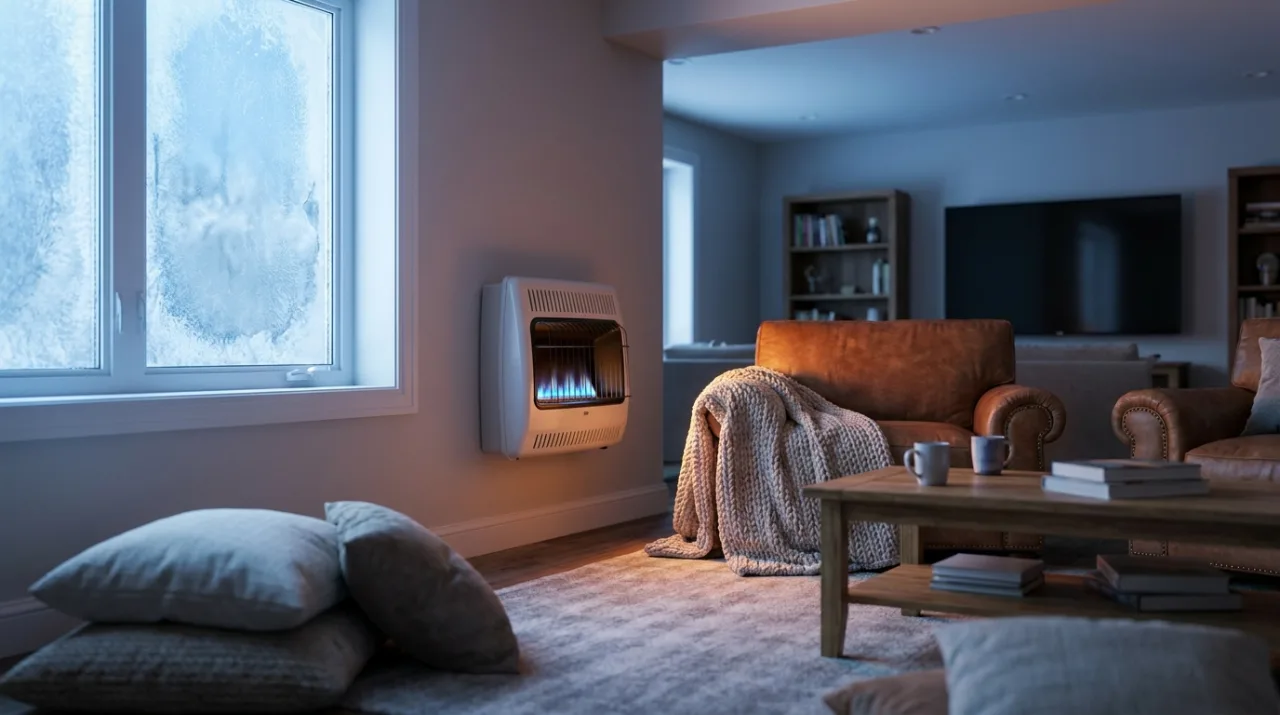
A wall mount propane heater like the Mr. Heater 30,000 BTU Vent Free Radiant Propane Heater installs flush against a wall and stays there, typically connected to a fixed propane line or a nearby 20–30 lb tank rather than a swappable cylinder. It's rated for indoor use with an oxygen depletion sensor, which is what makes "vent-free" possible — the heater doesn't need a chimney or flue because it's certified clean-burning enough, combined with the ODS safety backstop, to run in an enclosed room. This is the category most people mean when they search for a wall mount propane heater for a workshop, converted garage or cabin that needs sustained, reliable heat rather than portable, occasional heat. That vented vs vent-free distinction is the key difference between this category and a heater requiring a chimney or flue.
Cabinet Heaters: Indoor-Safe Blue Flame Heater vs. Infrared Wall Heater, and the Hearth Heater Look
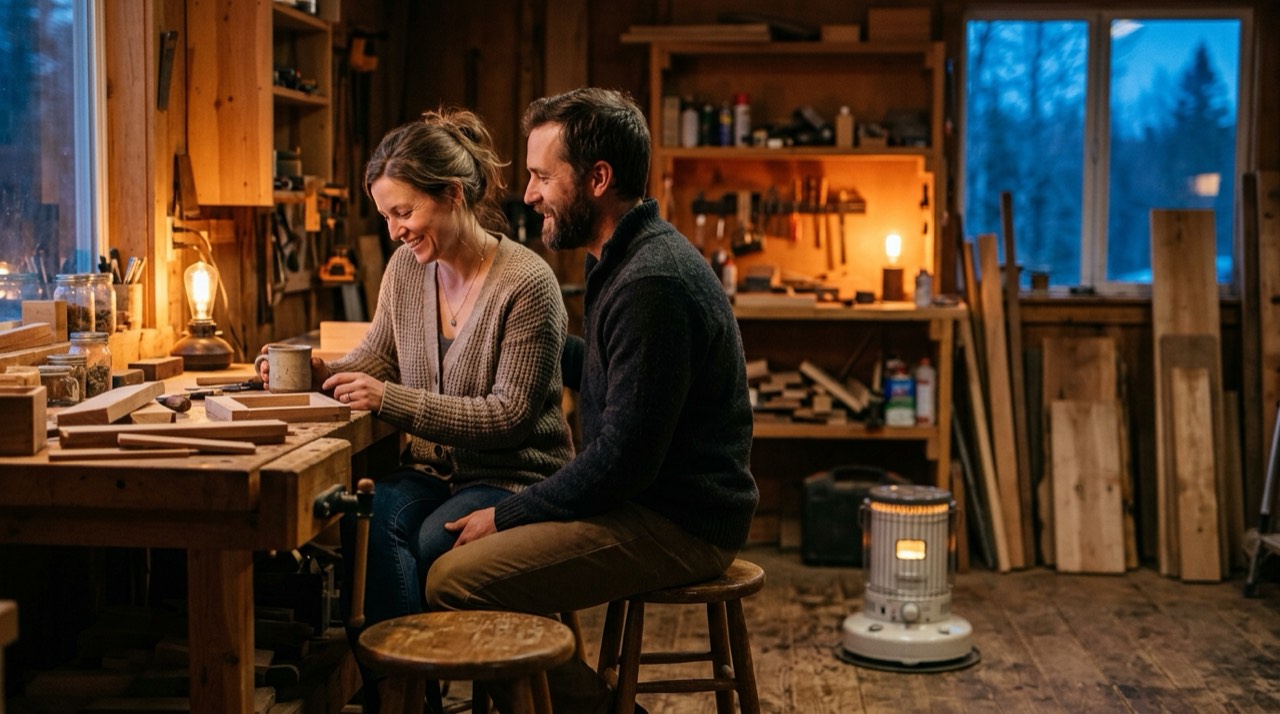
A cabinet heater, like the Mr. Heater 30,000 BTU Vent Free Blue Flame Dual Fuel Heater, delivers the same vent-free indoor-safe heating as a wall-mount unit but stands freely on its own base rather than requiring wall mounting. This matters for renters or anyone who doesn't want to modify a wall, and it also makes the heater easier to reposition within a room, though it still needs to stay connected to its propane source rather than moving room to room the way a portable Buddy heater does. Dual-fuel models that run on both propane and natural gas add flexibility if the fuel source at a given property might change or if you want the option to switch later. A blue flame heater, like the dual-fuel cabinet pick above, distributes warmth more evenly across a room than an infrared wall heater, which throws directional radiant heat at whatever's in its line of sight instead. Some cabinet models are also styled as a hearth heater, mimicking a built-in fireplace look while still running vent-free.
Tank Top Heater: Screw-On Simplicity
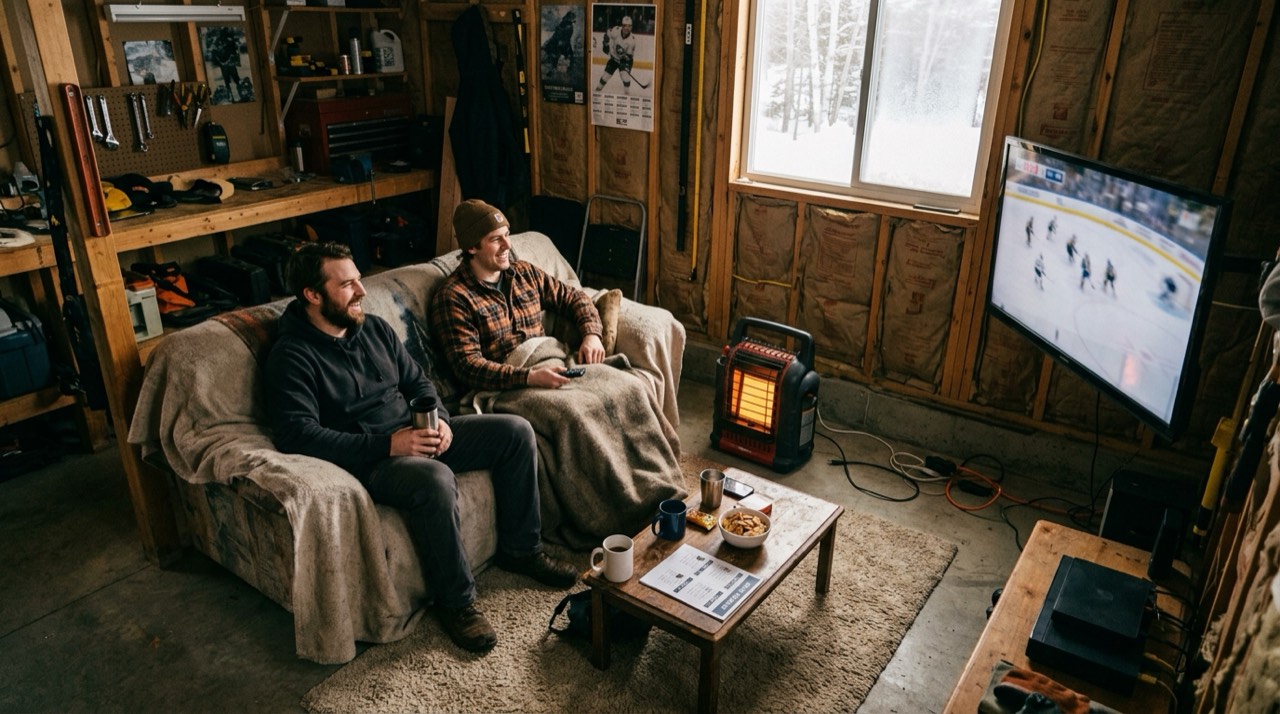
A tank-top heater takes a different approach entirely — it screws directly onto the top of a standard 20 lb propane tank, with no wall mounting, no fixed line, and no freestanding base beyond the tank itself. The Dura Heat TT-360 Propane 360° Tank Top Heater is a compact example: it throws heat in a full circle around the tank, which suits an open garage bay, patio or job site better than an enclosed room. Tank-top heaters are outdoor-rated rather than indoor-safe, so they occupy a different niche than the wall-mount and cabinet heaters above — semi-permanent rather than fully installed, and outdoor rather than indoor.
Installation Basics for a Wall-Mounted Heater: Mounting Bracket to Studs
Mounting a vent-free wall heater is more involved than plugging in a portable unit. A wall-mounted heater secured properly to studs, using the mounting bracket hardware it ships with, will outlast one anchored only to drywall, and it must sit at the manual's specified height and floor clearance. If connecting to a fixed propane line rather than a portable tank, that gas connection is typically a job for a licensed plumber or gas fitter rather than a DIY project — both for safety, and because many local codes require professional installation for a fixed gas appliance. Renters and anyone in a space they don't own should check with landlords or property managers before installing a permanent wall-mounted gas heater, since it usually counts as a fixed modification to the property.
Vent-Free Heater Clearance Requirements You Cannot Skip
Vent-free wall-mount and cabinet heaters are generally built to the ANSI Z21.11.2 safety standard and often carry CSA certification alongside it. Beyond Mr. Heater, brands like ProCom, Dyna-Glo, and World Marketing all sell comparable vent-free wall and cabinet lines, while Camco's Olympian Wave series offers a permanent wall-mount option specifically for RVs. OSHA sets workplace CO exposure limits for a workshop or garage running one of these heaters for extended hours. The CPSC also publishes seasonal safety warnings on carbon monoxide poisoning from portable and permanent heating equipment. A battery-backed CO detector, such as Kidde, is standard advice alongside any of these heaters, regardless of the built-in ODS.
Every wall-mount, cabinet and tank-top heater manual specifies minimum clearance from combustible materials — walls, furniture, curtains, stored items — and these numbers come from testing the specific heat output and pattern of that model, not a generic safety guideline. A 30,000 BTU wall unit needs more clearance than a smaller radiant Buddy heater. The clearance in front of the heater, where the radiant heat actually reaches, is typically much greater than what's required at the sides or above it. Before finalizing where a wall-mount heater will live, measure the manual's stated clearances against the actual room layout — several owners specifically mention discovering after purchase that furniture arrangement had to change to meet the clearance requirements.
Which Rooms Suit a Wall-Mount Propane Heater Best: BTU, Square Footage and Supplemental Heat
Wall-mount and cabinet heaters work best as the primary or supplemental heat source for a room without central HVAC: a detached workshop, a converted garage, a finished basement without ductwork, or a cabin. They're less suited to a room that already has central heating, where a portable option makes more sense for the occasional cold snap. Because these heaters are meant to run for extended periods, the room also needs adequate square footage (square feet) relative to the heater's BTU rating — an oversized wall heater in a small room can make temperature and ventilation harder to manage comfortably, not just wasteful. Our BTU sizing guide covers matching heater output to room size.
What Owners Report About Vent-Free Wall Heaters
Owners who install a vent-free wall or cabinet heater as their primary heat source for a workshop or converted space consistently report satisfaction with the sustained output. Unlike a portable radiant heater, these units are built to run for hours without needing a tank swap, provided they're connected to a larger tank or fixed line. The most common points of friction in reviews are around installation. Buyers who underestimate the clearance requirements, or the need for professional gas line work, sometimes have to adjust their setup after the heater arrives. Checking the manual's specific requirements before buying, not after, makes the installation go far more smoothly.
Thermostat Control on a Cabinet or Wall Mount Propane Heater
Some vent-free wall and cabinet heaters include a built-in thermostat, letting the unit cycle on and off automatically to hold a set temperature rather than running continuously at a fixed output. This is a meaningful upgrade over a manual on/off model for anyone using the heater as a room's primary heat source. It improves comfort — no manually adjusting the flame as the room warms up. And it reduces fuel consumption compared with running at a fixed high setting all day. Buyers heating a workspace they occupy for long stretches, like a home workshop, consistently mention thermostat control as one of the features that most improved day-to-day comfort — more so than the raw BTU rating.
Running Cost: How Long a 20-lb Tank or 100-lb Tank Lasts in a Vent-Free Wall Heater
Because these heaters are designed to run for extended periods rather than short bursts, running cost adds up differently than for a portable radiant heater. Using the standard conversion of roughly 21,600 BTU per pound of propane, a 30,000 BTU wall heater running continuously burns through a 20-lb tank in under 15 hours. In practice, a thermostat-equipped model cycles rather than running continuously, which stretches real tank life considerably beyond that full-burn number. It also means a heater connected to a small portable tank will need frequent refills if used as a genuine primary heat source through a cold season. This is a major reason most permanent installations connect to a larger 100 lb tank or bigger, or a fixed gas line, rather than a standard 20 lb cylinder. Our running-cost calculator can work out a number for your specific setup.
Tank-Top Heater Placement and Stability
Because a tank-top heater's entire weight sits on top of a propane tank rather than a wide stable base, tank stability matters more for this category than it does for a wall-mounted or freestanding cabinet unit. Placing the tank on a level, solid surface reduces the risk of the whole assembly tipping. Soft ground, gravel and uneven deck boards are the main culprits, and several tank-top heater reviews specifically flag this as a consideration in outdoor or job-site settings where the ground isn't always flat. Some owners add a simple stabilizing base or strap kit as an aftermarket accessory specifically to address this, particularly for use on a job site where the heater might be bumped or the ground is uneven.
Dual Fuel Heaters and Natural Gas Conversion
Several wall-mount and cabinet heaters, including some in the Mr. Heater vent-free line, are built as dual-fuel units that can run on either propane or natural gas depending on how they're configured at installation. This matters most for anyone who might switch fuel sources later — moving from a rental with propane tanks to a home with a natural gas line, for example. A dual-fuel heater avoids buying a second unit if the fuel situation changes. A natural gas conversion typically requires swapping a specific orifice or regulator component rather than being a simple switch flip, so it's worth confirming with the manual or manufacturer support if a fuel-type change is something you're planning rather than just a hypothetical.
Piezo Ignition vs. Millivolt Valve Systems
Tank-top heaters typically use piezo ignition, a spark generated by a spring-loaded crystal rather than a battery. Wall-mount and cabinet models more commonly use a millivolt valve system instead, a thermocouple-based design that needs no household electricity to hold a pilot light through a full heating season.
Maintenance for a Permanent Heater Installation: Checking the Oxygen Depletion Sensor
Because a wall-mount or cabinet heater typically runs a full heating season rather than occasional use, manufacturers recommend periodic cleaning of the burner ports and a visual check of the oxygen depletion sensor at the start of each season, along with inspecting any hose or fixed-line connections for wear. A heater that's been sitting unused since last winter benefits from this check before the first light of a new season — most "won't light" or "won't stay lit" complaints in long-term ownership reviews trace back to a skipped seasonal check rather than a genuine defect. Our troubleshooting and repair guide covers the specific symptoms and fixes.
Choosing Between the Three Styles
Choose a Wall-Mounted Heater for LP Gas or Natural Gas
Pick a wall-mount heater if you own the property, want the most space-efficient install, and don't mind the up-front work of securing it to studs and running a gas connection on LP gas or natural gas.
Choose a Cabinet Heater for Flexibility
Pick a cabinet heater if you're renting, don't want to modify a wall, or want the flexibility to reposition the heater within a room later.
Choose a Tank Top Heater for Outdoor or Semi-Outdoor Use
Pick a tank top heater if the space is outdoor or semi-outdoor, you want something that sets up and breaks down in minutes, and you don't need it to run unattended for hours at a time.
None of these three styles is a universal upgrade over the others — each solves for a different combination of permanence, portability and where the heater is allowed to run. Matching the style to the actual space, rather than defaulting to whichever heater has the highest BTU rating on the shelf, is the single biggest factor separating a satisfied long-term owner from someone who ends up buying a second heater within a season.


