
Affiliate disclosure: some links are affiliate links — as an Amazon Associate we earn from qualifying purchases, at no extra cost to you. Full disclosure.
A diesel heater — more precisely called a diesel parking heater or diesel air heater — is a self-contained combustion heater that runs on diesel fuel and low-voltage DC power, increasingly popular in van conversions, RVs, trucks and boats. It solves a specific problem propane heaters don't: heating a vehicle using fuel already carried for the engine, without needing a separate propane tank. This page covers how a diesel heater actually works, what installing one involves, and where it makes more sense than a propane alternative.

Top 3 Recommended
How a Diesel Parking Heater (Air Heater) Works
A diesel heater draws a small amount of fuel from a dedicated tank or the vehicle's main tank, atomizes it, and burns it in a combustion chamber that's sealed from the vehicle's interior air. A fan pushes fresh air across the outside of the combustion chamber, picking up heat and blowing it into the cabin, while a separate exhaust system vents combustion byproducts outside the vehicle entirely. This sealed-combustion design is fundamentally different from a propane heater, which burns fuel directly in the space being heated — a diesel heater's combustion never mixes with the air you're breathing, which changes the safety profile in a meaningful way.
Diesel Heater Installation Basics
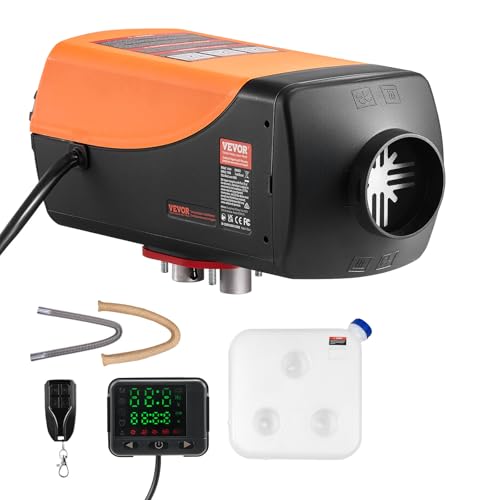
Unlike a portable propane heater that works straight out of the box, a diesel parking heater requires a genuine installation: mounting the unit (often under a vehicle or in a dedicated compartment), running a fuel line to a tank, routing an exhaust pipe to the vehicle's exterior, wiring a 12V or 24V power connection, and installing a control panel or app-based interface inside the cabin. Models like the VEVOR 8KW Diesel Heater with Bluetooth App Control include the core components needed for a DIY install, but this is a genuine wiring and fabrication project, not a plug-and-play purchase — budget real time and basic mechanical or 12V-electrical skill for the installation.
Diesel Heater Exhaust Venting Requirements
Correct exhaust routing is the single most safety-critical part of a diesel heater installation. The exhaust must vent completely outside the vehicle, positioned away from windows, vents and any point where exhaust gas could re-enter the cabin, and the exhaust pipe itself gets hot enough to require heat-shielding from surrounding materials along its route. Getting this wrong is a genuine carbon monoxide risk, since diesel combustion produces carbon monoxide as a byproduct, even though it's designed to vent fully outside rather than into the cabin. A battery-backed carbon monoxide detector inside the vehicle is recommended regardless of how correctly the installation is done, as a backstop against an exhaust leak or blockage.
Fuel Consumption and Fuel Tank Size: kW and BTU Output
Diesel heaters are notably fuel-efficient compared with running a vehicle's main engine for heat, typically consuming well under half a gallon per hour depending on the heater's output setting and the specific model's efficiency. An 8KW unit like the two VEVOR models available runs long enough on a small dedicated fuel tank — often a few gallons — to provide heat through a full cold night, which is a major reason overlanders and van-lifers choose a diesel heater over idling the vehicle's engine for warmth, an approach that's both far less fuel-efficient and puts more hours on the engine.
Diesel Heater Error Codes Explained
Diesel heaters commonly display numeric or alphanumeric error codes on their digital control panel rather than the simpler "won't light" symptom pattern of a propane or kerosene heater. Common categories include ignition failure codes (often related to fuel supply or a worn glow plug), overheat codes (triggered by restricted airflow or a failing fan), and voltage codes (triggered by a weak or failing 12V/24V power supply). Because codes vary between manufacturers and even between models from the same brand, checking the specific error code against your exact unit's manual is the fastest path to an accurate diagnosis rather than assuming based on a general description.
Glow Plug Failure: A Common Diesel Heater Issue
The glow plug is the component responsible for igniting fuel during startup, similar in function to a spark plug, and it's one of the most common parts to fail on a diesel heater over time since it experiences repeated heating and cooling cycles with every startup. A glow plug nearing failure often shows symptoms like difficulty starting, especially in cold weather, or an ignition-failure error code that clears temporarily after several restart attempts. Glow plugs are a standard, relatively inexpensive replacement part across most diesel heater brands, and replacing one is a common maintenance task for anyone running a diesel heater regularly over multiple seasons.
Diesel Heater vs. Propane Heater for a Van, RV or Overlander Rig
The choice between diesel and propane for van or RV heating comes down to what fuel infrastructure you already have and how much installation effort you're willing to take on. A diesel heater makes the most sense in a diesel-powered vehicle, where you can draw fuel from the same tank as the engine without carrying a separate fuel source — a genuine convenience for full-time travelers. A propane heater, whether portable or catalytic, requires no vehicle-specific installation and works in any vehicle regardless of what fuel the engine runs on, at the cost of carrying and refilling a separate propane tank. See our RV and off-grid heater guide for the propane side of this comparison.
Altitude and Cold-Weather Performance
Diesel heaters, like propane heaters, lose some efficiency at high altitude due to reduced oxygen availability for combustion, and better models include automatic altitude compensation that adjusts fuel delivery accordingly — a feature worth checking for specifically if you plan to use the heater at meaningfully high elevations. In extreme cold, diesel fuel itself can gel or thicken below certain temperatures unless winter-blend diesel or an additive is used — a phenomenon commonly called cold-weather gelling — a consideration diesel heater owners need to plan for that doesn't apply to propane, which doesn't have the same cold-weather fuel-gelling characteristic. An overlander traveling through genuinely cold regions regularly should keep a bottle of anti-gel additive on hand specifically for this reason.
Bluetooth and App Control
Newer diesel heaters increasingly include Bluetooth or app-based control alongside a traditional physical control panel, letting an owner start, stop and adjust the heater from a smartphone rather than reaching a fixed panel. This matters more in a van or RV than it might in a house, since the heater is often installed in a location that isn't convenient to reach directly, and starting it remotely before getting into a cold vehicle is a genuinely useful feature van-lifers specifically cite as worth the modest price premium over panel-only models. App control also typically exposes more detailed status information — current temperature, fuel level estimates, error codes — than a basic physical panel display can show.
Sizing a Diesel Heater by kW Output
Diesel heaters are commonly rated in kW rather than BTU, though the two units convert directly — roughly 3,412 BTU per kW. An 8KW diesel heater, a common size for van conversions, works out to roughly 27,000 BTU, comparable in output to a mid-size forced-air propane heater, though the heat is delivered continuously and ducted rather than in the direct radiant or blown-air pattern of a portable propane unit. Sizing follows similar logic to propane heaters: a well-insulated van interior needs meaningfully less output than a poorly insulated one of the same size, and manufacturers sometimes publish vehicle-size guidance alongside the raw kW rating.
Diesel Heater Noise Levels
A diesel heater's combustion fan and intake produce some operational noise, generally described by owners as a low, steady hum rather than the louder mechanical noise of a propane forced-air heater's larger fan. Noise level varies by model and by the heater's current output setting, with higher settings typically running louder as the fan works harder. For anyone sleeping in the same space as the heater overnight, checking owner reviews specifically for noise complaints on a given model is worth doing before installation, since it's one of the more subjective factors that varies meaningfully between brands even at similar kW ratings.
Cost Comparison: Diesel Heater vs. Idling the Engine
Running a vehicle's main engine to generate cabin heat is dramatically less fuel-efficient than a dedicated diesel parking heater, since an idling engine burns fuel across an entire drivetrain designed for propulsion rather than a small combustion chamber optimized purely for heat. Overlanders and full-time van-dwellers who've made the comparison directly report fuel savings that typically justify a diesel heater's installation cost within a single cold season of regular use, on top of avoiding the extra engine wear that comes from repeated idling purely for warmth.
Maintenance for a Diesel Parking Heater
Beyond glow plug replacement, diesel heaters benefit from periodic cleaning of the combustion chamber to remove carbon buildup, checking fuel line connections for leaks or air infiltration, and inspecting the exhaust system for damage or blockage. Running the heater periodically even during warmer months, rather than leaving it completely unused for long stretches, helps prevent fuel system issues that can develop from prolonged inactivity — a maintenance habit some manufacturers specifically recommend in their documentation.
What Owners Report About Diesel Heaters
Owner reviews of diesel parking heaters consistently emphasize the fuel efficiency and quiet, hands-off operation once installed, particularly from overlanders and full-time van-dwellers who've compared it directly against idling an engine or running a portable heater. The most common source of dissatisfaction traces back to installation quality rather than the heater unit itself — a poorly sealed exhaust connection or an undersized power wire gauge causes more reported problems than an actual heater defect. This is consistent with the general pattern across the diesel heater category: the unit's core combustion mechanism is fairly reliable, but the installation is where most things go wrong for DIY installers.
Choosing Between Diesel Heater Brands and Models
The diesel parking heater market includes several established Chinese manufacturers whose products are widely sold under various brand names and private labels, alongside a smaller number of premium European brands like Webasto and Espar that command a significant price premium. All diesel heaters sold for vehicle use should meet DOT vehicle-safety expectations for fuel-system components. The heater itself isn't a DOT-regulated part the way a fuel tank or cylinder is, but the fuel-system components around it still matter. For most van conversion and RV budgets, the mid-tier imported units — like the VEVOR models covered on this page — offer a reasonable balance of features and cost, while the premium brands are more common in commercial and professional installations where budget is less of a constraint and long-term brand support matters more.
Diesel Heater Components: Fuel Pump, Combustion Chamber, and #2 Diesel at 1L per Hour
A small fuel pump meters diesel from the tank to the combustion chamber at a precise rate, typically well under 1L per hour on a low setting, using standard #2 diesel rather than a specialty fuel.
12V DC Power: Air Intake and Exhaust Routing
Most installs run on 12V DC power, with a separate air intake and exhaust routed to opposite ends of the vehicle so intake air stays clean of exhaust gas.
Dry Heat for Cab Heating Without Added Moisture
Because combustion is fully sealed and vented outside, a diesel heater delivers dry heat well suited to cab heating in a work truck or a van's living area, without adding the moisture an unvented heater can.
Ducting, Thermostat Controller, and Remote Control for a Second Zone
Higher-end installs sometimes add ducting to carry warm air into a second zone, paired with a thermostat controller and remote control to hold a set temperature without reaching a fixed panel.
Eberspächer, Hcalory, and Autoterm: More Diesel Heater Brands
Beyond Webasto and Espar, Eberspächer is another long-established premium European name, while Hcalory and Autoterm sit in the same mid-tier import space as VEVOR. Prices and parts availability vary more between these mid-tier brands than the core combustion mechanism does, so checking a specific model's owner reviews matters more than the brand name alone.
Is a Diesel Heater Worth the Installation Effort?
For a diesel-powered vehicle used regularly in cold conditions — a full-time van conversion, an overlanding rig, a work truck — the installation effort of a diesel heater is generally worth it given the fuel efficiency and hands-off operation it delivers over a season of use. For occasional or seasonal use, the simpler installation of a portable propane heater or a catalytic RV heater often makes more practical sense, since the upfront installation time and cost of a diesel heater takes longer to pay back against infrequent use. Matching the investment to how often and how seriously you'll actually use the heater is the deciding factor more than which fuel type is objectively "better."