

Affiliate disclosure: some links are affiliate links — as an Amazon Associate we earn from qualifying purchases, at no extra cost to you. Full disclosure.
An RV has different needs than a garage or a standalone vehicle install. Battery draw matters. Noise while sleeping matters. Storage space for a fuel tank matters. Every ranking below reflects aggregated owner reviews, manufacturer specifications, and safety certifications, weighted specifically for RV use rather than general installation.

How We Picked the Best Diesel Heater for RV Trips
Three things mattered most here, in a different order than a general diesel heater roundup. First, power draw on the RV’s house battery, since many RV owners run these heaters while boondocking off-grid. Second, noise level, since the heater often runs overnight in the same space someone is sleeping. Third, fuel tank size relative to RV storage space.
The Short Answer
For most RV owners, the VEVOR 8KW with 10L Tank is the top pick — built specifically for RV, truck, and boat use with a larger tank for fewer refills. Running a smaller rig or watching battery draw closely? The VEVOR 2KW Compact covers that. Need the quietest possible overnight operation? The VEVOR Pre-Heating Low Noise model is the step up.
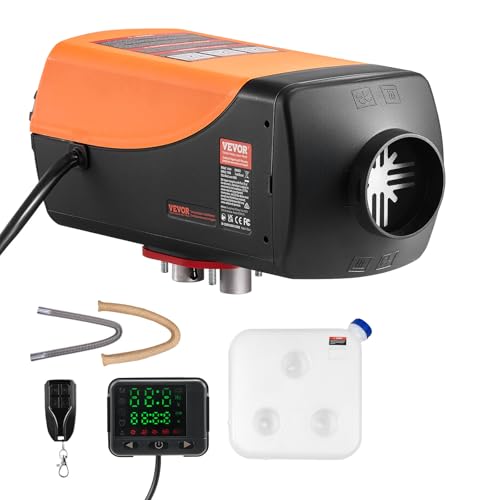
Best for A full-size RV or travel trailer wanting a dedicated, quiet installed heater
- 8KW output
- DC12-24V compatible
- 10L fuel tank
- Low noise, voice announcement feature
Why buy it: This unit is built specifically with RV, truck, and boat use in mind. Owners report the larger 10L tank means fewer refills through a multi-day trip compared to smaller-tank models.

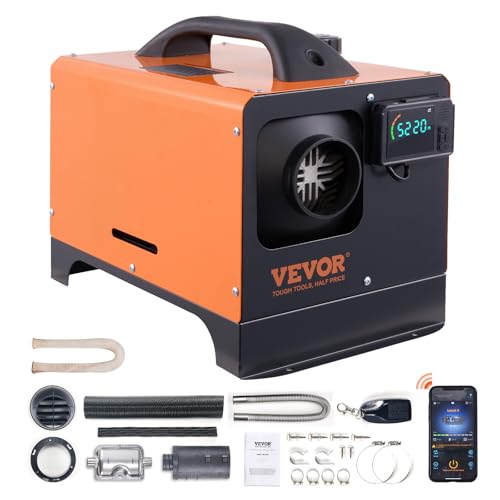
Best for A smaller RV, teardrop trailer, or camper van where battery capacity is limited
- 2KW output
- 12V operation
- Bluetooth app control
- Automatic altitude adjustment
Why buy it: Lower output means lower amp draw on the RV house battery, a genuine advantage for boondocking without shore power. Owners running smaller rigs specifically choose this over an 8KW unit for that reason.
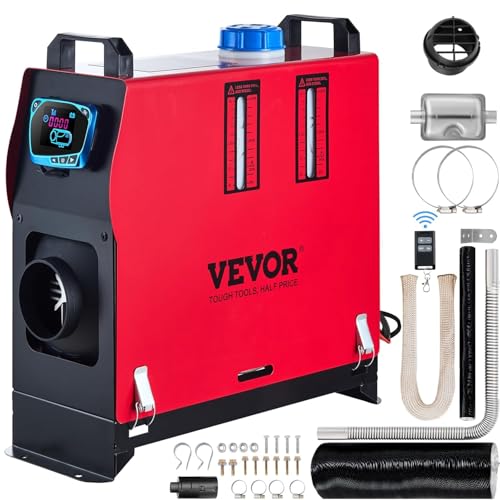
Best for RV owners sleeping in the same space as the heater overnight
- 8kW output
- DC12-24V compatible
- Pre-heating function
- Low-noise fan design
Why buy it: Fan noise is one of the most common RV diesel heater complaints, and owners specifically call out this model as noticeably quieter than a standard unit at the same output.

Best for RV owners traveling through mountain routes and higher elevations
- 8KW output
- 12V operation
- App control
- Rated for altitudes up to 20,000 ft
Why buy it: The altitude rating on this unit stands out for RV travel through mountain passes, where combustion efficiency drops without proper compensation.
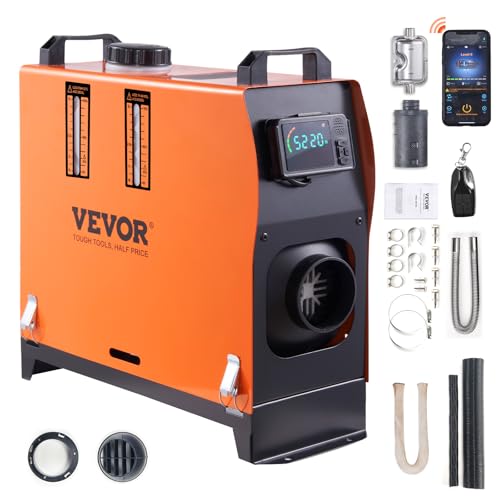
Best for An RV with limited storage space for a dedicated fuel tank
- 8KW output
- 5L fuel tank
- Fast-heating design
- App control
Why buy it: The smaller 5L tank takes up less storage space in an RV compartment than a 10L unit, a real consideration when every cubic foot of storage is already spoken for.
Full Comparison
All five picks side by side, ranked specifically for RV use rather than general installation.
| Product | Best for | Buy |
|---|---|---|
| VEVOR 8KW Diesel Heater, DC12-24V, Color Digital Display, 10L Fuel Tank, Low Noise | Best Overall for RV | Check Price |
| VEVOR Bluetooth App Control Diesel Air Heater, 12V 2KW | Best for Smaller RVs and Low Battery Draw | Check Price |
| VEVOR Diesel Air Heater, 8kW DC12-24V, Pre-Heating Function, Low Noise | Best Quiet Overnight Operation | Check Price |
| HCALORY 12V Portable Diesel Heater, Toolbox 2, 8KW, App Control | Best Alternative Brand for RV | Check Price |
| VEVOR Diesel Heater, 12V All-in-one, 5L Fuel Tank, Fast Heating, App Control | Best Compact Fuel Tank | Check Price |
Battery Draw: Why Power Matters More in an RV
An RV running off its house battery, especially while boondocking without shore power, has to budget every amp carefully. A diesel heater’s fan and controls draw electrical power even though the heat itself comes from burning fuel. The 2KW pick on this list draws meaningfully less than an 8KW unit, which matters for anyone running on battery and solar alone for days at a time.
Exhaust Venting: Is a Diesel Heater Safe to Run in an RV?
Yes, when properly installed with exhaust routed completely outside the RV, away from windows, vents, and low points where exhaust gas could pool. A battery-backed carbon monoxide detector inside the RV is recommended regardless of installation quality. Our exhaust venting requirements guide covers RV-specific placement in depth.
Installing a Diesel Heater and Glow Plug in an RV
None of the five picks above are plug-and-play. Expect to mount the unit, usually in an underbelly compartment, run a fuel line to a dedicated tank or the RV’s main tank if compatible, route exhaust safely outside, and wire into the RV’s 12V system. Our installation basics guide walks through the full process.
Diesel vs. Propane for RV Heating
Propane RV heaters need no vehicle-specific installation. They work in any RV, regardless of what fuel the engine runs on. The tradeoff is carrying and refilling a separate propane tank. A diesel heater installed in a diesel-powered RV or tow vehicle draws from fuel you’re already carrying. The tradeoff there is a real installation project. Our RV and off-grid heater guide covers the propane side of this decision.
Fuel Consumption on #2 Diesel for Multi-Day RV Trips
Diesel heaters are notably fuel-efficient. They typically burn well under half a gallon of standard #2 diesel per hour, depending on output setting. A 10L tank on the top pick can run through several cold nights before needing a refill. That matters for RV trips away from convenient fuel stops. Our fuel consumption guide breaks down the math for planning a specific trip.
Altitude Compensation for Mountain RV Travel
RV travel often crosses mountain passes and higher-elevation campgrounds. A diesel heater without altitude compensation loses real efficiency there. The HCALORY and VEVOR models with automatic altitude adjustment on this list handle that automatically. This matters more for RV travel with real elevation changes than for a heater installed in one fixed garage location.
Bluetooth Control From Inside the RV
App and Bluetooth control let you start the heater from inside the RV before getting out of bed on a cold morning. You can also check its status without walking to an underbelly-mounted unit. Every pick above includes this feature. It matters more in an RV than in a garage, since the unit is often mounted somewhere inconvenient to reach directly.
How a Diesel Parking Heater (Air Heater) Works: Glow Plug, Fuel Pump, and 12V DC Power
A diesel parking heater ignites fuel with a glow plug. A small fuel pump then feeds diesel from the tank at a metered rate. Most units run on 12V DC power drawn from the RV or campervan's house battery. They burn standard #2 diesel rather than a specialty fuel.
Dry Heat and Condensation-Free Heat, Not Added Moisture
Combustion happens in a sealed chamber, and exhaust vents outside. That gives the RV interior dry heat — genuinely condensation-free heat — instead of the moisture a vent-free propane heater can add to the air.
Thermostat Controller and Remote Control on 5kW to 8kW Models
Higher-output models in the 5kW to 8kW range often add a thermostat controller and a wired or app-based remote control. That lets you hold a set temperature without walking to the under-mount install location.
Ducting From an Under-Mount Install for Van Conversion and Campervan Builds
Some van conversion and campervan builds add ducting to carry heat from a single under-mount install into a second zone, like a cab or sleeping loft. Most single-zone RV installs skip ducting entirely.
Webasto, Espar, Eberspächer, and Autoterm: The Other Diesel Heater Brands
Outside the budget-friendly VEVOR and Hcalory models featured above, Webasto, Espar, Eberspächer, and Autoterm are the longer-established diesel heater brands. They're often specified as factory or professional-install options in European campervans and overlanding builds. These brands typically cost significantly more than the picks on this list, and installers usually fit them rather than a DIYer. For most RV owners comparing options on a budget, the VEVOR and Hcalory units above deliver comparable heat at a fraction of the price. That price gap is a big part of why VEVOR and Hcalory dominate the RV aftermarket space this roundup focuses on.
What RV Owners Report About Boondocking and Low Noise
RV owners consistently cite fuel efficiency and quiet operation as the main satisfaction drivers. This is especially true compared to running a generator or a large electric heater off an inverter. The most common complaint traces back to installation quality. A poorly sealed exhaust connection or undersized wiring causes more problems than the heater unit itself.
Solar and House Battery Bank Sizing for a Diesel Heater
If you run mostly on solar and battery power while boondocking, factor the heater’s fan and control draw into your overall power budget. Weigh it alongside lights, water pumps, and other loads. The 2KW pick on this list is the easier fit for a smaller battery bank or limited solar input. An 8KW unit’s higher draw is manageable with a larger battery bank and a reliable charging source. Check it against your actual setup before buying.
Underbelly Mounting Considerations for RVs
Most RV installations mount the heater in an underbelly compartment. This exposes it to road spray, mud, and temperature swings a garage installation never sees. Confirm the specific unit’s housing is rated for this kind of exposure. Route the fuel line and wiring with extra protection against abrasion from road debris over time.
Winterizing an RV Diesel Heater
Before storing an RV for an extended off-season period, run the heater through a normal shutdown cycle. Don’t simply disconnect power abruptly. Check the fuel line for any residual fuel that could degrade over a long storage period. Inspect the exhaust route for road-debris buildup accumulated over the travel season before your next trip.
Comparing Diesel Heaters to RV Furnaces
Many RVs ship with a built-in propane furnace as standard equipment. A diesel heater is usually an aftermarket addition rather than a replacement. It’s often installed to reduce reliance on propane, or to add heat in a section of the RV the built-in furnace doesn’t reach well. Running both systems gives genuine redundancy. Some full-time RVers specifically value that for reliability during extended trips.
Buying Checklist for an RV Diesel Heater
- Check your RV’s available battery capacity before choosing an 8KW unit over a lower-draw option.
- Confirm underbelly storage space for the fuel tank size you’re considering.
- Plan exhaust routing before buying, away from windows, vents, and low points.
- Check the altitude rating if your travel route crosses mountain passes.
- Install a battery-backed carbon monoxide detector inside the RV regardless of installation quality.
A Final Word on Choosing an RV Diesel Heater
The right RV diesel heater matches your rig’s battery capacity, your storage space, and how far off-grid you typically travel. All five picks here deliver real heat once properly installed. Start with your actual power budget and travel pattern, and the choice becomes straightforward.
Testing Before a Big Trip
Run any of these five picks through a full test cycle at home before a major RV trip, not just a quick startup check. Confirm it holds a steady temperature overnight, listen for any unusual noise from the fan or pump, and check every fuel and exhaust connection for tightness after the test run. A problem caught at home, within a retailer’s return window, beats one discovered three states away.
Combining a Diesel Heater With RV Solar
Pairing one of these five heaters with a solar and battery setup gives genuinely long boondocking range in cold weather, since the heater’s own power draw is modest compared to what solar can replenish on a clear day. The 2KW pick in particular pairs well with a smaller solar array, while the 8KW options benefit from a more robust charging setup to keep pace with daily use.
RV Diesel Heaters and Full-Time Living
Full-time RVers who travel through genuine winter conditions report the biggest satisfaction gains from these heaters, since the fuel savings and hands-off operation compound over months of continuous use. A weekend or seasonal RVer sees a smaller relative benefit, though the quiet, efficient heat is still a real upgrade over running a generator through the night.
Return Windows and Warranty for RV Use
Check the specific retailer’s return policy and the manufacturer’s warranty terms before installing, since RV-specific vibration and road exposure can reveal issues a garage installation never would. Keep documentation of your installation date and any professional install receipts in case a warranty claim becomes necessary down the road.
Comparing These Five to a Rooftop RV Air Conditioner Setup
An RV’s rooftop air conditioner and a diesel heater serve opposite seasons, but they share one thing in common: both draw meaningfully on the RV’s electrical system when running. Planning your overall power budget across both units, rather than considering the heater in isolation, gives a more realistic picture of your RV’s total capacity through a full year of use.
Insurance and Aftermarket Modifications
Check with your RV insurance provider before installing any of these five heaters, since some policies have specific language about aftermarket fuel-burning equipment. A quick call now prevents an unpleasant surprise later if you ever need to file a claim.
Choosing Between the Five Picks for Your Rig
Start with your rig size and typical travel pattern. A full-size RV making long, cold-weather trips benefits most from the larger-tank overall pick. A smaller rig or a tight power budget points toward the compact 2KW option. Frequent mountain travel favors the altitude-rated HCALORY pick. Match the heater to how you actually use your RV, not to the highest-spec option on the list.
A Note on Aftermarket vs. Factory RV Heating
None of these five picks come factory-installed. Every one is an aftermarket addition, whether fitted by the RV manufacturer's own upfit shop, a third-party installer, or a confident DIYer. That means the installation quality varies more than the heater's own reliability does, which is worth keeping in mind when reading owner reviews that seem inconsistent between otherwise identical units.
Quick Recap: kW Output by Pick and the Best Overall Choice
The VEVOR 10L Tank model suits full-size RVs wanting fewer refills. The 2KW Compact pick suits smaller rigs and limited battery capacity. The Pre-Heating Low Noise model runs quietest overnight. HCALORY offers strong altitude performance for mountain travel. The 5L Fast-Heating model saves storage space. Match one to your actual rig and travel style.