
Affiliate disclosure: some links are affiliate links — as an Amazon Associate we earn from qualifying purchases, at no extra cost to you. Full disclosure.
Every propane heater is a combustion appliance. That means every propane heater is a potential carbon monoxide source if it malfunctions or runs in a space without adequate air exchange. Indoor propane heater safety comes down to three things: buying a heater actually rated for the space you're using it in, following the manufacturer's ventilation guidance, and having a working carbon monoxide detector as a backstop. This page covers general information, not professional safety advice. Always follow the specific manual for your heater.
Top 3 Recommended
Propane Heater Indoor Safety: What Is an Oxygen Depletion Sensor?
An oxygen depletion sensor, or ODS, is a pilot-mounted sensor built into indoor-safe propane heaters. It continuously measures the oxygen concentration in the surrounding air. As oxygen drops toward an unsafe level — which can happen in a small, sealed room as a heater consumes oxygen to burn — the ODS automatically shuts the gas valve and extinguishes the flame, before carbon monoxide has a chance to build up to a dangerous concentration. This is the specific engineering feature that separates an indoor-safe heater from an outdoor-only one, and it's tested and certified by the manufacturer as part of the product's safety rating. The certification process itself is model-specific: a manufacturer tests each individual heater design against the relevant safety standard rather than certifying an entire product line at once, which is part of why the same brand can sell both indoor-safe and outdoor-only models side by side. A thermocouple-based flame-out safety valve is another common backstop on the same heaters, cutting gas flow automatically if the pilot light goes out unexpectedly. None of these safety systems change based on a heater's BTU rating — a low-BTU model needs the same ODS, thermocouple and ventilation guidance as a higher-BTU one.
Indoor-Safe vs. Outdoor-Only Propane Heaters
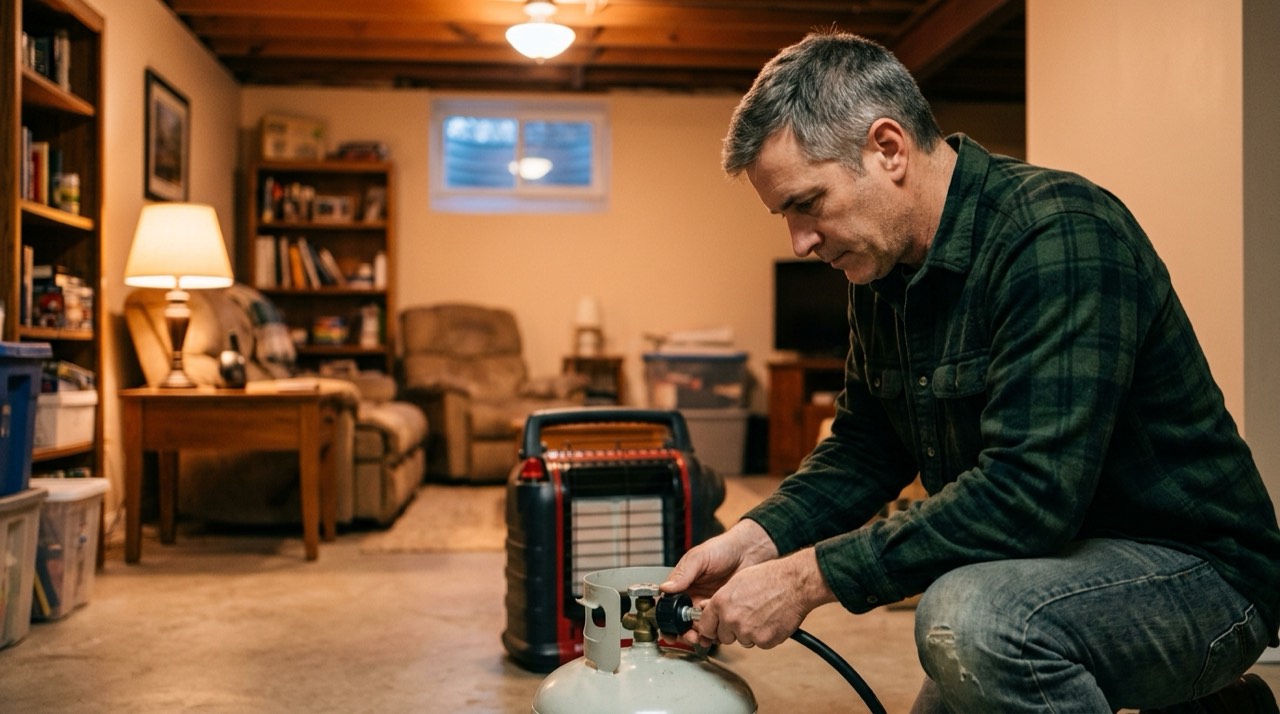
Not every propane heater is built with an ODS. Forced-air construction heaters and most tank-top radiant heaters lack this feature entirely and are explicitly labeled outdoor-use-only by their manufacturers. Portable radiant heaters like the Mr. Heater Buddy line — including the Big Buddy — and permanent vent-free wall-mount and cabinet heaters, are built with an ODS specifically so they can be certified for indoor or enclosed-space use. The rating is model-specific, not brand-wide — always check the exact model's documentation rather than assuming based on the general product category or brand name. See our indoor-safe vs. outdoor-only guide for how to verify a specific model, including the ANSI standard behind the label.
How an Odor Sensor Signals a Propane Smell and How the Tip-Over Switch Works
Beyond the ODS, most indoor-safe heaters include two additional safety mechanisms. Propane itself is odorless in its natural state, so manufacturers add a chemical odorant — commonly described as smelling like rotten eggs — specifically so a propane smell signals a leak before it becomes a hazard. A tip-over switch is a mechanical safety feature that shuts the heater off automatically if it's knocked over or tilted beyond a certain angle, preventing an unattended flame from continuing to burn against a surface it's fallen onto. Together with the ODS, these three systems form the layered safety approach that makes an indoor-safe heater appropriate for enclosed use when operated according to its manual. No single one of the three is meant to be the sole safeguard — the layered design assumes any one system could theoretically fail or be circumvented, and relies on the others to catch what the first one misses. Our full explainer on how these two features actually work covers the mechanics behind each one.
Why Ventilation Still Matters: Cracked Window Guidance With an ODS
An oxygen depletion sensor is a safety backstop, not a substitute for basic airflow. Manufacturer manuals for indoor-safe heaters consistently specify a minimum room size (often given in square feet) and recommend leaving a cracked window or door slightly open, even in a space the heater is rated for. This guidance is consistent across brands and reflects general combustion-safety principles rather than any single manufacturer's caution. Treating the ODS as the only safety measure needed, and skipping the ventilation guidance in the manual, is one of the more common mistakes buyers make with an otherwise correctly chosen heater.
Air Exchange: Why a Sealed Room Is the Real Risk
A heater consumes oxygen as it burns, so a room without adequate air exchange lets that oxygen deficit build up faster than fresh air can replace it. That's the core reason the ventilation guidance above exists at all.
Carbon Monoxide Detector Placement With a Propane Heater
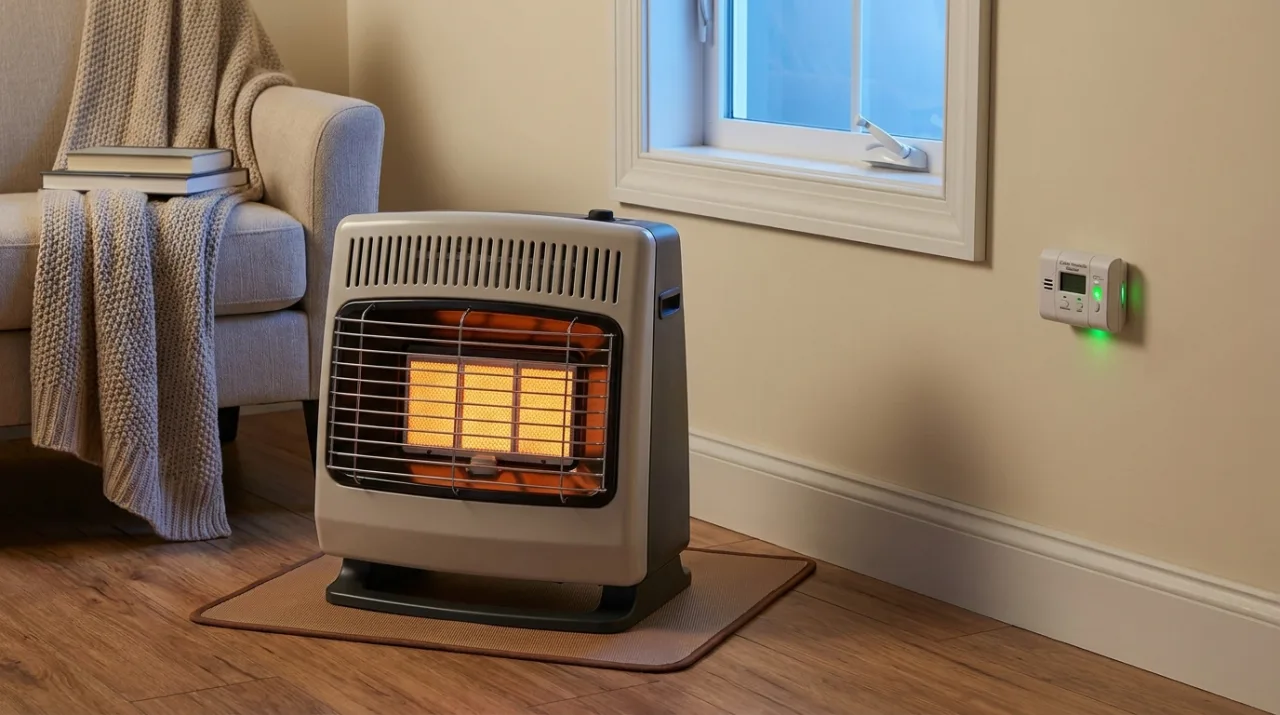
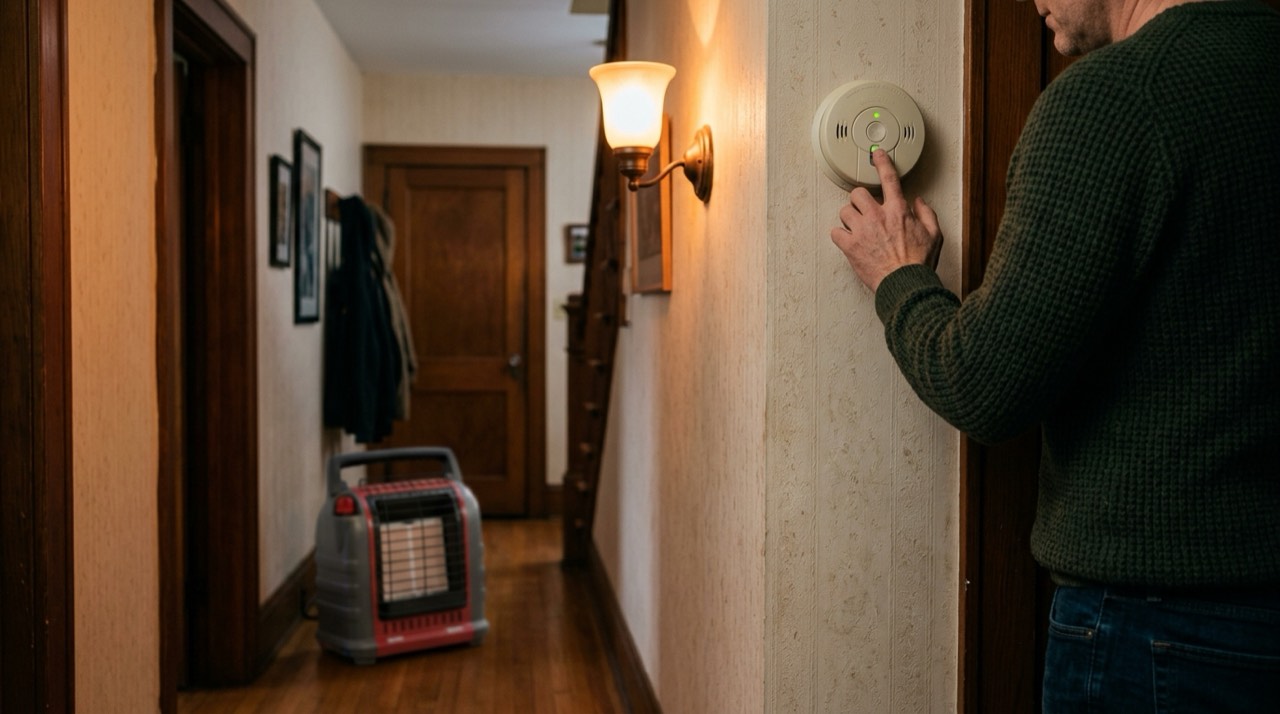
A battery-backed carbon monoxide detector (CO detector) is recommended in any room where a fuel-burning heater runs, regardless of the heater's indoor-safe rating. General placement guidance from detector manufacturers suggests installing at least one detector on each level of a home, and near sleeping areas. Position it at roughly knee-to-chest height, since carbon monoxide mixes with air rather than settling like a heavier gas.
Battery Backup vs. Plug-In CO Detectors
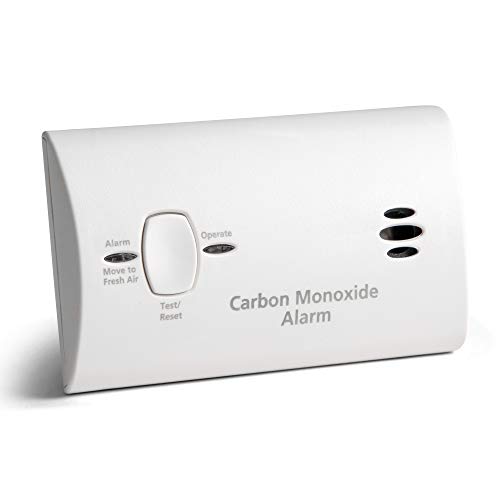
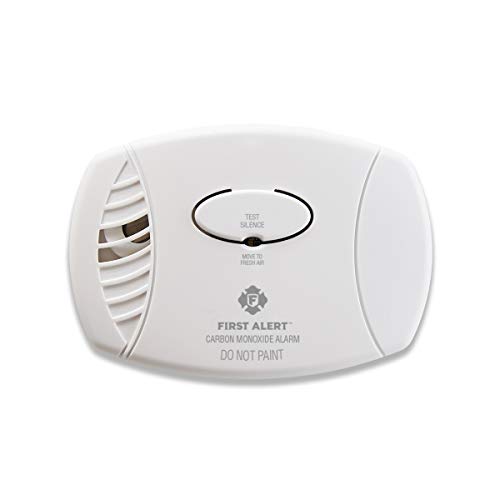
Battery-powered detectors, like the Kidde Carbon Monoxide Detector, are useful specifically because they don't depend on being near an outlet, which matters in a garage, workshop or camping setup where a heater might run away from household wiring. A plug-in model with battery backup, like the First Alert CO605, is a good fit for a fixed indoor location near an outlet.
A Separate Propane Leak Detector for a Gas Leak
A dedicated propane leak detector is a separate device from a CO detector. It senses a gas leak itself before combustion, and it's worth adding alongside one. Indoor-rated heaters and their detector pairings are generally built to the ANSI Z21.11 safety standard. OSHA's general workplace CO exposure guidance is also a useful reference for a garage or workshop where a heater runs for extended hours. See our full detector placement guide for the CPSC distance rule most people get backward.
Propane Heater Safety Checklist for Families
- Confirm the specific model's indoor-use rating before running any heater inside a home, garage or enclosed structure.
- Follow the manual's ventilation guidance even for an indoor-safe, ODS-equipped heater.
- Install a battery-backed carbon monoxide detector in any room where a heater runs, and test it periodically per the detector's own instructions.
- Never leave children or pets unsupervised near an operating heater, regardless of its safety features.
- Keep flammable materials clear of the heater at the distance specified in its manual.
- If you ever smell gas or suspect a leak, turn the heater off, ventilate the area, and leave immediately — this is general guidance from manufacturers and safety agencies, not specific to any one product.
Our full family safety checklist organizes this by phase — before buying, before each use, during use, after use and emergency response — with more detail than fits here.
Symptoms of CO Poisoning and Carbon Monoxide Exposure
General public health guidance describes early symptoms of CO poisoning as similar to flu without a fever — headache, dizziness, weakness, nausea. These symptoms can be mistaken for illness. That's exactly why a functioning detector is the more reliable warning system, rather than relying on symptom recognition alone. Carbon monoxide is colorless and odorless and gives no other warning sign on its own. If anyone in a space with a running heater experiences these symptoms, move to fresh air immediately and seek medical attention, treating it as a possible exposure until ruled out.
Indoor-Safe Heaters Still Require Manufacturer Compliance
An indoor-safe rating only holds if the heater is used exactly as the manual specifies: the correct fuel type, the specified minimum room size, and the ventilation guidance followed. Modifying a heater, using it with a fuel type it wasn't designed for, or running it in a smaller space than rated voids the safety assumptions the ODS certification was tested against. This is general guidance across the whole indoor-safe heater category, not specific to any one brand's fine print.
How Carbon Monoxide Forms From Incomplete Combustion
Carbon monoxide forms when a fuel-burning appliance doesn't get enough oxygen to complete combustion fully. Incomplete combustion produces carbon monoxide instead of the carbon dioxide and water vapor a properly ventilated flame produces. This is why oxygen levels in the surrounding air matter so much for a propane heater specifically. As a sealed room's oxygen gets consumed by the burning flame, without fresh air replacing it, combustion becomes progressively less complete. That increases carbon monoxide output at exactly the moment the room has the least fresh air to dilute it. This is the specific chain of events the oxygen depletion sensor is engineered to interrupt before it reaches a dangerous point.
Common Ventilation Mistakes in an Enclosed Space
Several patterns show up repeatedly in general safety guidance about heater-related incidents. Sealing a room too tightly for warmth, ironically, increases risk with any fuel-burning heater rather than reducing it. It eliminates the airflow the heater's combustion process depends on. Assuming a garage door "cracked" by a few inches provides adequate ventilation for an outdoor-only forced-air heater is another common mistake. These heaters typically need considerably more airflow than a small gap provides, per their specific manuals. Running a heater in a vehicle, camper shell, or similarly small enclosed space it wasn't designed for is another pattern worth explicitly avoiding, regardless of how cold the conditions are outside.
Testing and Maintaining a CO Detector: Service Life Explained
A carbon monoxide detector only provides protection if it's actually working. Manufacturers universally recommend testing detectors periodically using the built-in test button, following the specific product's instructions for frequency. Battery-powered detectors need their batteries checked or replaced on the schedule the manufacturer specifies. Most detectors also have a limited overall service life — typically several years — after which the whole unit needs replacement even if it still appears to function, since the sensing element degrades with age. Checking the manufacture date printed on the detector itself, not just assuming it's still within its service life, is worth doing periodically.
Safety by Heater Type: Wall-Mount, Catalytic, Forced-Air, Tank-Top, and Overnight Use
Different heater categories carry different specific safety considerations beyond the general ODS and ventilation guidance. Forced-air construction heaters need active mechanical ventilation, not just an indoor-safe rating, since they have none at all. Catalytic heaters, common in RVs, produce heat through a flameless chemical reaction and generally run cooler than a radiant burner. But they still consume oxygen, and they still require the ventilation specified in their manual. Vent-free wall-mount and cabinet heaters are designed for extended unattended operation, including overnight use in some models. That means they carry stricter clearance to combustibles requirements than a portable radiant heater, since they're expected to run longer without direct supervision. Tank-top radiant heaters, by contrast, are outdoor-only and rely on open air rather than an ODS. See our category guides — forced-air, RV and catalytic, and wall-mount and cabinet — for the type-specific detail, and our BTU sizing and running cost guide for the sizing side of the decision.
Understanding CO Poisoning: Ppm Levels and Low-Oxygen Shutoff
CO poisoning severity depends on concentration, measured in ppm (parts per million), and exposure duration. A low concentration over many hours can be as dangerous as a brief spike at a much higher level. The oxygen depletion sensor works as a low-oxygen shutoff, cutting gas flow before oxygen depletion in a sealed room lets carbon monoxide build toward a dangerous ppm level.
CSA Certified and Tip-Over Shut-Off as a Second Safety Layer
Look for a heater that's CSA certified alongside the more common ANSI Z21.11 mark. Check that any heater you're considering also has a tip-over shut-off as a second, independent safety layer.
Ventilation Requirements and Clearance to Combustibles
The CPSC and NFPA both publish general ventilation requirements and clearance to combustibles guidance for fuel-burning space heaters, worth a read alongside the manufacturer's own manual.
Renters, Landlords and Shared Spaces
Anyone using a propane heater in a rented apartment, shared house, or workspace they don't own outright should check their lease or building rules first. Some rental agreements and building codes restrict or prohibit portable fuel-burning appliances specifically because of the carbon monoxide and fire risks discussed on this page. Shared or multi-unit buildings also raise the stakes on proper ventilation. A carbon monoxide issue in one unit can potentially affect connected spaces, depending on the building's ventilation system.
This Is General Information, Not Professional Safety Advice
The guidance on this page reflects general, widely published safety principles for propane heating equipment — it is not a substitute for the specific manufacturer's manual for your heater, nor for professional advice from a licensed gas fitter, fire marshal or safety inspector where relevant. Requirements can vary by state, local code and specific product, so always defer to your heater's actual documentation and any applicable local regulations over general guidance found on any website, including this one. If you're ever genuinely unsure whether a specific setup is safe, the more conservative choice — more ventilation, a smaller heater, or professional inspection — costs little compared with the alternative.
What to Do If a CO Alarm Sounds
If a CO alarm sounds while a heater is running, general safety guidance is consistent across manufacturers and safety agencies: turn the heater off immediately, ventilate the space by opening doors and windows, and move everyone to fresh air. Do not re-enter the space or restart the heater until the source of the alarm has been identified and addressed. If anyone is experiencing symptoms consistent with carbon monoxide exposure, treat it as a medical emergency rather than waiting to see if symptoms resolve on their own. This is general public guidance, not specific to this site or any single product.
A detector that alarms repeatedly, even after ventilating and shutting off every fuel-burning appliance, should be treated as a signal to have the space professionally inspected rather than assumed to be a false alarm or a faulty unit. Repeated alarms sometimes point to a source other than the heater itself — a furnace, a water heater, or an attached garage — which a qualified technician is better equipped to diagnose than guesswork at home.