

Affiliate disclosure: some links are affiliate links — as an Amazon Associate we earn from qualifying purchases, at no extra cost to you. Full disclosure.
Diesel heaters have become the go-to installed heat source for garages, vans, boats, and work trucks, especially where a diesel fuel supply is already on hand. Every ranking below reflects aggregated owner reviews, manufacturer specifications, and safety certifications — the same honest-research standard we apply to every propane heater on this site.

How We Picked: kW Output and Altitude Compensation
Three things mattered most. First, real-world reliability reported across a full season of use, not just an unboxing review. Second, app and remote control quality, since most owners run these heaters without direct physical access. Third, altitude compensation, a genuine differentiator for buyers at higher elevations where combustion efficiency drops without it.
The 5kW and 8kW Tiers Dominate This List
Diesel heaters on the market span a wide range, from compact 2kW units through 5kW and 8kW mid-to-high output models. The 8kW tier is where five of today's six picks sit.
The Short Answer: Our Best Overall Pick
For most buyers, the VEVOR 8KW All-in-One is the safest starting point — rated for both vehicles and indoor installations, so it covers the widest range of use cases. Installing in a garage specifically? The VEVOR 8KW with Altitude Adjustment is purpose-built for that. Want a brand outside VEVOR? The HCALORY 12V Toolbox 2 is a well-reviewed alternative.
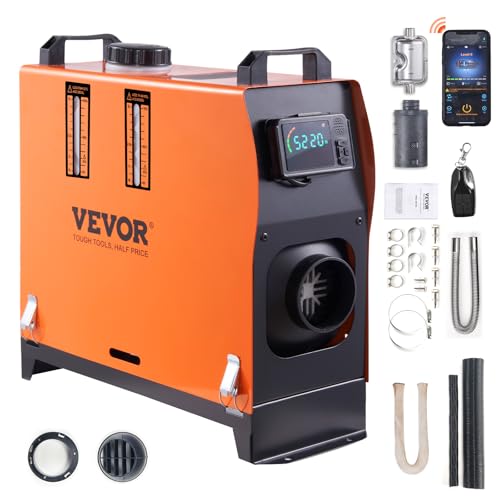
Best for A buyer who wants one heater that works equally well in a vehicle, a boat, or a garage
- 8KW output
- Bluetooth app control
- Automatic altitude adjustment up to 18,045 ft
- Rated for vehicles and indoor installations
Why buy it: This is the most versatile pick on the list. Owners like that it is rated for both vehicle and indoor use, so one purchase covers a garage install and a van build without buying two different heaters.

Best for A detached garage or workshop where a permanent installed heater makes more sense than a portable propane unit
- 8KW output
- Bluetooth app control
- Automatic altitude adjustment up to 18,045 ft
- Remote control and LCD display
Why buy it: Owners installing this in a garage report it holds a steady temperature through a full workday without the fuel logistics of swapping propane tanks.

Best for Buyers who want a well-reviewed option outside the VEVOR lineup
- 8KW output
- 12V operation
- App control
- Rated for altitudes up to 20,000 ft
Why buy it: HCALORY is a genuine alternative to VEVOR in this category. Owners comparing the two report similar real-world heat output, with HCALORY’s altitude rating standing out for high-elevation use.
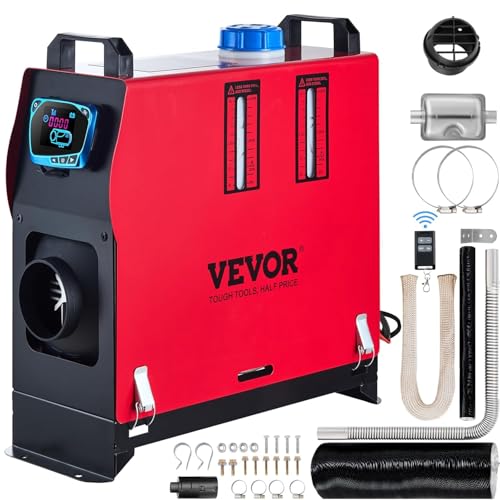
Best for A space where fan noise from the heater is a real concern, like a small workshop or a shared living area
- 8kW output
- DC12-24V compatible
- Pre-heating function
- Low-noise fan design
Why buy it: Owners specifically call out how much quieter this runs compared to a standard diesel heater fan, which matters more than raw output for anyone working or sleeping near the unit.

Best for A smaller space or a setup where minimizing power draw matters more than maximum output
- 2KW output
- 12V operation
- Bluetooth app control
- Automatic altitude adjustment
Why buy it: This is the pick for a smaller garage, a car, or a setup with limited electrical capacity. It draws far less power than the 8KW models while still delivering real heat in a compact space.
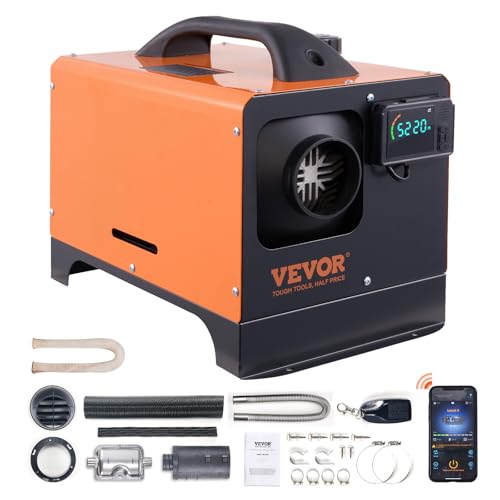
Best for A buyer who wants quick warm-up without paying for extra features they will not use
- 8KW output
- 5L fuel tank
- Fast-heating design
- App control
Why buy it: Owners report this reaches a comfortable temperature quickly after startup, a genuine advantage over slower-heating models when you need warmth right away.
Full Comparison
All six picks side by side. "Best for" reflects the specific situation each heater is most consistently recommended for in owner reviews.
| Product | Best for | Buy |
|---|---|---|
| VEVOR 8KW Diesel Heater All in One, Bluetooth App Control, for Vehicles and Indoors | Best Overall | Check Price |
| VEVOR 8KW Diesel Heater, Bluetooth App Control, Automatic Altitude Adjustment | Best for a Garage or Workshop | Check Price |
| HCALORY 12V Portable Diesel Heater, Toolbox 2, 8KW, App Control | Best Alternative Brand | Check Price |
| VEVOR Diesel Air Heater, 8kW DC12-24V, Pre-Heating Function, Low Noise | Best Low-Noise Pick | Check Price |
| VEVOR Bluetooth App Control Diesel Air Heater, 12V 2KW | Best Compact/Small-Space Pick | Check Price |
| VEVOR Diesel Heater, 12V All-in-one, 5L Fuel Tank, Fast Heating, App Control | Best Value Fast-Heating Pick | Check Price |
How a Diesel Parking Heater’s Combustion Chamber Actually Works
A diesel heater burns fuel in a sealed combustion chamber, separate from the space being heated. A fan pushes fresh air across the outside of that chamber, picking up heat and blowing it into the room or cabin, while exhaust vents outside entirely. This is fundamentally different from a propane heater, which burns fuel directly in the air you breathe. Our how a diesel heater works guide covers this in full technical depth.
Installation Is Real Work — Budget For It
None of the six picks above are plug-and-play. Every one needs mounting, fuel line plumbing, exhaust routing, and 12V or 24V wiring before it produces heat. This is a genuine DIY project or a paid installation job, not a quick setup. Our installation basics guide walks through what’s actually involved before you buy.
Diesel Air Heater vs. Propane: Which Should You Actually Install?
If you’re reading this on a propane-focused review site, it’s worth asking directly: does a diesel heater make sense for you at all? Diesel wins when you already have diesel fuel on hand and want a permanent, hands-off installed heater. Propane wins when you want heat now, with zero installation, using a portable unit you can move between spaces. Our propane vs. diesel heater for garage comparison and our is a diesel heater worth it guide both dig into this decision in depth.
Exhaust Venting Is the Safety-Critical Step
Every pick above requires exhaust routed completely outside the space being heated, positioned away from windows, vents, and any point where exhaust gas could re-enter. Getting this wrong is a genuine carbon monoxide risk. A battery-backed carbon monoxide detector is recommended regardless of how correctly the installation is done. Our exhaust venting requirements guide covers this in full.
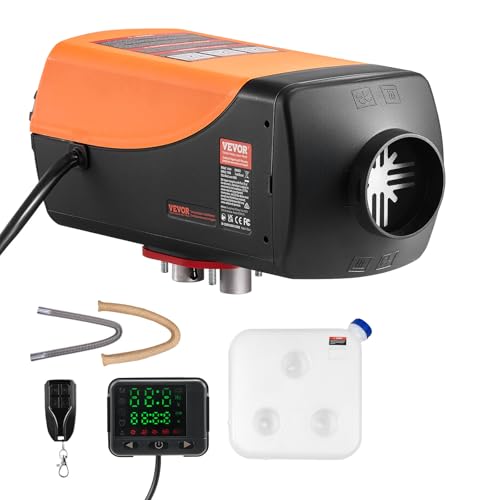
Fuel Consumption and Fuel Tank Size: What to Expect
Diesel heaters are notably fuel-efficient, typically burning well under half a gallon per hour depending on the output setting. An 8KW unit like most picks above can run through a full cold night on a small dedicated tank. Our fuel consumption guide breaks down the math by output setting.
Glow Plug Failure and Ignition Error Codes: The Most Common Issue
The glow plug ignites fuel during startup and wears with repeated heating and cooling cycles. It’s the most common part to fail across all six brands on this list, and it’s a standard, inexpensive replacement. Difficulty starting, especially in cold weather, or one of several recurring ignition-failure error codes both point to a glow plug nearing the end of its life. Most app-controlled models display these error codes directly on the phone screen rather than just a blinking light on the unit, which makes diagnosing a glow plug problem versus a fuel or air intake issue much faster.
Webasto, Espar, Eberspächer and Autoterm: 12V DC and #2 Diesel Compatibility Beyond VEVOR and HCALORY
VEVOR and HCALORY dominate the budget and mid-range diesel parking heater market, but they are not the only names worth knowing. Webasto and Espar — sold in some markets under the Eberspächer name — are the original OEM diesel air heater brands, supplying factory-installed heat to truck, boat and RV manufacturers for decades at a considerably higher price point than any pick on this list. Autoterm is a newer brand that sits between the two tiers, built around the same 12V DC electronics and #2 diesel fuel compatibility as VEVOR and HCALORY at a comparable price. None of today's six picks are OEM units, but knowing where they sit relative to Webasto, Espar, Eberspächer and Autoterm explains why they cost a fraction of a factory-installed system while covering the same basic job.
Ducting, Dry Heat, the Thermostat Controller and Air Intake Tube
Every pick above produces dry heat rather than the humid output of a combustion appliance that burns fuel directly in the air you breathe, which is why diesel heaters are popular in a cab or cabin where condensation is already a problem. Most ship with a hose and a short run of ducting, though a larger van or garage install often needs extra ducting purchased separately to route heat where you actually need it. The digital thermostat controller — the panel that sets and holds a target temperature — is a genuine upgrade over the manual dial some cheaper heaters still use, and every VEVOR and HCALORY pick above uses this style of controller. All six draw combustion air through a dedicated air intake tube kept separate from the cabin air supply, a detail worth confirming survived shipping before your first cold-weather use.
Altitude Adjustment and Cold-Weather Performance
Diesel heaters lose some efficiency at high altitude from reduced oxygen for combustion. The picks with automatic altitude adjustment, including the VEVOR and HCALORY models above, compensate for this by adjusting fuel delivery. In extreme cold, diesel fuel itself can gel unless winter-blend diesel or an additive is used — worth keeping on hand if you travel through genuinely cold regions.
Bluetooth App Control and Remote Control Options
Every pick above includes app or Bluetooth control alongside a physical panel, letting you start, stop, and adjust the heater from a phone rather than reaching a fixed panel. This matters more for a diesel heater than a portable propane unit, since the diesel heater is often installed somewhere that isn’t convenient to reach directly.
What Owners Report Across These Six Picks
Owner reviews consistently emphasize fuel efficiency and quiet, hands-off operation once installed. The most common source of dissatisfaction traces back to installation quality, not the heater itself. A poorly sealed exhaust connection or an undersized wire gauge causes more reported problems than an actual unit defect.
VEVOR vs. HCALORY: How to Choose
VEVOR dominates this category with the widest model range, from compact 2KW units to full 8KW heaters. HCALORY is the strongest alternative, with a reputation for solid altitude performance. Neither brand is objectively superior across every use case. Owners choosing between them usually decide on the specific feature that matters most — altitude rating, tank size, or noise level — rather than brand loyalty alone.
Warranty Coverage and Seasonal Timing
Warranty length and terms vary by model and retailer, so check the specific listing rather than assuming a standard period applies across the board — a diesel heater has more moving parts than a portable propane heater, which makes this worth a closer look. Late summer and early fall are the best times to buy and install, giving you time to work through any issues, bleed the fuel line, and run a full test cycle before you actually need the heat, rather than troubleshooting during the first genuinely cold week.
Replacement Parts: Fuel Pumps and Long-Term Support
Glow plugs, fuel pumps, and control panels are all standard replacement parts across the VEVOR and HCALORY lineups, widely available from the same retailers that sell the heaters — a glow plug or fuel pump is far more likely to need replacing than the heat exchanger itself.
Buying Checklist
- Confirm you have a diesel fuel source already, whether a vehicle tank or a dedicated tank you’re willing to install.
- Budget real time or money for installation — none of these are plug-and-play.
- Check the altitude rating if you live or travel at higher elevations.
- Plan exhaust routing before you buy, since it’s the most safety-critical part of the install.
- Install a battery-backed carbon monoxide detector regardless of installation quality.
12V and 24V Maintenance Through a Full Season
Beyond glow plug checks, periodically clean the combustion chamber of carbon buildup, inspect fuel line connections for leaks, and check the exhaust route for vibration damage. Running the heater occasionally in warmer months, rather than leaving it fully idle, helps prevent fuel system issues from prolonged inactivity.
Noise Levels and a Final Word on Choosing a Diesel Heater
Fan and combustion noise varies noticeably between these six units, with the dedicated low-noise VEVOR pick standing out as the quietest at comparable output; the rest run a moderate, steady hum most owners tune out during the day but worth weighing if the heater runs near a sleeping area overnight. The right diesel heater ultimately matches your fuel situation, your installation appetite, and how you’ll actually use the space — start with whether you already have diesel fuel on hand and how much installation effort you’re willing to take on.
Return Windows, First-Week Testing and Off-Season Storage
Test any of these six heaters at low output within the retailer’s return window, before relying on a full installation for a real cold night. Run a complete startup-and-shutdown cycle and confirm the exhaust exits cleanly with no leaks. Catching a problem in the first week beats discovering it mid-winter. Off-season, run a normal shutdown rather than cutting power abruptly, and check fuel line connections before the next season, since a heater left dormant for months can develop small issues a quick pre-season test catches early.
Comparing These Picks to a Portable Propane Heater One More Time
It’s worth repeating the core tradeoff plainly. A portable propane heater needs zero installation and moves anywhere in minutes. Every diesel heater above needs a genuine install before it produces any heat. Choose diesel when you already have fuel on hand and want a permanent, hands-off solution. Choose propane when you want heat now, with no wiring or exhaust work at all.
Insurance and Resale Considerations for an Installed Heater
Some vehicle and homeowner insurance policies have specific language covering aftermarket fuel-burning equipment, so check with your insurer whether a permanently installed diesel heater affects coverage. An installed unit usually stays with the vehicle or structure rather than moving between owners on its own; if you’re selling a vehicle with one installed, document its maintenance history, including glow plug replacements, for the next owner.
Fitting a Diesel Heater’s Fuel Line Into an Existing Build
Retrofitting one of these six heaters into a vehicle or structure not originally planned for it takes more creative routing than a ground-up install, but it’s a common scenario. Budget extra time for a workable fuel line and exhaust path around existing components, without compromising the clearance and heat-shielding rules covered in our installation and venting guides.
Quick Recap of the Six Picks
The VEVOR All-in-One covers the widest range of use cases. The VEVOR Altitude Adjustment model is purpose-built for garage installs. HCALORY offers a genuine alternative brand. The Pre-Heating model runs quietest. The 2KW compact pick suits smaller spaces and limited power. The 5L fast-heating model warms up quickest. Match one to your actual installation and use case.