

Affiliate disclosure: some links are affiliate links — as an Amazon Associate we earn from qualifying purchases, at no extra cost to you. Full disclosure.
Heating a cabin, tiny home, or homestead without grid electricity comes down to a short list of real options. Propane is one of the most practical. Here is why, along with the planning it actually takes to rely on it.

Top 3 Recommended
Why Propane Works for Off-Grid Heating
Propane heaters need no electricity to produce heat. Some models need a small amount to ignite. This makes them genuinely independent of a solar and battery system already stretched thin by lighting and refrigeration. This is the single biggest reason propane shows up so consistently in off-grid heating discussions.
Comparing Propane to Wood Heat
Wood heat is the other dominant off-grid heating option. It has real advantages. Fuel can often be sourced on-site. A wood stove provides genuine ambiance many off-grid dwellers value. Propane’s advantages are convenience and consistency. No wood to split and dry. No chimney to clean. Instant, adjustable heat instead of managing a fire. Many off-grid households use both, wood as primary heat and propane as backup.
Comparing Propane to Electric Heat
An electric heater is only as reliable as your off-grid power system. Heating is one of the most power-hungry loads a solar and battery setup can face. Propane sidesteps this entirely. It does not compete with your electrical system’s limited capacity for lighting and refrigeration.
Tank Sizing for a Stationary Off-Grid Structure
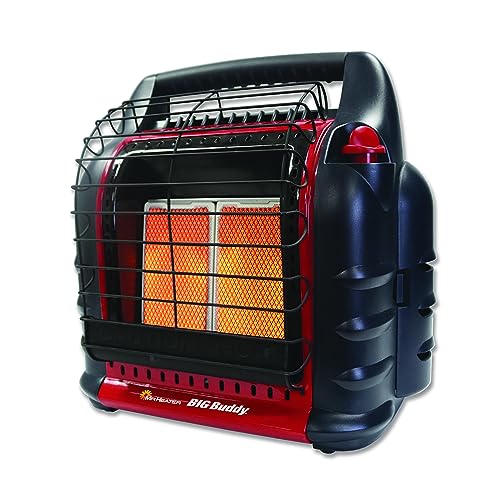
A stationary cabin or tiny home benefits from a larger tank than a portable camping setup would use. Fewer refill trips means less disruption to an off-grid routine. A 100 lb or larger tank, hose-connected to a Big Buddy or a permanent wall-mount heater, is a common setup for a small off-grid structure through a full winter.
Planning Fuel Delivery to a Remote Property
Some propane suppliers offer delivery service to a fixed tank at a remote property, similar to residential propane delivery. This removes the need to transport tanks yourself. Check delivery availability and typical lead time for your location before winter. Delivery services sometimes have longer routes to genuinely remote areas.
Permanent vs. Portable Setups for a Cabin
A permanent vent-free wall heater connected to a large fixed tank is the more common long-term setup for a primary off-grid residence. It avoids the ongoing hassle of swapping smaller tanks. A portable Buddy-style heater remains useful as backup or for a secondary structure like a workshop that does not justify a permanent installation.
Ventilation in a Tightly Sealed Off-Grid Structure
Off-grid cabins are often built more airtight than a typical home. This reduces heat loss and the energy needed to stay warm. It makes deliberate ventilation more important, not less. A sealed structure has less incidental air exchange than typical home construction. A dedicated fresh-air vent, sized to the heater’s requirements, is worth building in.
Combining Propane With Passive Solar Design
Many off-grid structures use passive solar heating: south-facing windows, thermal mass, and careful insulation. These reduce the total heating load before any active heat source is needed. A heater sized for a well-designed passive-solar structure can often be smaller than one sized for a conventional structure of the same square footage.
Seasonal Fuel Stockpiling
Some off-grid households stockpile propane before winter. This reduces resupply trips during the coldest, least accessible months. Store multiple tanks safely, upright, outdoors or in a well-ventilated area away from living spaces and ignition sources. This reduces the risk of running out during a difficult winter access period.
Safety Considerations Specific to Off-Grid Properties
A remote off-grid property may be farther from emergency services than a typical suburban home. This raises the stakes on basic safety equipment. A working carbon monoxide detector. A propane leak detector if using a fixed tank system. A clear understanding among all occupants of what to do if something goes wrong. Treat these as non-negotiable, since help may be farther away.
Off-Grid Heating for a Workshop vs. a Living Space
A workshop or barn used intermittently does not need the same continuous heat as a living space occupied daily. A portable Buddy-style heater run only while working suits a workshop well. A living space benefits more from a permanent installation sized for continuous, reliable operation through the coldest months.
Sourcing Propane in a Truly Remote Location
Some off-grid properties sit far enough from any town that even a delivery service has limited or no coverage. In these cases, transporting tanks yourself in a truck bed, secured upright, to the nearest refill station becomes the practical fallback. Building this trip into a regular supply run, alongside groceries and other errands, keeps it from becoming a separate dedicated trip each time.
Comparing Total Cost: Propane vs. Grid Electricity
A homeowner connected to the grid rarely thinks about heating fuel cost per BTU, since it is bundled into a monthly bill. An off-grid propane user sees this cost directly, tank by tank, which makes efficient heater sizing and basic insulation improvements pay off more visibly than they would for a grid-connected home of the same size.
Propane Appliances Beyond Heating
Many off-grid properties also run a propane refrigerator, water heater, and stove, sharing fuel infrastructure with the heating system. Sizing a single larger tank to cover all propane appliances together, rather than separate small tanks for each, simplifies fuel management and reduces the total number of refill or delivery trips needed.
Regulatory Considerations for a Fixed Propane Tank
Some jurisdictions have specific regulations around installing a fixed propane tank on a property, including minimum distances from structures and property lines. Check local requirements before installing a large fixed tank, since retrofitting an improperly placed tank later is more costly than confirming the rules upfront.
Long-Term Reliability of an Off-Grid Propane Setup
A well-maintained propane heating system, with a genuine tank, regulator, and heater serviced on a reasonable schedule, is one of the most reliable off-grid heating approaches available, since it depends on none of the more failure-prone components a solar-electric or wood-burning system can involve. This reliability is a large part of why it remains the default choice across so many off-grid living discussions.
Off-Grid Heating During a Multi-Day Power Outage
A grid-tied home loses heat entirely during an extended power outage if it relies on an electric furnace. A propane heating system keeps working through the same outage. This is one of the clearest practical arguments for keeping propane as at least a backup heat source, even for a home with grid access.
A Quick Word on Propane Odor and Leak Detection
Propane has an added odorant specifically so leaks are noticeable by smell, a genuine safety feature built into the fuel itself. Trust your nose. If you ever smell propane near a tank, hose, or heater connection, treat it as a real leak and shut off the fuel supply immediately rather than assuming it is a false alarm.
Choosing a Reputable Propane Delivery Service
Ask neighbors or other off-grid residents which propane suppliers they use and trust. Local reputation matters more here than a national brand name. A supplier familiar with rural delivery routes in your area is worth more than a lower price from a company unfamiliar with your property’s access challenges.

The Bottom Line
Propane solves off-grid heating’s core problem. It delivers reliable heat that does not compete with a limited solar and battery system. Size your tank for your actual usage and access difficulty. Plan fuel delivery or stockpiling ahead of winter. Pair it with solid ventilation and safety equipment.