
Affiliate disclosure: some links are affiliate links — as an Amazon Associate we earn from qualifying purchases, at no extra cost to you. Full disclosure.
Almost every propane heater marketed for indoor use — from a portable Buddy-style unit to a permanent wall-mount heater — is described as "ventless" or "vent-free." That term confuses a lot of first-time buyers, because it sounds like it should be a downside. It isn’t inherently one, but it does explain why indoor-safe propane heaters have the specific safety features they do, and why that matters when you’re deciding what to buy.

Top 3 Recommended
What "Ventless" Actually Means
A ventless or vent-free heater burns fuel and releases its combustion byproducts directly into the room, rather than routing exhaust outside through a flue or chimney the way a vented furnace or a vented gas fireplace does. That’s the entire mechanical distinction. It’s not a marketing term for "safer" or "better" — it’s a description of how the appliance handles its own exhaust. Nearly every propane heater sold as "indoor-safe" is a ventless design, because building a portable, cylinder-fed heater with a chimney isn’t practical. The ventless design is what makes a Buddy-style heater or a wall-mounted radiant unit possible in the first place.
Why Ventless Heaters Need an Oxygen Depletion Sensor
Because a ventless heater’s combustion byproducts stay in the room, manufacturers build in a specific safety mechanism to compensate: the oxygen depletion sensor (ODS). It’s a pilot-mounted sensor that continuously monitors the oxygen level in the surrounding air and shuts the heater off automatically if it drops below a safe threshold — which happens naturally in a sealed room as any combustion appliance burns fuel. This is the feature that makes a ventless heater viable indoors at all, and it’s why "ventless" and "ODS-equipped" go hand in hand on every legitimate indoor-safe propane heater. A ventless heater without an ODS is not something you’ll find sold for indoor use from a reputable manufacturer — if a listing doesn’t mention one, treat that as a red flag rather than an oversight.
What a Vented Propane Appliance Looks Like Instead
Vented gas appliances — a traditional gas furnace, a vented gas fireplace insert, some larger wall furnaces — route exhaust gases outside through a flue pipe or chimney, the same basic principle as a wood stove. They don’t need an ODS in the same way, because the combustion byproducts don’t accumulate in the living space. The tradeoff is installation complexity: a vented appliance needs a physical vent path built into the structure, which is a real construction project, not something you plug in or hose-connect to a tank. This is why vented propane heaters are essentially absent from the portable and semi-permanent categories this site covers — if you need a vented appliance, that’s a conversation with an HVAC contractor about a fixed installation, not a product comparison between propane heater brands.
Does Ventless Mean Lower Air Quality?
A ventless heater does release water vapor and combustion byproducts into the room it’s running in, and manufacturer manuals consistently recommend the same ventilation guidance regardless of ODS certification: crack a window or door slightly during extended use, even in a heater rated for indoor use. This isn’t a contradiction of the "indoor-safe" label — it’s the same logic as running a gas stove with a range hood on. The ODS is there to shut the heater off before oxygen drops to a dangerous level; basic ventilation is there to keep air quality comfortable well before that point is ever reached. Buyers who run a ventless heater in a genuinely sealed room with no ventilation at all are not following the manufacturer’s actual guidance, regardless of how the heater is certified.

Vent-Free Doesn’t Mean Maintenance-Free
Because a vent-free heater’s exhaust stays local, a burner that’s dirty or out of adjustment shows up faster as a comfort or odor issue than it would on a vented appliance where problems can go unnoticed for longer. Manufacturers recommend a visual inspection of the burner and ODS pilot assembly before the start of each heating season, and immediately addressing any change in flame color (a healthy propane flame burns blue, not yellow or orange) or any new odor beyond the brief smell some heaters produce on first light. A yellow or orange flame on a ventless heater is a sign of incomplete combustion and should be treated as a reason to stop using the heater until it’s inspected, not something to wait out.
Which Buyers Actually Need to Think About This Distinction
For the vast majority of people shopping for an indoor propane heater — a bedroom, a workshop, a converted garage — "ventless" isn’t a decision point, because every practical indoor-safe option in that category is a ventless design by necessity. The distinction matters more if you’re comparing a propane heater against a fundamentally different heating option, like a vented gas fireplace insert or a central furnace upgrade, where the installation complexity and ongoing exhaust routing are genuinely different propositions. If you’re simply choosing between propane heater models for a room that needs supplemental heat, the ventless-vs-vented question is effectively already answered — what matters is whether the specific ventless model has a certified ODS and is rated for your room size. Our indoor propane heater guide covers that decision in full.
Portable Ventless Heaters vs. Permanent Vent-Free Wall Units
Both categories are ventless in the mechanical sense described above, but they differ in scale and installation. A portable heater like the Mr. Heater 9,000 BTU Portable Buddy is a self-contained, cylinder-fed ventless unit you can move between rooms. A permanent unit like the Mr. Heater 30,000 BTU Vent Free Radiant Heater is also ventless, but it’s installed in one place and typically connects to a fixed line or larger tank, with stricter manual-specified clearance and minimum room-volume requirements because it’s designed to run for longer stretches unattended. Both need the same underlying ODS safety feature; the permanent unit simply has more BTU output and a more involved installation to account for.
Why Vented Alternatives Are Rare in This Product Category
If ventless heaters need an extra safety sensor and ongoing ventilation discipline, why not just build vented portable propane heaters instead? The honest answer is that a genuinely vented, portable, cylinder-fed heater is close to a contradiction in terms — routing exhaust through a real flue requires a fixed structural penetration, which is incompatible with picking the heater up and moving it to a different room next winter. That’s why the entire portable indoor-propane-heater category standardized on the ventless-plus-ODS approach rather than trying to engineer a portable vented alternative: it’s the only design that’s both genuinely portable and genuinely certifiable for indoor use.
A Carbon Monoxide Detector Is the Right Backstop Either Way
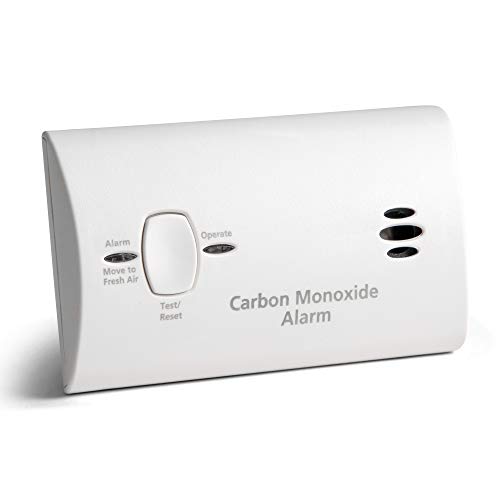
Regardless of which ventless heater you choose, a battery-backed carbon monoxide detector in the same room is the universal recommendation across every manufacturer and every safety agency covering this appliance category. It doesn’t depend on the heater’s own ODS functioning correctly, and it’s inexpensive relative to the heater itself. A model like the Kidde Carbon Monoxide Detector runs on batteries rather than household wiring, which is useful in a garage or workshop that may not have an outlet near where the heater runs.