

Affiliate disclosure: some links are affiliate links — as an Amazon Associate we earn from qualifying purchases, at no extra cost to you. Full disclosure.
Mr. Heater’s Buddy lineup has two specialty variants (the camo Hunting Buddy and the dual-rated Buddy FLEX), but most buyers are really choosing between the three core sizes: Little Buddy, standard Buddy, and Big Buddy. This comparison reflects aggregated owner reviews and manufacturer specs across all three, to help settle which to buy for your actual space rather than guessing.
Model Numbers and Spec Reference: Blower Fan and Battery Power
For anyone comparing listings across retailers, the model numbers are: the Little Buddy is F215100 (3800 BTU fixed), the standard Buddy is MH9BX (4000 BTU on low, up to 9000 BTU on high), and the Big Buddy is MH18B (4000 BTU on low, up to 18000 BTU on high, with a built-in blower fan that runs on battery power rather than mains electricity). Matching the right model number to the right BTU range avoids ordering confusion when a listing doesn't spell out which "Buddy" it actually is.
Little Buddy vs. Portable Buddy vs. Big Buddy: Quick Verdict
If you are heating a space under about 95 sq ft and want the lightest, cheapest option, get the Little Buddy. For most single rooms, garages and tents up to roughly 200 sq ft, the standard Buddy is the right default. For a full garage or a large wall tent, step up to the Big Buddy.

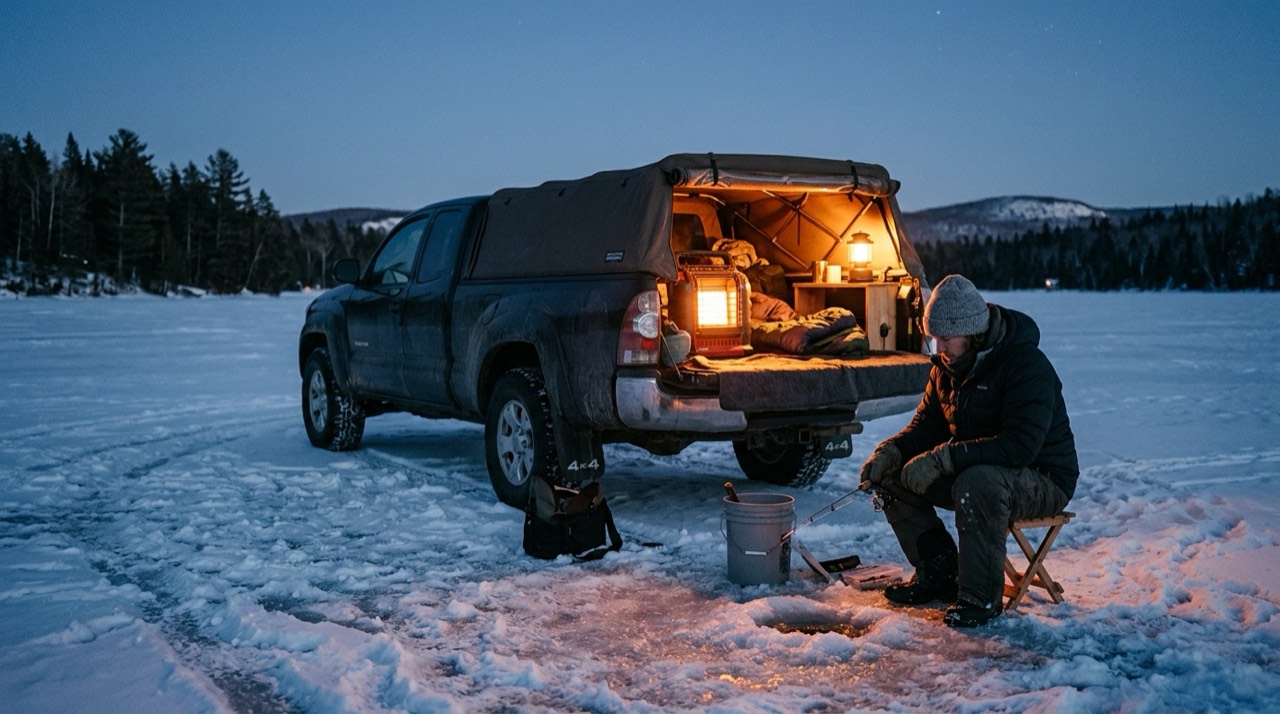
Best for Spaces under roughly 95 sq ft — ice shanties, small tents, a single small room
- 3,800 BTU fixed output
- 1 lb disposable cylinder only
- Under 10 inches tall, a few pounds
Why buy it: The lightest, cheapest entry point into the indoor-safe Buddy platform, with no low/high dial to think about.
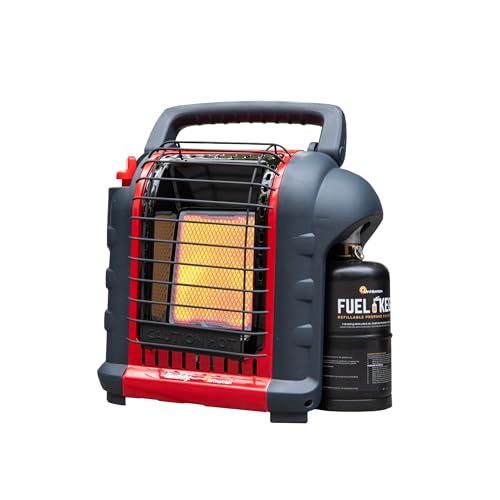
Best for Spaces up to roughly 200 sq ft — garages, workshops, larger tents, single rooms
- 4,000–9,000 BTU on low/high
- Runs on a 1 lb cylinder or hose-connects to a 20 lb tank
- Most-reviewed model in the whole lineup
Why buy it: More than doubles the Little Buddy’s ceiling output while staying genuinely portable, which is why it is the default most owners land on.
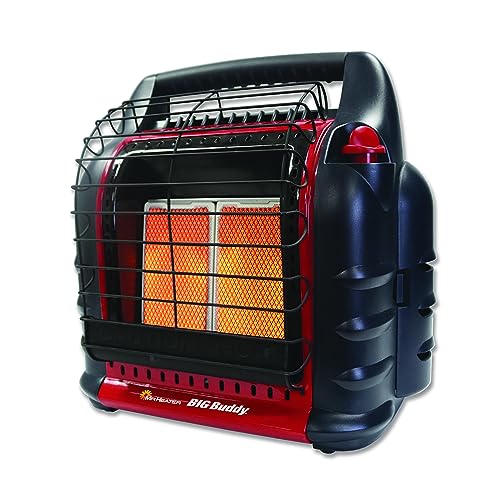
Best for A full single-car garage or a large canvas wall tent
- 4,000–18,000 BTU across three settings
- Two 1 lb cylinders or hose-connect to a larger tank
- Fan-assisted heat distribution
Why buy it: Doubles the standard Buddy’s maximum output and spreads it more evenly with a built-in fan, at the cost of extra size and weight.
Side-by-Side Comparison
| Product | Best for | Buy |
|---|---|---|
| Mr. Heater 3,800 BTU Little Buddy Portable Radiant Propane Heater | Smallest & Cheapest | Check Price |
| Mr. Heater 9,000 BTU Portable Buddy Radiant Propane Heater | Most Versatile | Check Price |
| Mr. Heater 18,000 BTU Big Buddy PRO Series Heater | Highest Output | Check Price |
BTU Output and Coverage Area by Model: 3800 BTU, 4000 BTU, 9000 BTU and 18000 BTU Compared
The Little Buddy is fixed at 3,800 BTU with no adjustment. The standard Buddy adjusts from 4,000 to 9,000 BTU, giving you a low setting for mild days and a high setting for genuinely cold ones. The Big Buddy runs 4,000 to 18,000 BTU across three settings and adds a fan to push that heat further into a room instead of concentrating it near the unit. Bigger BTU numbers only help if the coverage area actually matches your space — oversizing wastes fuel just as sizing too small leaves you cold. Our full BTU comparison across all five models has the exact coverage-area math for each.
Size and Weight
The Little Buddy weighs only a few pounds and stands under 10 inches tall, small enough for a backpack or under a truck seat. The standard Buddy is still genuinely portable but noticeably heavier once you factor in a hose-connect kit and tank. The Big Buddy, with its dual-cylinder capacity and fan assembly, is the heaviest and bulkiest of the three — still portable in the sense that it is not a fixed installation, but closer to a "load it in the truck" heater than a "carry it in one hand" heater.
Fuel Options: 1-lb Cylinder, 20-lb Tank Hookup and Hose Connection
All three run on a standard 1-lb cylinder out of the box. The standard Buddy and Big Buddy can also hose-connect via a 20-lb tank hookup (or larger) with the right filter kit, which cuts long-term fuel cost significantly for regular use — the Little Buddy is designed for 1-lb cylinders only and has no hose connection option at all. See our hose and adapter guide for exactly which kit fits which model.
Run Time on a Single Fuel Cylinder
Using the standard conversion of roughly 21,600 BTU of usable energy per pound of propane, the Little Buddy at its fixed 3,800 BTU stretches a 1 lb cylinder to about 5.5 hours. The standard Buddy on high (9,000 BTU) burns through the same cylinder in under 2.5 hours. The Big Buddy at its full 18,000 BTU setting burns through two 1 lb cylinders in a little over an hour. Our run-time by tank size breakdown covers every setting and tank combination for all three.
Little Buddy vs. Standard Buddy: The Most Common Upgrade Path
Buyers who choose the Little Buddy specifically for its price and size, then find it underpowered for their actual room, are one of the most consistently reported upgrade paths in owner reviews — moving to the standard Buddy afterward. If your space is anywhere close to the 95 sq ft cutoff, sizing up to the standard Buddy up front usually costs less overall than buying twice.
Standard Buddy vs. Big Buddy: When to Step Up
Owners who step up from the standard Buddy to the Big Buddy consistently cite one of two reasons: a two-car garage or larger space the 9,000 BTU model could not keep up with, or a canvas wall tent used for extended camping or hunting trips where sustained heat matters more than compact size. If neither applies, the extra weight and cost of the Big Buddy is rarely worth it.
Fan-Assisted Noise and Radiant Heat Feel
The Little Buddy and standard Buddy both run silently — pure radiant heat with no fan. The Big Buddy’s fan assist means a small amount of audible airflow, though nowhere near the noise level of a forced-air construction heater. For anyone sleeping in a small tent overnight, the two smaller models’ silent operation is a genuine comfort advantage the Big Buddy does not fully match.
Oxygen Depletion Sensor and Tip-Over Shut-Off: What Makes All Three Indoor-Safe
All three models share the same oxygen depletion sensor and tip-over shut-off hardware, the two features that make the whole lineup indoor-safe. Choosing a smaller or larger model does not trade away any safety feature — see our tent safety guide for how this applies specifically to enclosed-space use.
Lighting Is the Same Process on All Three
Every model in this comparison uses the same open-valve, hold-to-pilot ignition sequence. Size does not change how you light it. Our step-by-step lighting guide covers the process and the most common reason a first attempt fails.
Price Difference in Context
The Little Buddy is consistently the cheapest of the three, the standard Buddy sits in the middle, and the Big Buddy commands the highest price of the core lineup. Buyers comparing all three on price alone tend to regret it more than buyers who size to their actual space first — an underpowered cheap heater that gets replaced within a season costs more in total than paying correctly the first time.
What Owners Report: Fuel Consumption and Weight Complaints
Reliability is the most repeated praise point across all three sizes. "It just works" appears in review history for every one of them. Complaints scale predictably with size. Little Buddy owners most often mention fuel consumption on a 1 lb cylinder. A smaller number of Big Buddy owners mention its weight and bulk compared to the smaller models.
Cost to Own Each Model Over a Season
The Little Buddy costs the least to buy but the most per hour to run, since 1 lb cylinders cost more per BTU than a refillable tank. The standard Buddy and Big Buddy can offset this with a hose-and-filter kit. For a heater used only a handful of times a year, the Little Buddy’s lower purchase price still wins overall. For regular winter use, the standard Buddy or Big Buddy on a hose-connected tank is cheaper in the long run.
How Each Model Handles Wind and Drafts
An open patio or a drafty blind steals heat fast from any radiant heater. The Little Buddy’s low output struggles most in these conditions. The Big Buddy’s higher ceiling and fan assist cope better with a breeze moving through a partially open space. If your use case involves regular wind exposure, size up from what the square-footage guideline alone suggests.
Thermocouple and Replacement Parts for Long-Term Repairability
All three models share simple, well-documented parts: a thermocouple, a pilot assembly, a control valve. Genuine Mr. Heater replacement parts are sold individually rather than requiring a full unit swap. This keeps long-term repair costs low across the whole lineup, and it is one more reason owner reviews trust the platform over a cheaper, less-supported alternative.
Which To Buy: What First-Time Buyers Regret Least
The standard Buddy has the fewest size-related regrets in review history, simply because its range covers the widest variety of common use cases. First-time buyers who are unsure which size to pick are usually best served by starting here rather than guessing at either extreme of the lineup.
Buying More Than One Instead of Sizing Up
Some owners solve a coverage gap by running two smaller heaters instead of one larger one — two Little Buddies in a large wall tent, for instance, rather than a single Big Buddy. This spreads heat more evenly across a larger floor area and gives redundancy if one unit needs servicing mid-trip. It also means carrying and fueling two separate units, which adds its own logistics. Whether this beats a single larger heater depends on how much you value redundancy versus simplicity.
Fitting a Heater Into Existing Gear
Storage space matters as much as heater size for many buyers. The Little Buddy fits into a corner of a truck bed toolbox or a backpack side pocket without much thought. The Big Buddy needs a dedicated spot, ideally its own carry case, since its size and the two-cylinder bracket make it awkward to stack with other gear. If vehicle or pack space is already tight, factor this in alongside raw heating capacity.
Resale Value: Reselling a Buddy Heater
All three models hold resale value reasonably well, given the platform’s strong reputation and simple mechanics. A well-maintained standard Buddy or Big Buddy, with the original box and documentation, typically sells faster secondhand than an off-brand equivalent, since buyers recognize the name and trust the safety record. The Little Buddy’s lower original price means less absolute resale value, but also less to lose if you decide to upgrade later.
How Long Each Model Typically Lasts
With basic seasonal maintenance, all three models commonly reach several years of regular use before any major component needs replacing. The thermocouple and pilot assembly are the parts most likely to eventually need attention, and all three share the same basic design for these components. Size does not meaningfully change expected lifespan; how carefully a unit is stored and maintained between seasons matters far more than which of the three you own.
A Simple Decision Checklist by Square Footage
- Under 95 sq ft, budget-conscious: Little Buddy.
- Most single rooms, garages, and tents: standard Buddy.
- A full garage or a large wall tent: Big Buddy.
- Unsure and want the safest default: standard Buddy, then reassess after a season of use.
What to Do If You Outgrow Your First Choice
Outgrowing the Little Buddy or standard Buddy after a season is a common, low-stakes outcome, not a sign you bought the wrong thing at the time. Many owners keep the smaller unit for its original use case, a quick tool run or a small tent, and add a larger model for the situation that outgrew it. This two-heater approach often ends up more practical than replacing the smaller unit outright, since the original purchase still earns its keep in the role it was bought for. A spare heater in a second vehicle or a second tent is rarely wasted equipment.


The Bottom Line: Price, Portability and Which Size Wins
Size to your actual space, not your budget. Under 95 sq ft, the Little Buddy’s price and portability are hard to beat. Up to about 200 sq ft, the standard Buddy is the safest all-around choice and the one most owners are satisfied with. Above that — a full garage, a large wall tent, extended off-grid use — the Big Buddy’s extra output and fan-assisted distribution earn their extra size and cost.