
Affiliate disclosure: some links are affiliate links — as an Amazon Associate we earn from qualifying purchases, at no extra cost to you. Full disclosure.
Looking for the full spec breakdown and verdict on the Portable Buddy itself? Read our complete Mr. Heater Portable Buddy (MH9BX) review →
The Portable Buddy’s 225 sq ft rating is the number most buyers see first. It’s also the number most likely to get misread. This page isn’t another full spec teardown — we’ve already published one of those in our dedicated Portable Buddy (MH9BX) review. Instead, this page answers the question buyers actually ask before clicking "buy": does 225 sq ft really mean my room, tent or shed?

Top 3 Recommended
What "225 Sq Ft" Actually Means
Manufacturer coverage ratings assume ideal conditions. That means a well-sealed, reasonably insulated space with a standard ceiling height, running the heater at its top 9,000 BTU setting. A drafty tent, an uninsulated shed, or a room with a high or vaulted ceiling all need less actual floor space to feel the same 225 sq ft rating stretched thin. Owners who report disappointment with the Portable Buddy’s heat output almost always describe one of these conditions, not a flaw in the heater itself.
Quick Sizing Checklist
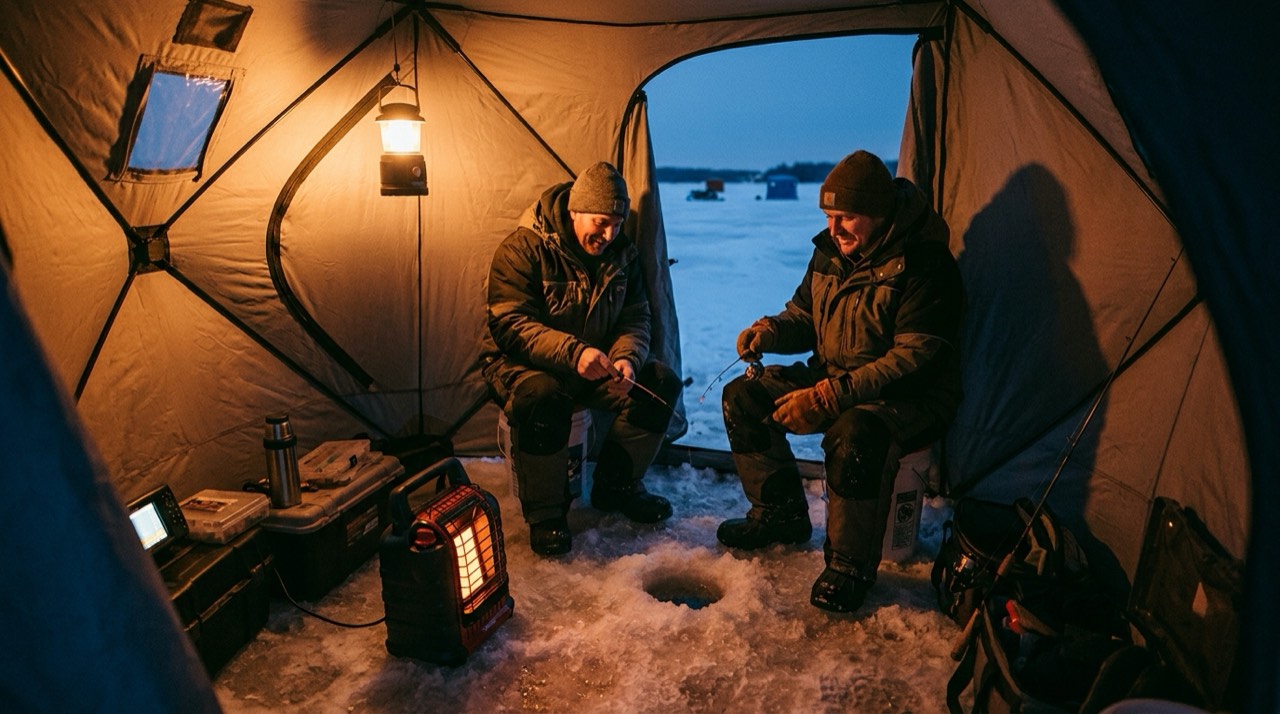
- Small, sealed tent or car interior: 225 sq ft is generous headroom here. The heater will likely run on its 4,000 BTU Low setting most of the time.
- Mid-size cabin room or garage bay, well insulated: This is the sweet spot the rating is built for. Expect to run High on cold nights.
- Open garage, drafty shed, or a room with a vaulted ceiling: Treat the real coverage as noticeably smaller than 225 sq ft. Consider the Big Buddy instead.
- Two or more people, or a space used for hours at a stretch: Size up. A heater running flat-out for comfort burns through fuel faster than one with headroom.
Base Heater Specs (for reference)
| Spec | Detail |
|---|---|
| BTU output | 4,000 (Low) / 9,000 (High) |
| Rated coverage | Up to 225 sq ft |
| Fuel | One 1 lb. cylinder, or optional hose to a 20 lb. tank |
| Safety | Oxygen Depletion Sensor (ODS), accidental tip-over shut-off |
| Ignition | Piezo igniter |
Full sourced spec table, owner-reported pros and cons, and complete verdict: Mr. Heater Portable Buddy (MH9BX) review.
What Owners Say About Sizing Specifically
Aggregated owner feedback shows a clear pattern. Buyers who measure their actual space before ordering report high satisfaction with the 225 sq ft rating. Buyers who guess, or round up generously, are the ones most likely to leave a review saying the heater "isn’t as strong as advertised." A tape measure and a rough estimate of ceiling height, done before buying, prevents most of the disappointment reported in owner reviews.
When to Size Up Instead
If your space sits close to the 225 sq ft line, or has any of the drafty conditions above, sizing up to the Big Buddy costs relatively little more. It nearly doubles the coverage to 450 sq ft. Owners who upgraded after finding the Portable Buddy insufficient almost universally say they wish they’d started with the bigger unit. The reverse regret — buying too big — shows up far less often in aggregated feedback.

Pros & Cons of the 225 Sq Ft Rating
Pros
- Generous headroom for small, sealed spaces like tents or car cabs
- Two heat settings let you match output to actual conditions
- Well-documented, widely reviewed rating with lots of real owner data
Cons
- Rating assumes ideal, well-sealed conditions — drafty spaces cover less
- Easy to overestimate a room’s real square footage before buying
- No adjustment beyond two settings if a space is borderline
How Insulation and Ceiling Height Change the Math
Two rooms of the same square footage can heat very differently. A well-insulated room with a standard 8-foot ceiling holds warm air close to the floor, where people actually feel it. A drafty room, or one with a vaulted or open ceiling, loses heat upward before it ever reaches you. That’s why two owners can report opposite experiences with the same 225 sq ft rating. One has a tight, insulated space and finds the heater plenty warm. The other has an older cabin with gaps around the windows and finds it falls short. Before buying, walk your actual space and note any drafts, gaps or high ceilings. Those matter more than the raw square footage number.
A Simple Test Before You Commit
If you already own a smaller heater, or can borrow one, running it in the space for an evening gives a rough sense of how the room behaves. No test heater on hand? Ask how the space performs with a simple portable electric heater instead, even a much smaller one. If a small electric unit noticeably helps in that room, a properly sized Buddy heater almost certainly will too. If the room barely responds to any supplemental heat, insulation is the real problem, and no propane heater at any BTU rating fixes that on its own.
Verdict
The 225 sq ft rating is accurate for the conditions it assumes. It is not a guarantee for every space that measures 225 sq ft on paper. Measure your actual space, account for insulation and ceiling height, and size up to the Big Buddy if there’s any doubt. For the full owner-reported pros, cons and verdict on the heater itself, see our complete Portable Buddy review.

Best for Buyers deciding whether the standard Buddy actually fits their space
Related Products
See our Little Buddy vs Buddy vs Big Buddy comparison for a full sizing breakdown, or the Mr. Heater Buddy series guide. Pair a Portable Buddy purchase with these: