
Affiliate disclosure: some links are affiliate links — as an Amazon Associate we earn from qualifying purchases, at no extra cost to you. Full disclosure.
Mr. Heater Portable Buddy (MH9BX)
A two-setting radiant heater, 4,000/9,000 BTU, rated for up to 225 sq ft. Runs on a 1 lb cylinder or hose-connects to a 20 lb tank with the optional kit.
Best for: A mid-size tent, small cabin, or a corner of a garage
- Lighter and less expensive than the Big Buddy
- Compact enough to carry easily by hand
- Plenty of output for most one- or two-person spaces
- Tops out at 9,000 BTU — not enough for a full garage or large cabin
- Single-cylinder design only supports one 1 lb bottle at a time
- No built-in fan for spreading heat further into a room
Mr. Heater Big Buddy (F274805)
The largest radiant Buddy, up to 18,000 BTU across three settings, rated for up to 450 sq ft — double the standard Buddy — with dual 1 lb cylinder capability for extended runtime.
Best for: A garage, workshop, cabin, or any space over 225 sq ft
- Double the coverage and BTU ceiling of the standard Buddy
- Dual-cylinder capability roughly doubles runtime on 1 lb bottles
- Also hose-connects to a 20 lb tank for extended sessions
- Meaningfully heavier and bulkier to carry or store
- Costs more upfront than the standard Buddy
- More heater than needed for a small one-person space
Spec-by-spec comparison
| Factor | Mr. Heater Portable Buddy (MH9BX) | Mr. Heater Big Buddy (F274805) |
|---|---|---|
| BTU output | 4,000 / 9,000 BTU | 4,000 / 9,000 / 18,000 BTU |
| Coverage | Up to 225 sq ft | Up to 450 sq ft |
| Fuel source | 1 lb cylinder, or 20 lb tank with hose kit | Dual 1 lb cylinders, or 20 lb tank with hose kit |
| Runtime (high setting) | Approx. 3 hrs per 1 lb cylinder | Approx. 3 hrs per pair of 1 lb cylinders |
| Weight | Approx. 8.5 lb | Approx. 17 lb |
| Safety | ODS, tip-over shut-off | ODS, tip-over shut-off |
Both heaters share the same radiant design and safety features — an oxygen depletion sensor, piezo ignition, tip-over shut-off — so the real decision comes down to how much space actually needs heating and whether dual-cylinder capability matters for your use.
| Product | Best for | Buy |
|---|---|---|
| Mr. Heater 9,000 BTU Portable Buddy Radiant Propane Heater | Best for tents & small rooms | Check Price |
| Mr. Heater F274805 Big Buddy Propane Heater | Best for garages & large spaces | Check Price |

Top 3 Recommended
BTU Output and Coverage: A Real Step Up
The standard Buddy tops out at 9,000 BTU across a 225 sq ft rating. The Big Buddy adds a third setting at 18,000 BTU and doubles the rated coverage to 450 sq ft. That extra top-end setting is what makes the Big Buddy viable for a real garage or workshop. An uninsulated space with a cold concrete floor demands more raw output than a sealed bedroom or small tent ever would. For anything smaller — a single room, a mid-size tent, a car cab — the standard Buddy’s 9,000 BTU ceiling is plenty. The Big Buddy’s extra capacity just goes unused.
Dual-Cylinder Capability: What It Actually Buys You
The Big Buddy’s defining feature isn’t just the higher BTU ceiling. It’s the ability to run off two 1 lb cylinders at once, roughly doubling runtime versus a single-cylinder heater at the same setting. This matters most for extended sessions away from a refill point — an all-day hunting trip, an overnight in a cabin, or a long work session in an unheated garage. The standard Buddy runs on a single 1 lb cylinder only, so it needs more frequent swaps during long sessions. Both models support the same optional 20 lb hose-connect kit if you want to skip small-cylinder swapping entirely.
Weight and Storage
At roughly 8.5 lb, the standard Buddy is easier to carry one-handed and store in a closet or truck bed than the Big Buddy’s roughly 17 lb. That weight difference comes from the larger burner assembly and dual-cylinder cradle the Big Buddy needs for its higher BTU ceiling. If you move the heater between rooms or vehicles often, the standard Buddy’s lighter build is a real convenience the Big Buddy can’t match — regardless of how much heat you actually need.
Winner by Use Case


Garage or workshop: Big Buddy — the 18,000 BTU top setting and 450 sq ft rating are close to the minimum for a genuinely uninsulated space, where the standard Buddy would struggle.
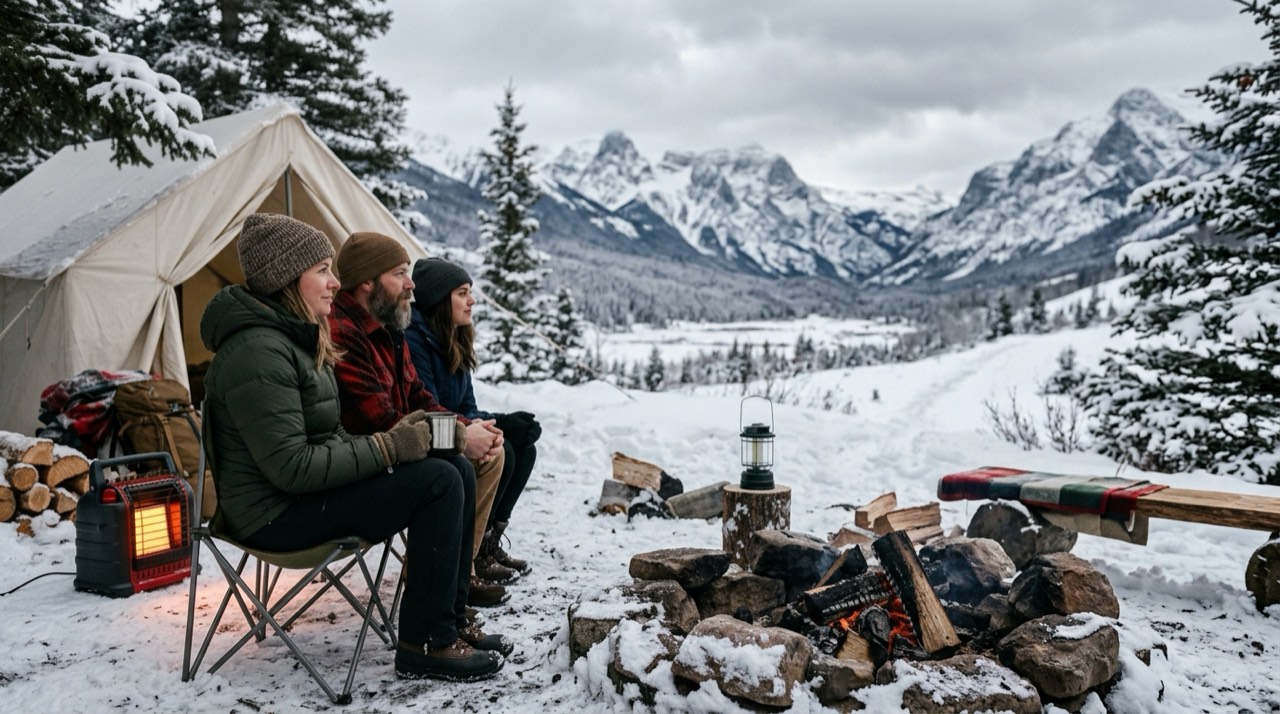
Camping (mid-size tent, one or two people): standard Buddy — 225 sq ft and 9,000 BTU comfortably cover this use case without carrying the Big Buddy’s extra weight.
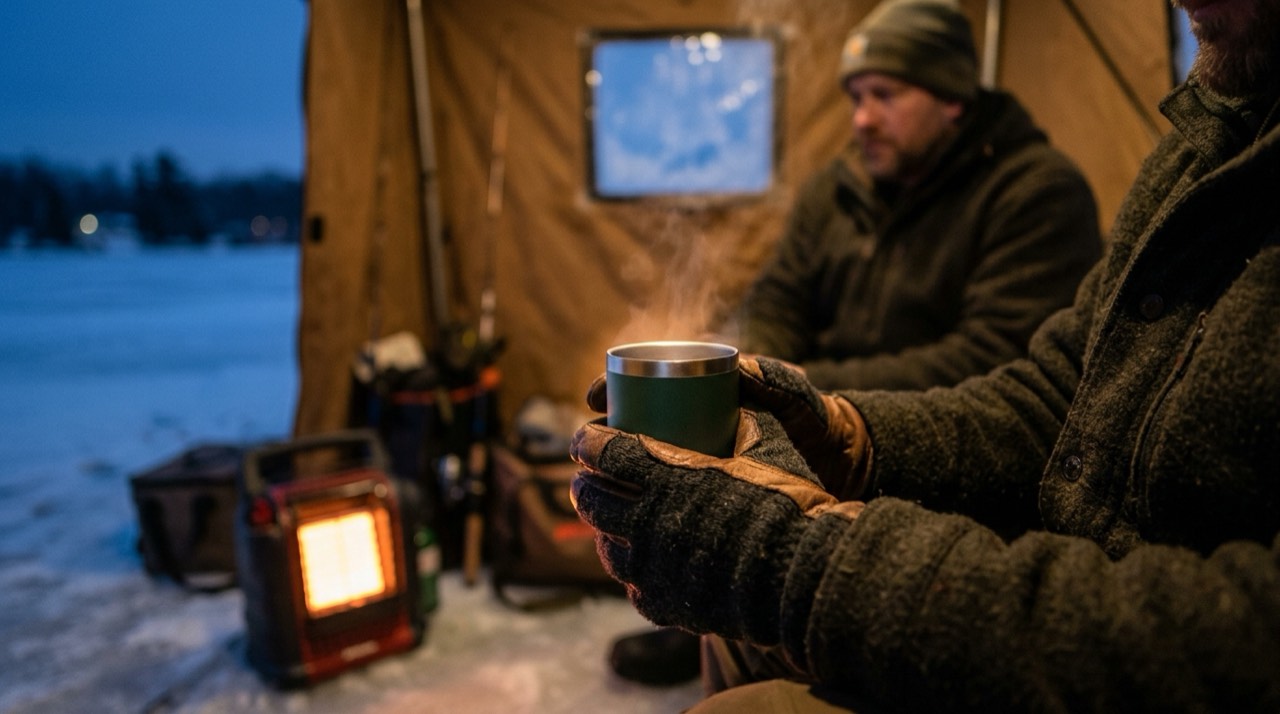
Ice fishing or hunting blind: standard Buddy for a solo setup; Big Buddy if sharing the space with a second person or running through a full cold day without wanting to swap cylinders mid-trip.
RV or van supplemental heat: standard Buddy — most RV interiors fall well within its 225 sq ft rating, and the lighter weight is easier to stow.
Cabin heating (unattended stretches): Big Buddy — the dual-cylinder runtime and higher output are built for exactly this kind of extended, less-frequently-checked use.
Pick the Standard Buddy If…
- You’re heating a single room, tent or vehicle cab under roughly 225 sq ft.
- Portability and lighter weight matter more than maximum runtime or output.
- Budget favors the less expensive option in the lineup.
Pick the Big Buddy If…
- You’re heating a garage, workshop, or any space approaching or exceeding 300 sq ft.
- Extended, unattended-adjacent runtime matters more than carry weight.
- You want the option to run dual 1 lb cylinders or hose-connect a 20 lb tank for longer sessions between refills.
Cost Difference Over a Season
The Big Buddy costs more upfront, and running it at its 18,000 BTU top setting burns through fuel meaningfully faster than the standard Buddy’s 9,000 BTU ceiling — roughly double, in line with the BTU difference. For occasional use, that fuel cost difference is minor. For anyone running a heater through most of a winter in a garage, sizing correctly up front (rather than undersizing with a standard Buddy and running it maxed out) tends to be the more cost-effective choice, since an undersized heater working at its limit doesn’t actually warm a too-large space any better — it just burns fuel trying.
Read the Full Reviews
For complete specs, owner-reported pros and cons, and long-term ownership notes, see our full Mr. Heater Portable Buddy MH9BX review and our full Mr. Heater Big Buddy (F274805) review. See also our Little Buddy vs. Big Buddy comparison for the lineup’s two extremes, or the full Mr. Heater Buddy series guide.