
Affiliate disclosure: some links are affiliate links — as an Amazon Associate we earn from qualifying purchases, at no extra cost to you. Full disclosure.
The Buddy series has a built-in oxygen depletion sensor, or ODS. That is the reason it is one of the most commonly used propane heaters inside a tent. But "indoor-safe" is not the same as "risk-free in a sealed space." The details matter more inside a tent than almost anywhere else this heater gets used.
Top 3 Recommended
What the ODS Actually Does
The ODS watches the oxygen level in the air around it. If oxygen drops below a safe threshold, it shuts the heater off automatically. This happens before carbon monoxide can build up to a dangerous level. It is a backstop for one specific failure mode: a sealed space slowly running low on oxygen. It is not a substitute for basic ventilation. Every model in the Buddy lineup uses the same core sensor technology.
Model-by-Model: Which Buddy Fits Which Tent Safely
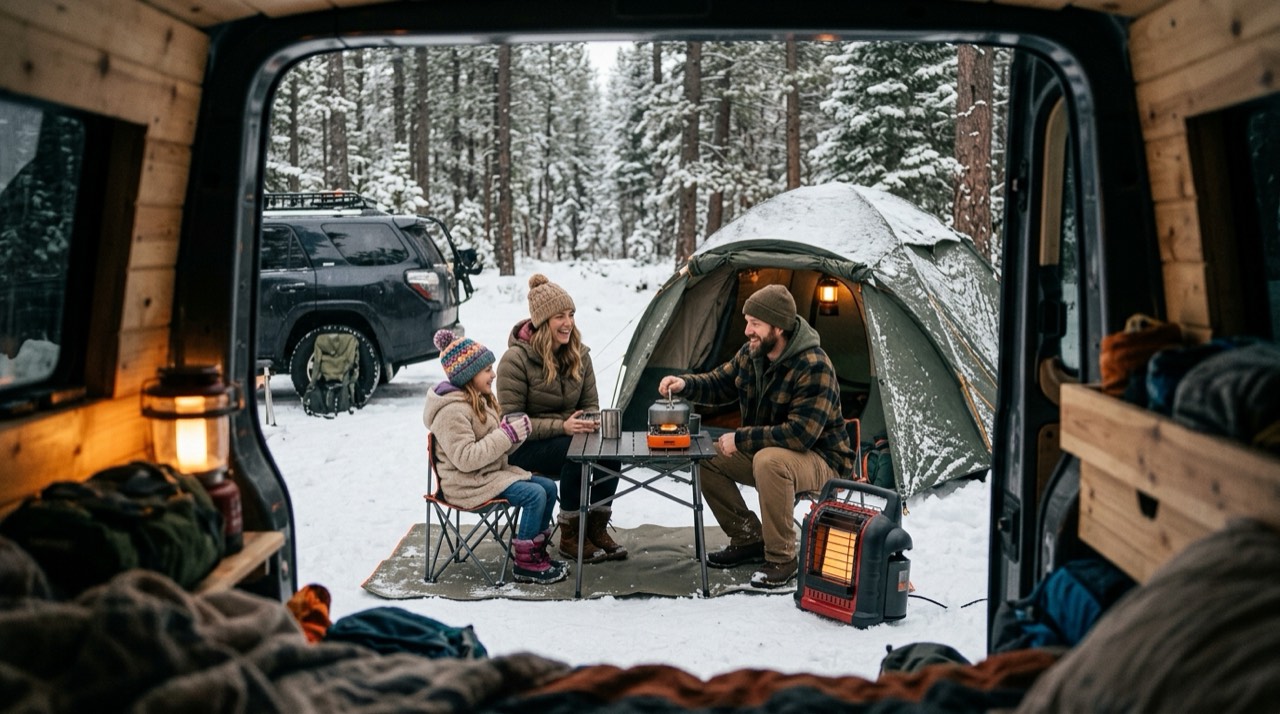
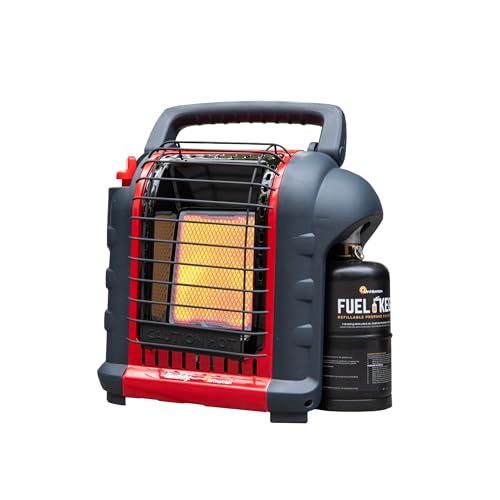
The Little Buddy runs 3,800 BTU. It suits a small one- or two-person tent under roughly 95 sq ft. Its low, fixed output means less total heat and less oxygen draw in a small space. The standard Buddy runs up to 9,000 BTU. It suits a larger tent, with the same ODS protection. The Big Buddy is sized for a large canvas wall tent. It produces more heat and more combustion byproduct. That makes following its ventilation guidance exactly more important, not less. The Hunting Buddy and Buddy FLEX both use the same ODS platform at their own fixed outputs.
Ventilation Still Matters With the ODS Present
Manufacturer guidance recommends cracking a tent flap or vent for airflow. This applies even with an ODS-equipped heater running. The ODS is built to catch a real oxygen-depletion event before it turns dangerous. Starting with some airflow already in place gives the sensor a wider safety margin. It also means the sensor needs to step in less often.
Carbon Monoxide Detection Inside a Tent
Carry a battery-backed carbon monoxide detector for any extended tent use with a heater running. This applies no matter which Buddy model you use, or how confident you are in the ODS. A tent is a genuinely enclosed space, more so than many other places this heater gets used. A small, portable CO detector adds a second layer of protection. It costs little in weight or money for real peace of mind.
Canvas Wall Tents vs. Nylon Backpacking Tents
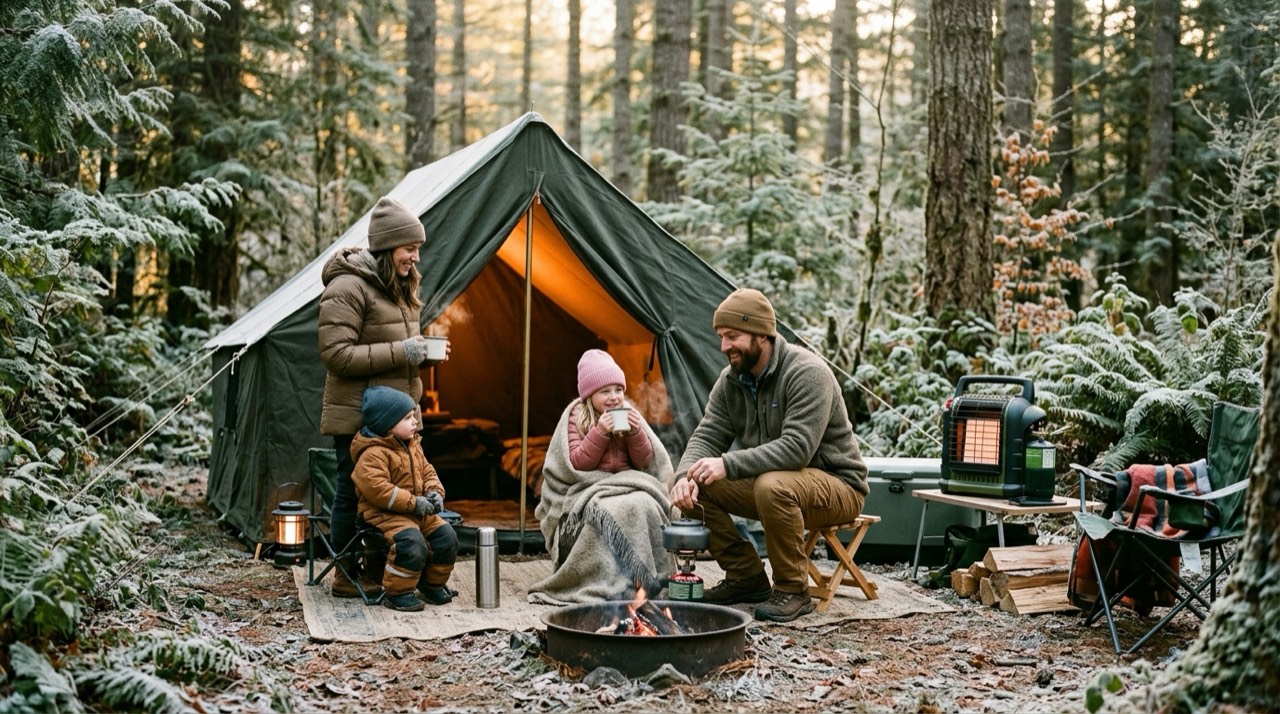
A canvas wall tent, common at hunting camps, usually has more interior volume. It often has a stove jack or vent built into the design. That changes the ventilation picture compared to a smaller nylon backpacking tent, which has fewer airflow options. If your tent has a built-in vent or stove jack, use it while the heater runs. That works better than relying on a partly open flap in a tent not built with that airflow path in mind.
Never Leave a Buddy Heater Unattended Overnight in a Tent
The ODS and tip-over shutoff both work as designed. Even so, manufacturer guidance does not recommend leaving any propane heater running unattended overnight while people sleep in a small, enclosed tent. Many experienced campers and hunters warm the tent before sleep, then turn the heater off. That is the safer pattern, rather than running it continuously through the night.
Tip-Over Shutoff: Why It Matters More in a Tent
A tent floor is uneven. It is often crowded with gear. People walk across it in the dark. All of this raises the odds of a heater getting bumped, compared to a stable garage floor. The tip-over shutoff cuts fuel flow if the heater tips past a certain angle. That makes it a genuinely important feature for tent use. Position the heater away from the main walking path inside the tent. That alone cuts down on accidental bumps.
Clearance From Tent Fabric
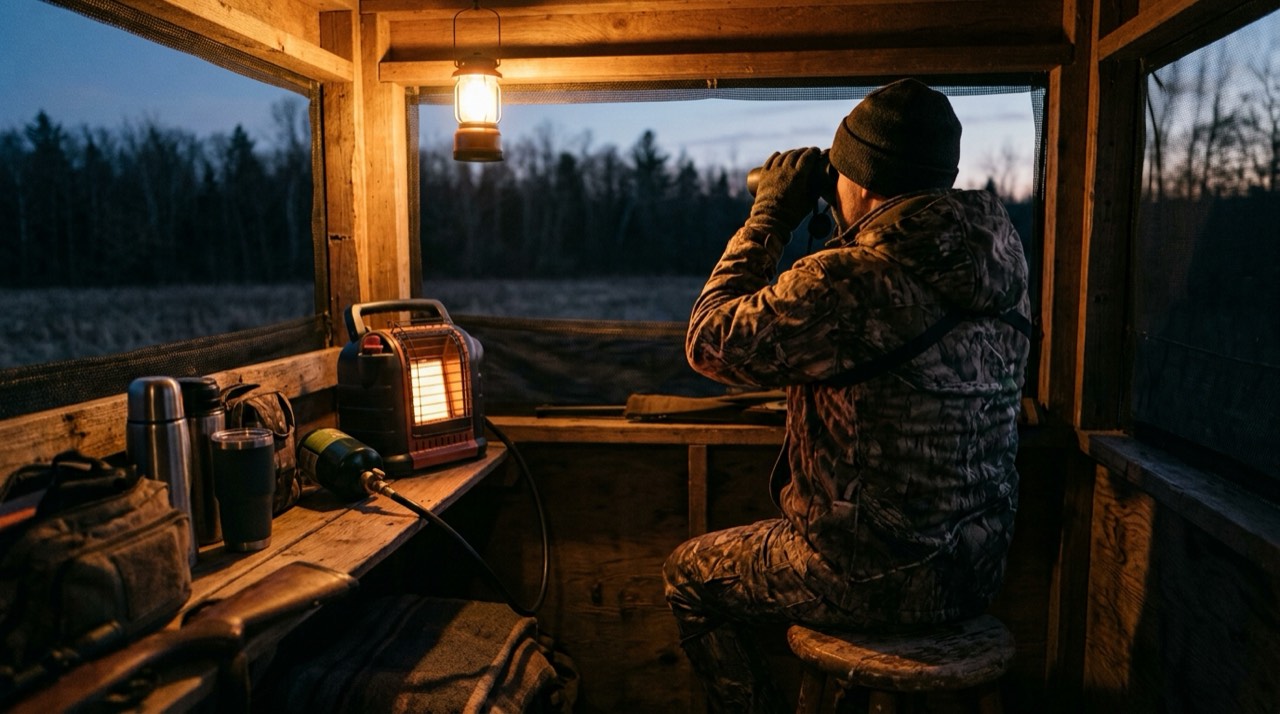
Keep the heater at the clearance distance stated in the manual. This applies to the tent’s walls, ceiling, and any gear stored nearby. Nylon, and even treated canvas, can be damaged or ignited by sustained closeness to a heater’s hot surface. This matters more in a small tent, where space is tight. It is easy to place the heater closer to fabric than the stated clearance allows without noticing.
Setting Up in an Ice Shanty
An ice fishing shanty is usually small and sealed tight against wind. That makes the Little Buddy’s low output, and the ODS’s safety margin, a good match for the space. But it also means ventilation is worth checking specifically. A small sealed shanty has less natural air exchange than a larger tent. Crack a vent or door slightly, even briefly and now and then. Do not assume the shanty’s small size makes ventilation unnecessary.
Setting Up in a Larger Wall Tent for Multi-Day Trips
A large wall tent used for several nights sees more total heater run time than a quick overnight stay. That raises the value of a consistent ventilation routine, checked each evening rather than once at setup. Reposition the heater if gear shifts during the trip and starts crowding its clearance zone. A quick check each night takes under a minute and catches problems before they become real ones.

What Owners Report About Tent Use
Across hunting and camping forums, two things come up again and again: the ODS, and the Buddy series' long safety track record. Both are the main reasons owners trust it inside a tent over a generic alternative. Reports of the sensor tripping unexpectedly are rare when basic ventilation guidance is followed. When shutoffs are reported, they almost always trace back to a genuinely under-ventilated tent. That is the sensor doing its job, not malfunctioning.
The Short Version
Match the model to your tent size. Crack a vent or flap even with the ODS present. Carry a battery-backed carbon monoxide detector for extended use. Never leave any model running unattended overnight while people sleep. Keep the heater clear of tent fabric at the manual’s stated distance. Five habits. Follow them, and the Buddy series' safety record inside a tent holds up in practice.
Teaching Kids and First-Time Campers the Rules
If children or first-time campers share the tent, walk them through the basics before the trip, not during it. Show them where the heater sits and why that spot was chosen. Explain that the heater is not a toy and should never be touched or moved. A two-minute conversation before the trip prevents most of the accidental bumps and curious hands that lead to a tip-over in practice.
After the Trip: What to Check
Once you are packing up, let the heater cool fully before storing it in its case or bag. Check the tent floor and nearby gear for any scorch marks or fabric damage from the trip, even minor ones, so you can address clearance next time rather than repeating the same setup. Disconnect the cylinder or hose before the heater goes back into storage between trips.