
Affiliate disclosure: some links are affiliate links — as an Amazon Associate we earn from qualifying purchases, at no extra cost to you. Full disclosure.
Both tank sizes work for most portable radiant heaters. The right one depends on how often you actually use the heater, not which is "better" in the abstract.
| Product | Best for | Buy |
|---|---|---|
| Coleman 2 Pack Propane Fuel Tank, 16 oz (1 lb style) | Best for Occasional Use | Check Price |
| Flame King YSN-201 20-Pound Steel Propane Tank Cylinder | Best for Regular Use | Check Price |
1 lb Cylinders: Best for Occasional Use
Disposable 1 lb cylinders are simple. No hose to store, no tank to keep filled, and nothing to inspect between seasons. They’re the right call for a heater used a handful of times a year — a camping trip here, an ice fishing day there. The downside is cost per hour, which is noticeably higher than a refillable tank once you’re buying cylinders regularly.
20 lb Tanks: Best for Regular Use
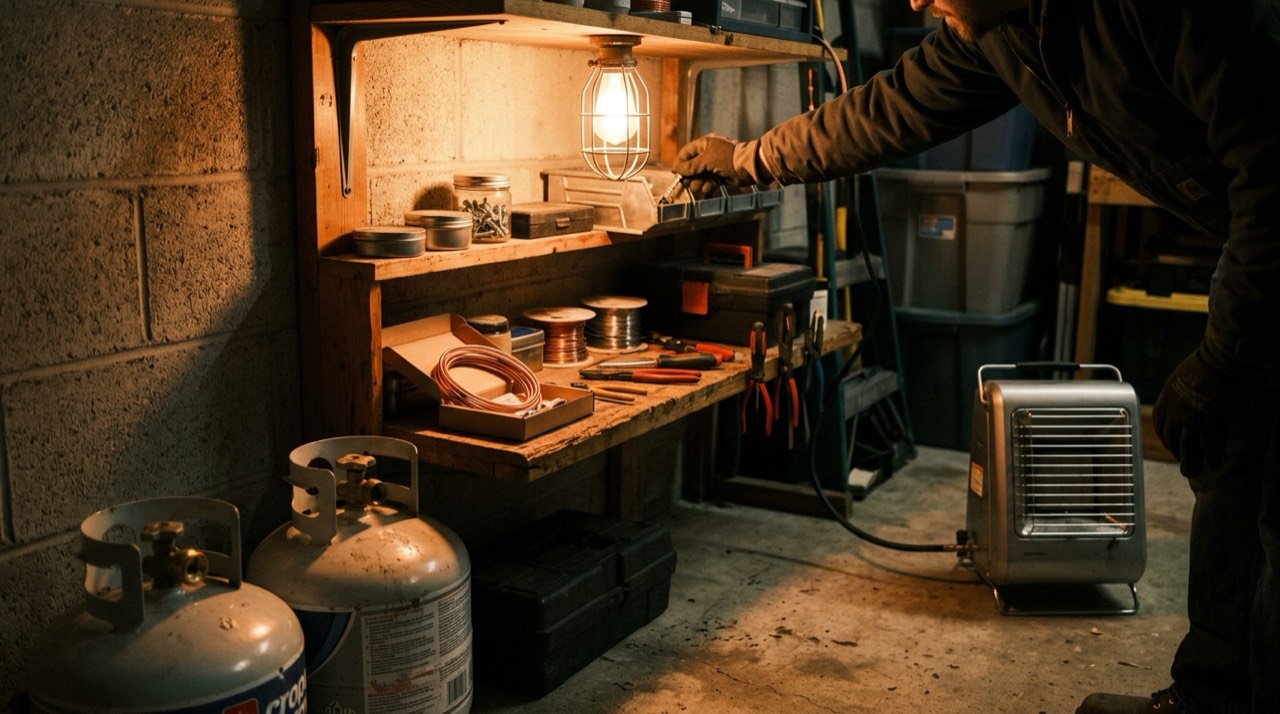
A refillable 20 lb tank costs more upfront, once you add a hose-connect kit, but pays for itself quickly for anyone running a heater through a full winter. It also means far fewer trips to buy fuel, since one tank holds roughly 20 times the fuel of a single 1 lb cylinder.
The Real Cost Difference
Refilling a 20 lb tank costs less per gallon than buying 1 lb cylinders individually, often by a wide margin over a season of regular use. Our 1 lb run-time guide and 20 lb run-time guide both walk through the run-time math for each size.
Which Heaters Can Use Which Tank
Not every heater supports both. The Little Buddy is 1 lb-cylinder only. The standard Buddy, Big Buddy, Hunting Buddy and Buddy FLEX all support hose-connecting to a 20 lb tank with the right kit. Forced-air and larger permanent heaters typically require a 20 lb or bigger tank from the start.
Weight and Portability
A 1 lb cylinder weighs about a pound and fits in a jacket pocket, which matters for backpacking, hunting, or any trip where you’re carrying everything on foot. A full 20 lb tank weighs roughly 37 to 38 lb including the tank itself, which rules it out for backpacking but is a non-issue for car camping, a garage, or a job site where the tank rides in a vehicle rather than on your back.
Environmental Impact
Disposable 1 lb cylinders are single-use, and while some can be refilled with the right adapter, most people simply discard them once empty, which adds up over regular use. A 20 lb tank, refilled repeatedly over years, produces far less waste per hour of heater use. For anyone who cares about the disposable-cylinder waste stream specifically, a refillable 1 lb cylinder is a middle option worth considering, giving the portability of the small size without the single-use disposal question.
Making the Switch
If you’re moving from 1 lb cylinders to a 20 lb tank, you’ll need a hose-and-filter kit rated for your specific heater. See our hose adapter guide for the two types of adapter people usually mean, and our tank stand guide for keeping a larger tank secure and upright.
OPD Valves and Tank Fittings Explained
Every refillable tank size uses a specific valve, and the two sizes aren’t interchangeable the way people sometimes assume. Federal regulations have required an OPD (overfill prevention device) valve on refillable cylinders from 4 to 40 lb since April 2002, identifiable by a triangular hand wheel instead of a round one. A 20 lb tank without this feature won’t get filled at most refill stations regardless of age or condition, since the requirement applies to the valve itself, not just to newly manufactured tanks. Disposable 1 lb cylinders don’t use this valve system at all — they’re sealed, single-use, and connect through their own built-in thread rather than a serviceable OPD valve. If you’re buying a used 20 lb tank secondhand, checking for the triangular hand wheel before assuming it’s fillable saves a wasted trip to a refill station.
Recertification: An Ongoing Cost of the 20 lb Tank
A 1 lb disposable cylinder carries no recertification requirement, since it’s built to be used once and discarded. A refillable 20 lb steel tank is different. It needs to be requalified 12 years from its stamped manufacture date, then every 5 years after that once it has been requalified. A refill station will decline to fill a tank past its due date. This is a real, if minor, ongoing cost that a 1 lb cylinder simply doesn’t carry, and it’s worth factoring into the long-run comparison alongside the per-gallon fuel price.
Common Mistakes When Switching Sizes
The most common mistake when moving from 1 lb cylinders to a 20 lb tank is buying a hose kit rated below the heater’s actual BTU output, which produces a weak flame that looks like a heater problem but isn’t. The second is skipping a soapy-water leak test on the new hose connection before first use — a five-minute check that catches a cross-threaded fitting before it becomes a real problem. A third is storing a full 20 lb tank on its side rather than upright, which can affect how the valve draws fuel. All three are easy to avoid once you know to check for them, and none require special tools beyond what typically ships with a basic hose kit.
Is There a Middle Option?
Between a 1 lb cylinder and a full 20 lb tank sits a 30 or 40 lb tank, less commonly used with portable heaters but worth knowing about if you want more capacity than 20 lb without stepping up to a semi-permanent 100 lb installation. These mid-size tanks fit the same QCC1 fitting standard as a 20 lb tank, so a hose kit built for one works for the other, at the cost of more weight to move around.
The Bottom Line
Buy 1 lb cylinders if you use a heater a handful of times a year and value simplicity over cost savings. Buy a 20 lb tank and a hose kit if you run a heater regularly through a cold season and want to cut your ongoing fuel cost. Neither choice is permanent — many owners start with disposable cylinders and switch to a refillable tank once they know how often they’ll actually use the heater.
A Third Option: Refillable 1 lb Cylinders
A refillable 1 lb cylinder splits the difference. It keeps the small, portable size of a disposable cylinder, but can be topped off from a 20 lb tank using an adapter rather than thrown away once empty. This costs more upfront than a disposable cylinder, but pays for itself over repeated refills, and suits anyone who wants 1 lb-style portability without the ongoing cost or waste of buying disposables one at a time.
What Owners Actually Report
Owners who switch from disposable cylinders to a 20 lb hose-connect setup consistently mention two things: the upfront hassle of the first setup, and how quickly that hassle stops mattering once the system is running. The most common regret isn’t buying the tank and hose kit — it’s not doing it sooner, after a season or two of paying more per hour for the convenience of disposable cylinders. That said, occasional users report no such regret at all, since the simplicity of a disposable cylinder is exactly what they valued about it in the first place. Both groups tend to be satisfied with their choice once it actually matches how often they use the heater, which is really the whole point of this comparison.