
Affiliate disclosure: some links are affiliate links — as an Amazon Associate we earn from qualifying purchases, at no extra cost to you. Full disclosure.
"Adapter" means two different things depending on what you’re trying to do. Here’s how to tell which kind you need before you buy the wrong part.
Type 1: A 1 lb-to-20 lb Hose-and-Filter Kit
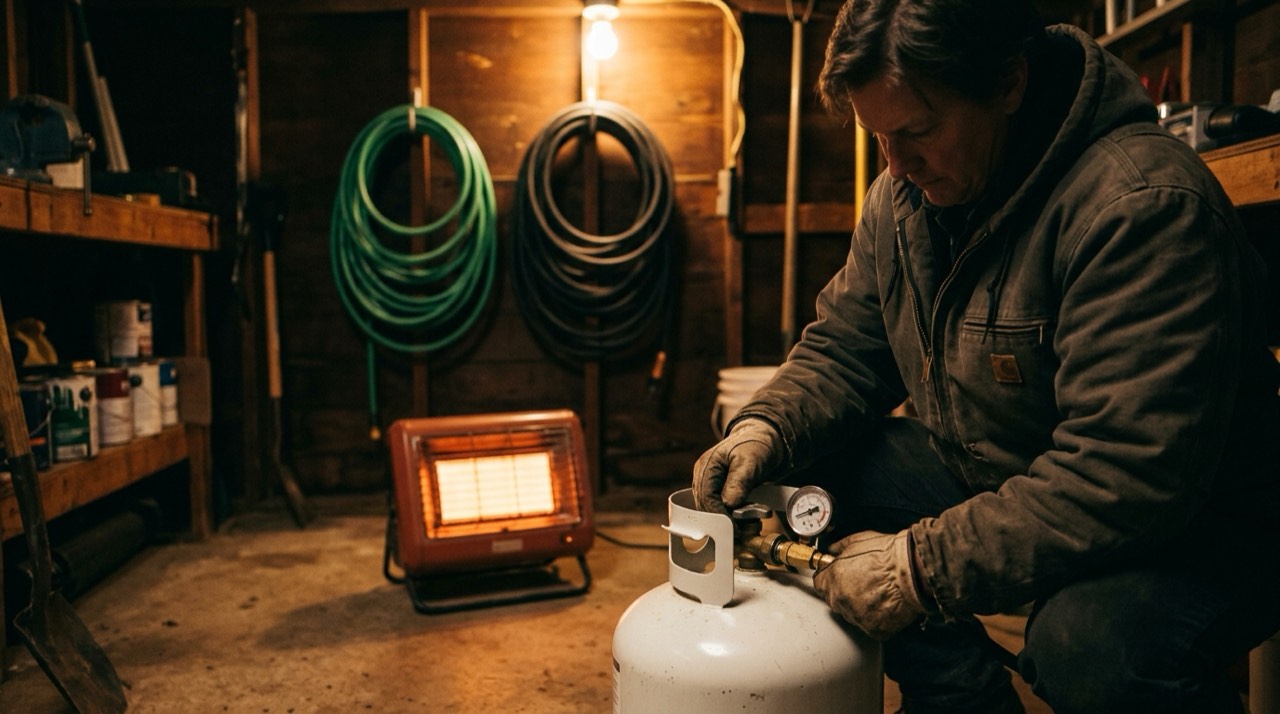
This is the adapter most Buddy owners actually mean. It’s a hose with a built-in filter that lets a heater designed for 1 lb cylinders run off a larger 20 lb tank instead. This is the upgrade covered in detail in our full hose and adapter how-to. If your goal is "stop buying disposable cylinders," this is the adapter you want. A model like the 12ft regulator hose with gauge covers this job, with the fuel-level readout as a bonus most stock hoses don’t include.
Type 2: A Fitting Adapter (QCC1 to POL)
This is a small brass fitting, not a hose. It solves a different problem: your tank or existing hose uses an older POL fitting, but the equipment you’re connecting to expects the newer QCC1 hand-tight style, or the other way around. A part like a POL-to-QCC1 brass adapter bridges the two without needing a whole new hose. This matters more for older tanks and specialty equipment than for a standard, recently purchased 20 lb tank, which almost always ships with a QCC1 fitting already.
How to Tell Which One You Have a Problem With
- If your heater still uses 1 lb cylinders and you want it to run off a bigger tank, you need Type 1 — a hose-and-filter kit.
- If you already have a hose-connect setup but it won’t thread onto a specific tank, you likely have a fitting mismatch — check for Type 2, an adapter fitting.
- If you’re not sure which fitting your tank has, look at the connection point: a QCC1 fitting is a wide plastic hand-tight collar; a POL fitting is a smaller brass fitting that needs a wrench.
Why This Confusion Happens So Often
Retail listings and forum posts both use the word "adapter" loosely, which is exactly why this mix-up is so common. A search for "Buddy heater adapter" turns up both hose-and-filter kits and small brass fittings side by side, with no consistent labeling standard between sellers. Reading the actual product description, not just the title, before buying is the most reliable way to confirm you’re getting the type you actually need.
Thread Specs: QCC1, POL, and the 1 lb Cylinder Thread
QCC1, also called Type 1 or the ACME connection, is the wide, hand-tight plastic collar standard on nearly every 20 lb tank sold since the early 2000s. It’s built around the OPD overfill-prevention valve, required by federal regulation since April 2002. POL is the older, smaller brass fitting that needs a wrench. It still shows up on older tanks and larger bulk cylinders. A disposable 1 lb cylinder uses neither. It has its own built-in male thread, sometimes listed as a CGA-600 or "1"-20" connection. That’s why a Buddy heater’s cylinder port and its hose-connect port are genuinely different interfaces, not the same fitting in two sizes.
Do You Need Both?
Occasionally, yes. If you’re connecting a heater to an older tank with a POL fitting, and that tank is also being upgraded from disposable cylinders for the first time, you may need a hose-and-filter kit rated for POL, or a hose-and-filter kit plus a separate fitting adapter. Check the specific hose kit’s included fitting type before assuming you need to buy a second adapter on top of it — many hose-and-filter kits already include the standard QCC1 connection built in.


What Happens If You Buy the Wrong Type
A hose-and-filter kit ordered when you actually needed a fitting adapter won’t solve your problem — you’ll have a whole new hose that still won’t thread onto your existing tank correctly. A fitting adapter ordered when you actually needed a full hose-and-filter kit means you’ll have solved a fitting mismatch that wasn’t your real issue, while your heater still runs on disposable cylinders. Reading the actual problem you’re trying to solve, not just searching "Buddy heater adapter" and buying the first result, avoids this kind of mismatched purchase.
Checking Compatibility Before You Order
Before buying either type, confirm three things: your heater model supports hose-connecting at all (the Little Buddy does not), your tank’s fitting type (QCC1 or POL, checked by looking at the connection collar), and whether the hose kit you’re considering already includes the fitting adapter you might otherwise buy separately. These three checks take a few minutes and prevent the most common ordering mistakes people make with this category of accessory.
Still Not Sure? Start With the Full How-To
If you’re setting up a hose-connect system for the first time and want step-by-step instructions, our full hose and adapter guide walks through the entire process, including the leak-check step that catches a cross-threaded fitting before you ever light the heater.
A Quick Terminology Cheat Sheet
- "Hose kit" or "hose-and-filter kit" — Type 1, lets a cylinder-only heater run off a bigger tank.
- "Fitting adapter" or "POL adapter" — Type 2, a small brass part that bridges two different connection standards.
- "Regulator" — often built into a hose kit already, reduces tank pressure to burner pressure; rarely something you shop for entirely on its own unless upgrading or troubleshooting.
- "Extension hose" — a longer hose for positioning a tank further from the heater, a separate concern from either adapter type above.
Maintaining Adapters and Fittings Over Time
A brass fitting adapter has no moving parts. It needs little upkeep beyond a visual check for corrosion or a worn thread each season. A hose-and-filter kit’s fittings benefit from a soapy-water leak check at the start of each season, even if nothing was disconnected over the off-season. Temperature swings during storage can loosen a fitting slightly. Replace a fitting adapter outright if you see green or white corrosion on the brass. Don’t try to clean and reuse it — corrosion can affect how well it seals under pressure.
One More Thing to Check: The Heater End
Everything above covers the tank end of the connection, but confirm the heater end matches too. Most Buddy models use a standard threaded inlet compatible with any properly rated hose kit, but always verify against your specific model before ordering, since a mismatch at the heater end is just as much of a dead-end purchase as a mismatch at the tank end.