
Affiliate disclosure: some links are affiliate links — as an Amazon Associate we earn from qualifying purchases, at no extra cost to you. Full disclosure.
An ice fishing shanty is one of the smallest, most fully enclosed spaces in this entire category, which makes matching heater output to the space more important than almost anywhere else. We looked at the heaters that come up most in ice fishing owner reviews and ranked six worth bringing onto the ice. Every ranking below reflects aggregated owner reviews, manufacturer specifications, and safety certifications.
How We Picked These Ice Fishing Heaters
Three things mattered most. First, matching output to shanty size, since a heater too big for the space overheats it fast. Second, a certified indoor-safe rating with a working oxygen depletion sensor, since a shanty is a genuinely enclosed space. Third, cold-weather ignition reliability, which is even more critical on the ice than in a hunting blind, given how cold ice fishing conditions typically get.
The Short Answer: The Best Overall Radiant Heat Pick for Most Anglers
For most solo and two-person shanties, the Mr. Heater 3,800 BTU Little Buddy is the safest starting point. Its lower output matches a small shanty’s volume without overheating it. Fishing with a bigger group? Step up to the standard 9,000 BTU Buddy. Running a fixed ice house for a full season? The ProCom Ice House heater with a thermostat is purpose-built for that.

Best for A small, one- or two-person ice fishing shanty
- 3,800 BTU output
- Indoor-safe with oxygen depletion sensor
- Lightest, most compact Buddy model
- Runs on a single 1 lb cylinder
Why buy it: A small shanty holds very little air volume, and this heater's lower output matches that space without overheating it. It is the size most consistently recommended for a solo or two-person setup.
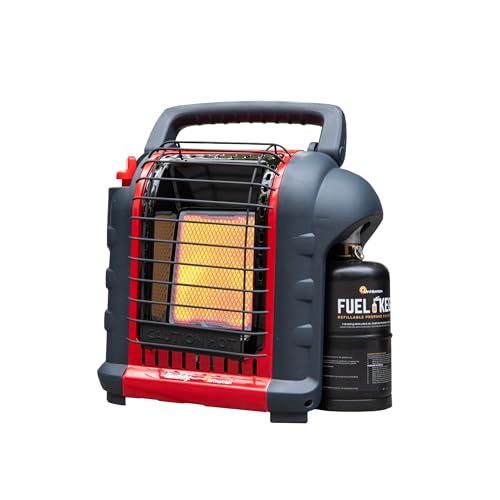
Best for A bigger shanty with three or more people fishing together
- 9,000 BTU output
- Indoor-safe with oxygen depletion sensor
- Runs on a 1 lb cylinder or hose-connected tank
- Adjustable heat settings
Why buy it: A larger shanty needs more than the Little Buddy can comfortably provide, and this standard Buddy steps up output while staying just as safe for the enclosed shanty environment.

Best for A fixed or semi-permanent ice house that gets used through a full season
- 10,000 BTU output
- Built specifically for ice house use
- Thermostat control
- Vent-free, indoor-safe design
Why buy it: Unlike a portable Buddy heater, this is designed specifically for the ice house category, with a thermostat that cycles automatically to hold a set temperature through a long day on the ice.
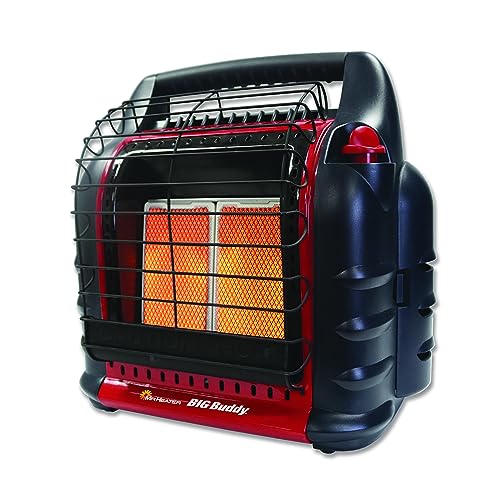
Best for A large group shanty or a shanty also used for overnight stays
- 18,000 BTU output
- Radiant heat, no fan noise
- Indoor-safe with oxygen depletion sensor
- Portable, no assembly needed
Why buy it: For a genuinely large shanty hosting several anglers, this is the output tier that actually keeps pace, without giving up the silent, indoor-safe operation every shanty heater needs.

Best for A backup heater carried in a sled or vehicle in case the primary fails
- 10,000 BTU output
- Compact, carry-handle design
- Indoor/outdoor rated
- Simple dial control
Why buy it: Ice fishing trips often mean being a real distance from a vehicle, and a compact backup heater is cheap insurance against a primary heater failing on the ice.

Best for Budget-focused anglers who want a small, simple heater
- Compact, lightweight design
- Works with 1 lb cylinder or ISO-butane adapter
- Simple piezo ignition
- Built for outdoor and fishing use
Why buy it: This is a genuinely budget-friendly option for anglers who want basic heat without paying for the Mr. Heater brand name, and the dual fuel-type compatibility adds some flexibility.
Full Comparison
All six picks side by side. "Best for" reflects the specific shanty setup each heater is most consistently recommended for in owner reviews.
| Product | Best for | Buy |
|---|---|---|
| Mr. Heater 3,800 BTU Little Buddy Portable Radiant Propane Heater | Best Overall for a Solo or Two-Person Shanty | Check Price |
| Mr. Heater 9,000 BTU Portable Buddy Radiant Propane Heater | Best for a Larger Multi-Person Shanty | Check Price |
| ProCom Liquid Propane Ventless Ice House Heater, 10,000 BTU, T-Stat Control | Best Purpose-Built Ice House Heater | Check Price |
| Mr. Heater 18,000 BTU Big Buddy PRO Series Heater | Best for a Full-Size or Group Shanty | Check Price |
| Dyna-Glo 10K BTU Grab N Go Portable Propane Heater | Best Backup Heater | Check Price |
| INTCOLL Portable Propane Heater For Outdoor, Fishing, Camping | Best Ultra-Compact Budget Pick | Check Price |
Ice Shelter and Hub Shelter Basics: Sizing a Portable Heater by BTU
Whether you call it a flip-over shanty, an ice shelter or a hub shelter, the sizing logic is the same: match a portable heater's output to the shelter's actual air volume rather than defaulting to the highest-BTU model available.
Oxygen Depletion Sensor, Low-Oxygen Shutoff and Tip-Over Shut-Off: The Baseline Safety Bar
A CSA-certified heater with an oxygen depletion sensor — also marketed as a low-oxygen shutoff — and a genuine tip-over shut-off is the baseline safety bar for running anything indoors on the ice, and every pick above clears it.
Heat Coverage for a Larger Hub Shelter
For heat coverage across a larger hub shelter hosting several anglers, positioning matters as much as raw output — see the group ice fishing section below.
Run Time: A 1-lb Cylinder vs. a 20-lb Tank Option
Run time on the ice depends on cylinder size and setting — a 1-lb cylinder stretches further at low output than most anglers expect, but pack two or three spares rather than relying on one. Anyone running a shanty off a bigger tank should confirm the heater actually supports a 20-lb tank option before buying, since not every compact model does.
A Packable Backup Heater for Instant Heat in Cold Weather
A lightweight, packable backup like the Little Buddy or a Coleman camping heater delivers instant heat within a minute if your primary unit fails, which matters in cold weather conditions far from a vehicle.
Why Matching Output to Ice Shanty Size Matters More Here
A one- or two-person shanty holds a genuinely small volume of air, often less than a hunting blind. A heater sized for a larger space can overheat a small shanty fast, which is uncomfortable and wastes fuel. This is the opposite problem from most heating decisions on this site, where undersizing is the bigger risk. On the ice, oversizing for the space is the more common mistake.
Portable Buddy Heaters vs. a Purpose-Built Ice House Heater
A portable Buddy-style heater moves with you and needs no installation, which suits an angler who relocates the shanty regularly. A purpose-built ice house heater like the ProCom pick, with its thermostat, suits a more fixed or semi-permanent setup used through a full season. If your shanty stays in roughly the same spot for weeks at a time, the fixed option’s automatic temperature control is worth considering.
Cold-Weather Reliability on the Ice
Ice fishing conditions are often colder than a typical hunting blind, and propane vaporizes more slowly in extreme cold, which can make ignition harder. Keep a spare cylinder somewhere warmer than the ice itself, such as inside a sled bag or vehicle, before use. This is a fuel characteristic, not a defect in any specific heater, but it matters more on the ice than almost anywhere else covered on this site.
Carbon Monoxide Awareness in a Shanty
A shanty traps air more effectively than most tents, which raises the stakes on carbon monoxide awareness even with an indoor-safe heater running. Manufacturer guidance still recommends some airflow, like a cracked vent, alongside the oxygen depletion sensor’s safety backstop. A small battery-powered carbon monoxide detector is genuinely worth carrying for a full day on the ice.


Fuel Planning for a Full Day on the Ice
Using the standard conversion of roughly 21,600 BTU per pound of propane, a Little Buddy at 3,800 BTU stretches a 1 lb cylinder to around 5.5 hours. A standard 9,000 BTU Buddy burns through the same size cylinder in under 2.5 hours on high. For a full day on the ice, pack two or three spare cylinders rather than relying on a single one.
Positioning a Heater Inside a Shanty
A shanty traps cold air at floor level more than a tent does, so positioning the heater to warm the space you are actually sitting in, rather than the coldest corner near the ice hole, makes a bigger difference than raw BTU output. Keep the heater clear of gear and away from the ice hole itself, both for stability and to avoid moisture affecting the burner.
Redundancy for Remote Ice Fishing Trips
For a remote or multi-day ice fishing trip, carrying a small backup heater is common practice among experienced anglers. Losing your only heat source on the ice, potentially a real distance from a vehicle, carries genuine consequences, and a lightweight backup like the Little Buddy or the Dyna-Glo Grab N Go directly solves that risk at low cost.
Storing and Transporting an Ice Fishing Heater
A heater carried onto the ice deals with moisture exposure more than almost any other use case on this site. Check connections for corrosion regularly, store the heater dry between trips with the cylinder disconnected, and consider a padded case to protect the burner assembly during transport across the ice in a sled.
What Anglers Report
Across ice fishing communities, the consistent theme is that a correctly sized heater for the shanty matters more than raw output. Anglers who oversized their heater for a small shanty report discomfort and wasted fuel, while those who matched output to shanty size report the most satisfaction. Cold-weather ignition reliability remains the top factor separating trusted heaters from frustrating ones.
Flip-Over Shanty vs. Hub-Style Shanty
A compact flip-over shanty holds noticeably less air volume than a larger hub-style shanty built for a group. The Little Buddy suits a flip-over shanty well, while a hub-style shanty sized for three or more anglers benefits from the higher-output Buddy or Big Buddy models. Match your heater choice to your specific shanty style rather than a generic size estimate.
Insulated Shanty vs. Non-Insulated Shanty
An insulated shanty holds heat considerably better than a non-insulated one, which can let a lower-output heater perform adequately in a space that would otherwise need more BTU. If you are shopping for both a shanty and a heater at the same time, factor insulation quality into your heater size decision, since it changes the real-world output needed to stay comfortable.
Moisture, Condensation and Ventilation Inside a Shanty
A propane heater running in an enclosed shanty produces water vapor as a byproduct of combustion, which can lead to condensation on interior walls in cold conditions. Some airflow, beyond the safety ventilation already discussed, also helps manage this moisture buildup. Wipe down condensation periodically to avoid it dripping onto gear or electronics stored inside the shanty.
Thermostat Control and Running a Heater Overnight in an Ice House
For anglers using a fixed ice house for overnight stays, check the specific heater’s rating for unattended or overnight use before assuming any indoor-safe heater is appropriate for that purpose. Not every heater with an oxygen depletion sensor is rated for continuous unattended operation, and this distinction matters more for an overnight stay than for a single day trip.
Group Ice Fishing: One Big Heater or Several Smaller Ones
For a larger group hub shanty, consider whether one Big Buddy or two standard Buddy heaters positioned at different points better serves the space. This mirrors the same spacing logic used for tailgating and large patios: heat distributed from multiple points often feels more even than one larger source in a single spot, especially in a longer or irregularly shaped shanty.
Final Buying Advice for Ice Anglers
Start with the Little Buddy for solo or two-person shanties, step up to the standard or Big Buddy for group setups, and consider the ProCom Ice House heater if your shanty is fixed and used through a full season. Always carry a backup and plan fuel generously, since running out far from a vehicle is a genuine problem, not just an inconvenience. Most anglers haul their heater on a sled alongside other gear, so a padded case or dedicated compartment protects the burner assembly in transit — check for damage before assuming it will light correctly on the first try once you reach your spot.
Drying Gear Near an Ice Fishing Heater
Wet gloves and boots are a near-constant reality of ice fishing, and some anglers position gear near a running heater to help dry it during a sit. Keep any drying items at the heater’s stated safe clearance distance, since fabric placed too close to a radiant element is a genuine fire risk in a small, enclosed shanty.
Choosing Fuel Cylinders for Cold-Weather Reliability
Standard 1 lb propane cylinders can occasionally underperform in extreme cold compared to their rated capacity, since the cold slows vaporization. Some anglers specifically look for cylinders with a stated cold-weather performance rating, or simply keep spares warmer in a pocket or sled bag before swapping in a fresh one, which is the simpler and more universally applicable fix.
Sharing a Shanty Heater Across a Group
For a shared hub-style shanty, agree on who manages the heater before the day starts, including cylinder swaps and confirming it is shut off before everyone leaves the ice. This simple agreement prevents the most common avoidable mistake in group ice fishing: a heater left running unattended after the group packs up and heads to the truck.
What to Do If a Heater Fails on the Ice
If a heater stops working during a fishing session, check the cylinder connection and fuel level first — this covers the large majority of field failures. Switch to a backup heater if you brought one, and treat a failed unit as needing inspection before its next trip rather than a one-time fluke. Matching output to shanty size matters more here than in almost any other category on this site, since a small enclosed space overheats fast with too much BTU — these few decisions cover the overwhelming majority of ice fishing heating needs.