
Affiliate disclosure: some links are affiliate links — as an Amazon Associate we earn from qualifying purchases, at no extra cost to you. Full disclosure.
Because infrared and radiant heat is directional and concentrated, clearance-to-combustibles guidance matters more here than it does for a forced-air heater, where the main clearance concern is the exhaust and fan intake rather than a concentrated heat beam. Here’s what actually determines a safe distance and why it’s model-specific.

Top 3 Recommended
Why Radiant Clearance Is Different From Forced-Air Clearance
A forced-air heater’s heat spreads through moving air across a room, so its clearance requirements are mostly about the exhaust and combustion air intake rather than a concentrated heat source. An infrared or radiant heater’s element radiates heat in a fairly direct line, which means anything flammable directly in that path — furniture, tent fabric, clothing, a wood wall — is exposed to concentrated heat exposure rather than the more diffuse warming a forced-air heater produces. This is why manufacturers specify a minimum safe distance measured from the radiant element specifically, not just a general room-clearance figure.
Where to Find the Actual Number
Every legitimate infrared or radiant propane heater’s manual specifies a minimum clearance distance, and it varies by model and BTU output — a compact portable Buddy heater has a different clearance requirement than a 25,000 BTU plaque-style wall unit. Always check the specific model’s manual rather than assuming based on a similar-looking heater from a different manufacturer or a different BTU tier within the same product line.
Clearance in Front of the Element vs. to the Sides
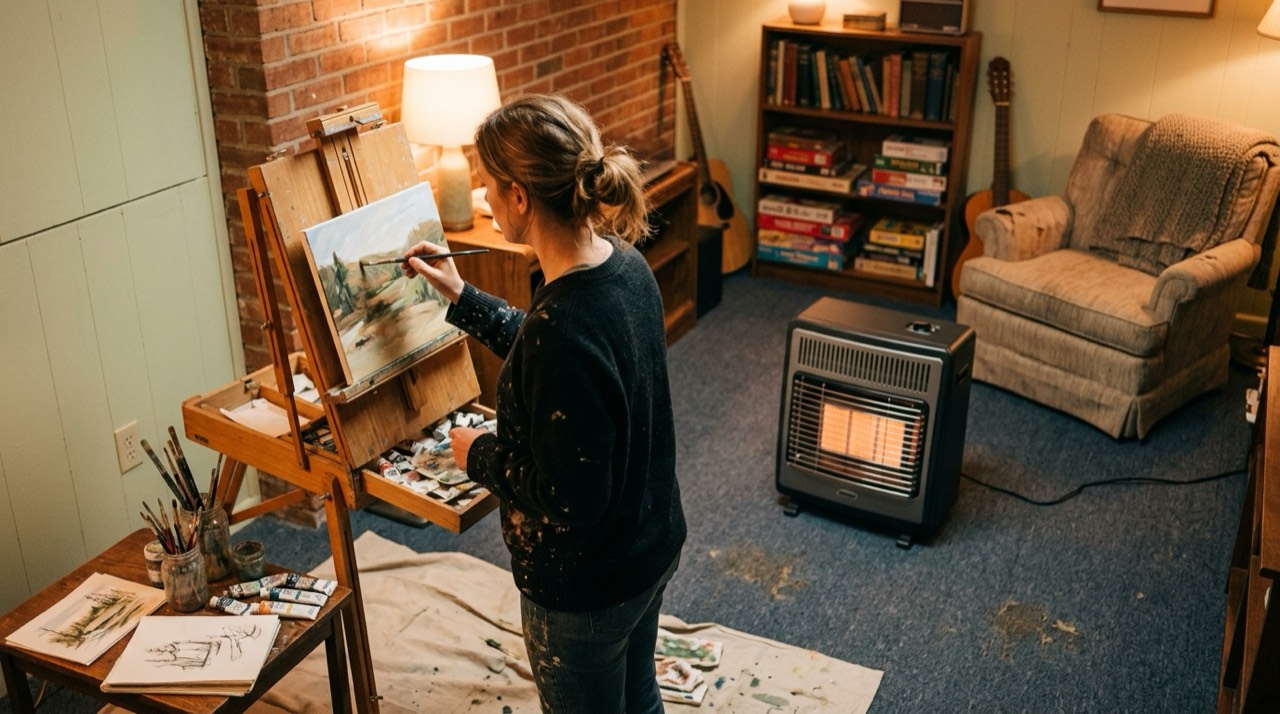
Most infrared and radiant heaters have a wider safe clearance directly in front of the element, where heat concentration is highest, than to the sides or behind, where the heater’s own housing blocks most of the radiant path. Positioning furniture or flammable material to the side of a radiant heater rather than directly in front of it is a practical way to work within a tighter space while still respecting the manual’s front-facing clearance requirement.
Fixed Wall Units Need Stricter Clearance Than Portable Ones
A permanent vent-free wall or plaque heater, designed to run for longer stretches at higher BTU output, typically has a stricter clearance requirement than a portable Buddy-style heater, both because of the higher output and because it’s meant to run unattended for extended periods. Installing one of these units means measuring the actual room dimensions against the manual’s specific clearance figures before mounting, not estimating by eye.
Fabric, Cushions and Tent Material Are Higher Risk Than They Look
Because radiant heat is directional, fabric positioned within the clearance zone is at real risk of scorching even without any flame contact — a cushion or a tent wall that seems "close but probably fine" can develop damage after extended exposure that wouldn’t show up from a single brief moment near the heater. Treat any fabric or cushioned material the same way you’d treat a combustible wall: outside the manual’s stated clearance zone, not just far enough by eye.
Vertical Clearance Matters Too
For a wall-mounted or plaque-style infrared heater, clearance above the unit matters as much as clearance in front of it, since heat rises and a low ceiling or shelf above the unit sits inside the heat path in a way that’s easy to overlook when focused on front-facing distance. Check the manual for both horizontal and vertical clearance figures rather than assuming one number covers all directions.
Positioning a Portable Radiant Heater Safely
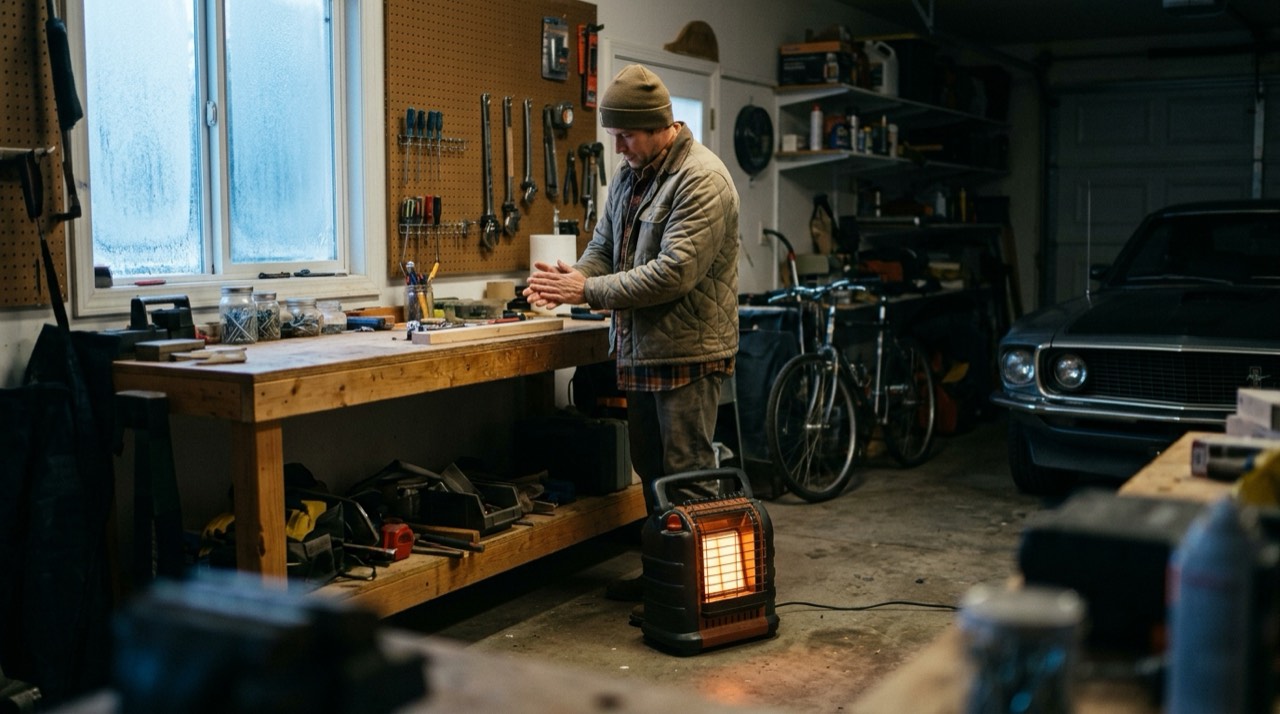
For a portable radiant heater used in a tent, blind or workshop, the practical approach is aiming the heater at open floor space or a person rather than at furniture, walls or fabric, and repositioning it if the space changes — moving a tent’s interior layout, for instance, without re-checking where the heater is now pointed relative to gear or bedding.
What Happens If Clearance Is Violated
Violating clearance guidance doesn’t necessarily cause visible damage immediately, which is part of why the mistake is easy to repeat. Heat exposure that’s borderline unsafe often shows its effects cumulatively rather than as an obvious immediate problem — a scorch mark developing after several uses rather than the first one. Treating the manual’s clearance figures as a hard rule from the start, rather than testing empirically, is the safer approach.
Clearance Differences Between Catalytic and Flame-Based Radiant Heaters
A catalytic heater’s flameless pad still produces significant surface heat and requires its own manual-specified clearance, even without an open flame involved. Don’t assume a catalytic unit needs less clearance than a flame-based radiant heater simply because it lacks a visible flame — the heat output at the surface can be comparable, and manufacturers publish separate clearance figures for exactly this reason rather than treating "flameless" as automatically safer at closer range.
Adjustable Heaters and Clearance at Different Settings
Some radiant heaters, like the adjustable Buddy models, publish a single clearance figure that assumes the heater’s highest setting, since that’s the most conservative and safest number to rely on regardless of what setting you’re actually running. Don’t assume a lower setting allows for reduced clearance unless the manual explicitly says so — most manuals intentionally don’t offer a setting-dependent clearance table, precisely to avoid buyers making that assumption incorrectly.
Clearance on Uneven or Sloped Surfaces
A heater on a sloped or uneven surface can end up angled differently than intended, which changes where its heat path actually falls relative to nearby combustibles compared with the heater sitting perfectly level. This is one more reason the tip-over safety switch matters beyond just preventing an actual fall — a heater that’s tilted but hasn’t tipped enough to trigger the switch can still be throwing heat toward something it wasn’t aimed at when positioned on level ground.
Re-Checking Clearance After Moving a Heater
Every time a portable radiant heater gets repositioned — a different spot in a tent, a new location in a workshop — the clearance check needs to happen again for the new position, not just once when the heater is first purchased. This is easy to skip in practice, especially with a heater that gets moved frequently, but it’s the step most likely to lapse precisely because it feels repetitive rather than because anyone consciously decides clearance doesn’t matter the second time. Building it into your setup routine every time avoids that gap entirely.
Manufacturer Manuals Are Worth Keeping, Not Discarding
The specific clearance figures for your heater live in the manual that ships with it, and that document is worth keeping rather than discarding once the heater is set up. If you lose the physical manual, most manufacturers publish PDF versions on their websites searchable by model number, which is worth checking before assuming a generic clearance figure from a similar-looking product applies to your specific unit and model year. This is a five-minute lookup that removes any guesswork from an otherwise safety-critical number.
Pair Any Infrared Heater With a Carbon Monoxide Detector
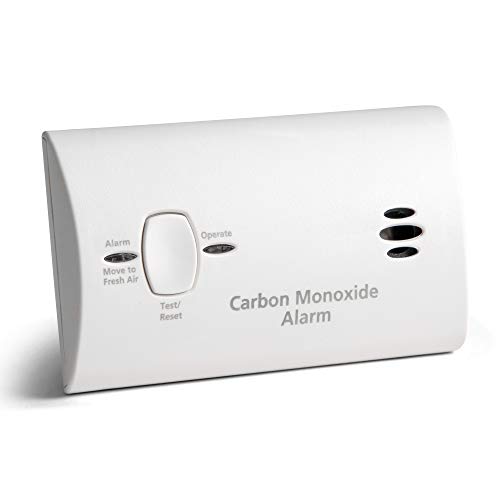
Clearance guidance addresses fire and heat-damage risk specifically, separate from the ventilation and carbon monoxide question that applies to any indoor-rated heater. A battery-backed detector like the Kidde Carbon Monoxide Detector addresses that separate risk regardless of how well the heater is positioned for clearance.