
Affiliate disclosure: some links are affiliate links — as an Amazon Associate we earn from qualifying purchases, at no extra cost to you. Full disclosure.
Radiant heat warms people and objects directly, without needing to first warm the surrounding air — that is what separates this whole category from a forced-air unit. We looked at the portable radiant propane heaters that come up most consistently across garages, camping, hunting and RV use, cross-referenced owner reviews with manufacturer BTU and safety specs, and ranked the six that stand out. Every ranking below reflects aggregated owner reviews and manufacturer specifications, not a first-hand test rig.

How We Picked These Radiant Propane Heaters
Portable radiant heat lives or dies on a few things. Is it rated for the space you actually plan to run it in — indoor, outdoor or both? Does BTU output match the space without being wastefully oversized? How is it fueled, and how easily can you keep it running through a full season? And what do owners report after months of real use rather than an unboxing video? We weighted all four, and dropped any heater with a recurring pattern of ignition or regulator complaints across dozens of reviews, even with a decent average rating.
The Short Answer: The Best Overall Radiant Propane Heater
For most people, the Mr. Heater 9,000 BTU Portable Buddy is the safest starting point — it is the most-reviewed heater in the category, it is indoor-safe, and 9,000 BTU covers most garages, tents and small rooms without wasting fuel. Heating a bigger space? Step up to the Big Buddy. Want total silence for an RV or cabin? The Camco Olympian Wave-3 is the pick.
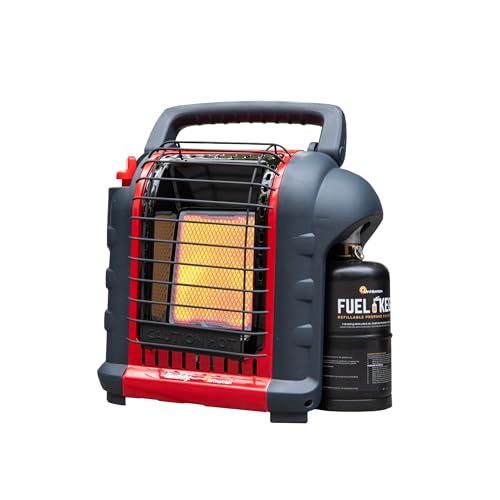
Best for Garages, workshops, tents, ice shanties and small-to-mid rooms
- 4,000–9,000 BTU, low/high settings
- Built-in oxygen depletion sensor (ODS) and tip-over shutoff
- Runs on a 1 lb cylinder or a hose-connected 20 lb tank
Why buy it: It is the most-reviewed portable radiant propane heater on the market, and owners across garages, hunting blinds and campers consistently report the same thing: it lights first try and heats a small enclosed space fast.
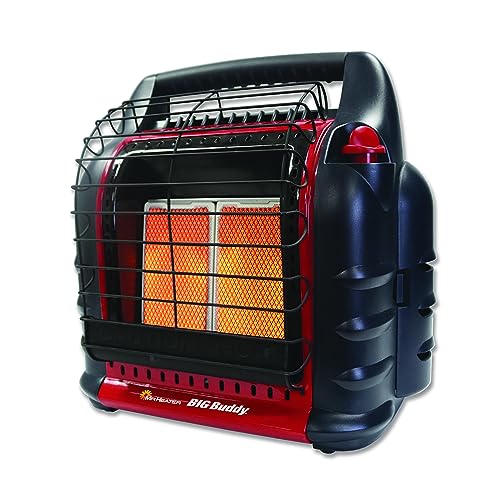
Best for Larger garages, big canvas tents and job-site trailers
- 4,000–18,000 BTU across three settings
- Two 1 lb cylinders or hose-connect to a 20 lb tank
- Fan-assisted heat distribution
Why buy it: Owners who outgrew a standard Buddy heater report the Big Buddy comfortably carries a two-car garage or a wall tent, without giving up the same indoor-safe sensor package.

Best for Ice fishing shanties, small tents and single-room emergency backup heat
- 3,800 BTU fixed output
- Runs directly off a 1 lb disposable cylinder
- Under 10 inches tall
Why buy it: It is the cheapest way into the indoor-safe Buddy platform, and owner reviews are consistent that for a space under roughly 100 sq ft it is not underpowered.

Best for Hunting blinds and outdoor gear that benefits from a camo finish
- 12,000 BTU output
- Camo finish
- Same ODS and tip-over safety package as the standard Buddy line
Why buy it: Hunters specifically choose this over the standard Buddy for the extra BTU and the finish, and owners report it holding up well to being hauled in and out of a blind repeatedly through a season.

Best for Buyers who move a single heater between indoor and outdoor use
- 11,000 BTU output
- Rated for both indoor and outdoor use
- ODS and tip-over shutoff
Why buy it: Owners who split time between a garage and a patio or campsite specifically like this model because they do not need to own two separate heaters for the two use cases.

Best for RVs, small cabins and sleeping-adjacent spaces where noise matters
- 3,000 BTU flameless catalytic heat
- No fan, no pilot noise
- Portable or wall-mount
Why buy it: Catalytic heaters burn cooler and quieter than a radiant flame burner, and RV owners specifically praise the total silence overnight, trading some BTU ceiling for that quiet.
Full Comparison
All six picks side by side. "Best for" reflects the space and use case each heater is most consistently praised for in owner reviews.
| Product | Best for | Buy |
|---|---|---|
| Mr. Heater 9,000 BTU Portable Buddy Radiant Propane Heater | Best Overall | Check Price |
| Mr. Heater 18,000 BTU Big Buddy PRO Series Heater | Best for Larger Spaces | Check Price |
| Mr. Heater 3,800 BTU Little Buddy Portable Radiant Propane Heater | Best Compact & Budget | Check Price |
| Mr. Heater 12,000 BTU Hunting Buddy Portable Radiant Propane Heater | Best for Hunting & Camo Use | Check Price |
| Mr. Heater Buddy FLEX 11,000 BTU Radiant Propane Indoor/Outdoor Space Heater | Best Indoor/Outdoor Flex | Check Price |
| Camco Olympian Wave-3 Catalytic Safety Heater, 3,000 BTU | Best Silent / Catalytic | Check Price |
How a Radiant Heater’s Ceramic Burner, Reflector and Line-of-Sight Heating Produce Infrared Heat
A radiant burner heats a ceramic or metal element to a high temperature, and that element radiates infrared energy directly outward, warming whatever is in its path — the same basic principle as sunlight warming your skin on a cold day. A metal reflector behind the element focuses that energy forward into a directional heat pattern rather than scattering it evenly, which is sometimes called line-of-sight heating, since anything blocking the burner's view of you blocks the warmth too. This makes radiant heat well suited to spot heating — a workbench, a hunting blind seat, or one corner of a garage — with instant warmth the moment it lights, rather than needing to first heat the surrounding air. This is different from a forced-air heater, which uses a fan to warm and circulate the surrounding air. Radiant heat doesn’t care much about wind or air movement, which is why it dominates portable, camping and outdoor categories where a forced-air unit’s warmed air would simply blow away. Our radiant and infrared hub guide covers the physics in more depth.
Radiant vs Forced Air: Directional Heat and Garage Heating Tradeoffs
The radiant vs forced air decision comes down to whether you need directional heat output aimed at a person or object, or whole-room warmth from raising ambient air temperature. Garage heating is a common case where both approaches show up: a radiant pick for someone in and out quickly, a forced-air unit for someone working the whole bay for hours.
Portable Radiant Heater vs. Catalytic Heater: Two Different Mechanisms
Five of these six picks are flame-based radiant heaters with a ceramic burner element — sometimes marketed under names like Radiant Buddy alongside the Little Buddy and Big Buddy naming across Mr. Heater's retail lineup. The sixth, the Camco Olympian Wave-3, is catalytic — it produces heat through a chemical reaction on a treated pad rather than an open flame, which is why it runs silently with no fan or pilot hiss. Catalytic heaters generally run at lower BTU output than a flame-based radiant heater of similar size and typically need a fixed propane connection rather than a swap-in cylinder, but the tradeoff of near-total silence is exactly why RV and van-life owners specifically seek this style out. Beyond Mr. Heater and Camco, brands like Dyna-Glo, DeWalt and Texsport also sell radiant or tank-top propane heaters worth cross-shopping for garage, camping or job-site use.
What Garage, Hunting Blind and RV Owners Report About the Less-Obvious Picks
The standard 9,000 BTU Buddy’s review pattern is well known: reliable ignition, fast warm-up, and a 1 lb cylinder that runs out faster than some expect at full output. The Hunting Buddy draws more specific praise from hunters for durability under repeated transport in and out of a blind, with the camo finish being a genuine purchase driver rather than a cosmetic afterthought. The Buddy FLEX earns its reviews from owners who specifically wanted one heater that moves between indoor and outdoor use without needing two separate units. The Little Buddy has the most polarized reviews of the group — people heating a space it’s actually sized for (under roughly 100 sq ft) are consistently satisfied, while lower ratings mostly come from buyers who tried to use a 3,800 BTU heater in a bigger space.
Fuel Setup: Propane Cylinder and Hose-Connect Across These Six Picks
Five of the six run on disposable 1 lb cylinders out of the box, with the option to hose-connect to a refillable 20 lb tank on most models for lower cost per hour of run time. The Camco Olympian Wave-3 typically needs a fixed propane connection instead, which is worth planning for before buying if you’re used to the simplicity of swap-in cylinders. If you’re running a heater daily through a whole season, the hose-and-tank setup pays for itself in convenience faster than most buyers expect.
Indoor Safety: The Oxygen Depletion Sensor, Low-Oxygen Shutoff and CSA Certified Ratings
Every pick on this list except the tank-top-style outdoor units carries an oxygen depletion sensor (ODS) — a low-oxygen shutoff and the feature that makes a portable radiant heater viable for enclosed use in the first place. Indoor-safe models in this category are typically CSA certified alongside that ODS listing. Even with an ODS, manufacturer manuals recommend basic ventilation — cracking a window or door slightly — during extended use. Pair any of these heaters with a battery-backed carbon monoxide detector in the room, which doesn’t rely on the heater’s own sensor working correctly. Our indoor safety and carbon monoxide guide covers this in full.
BTU Sizing, Heat Output and Run Time for These Six Heaters
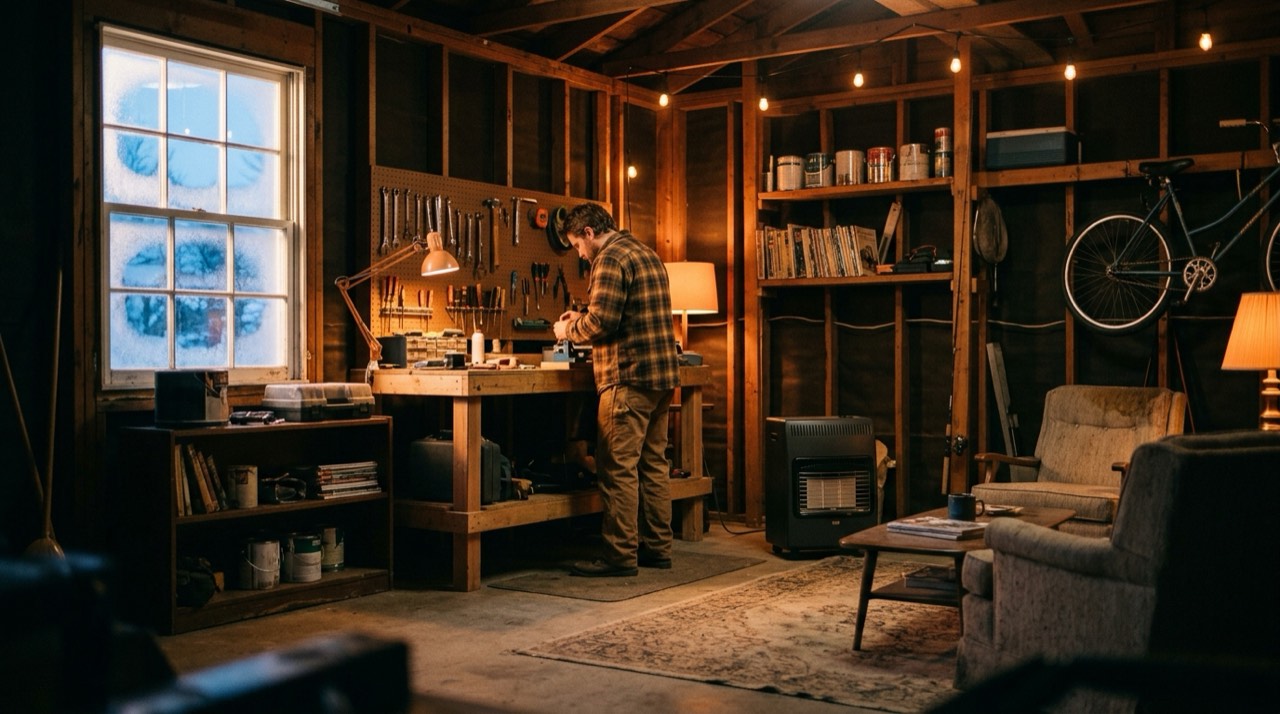
As a rough starting point, well-insulated indoor spaces need roughly 20–30 BTU per square foot, and matching heat output to the room lets radiant heat run efficiently without oversizing. The 3,800 BTU Little Buddy suits a space under 100 sq ft; the standard 9,000 BTU Buddy covers a single room, garage bay or tent; the 18,000 BTU Big Buddy is the right step up for garage heating in a larger space or a big tent. Our BTU sizing and running-cost guide has an interactive calculator for your specific space.

Assembly and Setup for a Buddy Heater: 1-lb Cylinder, 20-lb Tank and Piezo Ignition
All six of these picks are essentially ready to use out of the box, which is one of the real advantages of the portable radiant category over a permanent installation. Attach the regulator to a 1-lb cylinder or connect a hose to a 20-lb tank, press the piezo ignition button, and you’re lighting the heater within a couple of minutes. This is meaningfully simpler than a standing patio heater’s 30-to-45-minute assembly process or a permanent vent-free wall unit’s professional installation, and it’s part of why the Buddy platform specifically has become the default recommendation across so many different use cases in this roundup.
Tip-Over Switch Protection Across These Picks
Every heater on this list includes a tip-over switch that cuts fuel if the unit isn’t sitting level and stable, which matters more than it might seem given how these heaters get used — on uneven tent floors, in a truck bed, or on a hunting blind’s platform. Owners occasionally mistake this safety feature triggering for a malfunction when a heater shuts off unexpectedly on an unstable surface. It’s the heater working exactly as designed, and repositioning it on more stable, level ground resolves it immediately.
Fan-Assisted Noise: How These Six Picks Compare
Five of the six picks are flame-based radiant heaters that run essentially silently apart from a faint burner hiss; the Big Buddy adds a fan for heat distribution, which introduces mild fan noise most owners describe as unobtrusive rather than loud. The Camco Olympian Wave-3 is the quietest of the group by a wide margin, since catalytic combustion produces no flame noise at all. If noise is a genuine concern — sleeping in an RV or a small tent, for instance — the Wave-3 is worth prioritizing over raw BTU output.
Running Cost Across the Category
Using the standard conversion of roughly 21,600 BTU per pound of propane, a 9,000 BTU heater on a 20 lb tank runs roughly 48 hours continuously; the 3,000 BTU catalytic Wave-3 stretches that considerably further given its lower output. Most owners run these heaters intermittently rather than continuously, which extends real-world tank life well past the full-burn numbers on the box.
Buying Checklist
- Confirm the specific model’s indoor-safe certification rather than assuming based on the brand alone.
- Size to your actual space, not the biggest heater available.
- Decide cylinder vs. tank-fed fuel setup based on how often you’ll actually run the heater.
- Add a carbon monoxide detector regardless of which pick you choose.
- Consider noise level if the heater will run near sleeping or resting areas.
- Check the manual’s clearance distance from combustibles before first use, especially in a garage or tent with gear stacked nearby.
Tent, Garage and Seasonal Maintenance Between Uses
Most portable radiant heaters sit unused for months at a time between camping trips or cold snaps, and a good share of "won’t light" complaints in owner reviews trace back to storage rather than a defective unit. Manufacturers recommend disconnecting the tank or cylinder before long-term storage, keeping the heater somewhere dry, and checking the hose and connections for cracking before the first use of a new season. A quick visual check of the ODS sensor and pilot assembly before first light catches most seasonal issues before they turn into a mid-use shutdown, and it takes only a few minutes at the start of a new season.
Buying New vs. Used
For a simple radiant unit like the Buddy or Little Buddy, a used heater in good condition can be a reasonable way to save money, since the mechanism is straightforward and there isn’t much to fail silently. Be more cautious with a used catalytic heater, since a catalytic pad past its service life is harder to evaluate without running the unit for a while first. Buying new carries a real advantage either way: a full manufacturer warranty and a known service history, which matters more for a device producing open flame or catalytic combustion than it would for most other gear.
Accessories Worth Pairing With Any of These Picks
A hose-and-filter kit that connects a portable Buddy-style heater to a 20 lb tank is one of the most commonly added accessories, since it stretches fuel life well beyond what a 1 lb cylinder alone provides for regular use. A carbon monoxide detector, as covered above, is close to a universal recommendation across every pick on this list. For hunting-specific use, a padded carry case protects the heater during transport in and out of a blind, which owners of the Hunting Buddy specifically mention as worth the extra purchase. None of these accessories are strictly required, but each addresses a specific, commonly reported gap in the base setup.