
Affiliate disclosure: some links are affiliate links — as an Amazon Associate we earn from qualifying purchases, at no extra cost to you. Full disclosure.
Mr. Heater 12,000 BTU Hunting/Radiant Buddy
A portable radiant heater that warms you directly with no fan, ideal for a hunting blind, ice shanty, or small enclosed space up to 300 sq ft.
Best for: A hunting blind, ice shanty or small space up to 300 sq ft
- Silent operation — no fan noise to spook game or disturb sleep
- Works instantly, no time needed to warm ambient air
- Runs on portable 1 lb cylinders, no power source needed
- Only warms what the radiant heat directly reaches
- Doesn’t raise the overall air temperature of a larger space
- Lower BTU ceiling than a forced-air unit
Mr. Heater 125,000 BTU Forced Air Heater
A high-output forced-air heater that blows heated air to warm an entire space, built for large garages, workshops and construction sites up to 4,000 sq ft.
Best for: Large garages, workshops and construction sites up to 4,000 sq ft
- Raises the ambient temperature of a whole large space
- Much higher BTU ceiling for genuinely large areas
- Fast, even heat distribution via the fan
- Fan noise runs continuously and can be loud
- Needs a power source (typically 120V) for ignition and the fan
- Outdoor/ventilated-use-only — not for a sealed space
Spec-by-spec comparison
| Factor | Mr. Heater 12,000 BTU Hunting/Radiant Buddy | Mr. Heater 125,000 BTU Forced Air Heater |
|---|---|---|
| Heat mechanism | Direct radiant warmth, no fan | Fan-blown heated air |
| BTU output | 12,000 BTU | 125,000 BTU |
| Coverage | Up to 300 sq ft | Up to 4,000 sq ft |
| Noise level | Silent | Continuous fan noise |
| Power requirement | None | 120V for ignition and fan |
| Best setting | Hunting blind, tent, ice shanty | Garage, workshop, job site |
Radiant and forced-air heaters solve heating in two completely different ways. One warms whatever the heat directly reaches. The other warms the whole air volume of a space. Picking between them comes down to how big your space is and whether silence matters.
| Product | Best for | Buy |
|---|---|---|
| Mr. Heater 12,000 BTU Hunting Buddy Portable Radiant Propane Heater (Camo) | Best radiant option for small spaces | Check Price |
| Mr Heater 125,000 BTU Forced Air Propane Heater | Best forced-air option for large spaces | Check Price |

Top 3 Recommended
How Each One Actually Heats a Space
The Radiant Buddy has no fan. It produces heat that travels in a direct line, similar to how sunlight warms your skin before it warms the air around you. That makes it fast and silent, but it only warms what’s in that direct path. The MH125 works differently. Its fan pulls in air, heats it, and blows it out to circulate through the whole space. That takes a bit longer to feel the full effect, but it eventually raises the temperature of the entire room or garage, not just one spot.
Why Hunters and Campers Choose Radiant
A fan running nonstop is a real problem in a hunting blind. It can spook game and drowns out the sounds hunters rely on. The Radiant Buddy runs completely silent, which is exactly why it dominates this use case. It’s also instant. There’s no warm-up period for ambient air, since the heat reaches you directly the moment it’s lit. For a one- or two-person tent, an ice shanty, or a blind, this mix of silence and instant heat is hard to beat.
Why Garages and Job Sites Choose Forced-Air
A garage or job site is a different problem entirely. You need the whole space warmed up, not just the spot right next to the heater. That’s what a forced-air unit is built for. The MH125’s fan actively circulates heated air, so a genuinely large, uninsulated space actually gets warmer over time. A radiant heater physically can’t do that at this scale, no matter how high you turn it up. The tradeoff is constant fan noise and a real power requirement — both non-issues in the radiant heater’s typical use case.
Setup and Fuel Requirements Differ Too
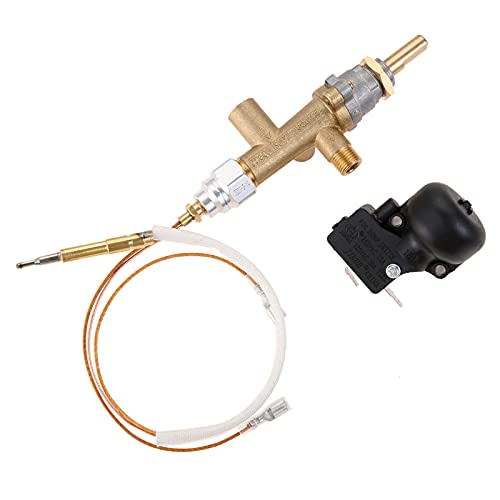
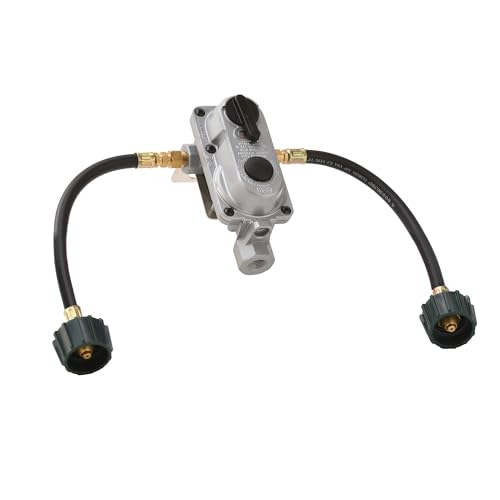


The Radiant Buddy runs on portable 1 lb cylinders with no power source needed at all — attach a cylinder and light it. The MH125 needs a 120V outlet for its ignition system and fan, plus a larger propane tank to keep up with its higher output over any real length of time. For a remote hunting spot with no power access, that difference alone can decide the comparison before BTU output even enters the picture.

BTU Output Isn’t Directly Comparable
At 125,000 BTU, the MH125 puts out roughly ten times the Radiant Buddy’s 12,000 BTU rating. But that gap doesn’t mean the forced-air unit is simply "better." These heaters solve different problems for different space sizes. Comparing their BTU numbers head-to-head is a bit like comparing a flashlight to a floodlight — the right choice depends entirely on what you’re actually trying to light up.
Winner by Use Case
Hunting blind or ice shanty: radiant — silence and instant heat matter more than raising the whole space’s temperature.
Tent camping (one or two people): radiant — the small enclosed space doesn’t need whole-air heating, and the fixed weight and lack of a fan suit portability.
Large garage or workshop: forced-air — only a fan-driven design can warm a genuinely large, uninsulated space.
Construction site with no fixed power: check power access first — forced-air heaters like the MH125 need 120V for ignition and the fan.
Sleeping in the same space overnight: radiant — silent operation matters far more when you’re trying to rest.
Pick Radiant If…
- Silence matters — hunting, sleeping, or a quiet workspace.
- Your space is small and enclosed, under roughly 300 sq ft.
- You want instant heat with no fan warm-up time.
Pick Forced-Air If…
- You need to raise the ambient temperature of a large space.
- Fan noise isn’t a dealbreaker for your use case.
- You have access to a 120V power source for ignition and the fan.
Read the Full Reviews
For complete specs and owner-reported detail, see our full Mr. Heater Radiant/Hunting Buddy review and our full Mr. Heater MH125 Forced Air review. For the garage-specific version of this same radiant-vs-forced-air question, see our forced-air vs. radiant for a garage comparison, or the broader radiant and infrared heater guide.