
Affiliate disclosure: some links are affiliate links — as an Amazon Associate we earn from qualifying purchases, at no extra cost to you. Full disclosure.
DEWALT DXH65FAV 65,000 BTU Forced Air Propane Heater
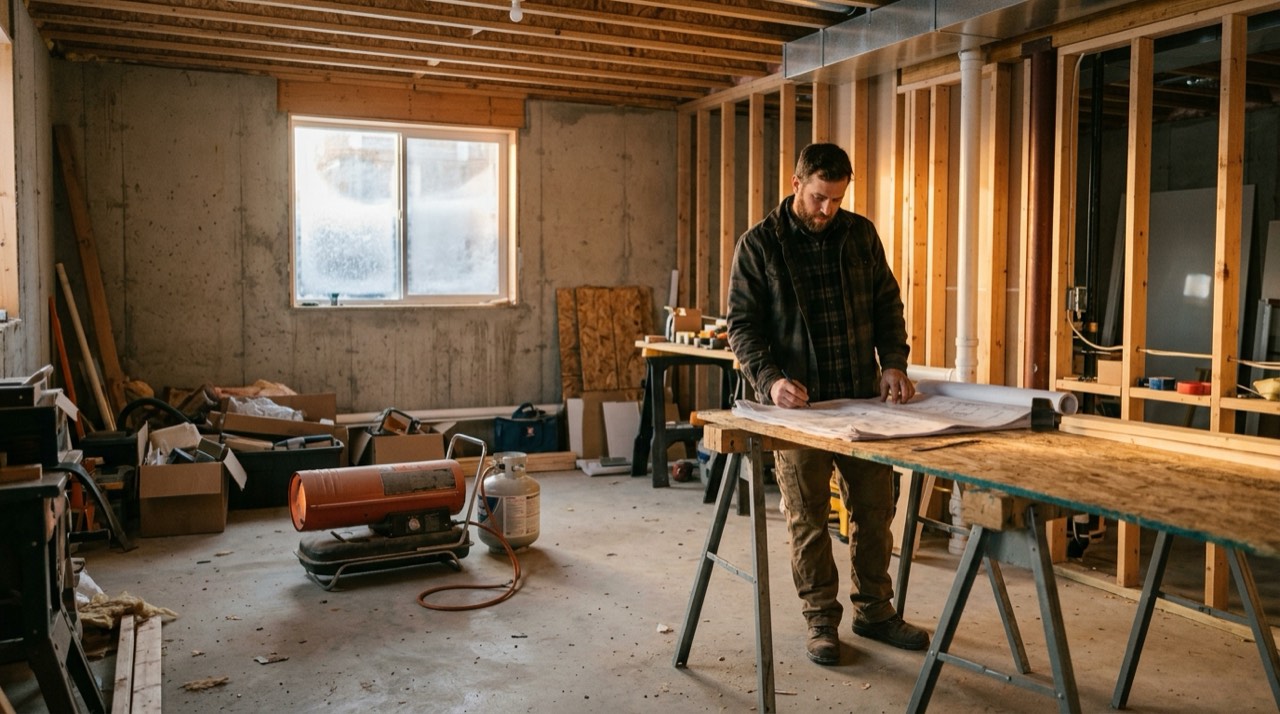
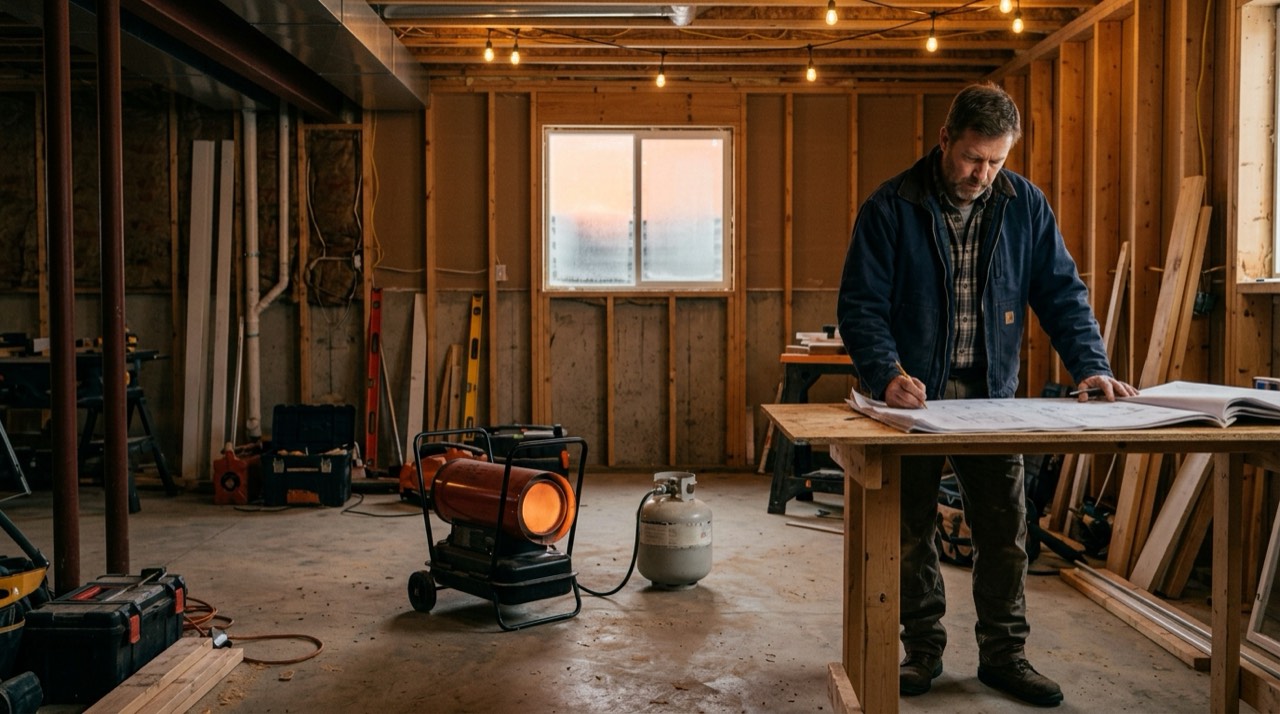
A forced-air heater built for garages and job sites, raising the ambient temperature of the whole space rather than warming a single spot.
Best for: A single or two-car garage used for hours of real work
- Warms the whole garage, not just the area right next to it
- High enough output for an uninsulated space
- Fast recovery time when the garage door opens and closes
- Continuous fan noise some find tiring over a long session
- Outdoor/ventilated-use-only — needs the door open per the manual
- Burns through fuel faster at high output
Mr. Heater 18,000 BTU Big Buddy (MH18B)
A radiant heater that warms you directly and starts working the moment it’s lit, suited to brief visits rather than warming the entire garage.
Best for: Quick, in-and-out garage visits and grabbing tools
- Silent operation, no fan noise during a long project
- Works instantly with no warm-up period
- Can run with the garage door closed since it’s indoor-safe
- Doesn’t raise the whole garage’s ambient temperature
- Lower BTU ceiling than a dedicated forced-air unit
- Less effective for hours of continuous work in a large space
Spec-by-spec comparison
| Factor | DEWALT DXH65FAV 65,000 BTU Forced Air Propane Heater | Mr. Heater 18,000 BTU Big Buddy (MH18B) |
|---|---|---|
| Heat mechanism | Fan-blown heated air | Direct radiant warmth, no fan |
| BTU output | 65,000 BTU | 18,000 BTU |
| Ventilation requirement | Active airflow, door open per manual | Basic guidance, ODS-equipped |
| Noise level | Continuous fan noise | Silent |
| Best for | Hours of work in the full garage | Quick visits, grabbing tools |
| Can run with door closed | No | Yes |
Most people shopping for a garage heater are really trying to solve one of two problems. Either they want to warm themselves briefly while grabbing tools, or they want to warm the whole space for hours of real work. Those two problems call for genuinely different heater types.
| Product | Best for | Buy |
|---|---|---|
| DEWALT DXH65FAV 65,000 BTU Forced Air Propane Heater | Best for warming the whole garage | Check Price |
| Mr. Heater 18,000 BTU Big Buddy PRO Series Heater | Best for quick, in-and-out visits | Check Price |
Top 3 Recommended
Two Different Jobs, Not Just Two Different Heaters
The DEWALT’s fan actively pulls in air, heats it, and blows it around the garage. Over time, that raises the actual ambient temperature of the whole space. That’s useful if you’re working for hours and need the room itself to feel warmer, not just your hands. The Big Buddy skips the fan entirely. It throws radiant heat directly at you, warming your body the moment it’s lit but leaving the rest of the garage’s air roughly where it was. Neither approach is wrong. They’re just built for different amounts of time spent in the space.
Ventilation Changes the Whole Equation
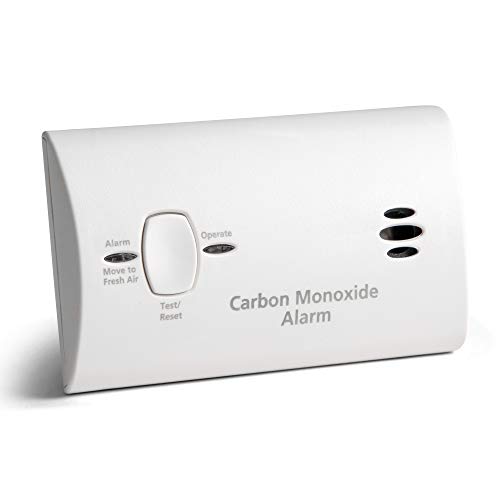
This is the single biggest practical difference for garage use. The DEWALT needs active airflow per its manual, typically the garage door open a set amount. Running it in a sealed garage is a real carbon monoxide risk. The Big Buddy is ODS-equipped and indoor-safe, so it can run with the door closed. If you want to work with the door shut on a cold day, that alone rules out the forced-air option and points you toward radiant instead.
Power and Fuel Setup
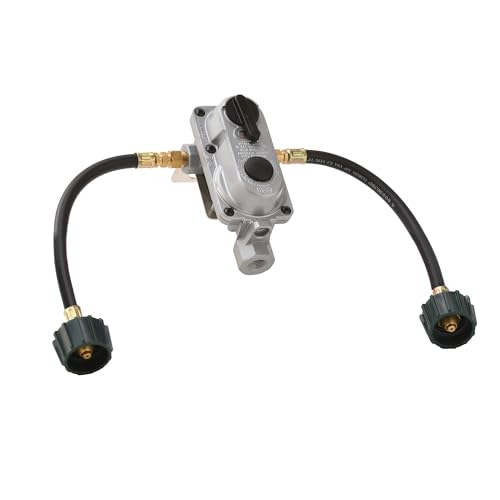
The DEWALT needs a standard 120V outlet for ignition and the fan, on top of the propane tank itself. The Big Buddy needs no electrical power at all — just a 1 lb cylinder or a hose-connected 20 lb tank. For a garage under construction or during a power outage, that difference matters. A generator can run the DEWALT if needed, but the Big Buddy works with nothing but fuel.
Sizing for a Real Garage


A single-car garage used occasionally is often well served by the Big Buddy on its highest setting. A two-car garage used as an active workshop for hours at a time typically needs a forced-air heater in the 50,000 to 100,000+ BTU range, depending on insulation. Uninsulated garages need considerably more BTU per square foot than a sealed interior room — often 40 or more per square foot rather than the standard 20 to 30. Our BTU sizing calculator can work out a specific number for your garage.
Noise Over a Long Work Session
The DEWALT’s combustion fan runs the whole time it’s on, and some woodworkers and mechanics find that fatiguing over a multi-hour session — owners commonly compare it to a shop vacuum or small generator. The Big Buddy runs silently by comparison. Some workshop owners split the difference: forced-air to bring the space up to temperature quickly at the start of a session, then radiant to maintain comfort once the room has warmed.
Winner by Use Case
Grabbing tools, in and out in a few minutes: Big Buddy — instant heat with no warm-up, and no ventilation setup required.
Full workday in the garage, door closed: Big Buddy — the only option here since forced-air needs active ventilation.
Full workday, door open or cracked for ventilation: DEWALT forced-air — actually warms the whole space over hours of work.
Large, uninsulated two-car garage: DEWALT forced-air — the Big Buddy’s 450 sq ft ceiling won’t keep up in a genuinely large, drafty space.
Noise-sensitive environment (shared wall, sleeping nearby): Big Buddy — silent operation matters here.
Pick the DEWALT Forced-Air If…
- You spend hours at a time working in the garage.
- The space is large or poorly insulated.
- You can maintain the required ventilation whenever it runs.
Pick the Big Buddy (Radiant) If…
- Your visits to the garage are quick and in-and-out.
- You want to run a heater with the garage door closed.
- Silent operation matters more than warming the whole space.
Read the Full Reviews
For complete specs and owner-reported detail, see our full DEWALT DXH65FAV review and our full Mr. Heater Big Buddy MH18B review. See also our garage and workshop heater guide for the full sizing breakdown, or the general-use radiant vs. forced-air comparison for camping and hunting scenarios.