

Affiliate disclosure: some links are affiliate links — as an Amazon Associate we earn from qualifying purchases, at no extra cost to you. Full disclosure.
A forced air propane heater — often called a torpedo heater or propane torpedo because of its shape — is built to warm a whole room, not just the person standing in front of it. That makes it the right construction heater for a garage, a workshop, or a job site trailer, but the wrong tool for a small tent or a hunting blind. We looked at owner reviews and manufacturer specs across the most-recommended forced air propane heaters on the market and ranked six that come up again and again as reliable choices for job site and garage heating. Every ranking below comes from aggregated owner reviews, manufacturer specifications, and safety certifications.

How We Picked the Best Forced Air Propane Heater for Job Site and Garage Heating
Four things mattered most.
BTU Output and Output Range for the Space
First, we checked BTU output and output range against the space each heater is rated for. A heater that is too small for a garage never actually feels warm.
Variable Heat Control Through a Thermostat
Second, we looked at whether the unit offers variable heat control through a thermostat or dial, rather than one fixed setting. That flexibility matters across a range of room sizes.
CSA Certified Safety Features and an Overheat Shut-Off
Third, we weighed safety features like CSA certified components and an overheat shut-off. Both confirm independent testing, not just a manufacturer’s own claim.
Real-World Reports From a Full Heating Season
Fourth, we read what owners report after real use through a full season, not just a first-week review. A heater with strong specs but a pattern of ignition complaints was ranked lower or left off the list.
The Short Answer: Best Overall Forced Air Propane Heater Pick
If you just want one solid pick, the Dyna-Glo RMC-FA150DGD is the safest starting point. Its adjustable output covers a small workshop and a large uninsulated garage with the same unit.
Best Pick With a Hose and Regulator Included
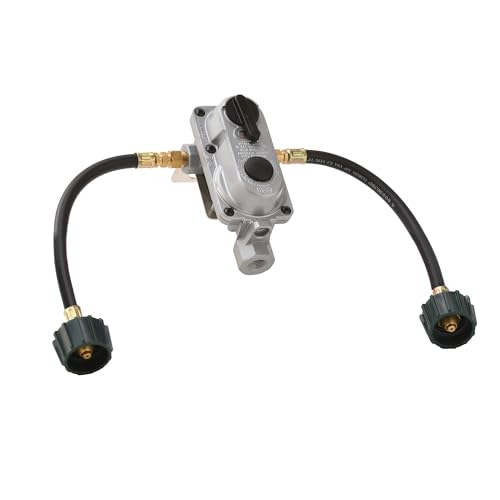
Want everything included in the box? Go with the 150,000 BTU CSA-certified heater instead. It ships with a hose and regulator included, so it is ready to run right out of the box.
Best for Quiet Operation on an Enclosed Job Site
Working in an enclosed space where fan noise gets old fast? The DEWALT Quiet Burner heater is built specifically for that.

Best for A two-car garage, a mid-size workshop, or general job-site use
- Adjustable output from about 120,000 to 150,000 BTU
- Continuous electronic ignition
- Cart-style frame with wheels for moving between spaces
- Rated for a large, well-ventilated area
Why buy it: Owners like that the BTU output adjusts instead of running at one fixed setting. That means one heater can handle a smaller room on a mild day and a full, uninsulated garage on a cold one, which is why it shows up so often as a general-purpose pick rather than a specialist unit.

Best for First-time buyers who do not already own a hose and regulator
- 150,000 BTU output
- CSA certified
- 11 ft hose and regulator included
- Automatic overheat protection
Why buy it: Most forced-air heaters ship without a hose or regulator, which catches first-time buyers off guard. This one includes both, so it is ready to run as soon as it is out of the box, and the CSA mark confirms it passed independent safety testing.

Best for Enclosed workshops or job sites where the fan noise of a normal forced-air heater gets old fast
- 150,000 BTU output
- Quiet Burner Technology reduces combustion noise
- Continuous electronic ignition
- Rugged cage frame
Why buy it: Every forced-air heater runs a combustion fan, and most owners describe that fan as loud. DEWALT built this one around a quieter burner design specifically to cut that noise down, which reviewers who spend hours next to the heater notice right away.

Best for A single garage bay or workshop up to about 1,500 sq ft
- 60,000 BTU output
- Rated for up to 1,500 sq ft
- Continuous electronic ignition
- Compact frame for easier storage
Why buy it: Not every space needs a 150,000 BTU heater. Owners heating one garage bay or a single-room workshop consistently say the 60,000 BTU tier is plenty, and it uses less propane per hour than the bigger units above it.

Best for Contractors who already run DEWALT power tools on the same job site
- 68,000 BTU output
- Rated for up to 1,700 sq ft
- Battery-powered ignition option on some configurations
- Compact, job-site-ready build
Why buy it: Contractors who already carry DEWALT batteries for their tools like that this heater can share the same battery platform. It saves packing a separate charger just for the heater, which several reviewers call out as a real convenience on a busy site.

Best for Buyers who want stainless construction without paying for a name-brand heater
- 60,000 BTU output
- Stainless steel housing
- Continuous electronic ignition
- Rated for job site, garage, and patio use
Why buy it: Owners comparing this against pricier 60,000 BTU heaters report the same basic performance for less money, and the stainless housing holds up to outdoor storage better than a painted equivalent at this price point.
Full Comparison: Torpedo Heater and Construction Heater Picks Side by Side
All six picks side by side, plus how they stack up against similar torpedo heaters from DeWalt, Bauer and Craftsman. "Best for" reflects the specific space and use case each heater is most consistently recommended for in owner reviews.
| Product | Best for | Buy |
|---|---|---|
| Dyna-Glo RMC-FA150DGD 120,000–150,000 BTU Liquid Propane Forced Air Heater | Best Overall | Check Price |
| 150,000 BTU Forced Air Propane Heater with 11FT Hose, Regulator, CSA Certification | Best Included Hose & Regulator | Check Price |
| DEWALT 150,000 BTU Forced Air Propane Quiet Burner Technology Job Site Heater | Best for Quiet Operation | Check Price |
| Remington LP Forced Air Heater, Portable 60,000 BTU | Best Mid-Size Output | Check Price |
| DEWALT 68,000 BTU/H 1,700 SQ FT Forced Air Propane Heater | Best for a DEWALT Battery Ecosystem | Check Price |
| Flame King 60,000 BTU Portable Propane Forced Air Heater, Stainless Steel | Best Budget Pick | Check Price |
How Much BTU Output Do You Need for Garage Heating and Job Site Use?
Forced-air heaters run much higher output than a radiant heater because they are meant to heat the air in a whole room, not just a person. As a rough starting point, a well-insulated space needs about 20 to 30 BTU per square foot. An uninsulated garage or job site trailer needs far more, often 40 or more BTU per square foot, since heat escapes through the walls and door almost as fast as the heater produces it. A single garage bay usually does fine with 60,000 BTU. A larger, uninsulated two-car garage or an open job-site structure often needs 100,000 BTU or more. Our BTU sizing guide walks through the math for your specific space.
Ventilation Is Not Optional
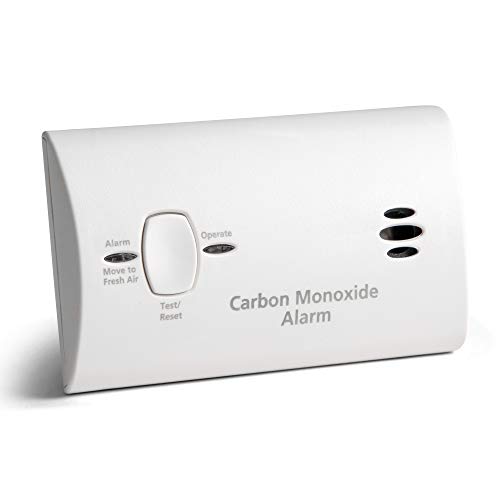
Every heater on this list is rated for outdoor or well-ventilated use only. None of them have the oxygen depletion sensor that makes a radiant Buddy-style heater safe for a closed room. The Consumer Product Safety Commission warns that any fuel-burning heater used in an enclosed space without enough fresh air can produce dangerous carbon monoxide levels, even if the heater itself is working normally. NFPA 58, the National Fire Protection Association's liquid propane gas code, sets its own clearance and ventilation requirements for propane-fired equipment like these heaters, on top of CSA product certification. Run these heaters with a door open, a vent in place, or in a genuinely open structure, and never in a sealed room. Our indoor safety guide covers ventilation requirements in more depth.
Blower Fan Noise Level: Why It's a Bigger Deal Than It Sounds
Every forced-air heater runs a combustion fan — essentially a blower fan — the whole time it is on, and owners consistently rate its noise level similar to a shop vacuum or small generator. That is fine for a quick job, but it adds up over a full day in an enclosed garage. If you spend hours next to the heater rather than passing through, the DEWALT Quiet Burner pick above is worth the extra cost. It will not disappear entirely, but reviewers who use it for long stretches notice the difference right away.
Fuel Consumption, GPH and High-Output Settings
A forced air propane heater burns through propane fast at high-output settings, simply because it is rated so much higher than a radiant heater. Using the standard conversion of about 21,600 BTU per pound of propane, a 150,000 BTU torpedo heater running at full output burns close to 7 pounds of propane an hour — roughly 1.6 GPH in liquid terms — and empties a standard 20-lb tank in a little over 3 hours. Anyone running a forced-air heater regularly should plan on a 100 lb tank or larger rather than swapping a 20-lb tank every few hours. Our fuel consumption guide breaks this down by BTU tier.
Continuous Ignition, Cordless Forced Air Options and What It Means for Power
Nearly every forced-air heater relies on continuous ignition electronics to run its burner and fan, which means a corded unit needs an outlet or a generator nearby. A few models, including the Reddy Heater battery hybrid option, offer a cordless forced air setup with battery-powered ignition specifically so they can run without a live power source. If your job site or garage does not have power yet, check this before buying rather than after. Our cordless vs. corded guide covers the tradeoffs.
Cart Frame Design: Moving a Propane Torpedo Between Job Sites


Every heater on this list ships on a cart-style frame rather than a simple base, and that design choice matters more than it might seem. A forced-air heater is heavier than a radiant heater once you factor in the burner assembly, fan motor, and cage. Wheels make it realistic to move the heater between a garage and a job site trailer without two people lifting it. Check the wheel size and frame clearance if you expect to roll the heater over gravel, mud, or an unfinished job-site floor rather than a smooth garage slab.
Seasonal Maintenance Between Uses
A forced-air heater that sees regular use picks up dust in its fan intake and burner assembly faster than most owners expect, especially in a garage or on a dusty job site. Clean the intake periodically during heavy use, and do a more thorough check before the first cold day of each new season. Most "won’t light" or "reduced output" complaints in long-term reviews trace back to a skipped seasonal check rather than an actual defect in the heater itself.
Buying Checklist: CSA Certified Components and 20-lb Tank Size
- Size to your space, not the biggest number on the shelf. Match BTU output to your room’s actual square footage and insulation level.
- Check for CSA or an equivalent certification plus automatic overheat protection.
- Confirm you have power available if the heater needs a corded ignition system, or budget for a battery-powered model.
- Plan tank size around your actual runtime. A 20 lb tank is fine for occasional use; regular use calls for 100 lb or a fixed line.
- Never run a forced-air heater in a closed room. These heaters need real airflow, not just a cracked window.
New vs. Used Forced Air Heaters With Quiet Burner Technology
Forced-air heaters take a beating on job sites, and the fan motor, ignition system, and regulator all wear with heavy use. A used unit’s history is hard to verify, and that matters more here than it would for a simple radiant heater. For a heater that runs unattended at high output, a new unit with a full warranty is usually worth the extra cost over a secondhand one of unknown condition.
Steel vs. Stainless Housing
Most budget and mid-range forced-air heaters use painted steel for the outer housing, which holds up fine if the heater is stored indoors between uses. A stainless housing, like the one on the Flame King pick above, resists rust better when a heater lives outdoors or in a damp garage most of the season. The difference shows up over years, not weeks, so it matters more to buyers planning to keep a heater for a long time than to someone who just needs heat for one project.
Overheat Protection and Setting Up the Heater the First Time
Out of the box, most forced-air heaters need the hose connected to a tank, the regulator checked for a tight seal, and a quick visual inspection before the first light. Purge air from the line after connecting a fresh tank, since trapped air can cause a hesitant or uneven first ignition that owners sometimes mistake for a defect. Following the manual’s specific startup sequence, rather than guessing based on a different heater you have used before, avoids most first-use frustration.
What to Check If the Heater Underperforms
If a heater is not reaching its expected temperature, check the basics before assuming it is defective. A partially closed tank valve, a kinked hose, or a low tank level all reduce output in ways that look like a weak heater but are not. A clogged burner nozzle from dust or debris is the next most common cause, and it usually shows up gradually rather than all at once. Our troubleshooting guide walks through diagnosing each of these symptoms step by step.
Buying for a Job Site, Garage or Rental Fleet
A property manager or contractor buying several heaters for a rental fleet has different priorities than a homeowner buying one for a single garage. Fleet buyers tend to favor a single consistent model across every unit, since that simplifies parts, training, and maintenance. A homeowner buying one heater has more room to pick based on a specific feature, like quiet operation or included accessories, without worrying about fleet-wide consistency.
What Owners Report After a Full Season
Across reviews, the Dyna-Glo and Mr. Heater forced-air lines both get consistent praise for how fast they raise the temperature in a genuinely cold garage or shop, often in well under 30 minutes. The most common complaints are noise, as covered above, and the physical bulk of the higher-output models, which usually move on a cart or dolly rather than by hand. Buyers who size correctly the first time report the fewest regrets. Undersizing to save money up front is the most common mistake reported in long-term reviews.
Warranty Coverage Across These Picks
Most forced-air heaters carry a one- to two-year limited manufacturer warranty covering defects in materials and workmanship. That coverage typically excludes damage from job-site abuse, like a dropped or run-over unit, and from skipped maintenance, like a fan intake never cleaned of debris. Keep your receipt and register the product where the manufacturer offers it. Warranty claims move faster with a clear purchase date on hand, a five-minute step at purchase that is easy to forget.