

Affiliate disclosure: some links are affiliate links — as an Amazon Associate we earn from qualifying purchases, at no extra cost to you. Full disclosure.
"Infrared propane heater" searches skew toward a different product category than a portable camping-style Buddy heater. This category means fixed, wall-mounted plaque burners and vent-free radiant units built for sustained, higher-BTU heating of a defined room. We looked at the infrared-specific heaters that come up consistently in this search category. We ranked the five that stand out on coverage, thermostat control and owner-reported reliability. Every ranking below reflects aggregated owner reviews and manufacturer specifications. Looking for a portable camping-style radiant heater instead? See our best radiant propane heater roundup.

How We Picked the Best Infrared Propane Heater
This category is defined by fixed installation and sustained output rather than portability. We weighted BTU output against a realistic room size, thermostat control, and ODS certification for indoor use. Thermostat control is a real differentiator here, unlike on most portable heaters. We also looked at what owners report about running these units continuously through a season rather than for a quick burst of heat.
The Short Answer: Best Overall and Best Value Picks
For most buyers replacing a garage or workshop's primary heat source, the ProCom 25,000 BTU Infrared Plaque Heater is the strongest overall pick, with genuine thermostat control most portable heaters lack. For a smaller room, the ProCom 10,000 BTU version is the best value pick — it avoids paying for output you don't need.

Best for Garages, workshops and larger rooms that need sustained higher-output heat
- 25,000 BTU infrared plaque burner
- Built-in thermostat control
- Vent-free wall or floor mount
- ODS standard
Why buy it: It is a genuinely different product category from a portable Buddy heater — a fixed infrared plaque burner designed to heat a defined room continuously, and owners specifically choose it for that sustained, higher-BTU output.

Best for Smaller rooms and workshops that don’t need the full 25,000 BTU tier
- 10,000 BTU infrared plaque burner
- Built-in thermostat control
- Vent-free wall or floor mount
- ODS standard
Why buy it: Same plaque-style infrared design as the larger ProCom model, scaled down for a smaller room, which lets buyers avoid the running-cost premium of the 25,000 BTU unit when it isn’t needed.

Best for A workshop, converted garage or cabin needing a fixed, higher-output heat source
- 30,000 BTU sustained radiant output
- ODS standard
- Wall or floor-mount installation
Why buy it: Owners consistently cite it as noticeably outperforming a portable heater for square footage covered, once they’ve decided a permanent installation makes more sense than a portable unit.

Best for Households that want the option to switch between natural gas and propane
- 30,000 BTU blue-flame burner
- Dual-fuel: switches between natural gas and propane
- ODS and built-in thermostat
Why buy it: Technically a blue-flame rather than pure infrared burner, it heats room air more evenly than a plaque-style infrared unit, and owners specifically compare the two when deciding between even air heating and directional infrared warmth.

Best for Patios, camping and outdoor spaces wanting infrared-specific heat throw
- 30,000 BTU double-burner infrared design
- Screws directly onto a 20 lb propane tank
- Outdoor-rated
Why buy it: Marketed and reviewed specifically as an infrared tank-top unit, it fills the outdoor side of this category for buyers who specifically want infrared heat throw rather than a standard radiant tank-top heater.
Full Comparison
All five picks side by side.
| Product | Best for | Buy |
|---|---|---|
| ProCom Heating Liquid Propane Ventless Infrared Plaque Heater, 25,000 BTU, T-Stat Control | Best Overall | Check Price |
| ProCom Heating Liquid Propane Ventless Infrared Plaque Heater, 10,000 BTU, T-Stat Control | Best Compact / Lower BTU | Check Price |
| Mr. Heater 30,000 BTU Vent Free Radiant Propane Heater | Best Vent-Free Radiant Wall Unit | Check Price |
| Mr. Heater 30,000 BTU Vent Free Blue Flame Dual Fuel Heater | Best Dual-Fuel Option | Check Price |
| Avenger FBDTP30 Infra-Red Tank Top Outdoor Heater, 30,000 BTU | Best Infrared Tank-Top for Outdoor Use | Check Price |
Ceramic Burner Tile vs. Wall-Mount Radiant: What's the Difference?
A plaque heater like the ProCom models uses a ceramic burner tile that glows red-hot to radiate infrared heat, typically with a built-in thermostat that cycles the burner to hold a target temperature. That's genuinely different from most portable radiant heaters, which run at a fixed or manually-adjusted output with no thermostat feedback loop. A vent-free radiant wall unit like the Mr. Heater 30,000 BTU model uses a similar radiant principle but without the plaque burner's thermostat control on the base model. If holding a consistent room temperature without manual adjustment matters to you, the thermostat-equipped ProCom units are the more capable pick in this list.
Blue Flame vs. Infrared: A Related but Different Technology
The Mr. Heater Blue Flame Dual Fuel model included here isn't pure infrared. It uses a blue-flame burner that heats room air more directly, similar to a furnace, rather than radiating heat primarily to objects in its path. Buyers comparing infrared plaque heaters frequently cross-shop it, so knowing the distinction helps you pick the right heat-transfer mechanism. Brands like Texsport and World Marketing also sell portable infrared and radiant heaters at a similar price point, though they show up less often in this specific higher-BTU fixed category.
Reflector Design, Spot Heating and Line-of-Sight Coverage
Every heater on this list relies on a reflector behind the burner to aim infrared output toward the room. That's why infrared heat works on a line-of-sight basis: it warms whatever sits directly in its path, not the whole volume of air the way a furnace does. This suits spot heating a specific work area — a bench, a bay, a seating corner — better than warming a large, open room evenly. Aim the reflector at the area you actually use.
Clearance Distance and Gas Fitter Installation for These Fixed Units
Four of these five picks are permanent or semi-permanent installations. They need wall or floor mounting and a connection to a fixed line or larger tank, a bigger commitment than a portable heater. Clearance distance to combustibles and minimum room-volume requirements are stricter for these higher-output units than for a portable Buddy heater, since they're designed to run for longer stretches unattended. A licensed gas fitter is typically required if connecting to a fixed propane line rather than a portable tank.
What Owners Report
The ProCom plaque heaters draw praise for the thermostat holding a consistent temperature without the manual adjustment portable heaters require. The main complaint is that the higher-BTU 25,000 model can feel like overkill in a smaller garage bay unless the thermostat is set conservatively. The Mr. Heater vent-free radiant unit's reviews center on output relative to a portable heater, with owners noting it comfortably handles a two-car garage that a Buddy-class heater couldn't keep up with. The Avenger tank-top infrared model draws outdoor-specific praise for its double-burner design throwing heat further than a single-burner tank-top unit of similar BTU.
BTU Sizing, Heat Output and Garage Heating for Fixed Infrared Heaters
These units run at meaningfully higher BTU than most portable radiant heaters. That's appropriate, since they're built for sustained, whole-room heat output rather than a quick burst of warmth. As a rough guide, a well-insulated 500–1,000 sq ft garage or workshop is a reasonable match for the 25,000–30,000 BTU tier represented by most picks here. For general garage heating in a smaller space under 300 sq ft, the 10,000 BTU ProCom or a portable heater is a better fit instead. Our BTU sizing guide has an interactive calculator.
Vent-Free and Ventless: Oxygen Depletion Sensor and Low-Oxygen Shutoff
Every heater on this list is a vent-free (ventless) design, meaning combustion byproducts release directly into the room rather than through a flue or chimney the way a furnace does. That's true of both the portable-adjacent tank-top unit and the fixed wall units here. Building a vented version of any of these would require the kind of structural chimney work that defeats the purpose of a relatively simple retrofit heater. The oxygen depletion sensor standard across this list exists to compensate for that ventless design. Its low-oxygen shutoff trips the unit off before oxygen drops to an unsafe level in an enclosed room.
Thermostat Control: A Real Differentiator in This Category
Unlike most portable radiant heaters, which run at a fixed or manually-stepped output, the two ProCom plaque heaters include a genuine thermostat. It cycles the burner on and off to hold a target room temperature automatically. This is a real difference from a portable heater you have to manually adjust as a room warms up or cools down. It's part of why these units suit a workshop or garage you're in for extended periods rather than a quick in-and-out visit.

Fuel Setup: 20-lb Tank Installations vs. a Portable 1-lb Cylinder Heater
Four of these five picks connect to a fixed propane line or a larger 20-lb tank kept nearby, not a swap-in 1-lb cylinder, which is a bigger upfront commitment than a portable heater. Budget for the installation itself as a separate cost from the heater — a licensed gas fitter's connection work, and potentially running a new gas line if one doesn't already exist near the mounting location. If a small 1-lb cylinder heater would cover your actual need, our portable radiant heater roundup is worth checking before committing to a fixed installation.
Comparing Running Cost Across the Category
Using the standard conversion of roughly 21,600 BTU per pound of propane, a 25,000 BTU heater running continuously burns through fuel faster than a portable 9,000 BTU Buddy heater would. That's expected, given the higher sustained output these units are designed for. A thermostat-equipped model like the ProCom plaques mitigates this somewhat, since the burner cycles off once the target temperature is reached rather than running continuously at full output the way a manually-adjusted heater might.
Tip-Over Shut-Off vs. Oxygen Depletion Sensor: Safety on Fixed Units
A portable Buddy-style heater relies heavily on a tip-over shut-off switch, since it can be knocked over. Wall-mounted and floor-anchored units like the ProCom plaques and the Mr. Heater radiant model are bolted or braced in place, so a tip-over shut-off isn't the relevant feature for them. Their oxygen depletion sensor does that safety job instead, cutting combustion before room oxygen drops too low.
Piezo Ignition and Why There's No Cordless Option on These Picks
All five picks light with piezo ignition — a spring-loaded mechanical spark that needs no batteries and works in cold weather. None offer a cordless option, since each one runs on propane fed from a fixed line or a tank rather than a battery pack. If a cordless option matters more than raw BTU output, look at a battery-electric heater instead.
Which of These Five Fits: Directional Warmth, Instant Heat or Whole-Room Coverage?
If you're replacing a garage or workshop's primary heat source and want thermostat control, the ProCom plaque heaters are the strongest fit. If you've already decided on a vent-free radiant wall unit and don't need thermostat cycling, the Mr. Heater 30,000 BTU model is a capable, simpler alternative — it delivers the same directional warmth and near-instant heat on light-up that defines the category. If you want the flexibility to switch fuel types, the dual-fuel Blue Flame model is worth the premium. And if your use case is genuinely outdoor rather than a fixed garage installation, the Avenger tank-top model is the only one on this list built for that scenario.
Maintenance for the Ceramic Burner Tile and Radiant Heat Elements
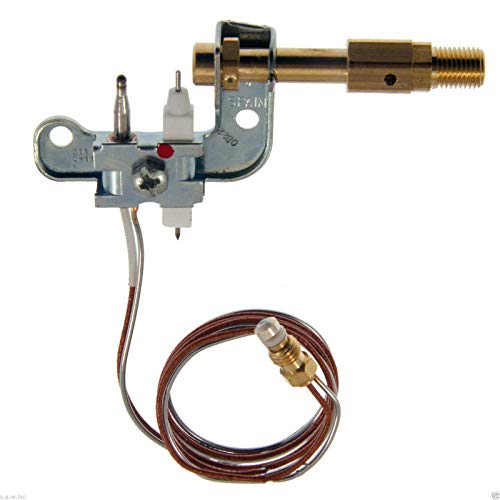
A ceramic burner tile or radiant element performs best kept free of dust buildup, which accumulates during off-season storage in an unused garage. Manufacturers recommend a visual check of the element before the first use of a new season. Cracks or discoloration beyond normal use are signs worth addressing before lighting the heater. A replacement ODS pilot assembly is a common part to keep on hand, given how central it is to safe operation over years of use.
Buying Checklist: CSA Certified Safety and Piezo Ignition Basics
- Decide portable vs. fixed installation first — it changes the entire shortlist, not just BTU comparison.
- Confirm thermostat control if consistent temperature without manual adjustment matters to you.
- Size to your actual room, not the highest BTU tier available.
- Look for CSA certified construction and piezo ignition as the baseline safety and reliability check on any pick.
- Budget for professional installation if connecting to a fixed gas line.
- Check local code requirements for a permanent gas appliance installation in your area.
Clearance and Room Volume Requirements
Fixed infrared heaters at this BTU tier carry stricter clearance and minimum room-volume rules than a portable heater, since they run unattended for longer at higher output. Measure your room against the manufacturer's stated minimums before buying, not after.
Cross-Shopping a Garage Pick Against a Portable Infrared Heater
Before committing to a fixed installation, it's worth checking whether a portable infrared heater from our radiant propane heater roundup meets your needs at a fraction of the cost. A fixed unit makes sense for sustained, thermostat-controlled heat in a room you use through an entire cold season. For occasional use — a workshop a few hours a week — a portable heater is often the more practical, cheaper choice.
Warranty Coverage on These Fixed Units
Most manufacturers offer a limited warranty covering defects in materials and workmanship, typically excluding damage from improper installation — one more reason professional installation matters. Keep documentation of who installed the unit and when, since warranty claims on a fixed gas appliance often require proof of code-compliant installation.
Resale and Long-Term Ownership
A fixed infrared or vent-free wall heater is a longer-term commitment than a portable unit. It doesn't travel with you if you move — it's typically left behind as a fixture, like a built-in appliance. Factor that in if you won't stay in your current property long-term. Renters should confirm with a landlord before installing any of these fixed units.