

Affiliate disclosure: some links are affiliate links — as an Amazon Associate we earn from qualifying purchases, at no extra cost to you. Full disclosure.
A common point of confusion for first-time buyers: a 9,000 BTU radiant heater can feel just as warm, in the right setup, as a much higher-BTU forced-air unit in an open space. This isn’t marketing exaggeration — it’s a real physical effect that comes down to how each heater actually delivers its energy.

Top 3 Recommended
Direct Energy Transfer vs. Heating the Air First
A radiant heater transfers energy directly to you — your skin, your clothing, the chair you’re sitting in — without needing to first raise the temperature of the air between the heater and you. A forced-air heater has to warm the air itself, and that warmed air then has to reach and stay around you long enough to feel warm. In an open or drafty space, that intermediate step constantly loses ground to ambient heat loss, while a radiant heater’s direct transfer keeps delivering the same warmth to you regardless of what’s happening to the air in between.
The Physics: Radiative vs. Convective Heat Transfer
Physicists describe this as the difference between convective heating (moving warmed air around a space) and radiative heating (transferring energy directly as electromagnetic radiation to objects in a heater’s line of sight). A furnace or forced-air heater relies on convection — the same principle as a hair dryer. A radiant heater skips that step, transferring energy the same way the sun warms the ground even through cold air. This is a genuinely different physical mechanism, not just a design choice, and it’s the reason the two heater types perform so differently outdoors versus in a sealed room.
Why This Matters More Outdoors Than Indoors
In a sealed room, a forced-air heater eventually raises the whole volume of air to a comfortable temperature, since the warmed air has nowhere to escape. Outdoors or in a drafty space, that warmed air disperses constantly, so a forced-air heater is perpetually fighting a losing battle against ambient heat loss. A radiant heater never has that problem, because it isn’t relying on the air holding heat in the first place — which is exactly why radiant heat dominates outdoor and semi-outdoor categories where a forced-air heater’s approach would be far less effective per BTU spent.
Where Radiant Heat’s Advantage Runs Out
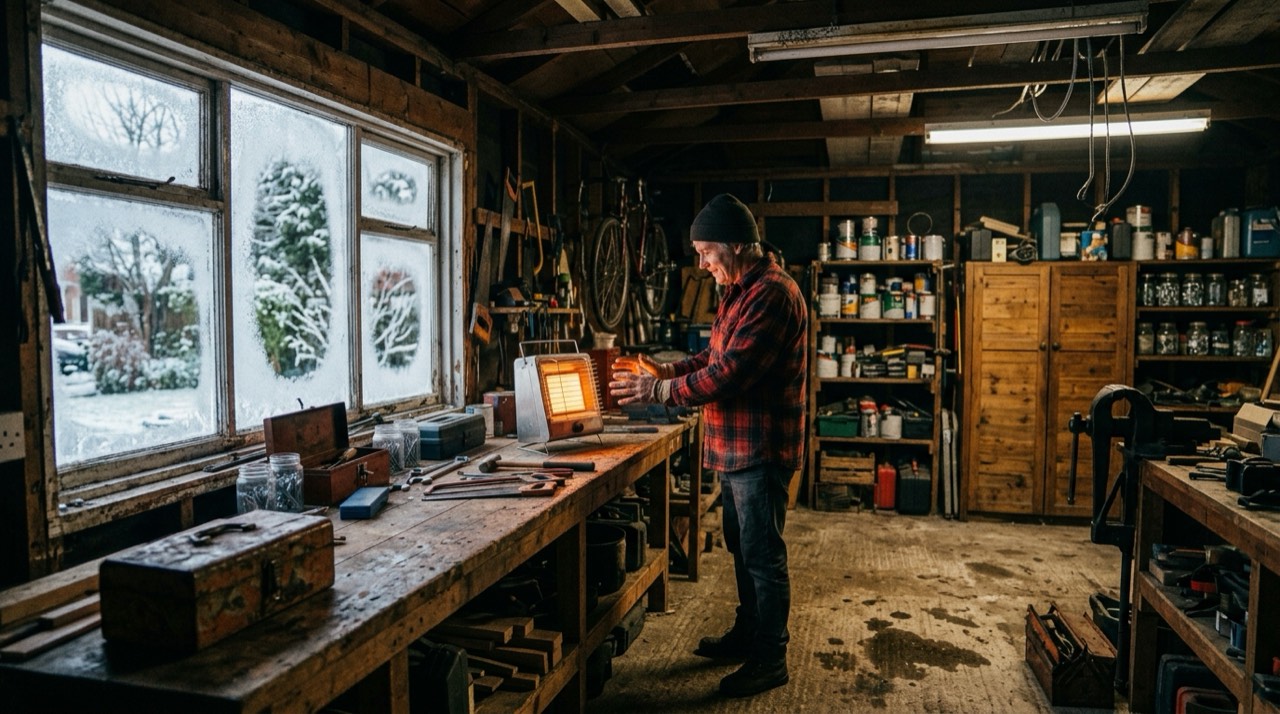
The flip side of this efficiency is that radiant heat is excellent at warming what’s directly in its path but doesn’t raise the ambient air temperature of a whole room the way a forced-air heater eventually can. In a genuinely large enclosed space — a two-car garage, for instance — a radiant heater underperforms its BTU rating compared with a forced-air unit, because there’s no single spot to target and the goal shifts to warming the entire room’s air volume. This is why forced-air heaters remain the better choice for that specific scenario despite radiant heat’s efficiency advantage elsewhere.
What This Means When Comparing Spec Sheets
Because of this mechanical difference, comparing BTU ratings directly between a radiant and a forced-air heater is misleading. A radiant heater rated lower can outperform a higher-rated forced-air unit for a person sitting directly in its path, while the reverse is true for warming an entire enclosed room. When shopping, match the heater type to your actual use case first — targeted personal warmth versus whole-room heating — rather than picking based on the highest BTU number you can find within a budget.
Positioning Matters More With Radiant Heat
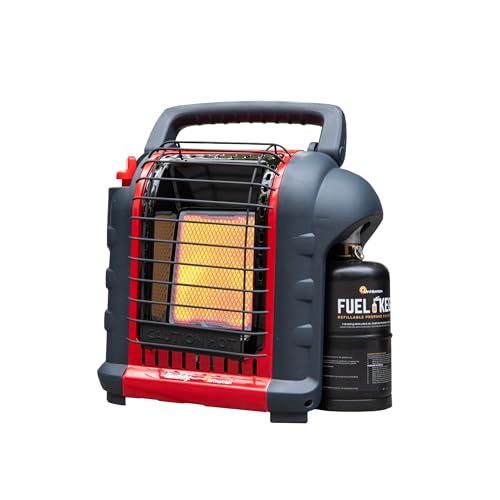
Because radiant heat travels in a fairly direct line from the element, where you place a radiant heater matters more than it would for a forced-air unit meant to circulate air throughout a space. Owners consistently report better results positioning a radiant heater so its heat path falls directly on the area people are sitting or working in, rather than pointing it at open floor space hoping it eventually warms the whole room the way a forced-air heater would. A tank-top heater’s swiveling head exists specifically to let you aim the heat pattern precisely for this reason, and taking a moment to angle it correctly makes a bigger practical difference than upgrading to a higher-BTU model in many cases.
An Everyday Analogy: Sun vs. Air Temperature
Standing in direct winter sunlight on a cold day feels noticeably warmer than standing in shade at the exact same air temperature, even though a thermometer reads identically in both spots. That’s radiative heat transfer at work — the sun warms you directly regardless of the surrounding air. A radiant propane heater does the same thing on a much smaller, more controllable scale, while a forced-air heater is closer to the shade scenario: it depends entirely on the ambient air temperature, which it has to actively raise rather than bypass.
Why Manufacturers Don’t Always Explain This Clearly
Spec sheets and product listings typically lead with BTU as the headline number because it’s simple and comparable on paper, even though it obscures this real mechanical difference. A buyer comparing two heaters side by side on a retail listing rarely gets an explanation of radiative versus convective heat transfer in the product description, which is exactly why this confusion persists despite being a well-understood physical phenomenon. Understanding it yourself, rather than relying on the spec sheet to explain it, is the more reliable way to make an informed comparison across two heaters that look similar on paper but perform very differently in practice.
Ambient Temperature Also Affects How Radiant Heat Feels
Radiant heat’s directness doesn’t make it completely immune to ambient temperature — a radiant heater still feels less effective on a genuinely frigid night than on a mildly cool one, since the surrounding cold air is still pulling heat away from your body between doses of direct radiant warmth. The difference is one of degree rather than kind: radiant heat is far less dependent on ambient conditions than forced-air heat, not entirely independent of them. On an extremely cold night, even a well-aimed radiant heater benefits from some wind protection or a partial enclosure to perform at its best.
Real Owner Experience Backs This Up
The recurring praise across radiant heater reviews is speed: people consistently mention feeling warm within a minute or two of turning the heater on, well before the surrounding air has changed temperature at all. The recurring complaint, especially from first-time buyers, is coverage — someone expecting a radiant heater to warm an entire room the way a forced-air or central heating system does is often disappointed, because that isn’t how radiant heat is designed to work. Understanding the physics above explains both patterns, and it’s the reason this site never recommends a radiant heater for someone whose actual goal is warming an entire large room rather than a specific spot within it, since no amount of radiant BTU output actually solves that particular problem.
Related Reading
For the full mechanical comparison between the two heat types, see our radiant vs. forced-air heat guide. For how the BTU numbers themselves compare across the two categories, see radiant heater BTU vs. forced-air BTU.