

Affiliate disclosure: some links are affiliate links — as an Amazon Associate we earn from qualifying purchases, at no extra cost to you. Full disclosure.
Yes. Every radiant propane heater burns fuel with an open flame. Carbon monoxide is a normal byproduct of that, the same as it is for a gas stove or a furnace. The real question is not whether CO gets made at all. It is whether the heater is built to keep that level low enough to be safe for where you use it.

How Combustion Produces CO in Any Radiant Heater
Propane never burns perfectly. Incomplete combustion always releases some carbon monoxide along with heat and light. A heater that is burning clean and running well makes very little of it. One that is dirty, faulty, or starved of oxygen makes a lot more. This is true of every open-flame radiant heater, no matter the brand or price.
ODS-Equipped Models Built for Enclosed Spaces
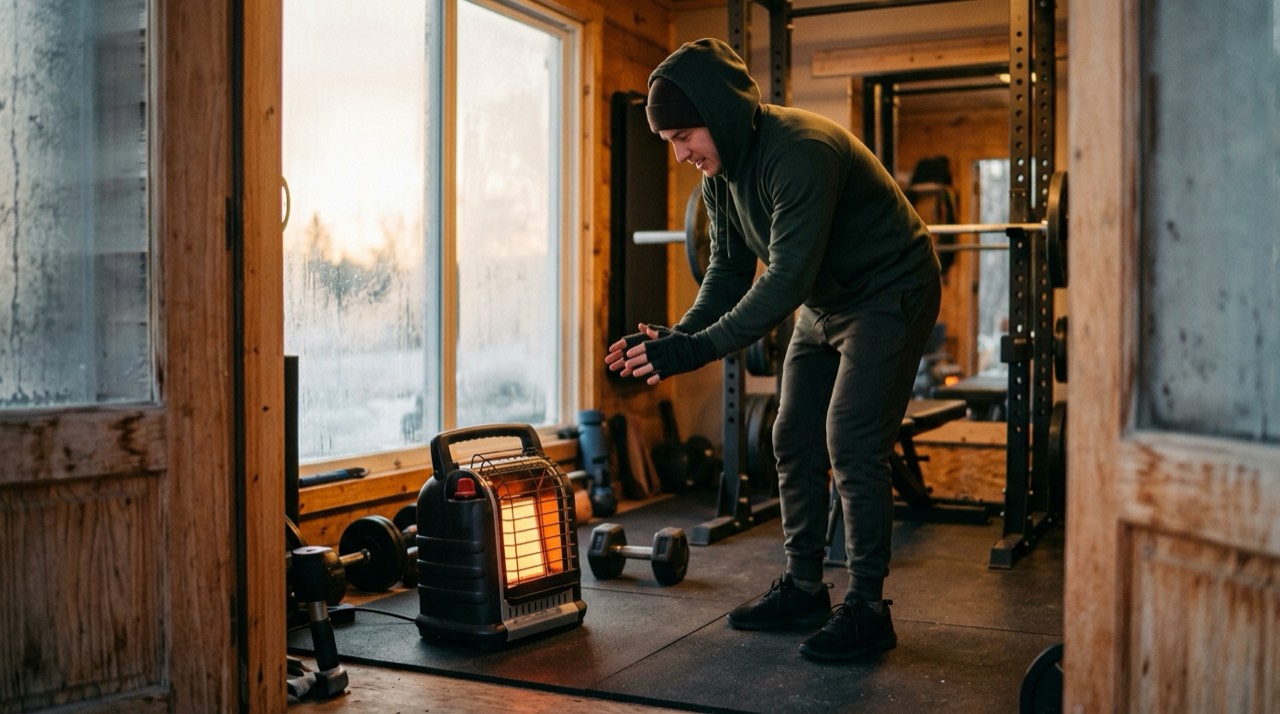
Indoor-safe radiant heaters, like the Buddy-series, add an oxygen depletion sensor. It watches the air around the heater and shuts it off before oxygen drops to a level tied to rising CO risk. That is a backup device on top of normal combustion. It is not a claim that the heater makes zero carbon monoxide. Our what is an oxygen depletion sensor answer covers exactly how that system works.
Why Ventilation Still Matters With an ODS
An ODS is a backstop, not a swap for real airflow. Run an ODS-equipped radiant heater in a truly sealed space, and CO can still climb faster than it would with some fresh air moving through, even before the sensor trips. Our indoor safety and carbon monoxide guide covers ventilation rules for indoor-safe models in more depth.
Outdoor-Only Radiant Heaters Carry More Risk Indoors
Tank-top and patio-style radiant heaters usually skip the ODS entirely. They are built for outdoor use, where CO spreads out and thins on its own. Bring one into a garage, tent, or any closed space, and you lose the one safeguard indoor-safe models rely on. Our best uses for a radiant propane heater guide covers which models fit which settings.
The Bottom Line
Yes, radiant propane heaters make carbon monoxide as a normal part of burning fuel. That is true of every model. An oxygen depletion sensor and real ventilation are what keep that byproduct at a safe level indoors. A battery-backed CO detector is still the recommended backstop, even on a certified indoor-safe unit. See our carbon monoxide detector roundup for specific models.