

Affiliate disclosure: some links are affiliate links — as an Amazon Associate we earn from qualifying purchases, at no extra cost to you. Full disclosure.
Radiant and forced-air are the two fundamentally different ways a propane heater delivers warmth, and understanding the mechanical difference — not just the marketing language — explains why one type dominates camping and outdoor use while the other dominates garages and construction sites.

Top 3 Recommended
How Radiant Heat Works
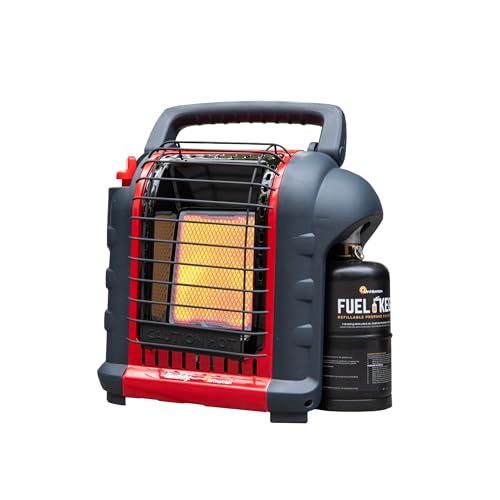
A radiant burner heats a ceramic or metal element to a high temperature, and that element radiates infrared energy directly outward in a fairly direct line, warming whatever surfaces and people are in its path. This is the same basic principle as sunlight warming your skin on a cold day even when the surrounding air temperature hasn’t changed. Radiant heat transfers energy directly to solid objects rather than needing to warm the air first, which is why it feels warm almost instantly.
How Forced-Air Heat Works
A forced-air heater uses a fan to blow heated air into a space, relying on that warmed air actually staying warm and circulating to raise the ambient temperature of the whole room. This is the same basic principle as a furnace or a hair dryer — the fan is doing real mechanical work to move heat around rather than radiating it directly to a target. Forced-air heaters need the warmed air to actually stay in the space long enough to build up temperature, which is why they underperform in drafty or open conditions.
Why Wind Changes Everything
Radiant heat doesn’t care much about wind or air movement, since it transfers energy directly rather than through warmed air. A forced-air heater’s warmed air disperses quickly outdoors or in any drafty space, which is exactly why radiant designs dominate camping, hunting, ice fishing and patio heating — anywhere air moves freely — while forced-air heaters are largely confined to sealed indoor spaces like a closed garage bay where the warmed air actually stays put.
Why a Sealed Garage Is the One Place Forced-Air Wins
In a genuinely sealed, enclosed space like a closed two-car garage, forced-air heat has an advantage radiant heat doesn’t: it raises the temperature of the entire volume of air in the room, not just what’s directly in the heater’s line of sight. For heating an entire large room rather than a specific spot or person, forced-air’s approach genuinely outperforms radiant heat once the space is big enough and sealed enough for the warmed air to accumulate. Our forced-air and construction heater guide covers that category directly.
BTU Ratings Don’t Compare Directly Between the Two
A 9,000 BTU radiant heater and a 9,000 BTU forced-air heater feel very different in the same space, because the radiant heater concentrates its output on what’s directly in front of it, while the forced-air heater spreads similar energy across a larger volume of moving air. As a rough rule that shows up consistently in owner comparisons, a radiant heater often "feels" equivalent to a forced-air heater rated meaningfully higher, when the use case is warming a person rather than a room. Our radiant vs. forced-air BTU comparison covers this specific confusion point.
Noise Is a Real Practical Difference
Forced-air heaters run a combustion fan that’s genuinely loud — owners commonly describe it as comparable to a shop vacuum, sometimes needing hearing protection for extended close-range use. Radiant heaters, apart from any fan-assisted models like the Big Buddy, run essentially silently. If noise matters to your situation — a heater running near where people are talking, sleeping or working closely together — that’s a real, practical factor independent of the heat-output comparison.

Portability Also Diverges Sharply
Radiant heaters in the Buddy-style category are built to be genuinely portable, running on a swap-in 1 lb cylinder and weighing little enough to move room to room easily. Forced-air construction heaters are heavier, bulkier units generally meant to be positioned once and left running rather than moved frequently, and they typically require a 20 lb or larger tank to sustain their much higher BTU draw. If frequent repositioning matters, that alone often decides the category before BTU comparison even enters the picture. A heater you’re moving between a garage, a campsite and a job site trailer over the course of a season needs the radiant category’s portability regardless of how the BTU numbers otherwise compare.
Fuel Consumption Patterns Differ Too
A forced-air heater generally runs at a fixed, higher output continuously while active, since its whole purpose is pushing large volumes of warmed air quickly. A radiant heater is more often cycled on and off or run at a lower setting for maintenance warmth once a space reaches a comfortable level, which can make real-world fuel consumption patterns diverge from what the BTU ratings alone would suggest. Neither pattern is inherently more efficient — they simply reflect how each heater type is actually used in practice.
Ignition and Startup Time
Radiant heaters, particularly the Buddy-style portable models, are typically ready to produce noticeable heat within seconds of ignition, since the radiant element heats quickly and the heat reaches you immediately without an intermediate air-warming step. Forced-air heaters take a bit longer to feel their full effect, since the fan needs to actually circulate enough warmed air to raise the room’s ambient temperature noticeably. For situations needing immediate warmth — stepping into a cold tent or blind — this startup-time difference is a genuine practical factor beyond the steady-state heat-transfer mechanism, and it’s part of why radiant heaters remain the default recommendation for quick, on-demand warmth in most portable use cases.
Maintenance Differences Between the Two Types
A forced-air heater’s fan is a moving mechanical part that can wear out or develop noise issues over years of use, in addition to the burner and ignition components a radiant heater also has. A radiant heater has fewer moving parts overall — no fan on most portable models — which generally means less to maintain or eventually replace. This isn’t a dramatic difference in practice, but it’s one more reason radiant heaters remain popular for occasional-use scenarios where a piece of equipment might sit unused for months between outings.
Which One Actually Fits Your Situation
Choose radiant heat for camping, hunting, ice fishing, patio use, or warming a specific person or workspace rather than an entire room. Choose forced-air heat for a large, enclosed, uninsulated space like a two-car garage or an active construction site where the goal is genuinely raising the room’s ambient temperature rather than targeting a specific spot. Most buyers who are unsure fall into the radiant category by default, since it covers a wider range of common use cases without the noise and bulk tradeoffs of a forced-air unit. If your specific situation genuinely calls for whole-room heat in a large enclosed space, that’s the one scenario worth overriding this default and choosing forced-air instead, and it’s worth being honest with yourself about which scenario actually describes your situation before buying.

Related Reading
For why radiant heaters feel warmer than their BTU rating suggests, see our radiant heater efficiency guide. For the specific use cases radiant heat suits best, see best uses for a radiant propane heater.