
Affiliate disclosure: some links are affiliate links — as an Amazon Associate we earn from qualifying purchases, at no extra cost to you. Full disclosure.
Looking for the full spec breakdown and verdict on the Portable Buddy itself? Read our complete Mr. Heater Portable Buddy (MH9BX) review →
A screened porch sits in an odd middle ground. It’s not fully outdoors, but it’s not indoors either. That matters when picking a heater. The Portable Buddy and the Buddy FLEX are both strong Mr. Heater options, but they’re built for slightly different jobs. This page answers a specific question: which one actually fits a screened porch better?
Top 3 Recommended
Why a Screened Porch Isn’t Quite Indoors or Outdoors
A screened porch has walls and a roof, but screens instead of solid walls. That means real airflow, unlike a fully enclosed room. It also means more wind exposure than a sealed indoor space. The Portable Buddy is rated indoor-safe with an oxygen depletion sensor, built around the assumption of a mostly still, enclosed room. The Buddy FLEX is built specifically for outdoor wind resistance, with a shielded 360-degree burner. Neither was designed with a screened porch specifically in mind, so the right pick depends on how open or sheltered your particular porch actually is.
When the Portable Buddy Is the Better Pick
Choose the Portable Buddy for a porch that’s mostly sheltered from direct wind, with screens on one or two sides rather than fully open on all sides. Its directional radiant heat works well when you’re sitting in one general area rather than moving around the whole space. Its indoor-safe rating and ODS also make it a reasonable, well-documented choice for a porch that gets used almost like an extra room. See the full spec table, owner-reported pros and cons, and verdict in our dedicated Portable Buddy review.
When the Buddy FLEX Is the Better Pick
Choose the Buddy FLEX instead for a porch that’s more open to the elements, with screens on three or four sides and real wind exposure on a gusty evening. Its wind-resistant burner shield and 360-degree heat pattern are built exactly for that condition. It also suits a porch where people sit around the heater from multiple sides, rather than facing one direction. Full details are in our Buddy FLEX review.
The Buying-Decision Checklist
- Mostly sheltered porch, screens on one or two sides? The Portable Buddy’s directional heat and indoor-safe rating are the better fit.
- Open porch, screens on three or four sides, real wind exposure? The Buddy FLEX’s wind-resistant design handles that condition better.
- Seating faces one direction, like toward a yard view? The Portable Buddy’s directional heat matches that layout.
- Group seating around a central area? The Buddy FLEX’s 360-degree pattern reaches everyone more evenly.
Ventilation Still Matters Either Way
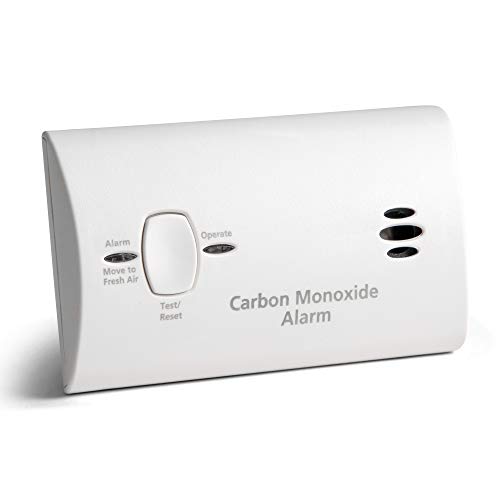
Both heaters burn propane and produce carbon monoxide as a byproduct, regardless of which one you pick. A screened porch’s open-air design usually provides more natural ventilation than a sealed room, but don’t treat that as a guarantee. Keep a battery-backed carbon monoxide detector on the porch whenever either heater runs, and never fully enclose a screened porch with plastic sheeting while a propane heater is lit — that removes the airflow the space depends on for safety. See our screened porch safety classification guide for the full picture.

Coverage and Sizing for a Porch
Most residential screened porches fall well under both heaters’ rated coverage. The Portable Buddy covers up to 225 sq ft, and the Buddy FLEX covers up to 275 sq ft. A typical porch runs smaller than either ceiling, so BTU output rarely decides the choice. Wind exposure and seating layout, covered above, are the more useful deciding factors for this specific use case.
Fuel Setup on a Porch
Both heaters run on a 1 lb. cylinder by default, with an optional hose adapter for a 20 lb. tank on some configurations. A porch is a good candidate for the 20 lb. tank setup, since it’s often close enough to a house’s existing propane supply for a longer hose run, and a bigger tank means fewer mid-evening cylinder changes during a long dinner or gathering outside.
What About a Fully Open Patio Instead of a Porch?
If your space has no screens or walls at all, it’s a patio, not a porch, and the calculus shifts further toward the Buddy FLEX or a dedicated outdoor patio heater. A screened porch, even a fairly open one, still has more shelter than a bare patio. See our porch heater vs patio heater guide for that distinction in more detail, since the hardware is often identical and the difference comes down to your specific space, not the product itself.
Renters and Temporary Setups
Both heaters work well for a rented home or apartment with a shared or temporary porch space, since neither requires permanent installation. A 1 lb. cylinder setup is the simplest option if you want to take the heater with you at the end of a lease. The optional 20 lb. tank hose adds more runtime but also adds a semi-permanent fuel line that’s worth removing before moving out.
Verdict
There’s no single right answer between the Portable Buddy and the Buddy FLEX for a screened porch. It depends on how sheltered your specific porch actually is. A mostly enclosed, low-wind porch favors the Portable Buddy’s indoor-safe rating and directional heat. A genuinely open, breezy porch favors the Buddy FLEX’s wind resistance and even heat pattern. Read both full reviews linked above before deciding, and match the heater to your porch’s actual exposure, not just its BTU rating.
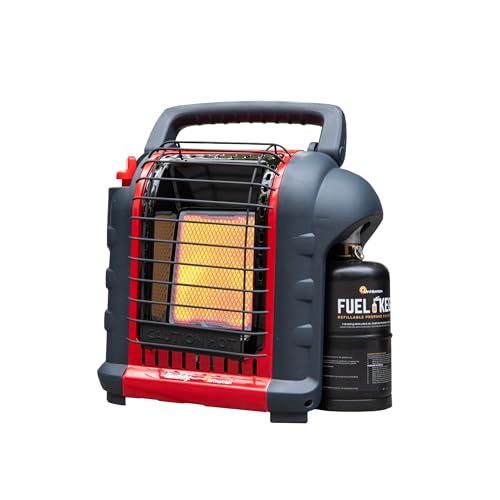
Best for Screened or three-season porches up to 225 sq ft
Related Products
See our best propane heater for screened porch roundup for more picks across styles, or the porch heater guide for the wider category. Pair either heater with these: