

Affiliate disclosure: some links are affiliate links — as an Amazon Associate we earn from qualifying purchases, at no extra cost to you. Full disclosure.
This is the single most important question to answer before buying any propane heater for a porch, and manufacturers don’t answer it for you directly. Heaters are certified either for enclosed indoor use or open outdoor use — there’s no official "screened porch" category — so the classification job falls to you, based on how your specific porch is actually built and used.

Top 3 Recommended
Why This Classification Matters More Than Any Spec Comparison
An outdoor-rated heater lacks the oxygen depletion sensor (ODS) that makes an indoor-safe heater viable in an enclosed space. Using an outdoor-only heater in a porch that’s actually enclosed enough to trap combustion byproducts removes that entire safety layer. Conversely, an indoor-safe heater works fine outdoors too, just with less raw output than a dedicated outdoor unit. That asymmetry is why, when a porch’s classification is genuinely ambiguous, defaulting to "indoor" and choosing an ODS-equipped heater is the safer call every time.
Signals That Point Toward "Outdoor"
- Screening on most or all sides with no solid panels installed.
- Consistent airflow you can feel — a breeze moves through even on a still day.
- No storm windows, vinyl panels or heavy tarps currently installed anywhere on the structure.
- The porch is used the same way in every season — nothing changes about its enclosure between summer and winter.
Signals That Point Toward "Indoor"
- Vinyl panels, storm windows or heavy tarps installed for part or all of the year.
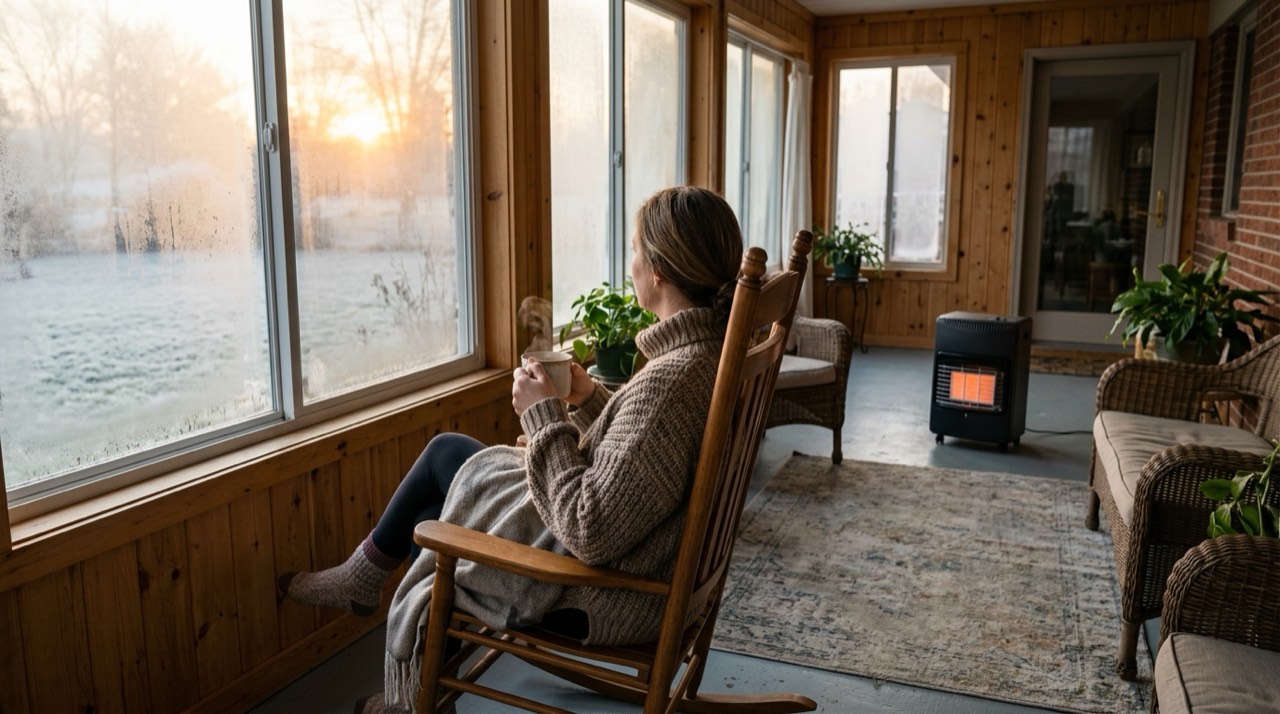
- The space feels noticeably warmer or stuffier than outdoor air with the door closed.
- It’s been insulated or drywalled in any part, even partially.
- You’ve noticed condensation on windows or panels during use — a sign the space isn’t exchanging air freely.
The Genuinely Ambiguous Middle: Three-Season Porches
A three-season porch — one with real windows that go in for cold months but come out or open in warm ones — is the hardest case, because its classification can change with the season and even with whether the windows happen to be open right now. The practical answer here isn’t to classify the structure once and forget about it. It’s to classify the porch’s current state each time you’re deciding what to run in it. A three-season porch with its panels out in summer is behaving like outdoor space; the same porch with panels installed for winter is behaving like an indoor room, even though it’s physically the same structure. Our three-season porch airflow guide covers this scenario specifically.
What to Do When You Genuinely Can’t Decide
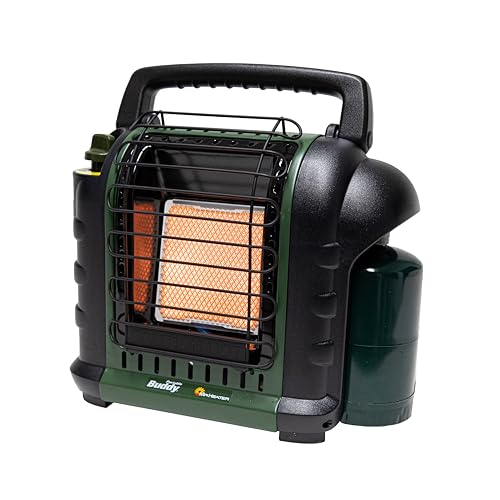
If you’ve read the signals above and still aren’t confident which category your porch falls into, default to treating it as indoor. An ODS-equipped heater like the Mr. Heater Buddy Indoor-Safe Heater is the safer default in a genuinely ambiguous space, since it’s rated for both an enclosed room and, just as safely, for open outdoor use. The reverse isn’t true — an outdoor-only heater isn’t rated for enclosed use under any circumstances, so it’s the riskier default when you’re unsure.
A Quick Reference for the Undecided
If you’ve read through the signals above and are still torn, a simple tiebreaker helps: picture the porch fully closed up (doors and any panels shut) on a still day. Does it feel noticeably warmer or more stagnant than the outside air within a few minutes of standing in it? If yes, that’s a meaningful signal toward treating it as indoor, even without storm windows or panels currently installed — the structure itself may be trapping more air than the screening alone would suggest. This simple test costs nothing and takes only a couple of minutes, but it tells you more than staring at a spec sheet ever could, since it reflects your specific structure rather than a generic manufacturer assumption written for porches in general rather than yours specifically.
Why Manufacturers Don’t Just Publish a Porch-Specific Rating
Porches vary too widely in construction, screening density, regional climate and seasonal use for a single manufacturer rating to cover them meaningfully. A screened porch in a humid coastal climate behaves differently from one in a dry, windy region, even with identical screening. Rather than a vague "porch-safe" label that couldn’t account for this variation, manufacturers stick to the two categories they can actually engineer and test for — enclosed indoor use and open outdoor use — and leave the classification of in-between spaces like porches to the buyer, informed by the specific structure in front of them.
Regional Climate Shifts the Judgment Call
The same physical porch structure can lean differently toward "indoor" or "outdoor" depending on regional climate. A screened porch in a humid, still-air climate traps moisture and combustion byproducts more readily than an identical structure in a windy, dry region, even with the same screening density. Buyers in humid climates should weight the "indoor" classification signals somewhat more heavily than the general guidance above suggests, since their local conditions compound the enclosure effect a porch’s construction alone doesn’t fully capture.
What a Building Inspector or Contractor Might Tell You
If your porch has been professionally enclosed or modified — a contractor-installed three-season conversion, for instance — it’s worth asking directly whether the space was built or permitted as a conditioned interior room or as an exterior structure. This answer, when available, is often more reliable than working through the signals list yourself, since a contractor or local permitting office has a technical answer for how the specific structure is classified under local building code, which frequently aligns with how it should be treated for heater safety purposes too.
Documenting Your Own Porch’s Classification
For a porch that genuinely sits in the ambiguous middle, it’s worth writing down your own reasoning the first time you work through the signals above — what convinced you to classify it as indoor or outdoor, and under what conditions (panels in vs. out, for instance). This isn’t just busywork: it gives you something concrete to check against the next time you’re deciding whether to run a specific heater, rather than re-litigating the whole judgment call from scratch each time, potentially with less care than the first pass.
Re-Evaluate If You Change Your Porch’s Structure
Adding storm windows, sealing gaps, insulating, or even just adding heavy curtains that block airflow can shift a porch from one classification to the other, even if the change feels minor at the time. Re-run through the signals above any time you modify your porch, rather than assuming a heater choice that was appropriate for the space’s original configuration still applies after a renovation or seasonal upgrade.
Related Reading
For the specific airflow and ventilation mechanics on a three-season porch, see our airflow guide. For heater picks matched to each enclosure tier, see our best propane heater for a screened porch guide.