

Affiliate disclosure: some links are affiliate links — as an Amazon Associate we earn from qualifying purchases, at no extra cost to you. Full disclosure.
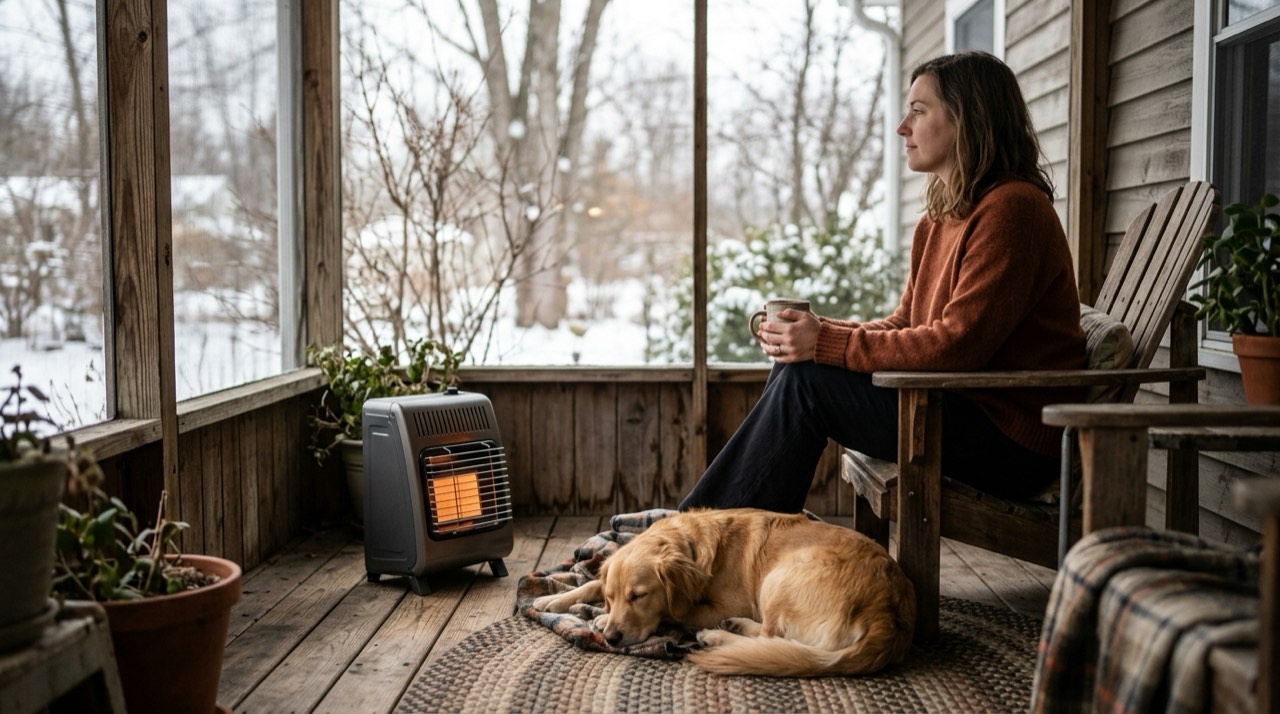
Yes. A propane heater rated for outdoor or well-ventilated use can run safely on a screened porch, since standard window-screen mesh still allows a meaningful amount of fresh air to move through. The exception is a screened porch that’s been closed up for winter with clear vinyl panels — at that point it functions more like a sealed room than a ventilated one.
Why Screen Mesh Isn’t the Same as an Open Patio
Screen mesh blocks bugs, not airflow, so a screened porch still exchanges air with the outside continuously. That’s meaningfully different from a solid-walled sunroom, but it’s also not identical to a fully open patio with no barrier at all. Our screened porch classification guide walks through exactly where this space falls between indoor and outdoor for heater purposes.
What Changes When You Add Winter Vinyl Panels
Many screened porches get zip-up or snap-in clear vinyl panels for the cold months, which is exactly the setup that changes the ventilation picture. Once most of the screen area is covered, airflow drops close to what you’d get in an enclosed room, and an outdoor-only heater is no longer an appropriate choice. Our three-season porch airflow guide covers how to handle heating once panels go up.
Picking the Right Heater for an Open Screened Porch
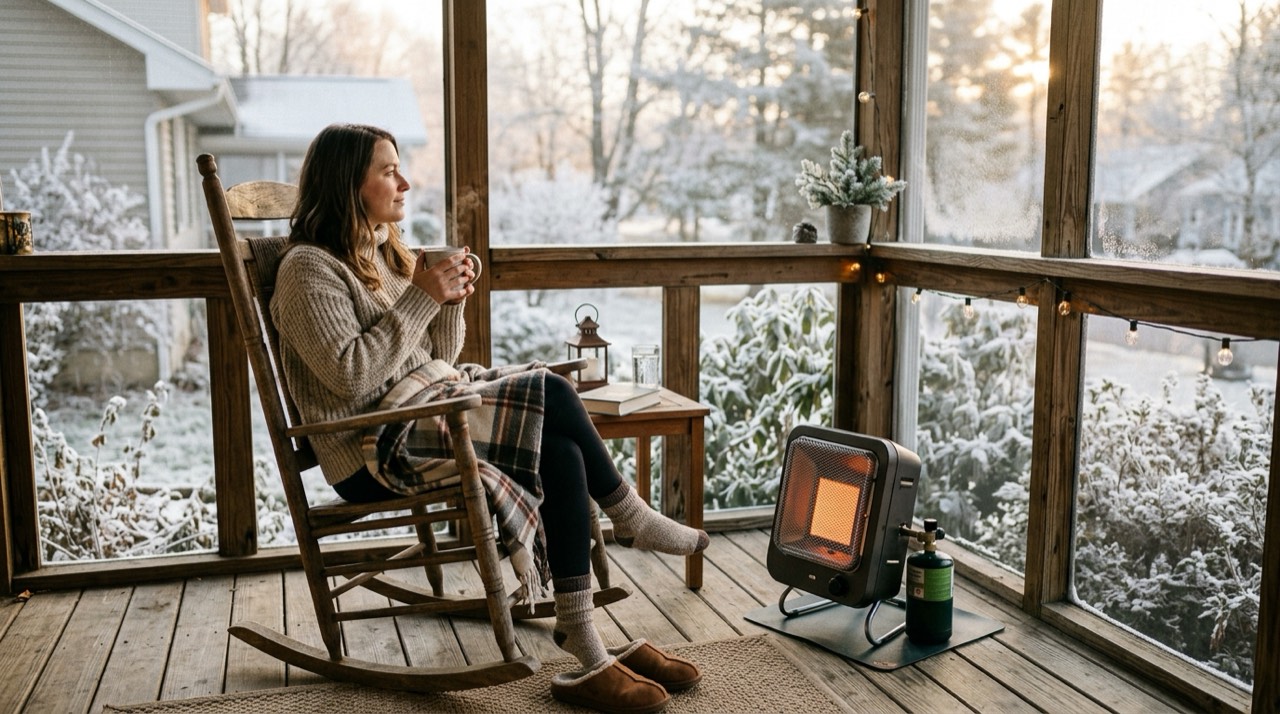
For a genuinely open, mesh-only screened porch, a standard outdoor-rated radiant or standing patio heater works the same way it would on a covered patio. Compact radiant models tend to fit a porch’s footprint better than a large standing heater built for a wide-open patio. Our porch heater guide covers picking a size and style for a typical screened porch.
Clearance From Screen Material
Screen mesh and its frame are combustible enough to matter for placement. Keep any heater the manufacturer’s full rated distance away from the screen itself, not just from the porch railing or furniture, since radiant heat can affect mesh and frame material at closer range than it would a solid wall.
The Bottom Line
An outdoor-rated propane heater is safe on a genuinely open, mesh-only screened porch. Once vinyl panels close most of that mesh up for winter, treat the space differently — it no longer ventilates the way an open screened porch does.