

Affiliate disclosure: some links are affiliate links — as an Amazon Associate we earn from qualifying purchases, at no extra cost to you. Full disclosure.
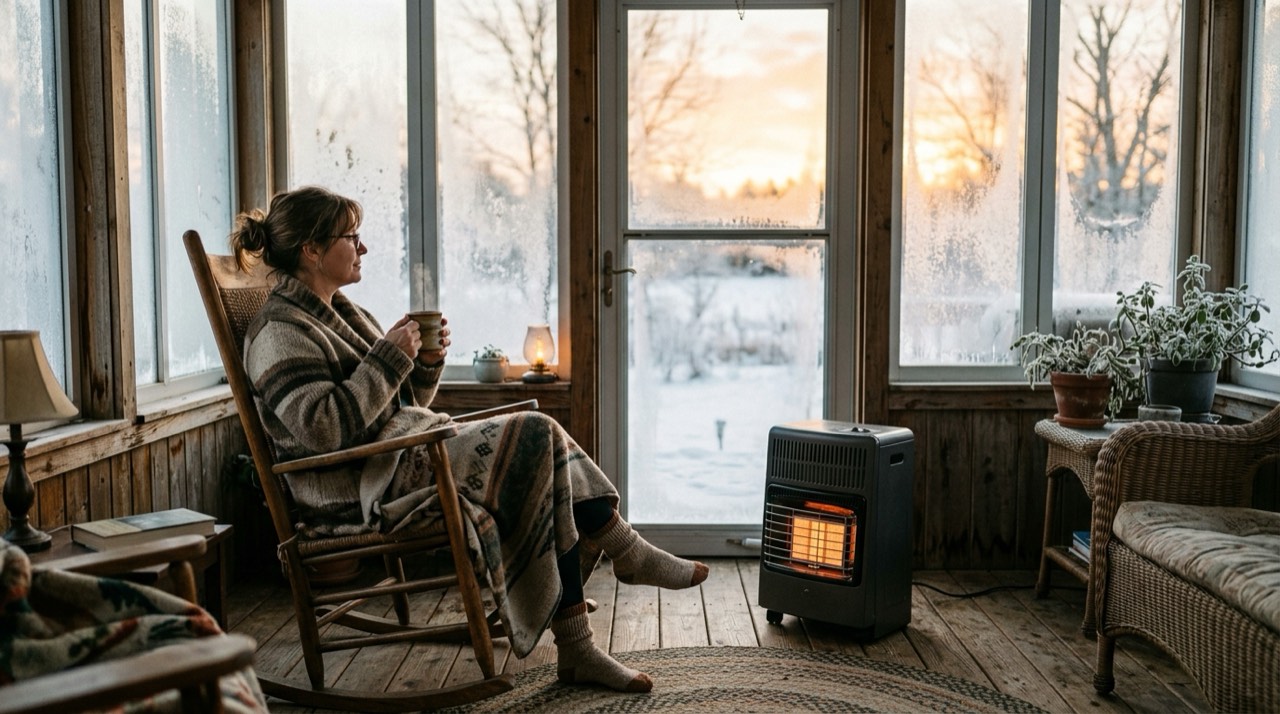
A three-season porch behaves differently from either a fully open patio or a sealed interior room, and its airflow characteristics change with the seasons in a way that directly affects which heater — and what ventilation guidance — actually applies at any given time.

Top 3 Recommended
Why Even a Well-Insulated Three-Season Porch Isn’t a Sealed Room
A three-season porch is rarely part of a home’s sealed HVAC envelope, even when its windows and panels are installed for winter. Older window frames, screen tracks and door thresholds allow more air infiltration than standard interior wall construction, which means a porch heater often needs to run longer or at a higher setting than the same BTU heater would need in a comparably sized interior room. This isn’t a flaw in the heater — it’s the nature of a space that’s semi-conditioned by design rather than fully sealed like an interior room.
How Airflow Changes With the Panels In vs. Out
With seasonal panels or storm windows removed, a three-season porch approaches fully outdoor airflow — wind moves through relatively freely, and an outdoor-rated heater is generally appropriate. With panels installed, airflow drops meaningfully, though rarely to the level of a fully sealed interior room, since these panels are typically not engineered for an airtight fit the way permanent walls and windows are. That partial reduction in airflow is exactly why the "indoor" classification is the safer default once panels go in, even though the space still isn’t as sealed as a true interior room.
Practical Signs of Inadequate Airflow With Panels Installed
A few signs suggest airflow has dropped enough to warrant extra caution with panels in place: visible condensation building up on the panels or windows faster than expected, a noticeably stuffy or heavy feeling in the air during extended heater use, or a heater’s oxygen depletion sensor triggering more often than it would on a fully open porch. Any of these is a reason to crack a window or door slightly, even on a heater rated for the space, rather than assuming the panels alone provide adequate ventilation.
Cracking a Window or Door on a Panel-Enclosed Porch
The same general guidance that applies to any indoor-safe heater — crack a window or door slightly during extended use — applies here too, and it’s often easier to achieve on a three-season porch than in a true interior room, since these spaces frequently have more openable panels or a door to an adjoining space. Cracking one panel on the leeward side (away from prevailing wind) tends to create better, steadier airflow than opening one facing directly into the wind, which can create an uneven draft rather than a gentle exchange.
Sizing a Heater for the Airflow You Actually Have
Because a three-season porch with panels installed sits between fully sealed and fully open, BTU sizing should lean toward the higher end of standard indoor guidance rather than the lower end — the extra air infiltration through panel seams and older window frames means the space loses heat faster than a truly sealed room of the same square footage. Our indoor BTU sizing guide covers the baseline numbers to adjust from.
What Changes When You Remove the Panels for Summer
Once seasonal panels come out, the porch’s airflow characteristics shift back toward fully outdoor, and continuing to run an indoor-safe heater is still fine — it’s simply working with more margin than it needs, similar to using an indoor-safe heater outdoors generally. What you shouldn’t do is switch to an outdoor-only heater for the open season and then keep using it once panels go back in for winter; re-evaluate the heater choice each time the porch’s physical configuration changes, not just once when you first set up the space.
Corner Rooms and Multi-Window Porches
A three-season porch built as an actual corner room of the house, with windows on two or three exterior-facing sides, tends to have more consistent air exchange than a shallow lean-to style porch with panels on only one side, simply because there’s more perimeter available for air to move through even with everything nominally "closed." If your porch has this multi-sided window configuration, it may lean slightly more toward the open end of Tier Two than a single-sided enclosed porch would, though the conservative indoor-safe default still applies unless you’re confident the space behaves like genuine outdoor air across all its window and door openings, in every season the porch is actually used.
A Battery-Backed Detector Handles the Uncertainty
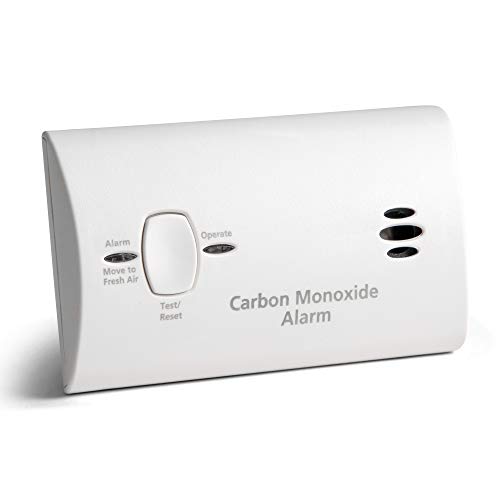
Because a three-season porch’s airflow genuinely varies by season and even by weather conditions on a given day, a battery-backed carbon monoxide detector is particularly valuable here — it doesn’t need you to correctly judge airflow conditions in real time the way manual ventilation guidance does. A model like the Kidde Carbon Monoxide Detector works the same whether the porch is in its open-season or enclosed-season configuration.
How Panel Material Affects Airflow
Not all three-season porch panels behave identically. Vinyl panels with zippered sections generally allow more intentional, adjustable airflow than fixed glass storm windows, since they can be partially opened without fully removing them. If your porch uses vinyl panels, cracking one zippered section is often a simpler way to maintain airflow than trying to prop open a fixed glass panel, which may not be designed to open at all. Knowing your specific panel type helps you apply the general "crack a window or door" guidance in a way that actually works for your structure.
Screens Behind Panels: A Common Three-Season Design
Many three-season porches keep their permanent screening in place behind removable winter panels, which means even a "sealed" panel configuration often still has some screen-level air exchange happening behind the solid panel material, depending on how the two layers fit together. This can make a panel-enclosed three-season porch meaningfully leakier than its appearance suggests, which cuts both ways: it’s part of why these porches rarely reach the airtightness of a true interior room, but it also means you can’t assume "panels installed" always means "fully enclosed" without checking your specific structure’s actual seal.
The Indoor-Safe Heater Is the Simplest Answer for This Specific Porch Type
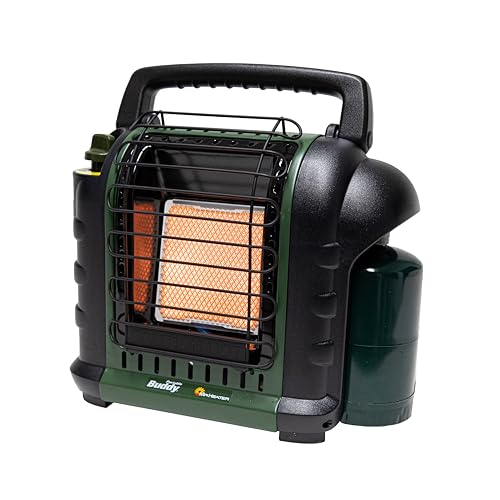
Given how much a three-season porch’s airflow shifts across the year, an ODS-equipped heater like the Mr. Heater Buddy Indoor-Safe Heater is generally the simpler, safer choice for this porch type specifically, compared with owning a separate outdoor-only heater for the open season and an indoor-safe one for the enclosed season. One ODS-equipped heater covers both configurations safely, which matters more for a three-season space than for a porch whose enclosure never changes.
Related Reading
For the broader indoor-vs-outdoor classification question this page builds on, see our screened porch classification guide. For clearance distances specific to a wood porch structure, see our porch clearance guide.