
Affiliate disclosure: some links are affiliate links — as an Amazon Associate we earn from qualifying purchases, at no extra cost to you. Full disclosure.
A porch — whether open-air, screened, or a fully covered porch — sits in a gray zone between indoor and outdoor, and that ambiguity is exactly why "best propane porch heater" doesn’t have one single answer the way a patio heater roundup might. We looked at propane heaters actually marketed and reviewed for porch use — portable heaters and fixed tank-top models alike — across tank-top, indoor-safe, standing and tabletop styles, and ranked the six that come up most consistently as reliable choices across different porch types, from a small space heater for a reading nook to a full standing unit for entertaining. Every ranking below reflects aggregated owner reviews, manufacturer specifications and safety certifications.
How We Picked These Porch Heaters
Porch heating has one wrinkle patio heating doesn’t: whether the space counts as enclosed enough to need an indoor-safe, ODS-equipped heater rather than an outdoor-only unit. We weighted four things. First, how the manufacturer rates the heater — outdoor-only or indoor-safe — since that determines which porch types it’s actually appropriate for. Second, coverage area relative to a typical porch’s narrower, often rectangular footprint. Third, build quality for a space that sees more humidity than an open patio but less airflow than fully open air. Fourth, what owners specifically report about porch use, not just general outdoor use, since porch reviews surface different patterns than patio ones.
The Short Answer
For a genuinely well-ventilated screened porch, the Mr. Heater 45,000 BTU Tank Top Heater is the safest and most-reviewed starting point. For a porch that’s been enclosed with panels or storm windows for winter, skip outdoor-only heaters entirely and go with the Mr. Heater Buddy Indoor-Safe Heater instead. Not sure which category your porch falls into? Our indoor-vs-outdoor classification guide walks through the decision before you buy anything.

Best for Well-ventilated screened porches and three-season rooms
- 45,000 BTU, screws directly onto a 20 lb tank
- 540° swivel head throws heat almost every direction
- Piezo ignition, no batteries
- No standing base to assemble
Why buy it: It is the single most-mentioned porch heater in owner reviews across outdoor-living forums, and the 360° swivel head suits a porch’s rectangular seating layout better than a heater that throws heat in one direction only.
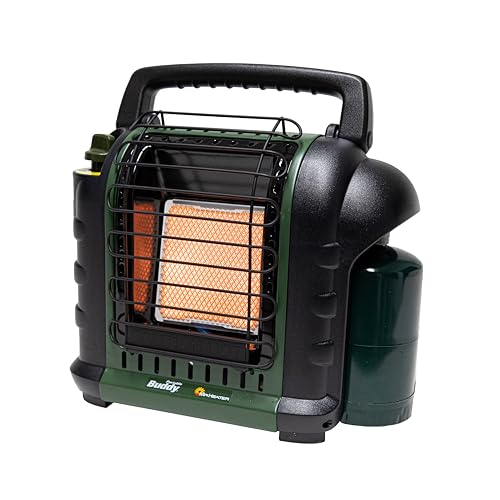
Best for A porch enclosed with vinyl panels or storm windows for winter use
- Built-in oxygen depletion sensor (ODS)
- Tip-over safety switch
- 4,000–9,000 BTU adjustable
- Runs on a 1 lb cylinder or hose-connects to a 20 lb tank
Why buy it: For a porch that behaves more like an indoor room once it’s been winterized with panels or storm windows, this is the pick owners consistently choose over an outdoor-only tank-top unit, precisely because it carries the ODS certification a mostly-enclosed space calls for.

Best for A smaller porch where a full-size tank-top unit is more than needed
- 360° radiant heat pattern
- Compact profile — under 21 inches tall
- Screws directly onto a 20 lb propane tank
- No electricity required
Why buy it: Owners with a narrower porch specifically mention this as the right size when a 45,000 BTU tank-top heater would be overkill for a two-to-four-chair setup.

Best for A wide, open, well-ventilated covered porch with room for a standing base
- Stainless steel construction resists rust
- Wide dome reflector for even heat throw
- Wheeled base for repositioning
- Piezo ignition
Why buy it: On a genuinely open, screened-on-most-sides porch with floor space to spare, a standing heater throws heat across a wider seating area than a tank-top unit can manage, and stainless steel holds up well to a porch’s humidity exposure.
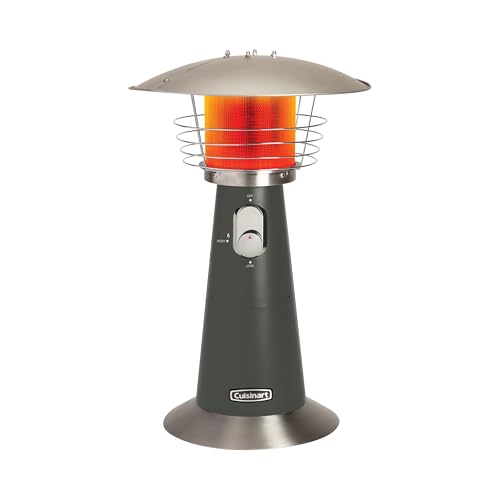
Best for A narrow porch with limited floor space around a small table
- 11,000 BTU output
- Anti-tilt safety switch
- Sits directly on a table
- Adjustable heat control
Why buy it: Porches are frequently narrower than a full patio, and a tabletop heater solves the floor-space problem a standing or even a tank-top unit can create in a tight, furniture-heavy porch layout.

Best for An enclosed porch used for reading or relaxing where fan noise is unwelcome
- 6,000 BTU adjustable catalytic (flameless) heat
- No fan, no pilot noise
- Portable or permanent wall-mount
- Rated for continuous ventilated use per the manual
Why buy it: Catalytic heat is silent, and owners who use a porch as a quiet retreat rather than an entertaining space specifically choose this style over a radiant heater with fan noise or pilot hiss.
Full Comparison: Radiant Propane Heater and Portable Heater Picks Side by Side
All six picks side by side. "Best for" reflects the specific porch type and enclosure level each heater is most consistently recommended for in owner reviews.
| Product | Best for | Buy |
|---|---|---|
| Mr. Heater Original 540° 45,000 BTU Tank Top Radiant Propane Heater | Best Overall | Check Price |
| Mr. Heater Buddy 4,000–9,000 BTU Indoor-Safe Portable Propane Radiant Heater | Best Indoor-Safe for an Enclosed Porch | Check Price |
| Dura Heat TT-360 Propane Tank Top Heater | Best Compact Tank-Top | Check Price |
| BALI OUTDOORS Propane Patio Heater, Stainless Steel Standing | Best Standing Option | Check Price |
| Cuisinart Patio Heater, Tabletop, 11,000 BTU with Anti-Tilt Safety Switch | Best Tabletop for a Small Porch | Check Price |
| Camco Olympian Wave-6 Catalytic Safety Heater, 6,000 BTU | Best Silent / Catalytic | Check Price |
The One Question That Decides Everything: How Enclosed Is Your Covered Porch?
Before coverage area, before BTU, before brand — the single decision that actually narrows this list is whether your porch is open enough to treat as outdoor space, or enclosed enough that it needs an indoor-safe heater. A porch with screening on most sides and consistent airflow behaves like outdoor space for heater-selection purposes. A porch that’s been sealed up with vinyl panels, glass or heavy tarps for winter behaves more like an indoor room, and at that point an outdoor-only tank-top or standing heater is the wrong category entirely, regardless of how good its reviews are for open-air use.
Why the Indoor-Safe Pick Costs You Some BTU and Heat Coverage
The Portable Buddy Indoor-Safe Heater runs at a lower maximum BTU than the tank-top pick, which means less raw heat coverage.
The Oxygen Depletion Sensor Doubles as a Low-Oxygen Shutoff
That’s the tradeoff for the oxygen depletion sensor, which doubles as a low-oxygen shutoff and makes it appropriate for a more enclosed space in the first place. You’re not choosing it because it heats a bigger area. You’re choosing it because it’s rated for a space an outdoor-only heater legally and safely isn’t.
Standing Heater vs. Tank-Top Heater vs. Tabletop Heater on a Porch: Space Matters More Than on a Patio
A porch is frequently narrower than an open patio, which makes a standing heater’s floor footprint a bigger practical constraint than it would be in an open backyard. A tank-top heater’s lower profile and lack of a wide base fits a porch’s typical furniture arrangement — chairs and a small table lined against rails — more comfortably than a standing unit in most porch layouts. Our standing vs. tabletop guide covers the general tradeoff in more depth, though the space constraint is more pronounced on a porch specifically.
What Owners Report About Tip-Over Shut-Off Safety and Porch-Specific Use
Owners running a tank-top heater specifically on a porch consistently mention two things beyond general outdoor reviews. First, the 360° heat throw suits a porch’s furniture layout better than they expected. Second, the tank itself takes up more relative floor space on a porch than it would on an open patio, since porches tend to be narrower — several reviewers specifically mention positioning the tank in a corner or against a rail to keep the walking path clear. For the indoor-safe pick, porch owners specifically cite the ODS and tip-over shut-off as reassuring in a space with less airflow margin than fully open outdoor use.
Clearance From Screens, Porch Furniture and a Wood Porch
Porches typically have more flammable material within heater range than an open patio does — outdoor curtains, cushioned furniture, and the screen material itself. Keep any heater on this list well clear of screen panels specifically; sustained heat exposure can warp or discolor screening well before it would ignite outright. See our porch clearance guide for the specific distances that matter on a wood porch.
Carbon Monoxide Detector Considerations Are Real on Any Porch
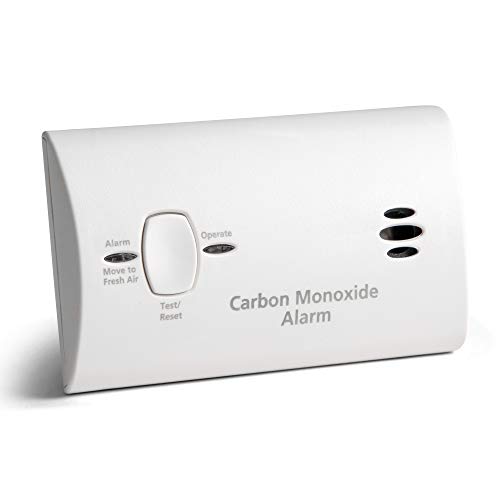
Any semi-enclosed space carries more carbon monoxide risk than a fully open patio, regardless of which heater style you choose. A battery-backed carbon monoxide detector is worth having on any porch that gets heated regularly, since it doesn’t rely on the heater’s own safety systems working correctly and it’s inexpensive insurance for a space that sits in the gray zone between indoor and outdoor. A model like the Kidde Carbon Monoxide Detector runs on batteries, which matters on a porch without a nearby outlet.
Wind and Draft on a Screened Porch
A screened porch isn’t fully sheltered from wind the way an interior room is. Screening cuts wind speed noticeably but doesn’t stop it entirely, so a porch on the windward side of a house often performs differently than a sheltered porch on the same property. Positioning a heater away from the most exposed screen panel — using a corner or a section shielded by the house — consistently produces more even heat than positioning it for maximum theoretical "spread" in the most exposed spot.
Humidity, Corrosion and a Weather Resistant, Best Value Material Choice on a Porch
A porch sees more sustained humidity exposure than an open patio in many climates, since screening traps moisture more than fully open air does, and the structure often sits closer to landscaping and shade. That makes material choice matter even more here than on a patio. The stainless steel standing pick resists the corrosion that painted steel is prone to in a consistently humid, semi-enclosed environment, and it’s worth the price premium specifically for a porch that stays screened and humid for most of the year rather than being stored between uses. Brands like Hiland, Bluu and Dyna-Glo all make weather resistant standing and tank-top models worth cross-shopping if you want a specific finish or a best value alternative to the picks above.
Fuel Setup: A 20-lb Tank or a 1-lb Cylinder Across These Six Picks
Five of the six heaters here connect to a standard 20-lb propane tank; the tabletop pick uses a smaller 1-lb cylinder given its lower BTU draw. If you already own a 20-lb tank from a grill or another appliance, that’s one less purchase to budget for when adding a porch heater. If you’re starting from scratch, factor the tank itself into your total cost and confirm it carries a current OPD valve before your first refill — older tanks without one can’t legally be refilled at most stations.
What to Do If Your Porch’s Enclosure Doesn’t Match Any Pick Above
These six picks cover the most common porch scenarios, but real porches are varied enough that yours might not map cleanly onto any single pick. If that’s the case, work backward from your porch’s enclosure classification and available floor space rather than trying to force-fit one of these six models. Our enclosure-tier buying guide organizes the decision that way specifically, which may be more useful than a flat ranked list if your porch is genuinely unusual in shape or construction.
Assembly Expectations by Style
The standing heater on this list ships disassembled and typically takes 30–45 minutes to build on a first attempt — base, pole, burner head, and in some cases a side shelf. The tank-top and tabletop picks need essentially no assembly beyond connecting to a tank or table. If setup time itself matters to your decision, that’s a real point in favor of tank-top or tabletop styles for a porch specifically, where storage between uses is often more of a factor than on a permanent patio installation.
Piezo Ignition Means No Batteries to Replace
Most of the picks above light with piezo ignition — a spark switch built into the control knob rather than a battery-powered igniter. It lights reliably in cold weather and never needs a battery swap mid-season, which matters on a porch heater that sees occasional rather than daily use.
Buying Checklist for a Porch Heater or Space Heater: Ventilation and CSA Certified Safety
- Classify your porch first — open/well-ventilated vs. enclosed for winter — before comparing specific heaters.
- Match coverage to your porch’s actual furniture layout, not the biggest heater available.
- Budget for a carbon monoxide detector regardless of which heater style you choose.
- Keep clearance from screens and cushioned furniture in mind, not just walls.
- Consider tank-top or tabletop first if your porch is narrower than a typical open patio.
- Favor stainless steel for any heater that will stay on a humid, screened porch year-round rather than being stored between uses.
Choosing Between These Six When Your Porch Sits Between Tiers
Not every porch fits neatly into "fully open" or "enclosed for winter." If yours has some screening and some solid wall, or storm windows on one side but open screen on another, lean toward the indoor-safe pick rather than an outdoor-only one — the cost of extra caution here is somewhat lower BTU output, while the cost of under-classifying a genuinely enclosed space is losing the entire safety margin an ODS provides. Our classification guide walks through exactly how to make that call, including the specific signals worth checking on your own structure before deciding.
Seasonal Storage for Porch Heaters
A porch heater used seasonally benefits from the same off-season care as any propane heater: disconnect the tank, keep the unit dry, and check the hose and burner ports for debris or cracking before the first use of a new season. Because a porch generally sees more humidity exposure than an interior storage closet, a heater left on the porch itself over an off-season is more prone to moisture-related wear than one moved indoors between uses. Our winter storage guide covers this in more depth, and the same principles apply whether the heater lives on a patio or a porch. It’s a five-minute routine that pays off the following season when the heater lights on the first try instead of needing troubleshooting, and it costs nothing beyond a few minutes of attention before the heater goes into storage.