
Affiliate disclosure: some links are affiliate links — as an Amazon Associate we earn from qualifying purchases, at no extra cost to you. Full disclosure.
A standing patio heater and a tabletop unit solve the same basic problem — outdoor propane heat — in genuinely different ways, and the right choice comes down to your patio’s actual floor space and seating layout more than personal preference. This guide compares the two formats directly rather than ranking specific products.
Top 3 Recommended
The Core Difference: Height and Footprint
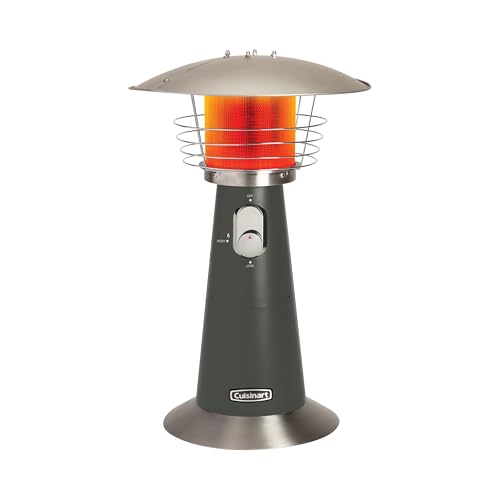
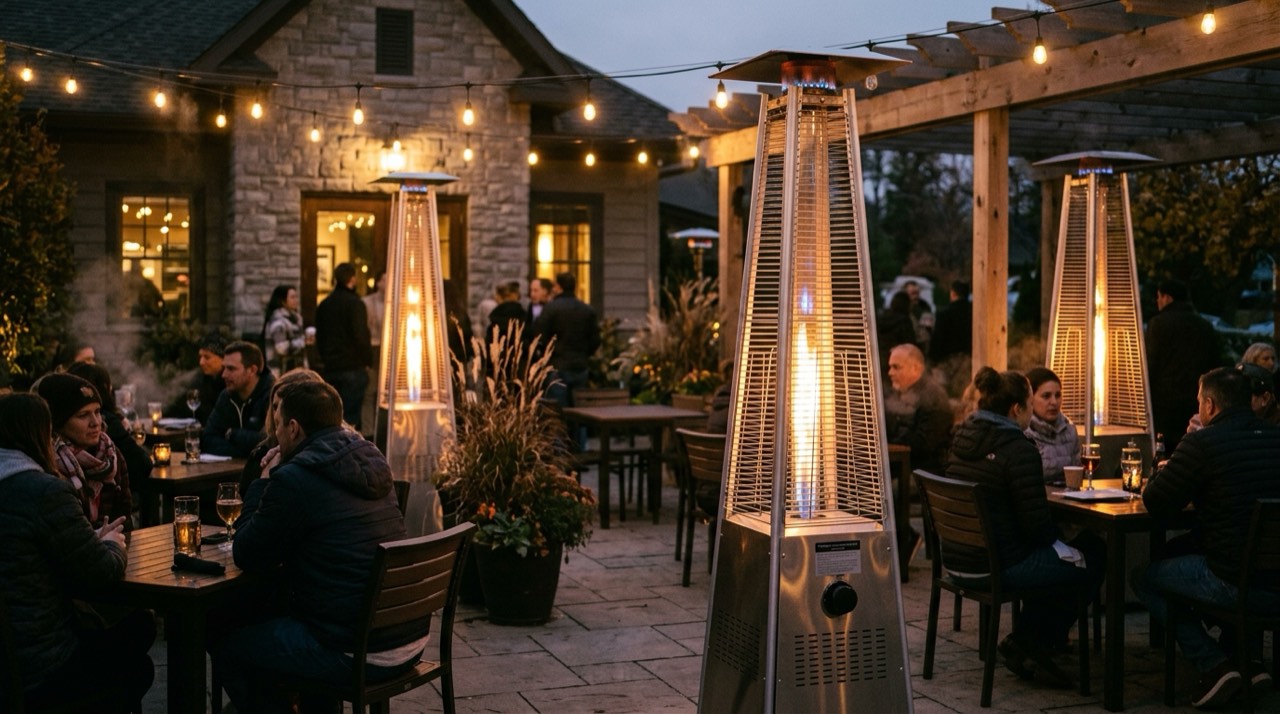
A standing heater is a tall pole unit, typically 85–90 inches, with a wide reflector dome at the top and a base that sits on the ground. A tabletop heater is a compact unit, usually under 3 feet, designed to sit directly on an outdoor table rather than the ground. That height difference changes everything else about how each style performs and where it fits.
Coverage Area: Standing Heaters Win on Raw Radius
Because a standing heater radiates heat from roughly seven feet up, it throws warmth across a wider radius — commonly 150–200 sq ft for a 45,000–50,000 BTU unit. A tabletop heater, running at a lower BTU output (often 10,000–15,000 BTU) from a much lower point, covers a noticeably smaller area, generally enough for the table itself plus the immediate seating around it. If your goal is heating an entire patio, a standing heater wins outright. If your goal is keeping the people at one specific table warm, the tabletop’s smaller coverage area isn’t actually a disadvantage.
Floor Space: Where Tabletop Heaters Win
A standing heater needs a dedicated footprint on the ground — its base alone often takes up 18–24 inches of diameter, before accounting for the safe clearance around it. On a small balcony or a tightly arranged patio, that footprint can be the deciding factor regardless of how much coverage the heater theoretically provides. A tabletop heater uses zero additional floor space, since it sits on furniture you already own. For apartment balconies, small courtyard patios, or any space where every square foot of floor is already accounted for, this is the difference that actually matters.
Wind Stability
Standing heaters, being tall and top-heavy relative to their base, are the more wind-sensitive of the two styles — a strong gust can tip an unweighted unit, which is why most standing heater manuals recommend a sandbag or weight kit for breezy locations. A tabletop heater’s lower center of gravity makes it inherently more stable against wind as a tip-over risk, though a table itself can still be bumped or shifted, which is why models like the Cuisinart Tabletop Heater include an anti-tilt safety switch specifically for this scenario.
Setup and Storage
Standing heaters ship disassembled in most cases, and owners commonly report 30–45 minutes for a first-time build involving the base, pole and burner head. Once assembled, they’re generally left in place for the season rather than broken down repeatedly. A tabletop heater needs little to no assembly and is easy to move indoors between uses, which matters if your patio furniture itself gets stored seasonally. For a heater you’ll be setting up and putting away frequently rather than leaving in place, the tabletop format’s simplicity is a real practical advantage beyond just floor space.
Fuel Setup: Similar Across Both Styles
Both standing and tabletop heaters in this category typically connect to a 20 lb propane tank, though tabletop units sometimes use a smaller cylinder given their lower BTU draw. Check the specific model’s fuel connection before buying — a heater built around a smaller disposable cylinder needs more frequent refills than one connected to a standard 20 lb tank, which matters if you’re using the heater regularly through a cool season rather than occasionally.
Assembly and Ignition Differences
Standing heaters ship disassembled in nearly every case, requiring 30–45 minutes to build the base, pole and burner head before first use. Tabletop heaters need little to no assembly beyond attaching the propane connection. Both styles typically use piezo ignition, a mechanical spark mechanism that needs no batteries and works reliably in cold weather — a genuine advantage over battery-dependent electronic ignition for a heater that may sit unused between cool evenings.
Price Tier and What Drives the Difference
Standing heaters generally sit at a higher overall cost than tabletop units, reflecting the larger amount of steel, the reflector assembly and the wheeled base most models include. Stainless steel construction adds further cost over painted steel on either style, but matters more on a standing heater that’s likely to remain outdoors in one fixed spot for an entire season. A tabletop heater’s smaller size and simpler construction is part of why it’s the more accessible entry point into propane patio heating for a first-time buyer.
Which One Should You Actually Buy?
If your patio has room for a dedicated heater footprint and you want to warm a genuine seating or dining area, a standing heater like the BALI OUTDOORS Stainless Steel Standing Heater is the more capable option. If your space is a balcony, a small table setup, or anywhere floor space is genuinely constrained, a tabletop heater is the only format that actually fits without dominating the space — and for a single table’s worth of warmth, it isn’t underpowered for that specific job.
Visual Footprint on the Patio
Beyond function, a standing heater is a visually prominent object on any patio — an eight-foot pole is hard to design around, and it becomes part of the space’s overall look whether you want it to or not. A tabletop heater is comparatively unobtrusive, sitting low enough that it doesn’t dominate the visual space the way a tall standing unit does. This matters more to some buyers than others, but it’s a legitimate factor in the decision alongside coverage and floor space, particularly for a smaller or more curated outdoor area where every piece of furniture is chosen deliberately.
Which Format Handles a Cold Snap Better
On a genuinely cold evening, a standing heater’s higher BTU ceiling gives it more headroom to keep a seating area comfortable than a tabletop unit’s lower maximum output can match. If your patio use skews toward genuinely cold nights rather than mild ones, that BTU ceiling is worth weighing alongside floor space and wind stability, since a tabletop heater running at its maximum on a cold night may simply not produce enough warmth for the space, regardless of how well it otherwise fits the location.
A Middle Ground: Tank-Top Heaters
Between these two extremes sits a third format worth knowing about: the tank-top heater, which screws directly onto a 20 lb tank and sits at a height between a tabletop and full standing unit. It offers wider coverage than a tabletop heater without the full floor footprint of a standing model, making it a reasonable compromise for a mid-size patio that’s too big for tabletop heat but doesn’t need a full standing unit’s reach. Our sitewide ranked patio heater roundup covers tank-top options alongside standing and tabletop picks.